Phong Nha - Ke Bang National Park is home to limestone mountains, caves and forest ecosystems of outstanding global value. These assets have made the heritage site a destination for scientists and international visitors, while providing a foundation for Vietnam to broaden cooperation in nature conservation.
Limestone karst terrain accounts for around three-quarters of the national park. Shaped by geological processes and karstification over hundreds of millions of years, the area features a complex system of mountains, valleys, underground rivers and caves. To date, 473 caves have been surveyed, with a combined length of approximately 259 kilometres. Highlights include Son Doong, the world’s largest natural cave, and Phong Nha Cave, known for its underground river system and striking stalactite formations.
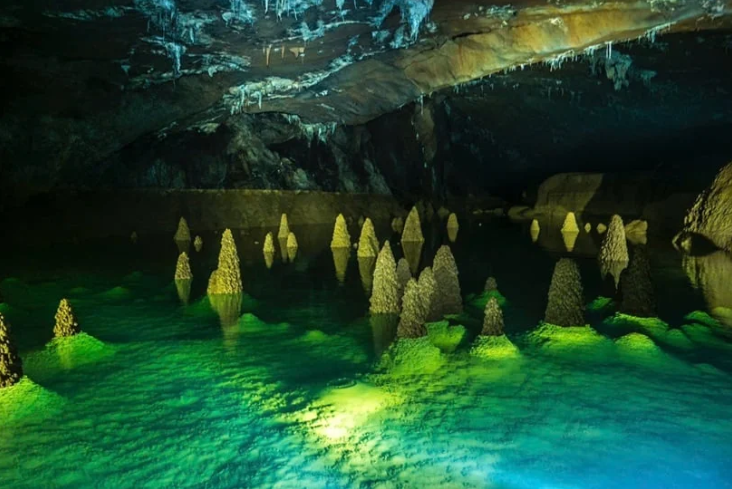 Limestone mountains and waterways form the distinctive landscape of Phong Nha–Ke Bang, a World Natural Heritage site. Photo: Thanh Tam.
The value of Phong Nha - Ke Bang is also reflected in its rich ecosystems. Surveys have recorded 2,958 plant species and 1,405 animal species. Over the past 25 years, 54 species new to science have been recorded and published, including 46 animal species and eight plant species.
In 2003, UNESCO inscribed Phong Nha - Ke Bang on the World Heritage List under geological and geomorphological criteria. In 2015, the site was also recognised under criteria relating to ecological processes and biodiversity. These inscriptions affirm the area’s international significance while underscoring the need to protect its ecosystems and maintain the integrity of the heritage site.
In July 2025, UNESCO approved the extension of the Phong Nha - Ke Bang World Natural Heritage site to include Laos’ Hin Nam No National Park. This became the first transboundary natural World Heritage site in Southeast Asia, opening up new avenues for cooperation between the two countries to protect karst ecosystems and biodiversity.
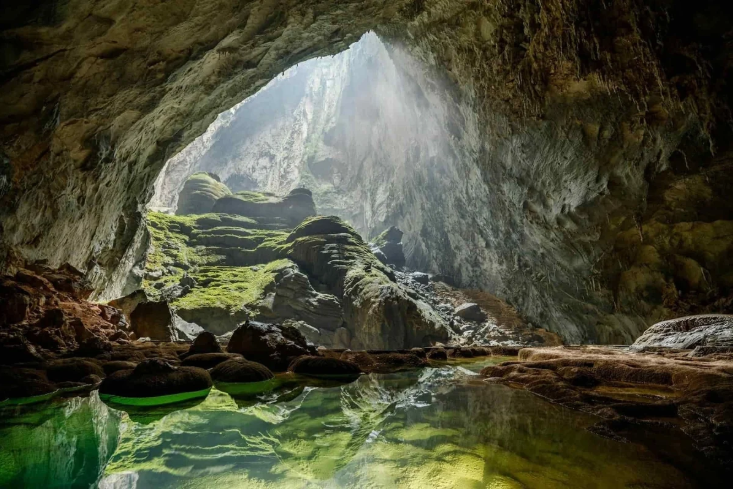 The spectacular interior of Son Doong Cave, featuring distinctive stalactite formations and geological structures. Photo: Thanh Tam.
According to Pham Hong Thai, Director of the Phong Nha - Ke Bang National Park Management Board, cooperation with Hin Nam No National Park is an important part of conserving and promoting the heritage site’s values. The two sides are working to finalise a 2025 - 2050 Transboundary Action Plan for submission to the relevant Lao authorities for approval. They are also advising on the development of a proposal for cross-border ecotourism cooperation.
The plan aims to strengthen coordination in management, information sharing and scientific research between the two national parks. Connecting protected areas with linked ecosystems also enables the two countries to work together to protect landscapes, monitor biodiversity and limit adverse impacts on natural resources.
Cooperation with Laos forms part of the international network that Phong Nha - Ke Bang has built over many years. The park’s management board maintains links with UNESCO, the World Heritage Centre, the International Union for Conservation of Nature (IUCN), and foreign organisations and research agencies. In particular, a partnership with the German government through GIZ and KfW from 2007 to 2016 provided technical and financial support and helped strengthen capacity in resource management, biodiversity conservation, buffer-zone development and community livelihood improvement.
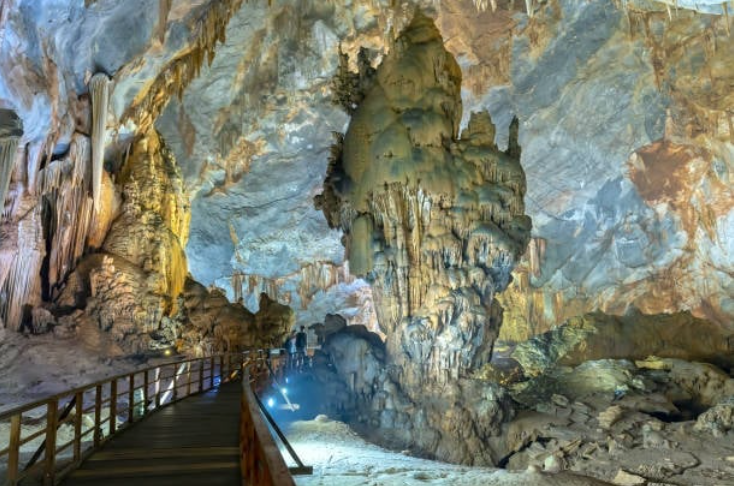 Diverse stalactite formations inside Thien Duong Cave. Photo: Phong Nha - Ke Bang Management Board.
Cave surveys and expeditions involving the British Cave Research Association and international experts have also contributed to expanding the scientific record. The 2009 expedition and discovery of Son Doong marked a major milestone in cave research and brought Phong Nha - Ke Bang to the attention of international audiences.
According to the management board’s plans, cooperation programmes will continue to focus on biodiversity conservation, forest management and protection, ecosystem restoration, climate change response and sustainable livelihoods. Combining domestic resources with international support helps strengthen management capacity while expanding opportunities to exchange technical expertise and conservation experience.
Tourism is an important channel for introducing Phong Nha - Ke Bang to the world. From the original Phong Nha - Tien Son Cave visitor route, the area has expanded its tourism offer to 22 routes, attractions and products, including cave exploration, nature experiences, ecotourism and cultural and historical discovery.
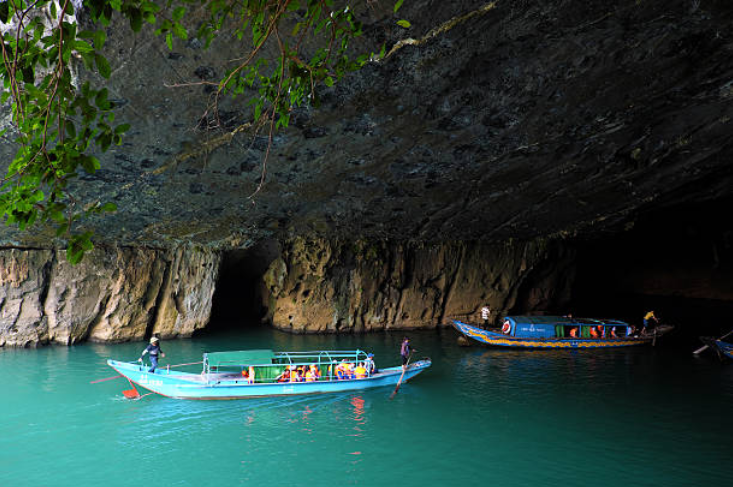 Visitors explore Phong Nha Cave by boat, taking in the spectacular cave system within the Phong Nha - Ke Bang World Natural Heritage site. Photo: Phong Nha - Ke Bang Management Board.
According to Pham Hong Thai, international designations and the site’s outstanding geological, geomorphological and biodiversity values have attracted interest from foreign media, television broadcasters and filmmakers. The management board has coordinated with and facilitated international crews’ work in the area, while participating in tourism promotion activities, exhibitions, seminars and international conferences.
Going forward, external communications will focus on developing multilingual content and using the website, digital platforms and research data to present the heritage site’s values more clearly. Promotion will also be linked with local culture, indigenous knowledge and the lives of communities around the national park, highlighting the relationship between nature conservation and local livelihoods.
Alongside promotion, forest and biodiversity protection remain priorities. In 2025, the management board organised 1,907 forest patrols and protection operations, while the success rate for wildlife rescue reached 93%. It is also expanding the use of technology to monitor natural resources, coordinating with local authorities and encouraging residents to take part in forest protection.
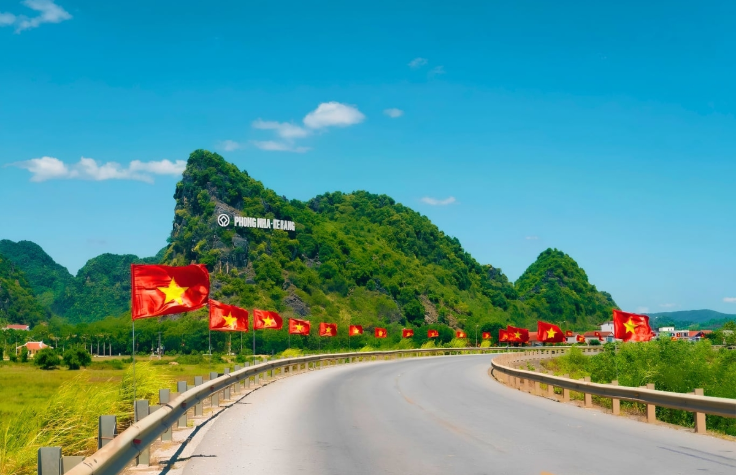 Phong Nha - Ke Bang, a World Natural Heritage site with distinctive forest ecosystems and limestone landscapes. Photo: Phong Nha - Ke Bang Management Board.
More than 3,000 local residents are now involved in tourism and related services, including accommodation, food, transport, guiding and visitor assistance. Tourism-based livelihoods provide additional income while giving communities an incentive to help preserve the landscape and natural resources.
The management board also plans to control waste, protect water sources, landscapes and cave systems, and assess the carrying capacity of routes and attractions so tourism can be managed appropriately. According to Pham Hong Thai, promoting and making use of the heritage site’s values must go hand in hand with conservation, ensuring that development does not undermine Phong Nha–Ke Bang’s outstanding universal value.
From cooperation with international research organisations to joint management of a transboundary heritage site with Laos, Phong Nha - Ke Bang is broadening its conservation partnerships and efforts to promote its natural values. In doing so, the site helps showcase Vietnam to the world while demonstrating the country’s efforts to protect natural resources and develop tourism in harmony with conservation.
$ 1 = VND 26,020 - Source: Vietcombank.