Recently in Hanoi, the Agriculture and Environment Magazine (under the MAE) organized a seminar titled “Digital and Green Transformation: Driving business development in the new era,” attracting the participation of numerous experts, policymakers, and enterprises.
Dual transformation - an inevitable trend
Dr. Dao Xuan Hung, Editor-in-Chief of the magazine, emphasized that digital and green transformation not only help businesses improve productivity and apply science and technology, but also expand development space through e-commerce, market connectivity, and deeper integration into global value chains.
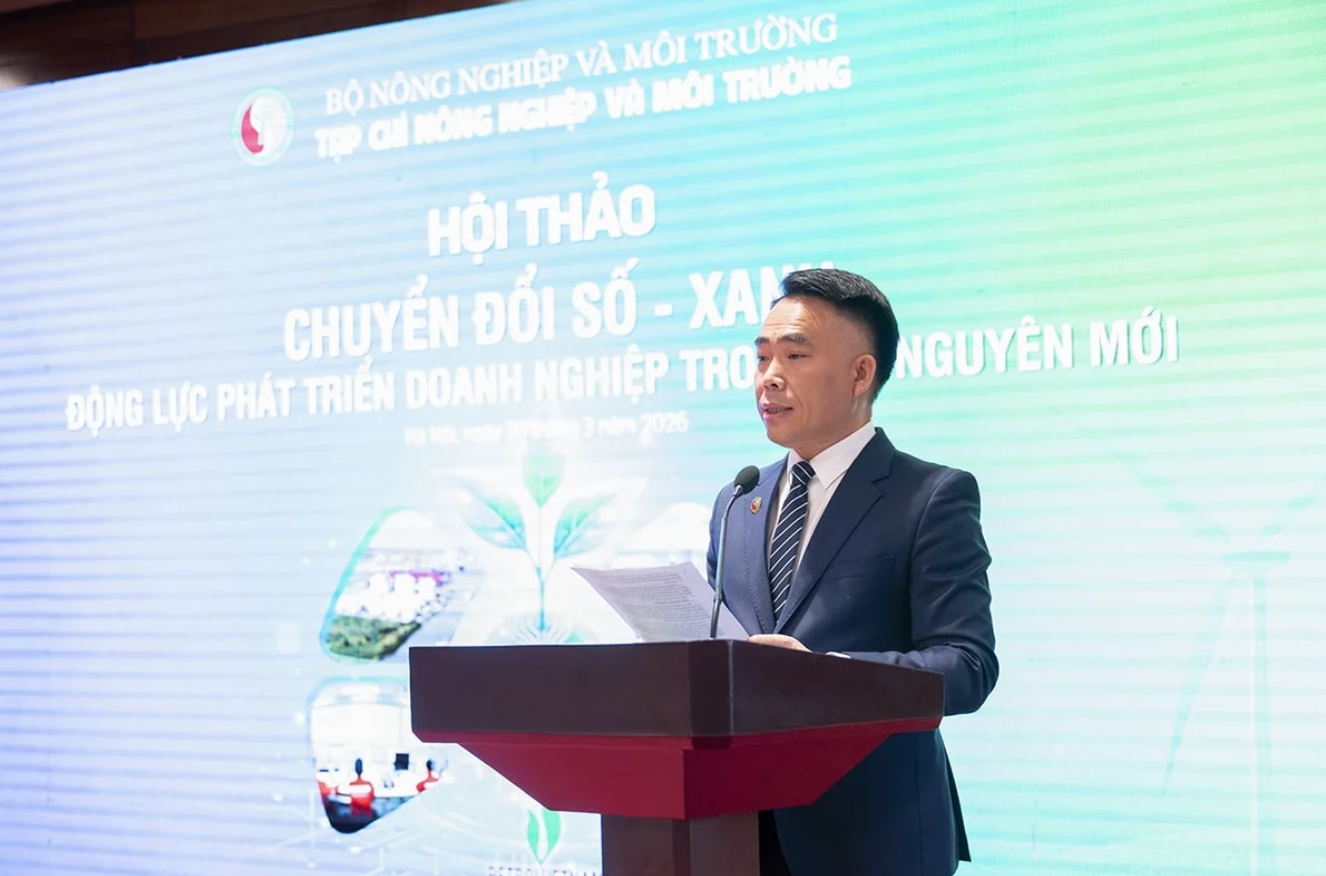 According to Dr. Dao Xuan Hung, “dual transformation” is considered the key to optimizing costs and enhancing supply chain transparency. Photo: Le Huy.
In the context of increasingly stringent international standards, especially those related to emissions and environmental protection, businesses can no longer rely on linear, resource-intensive growth models. Instead, transitioning toward an ecological and circular agricultural economy has become imperative.
According to Dr. Dao Xuan Hung, a key emerging trend is “dual transformation,” which combines digital and green transitions. In this process, digital technologies and national data are no longer just supporting tools but have become strategic resources for creating sustainable green value.
For businesses, particularly those within agricultural value chains, mastering digital infrastructure and effectively leveraging data are seen as critical to optimizing costs, ensuring supply chain transparency, meeting international standards, and accessing green finance.
Removing barriers, advancing sustainable development
At the seminar, Associate Professor Dr. Pham Anh Tuan, Director of the Viet Nam Institute of Agricultural Engineering and Post Harvest Technology, noted that Vietnam’s agricultural sector is facing increasing environmental pressures and rising market demands, requiring a more systemic approach.
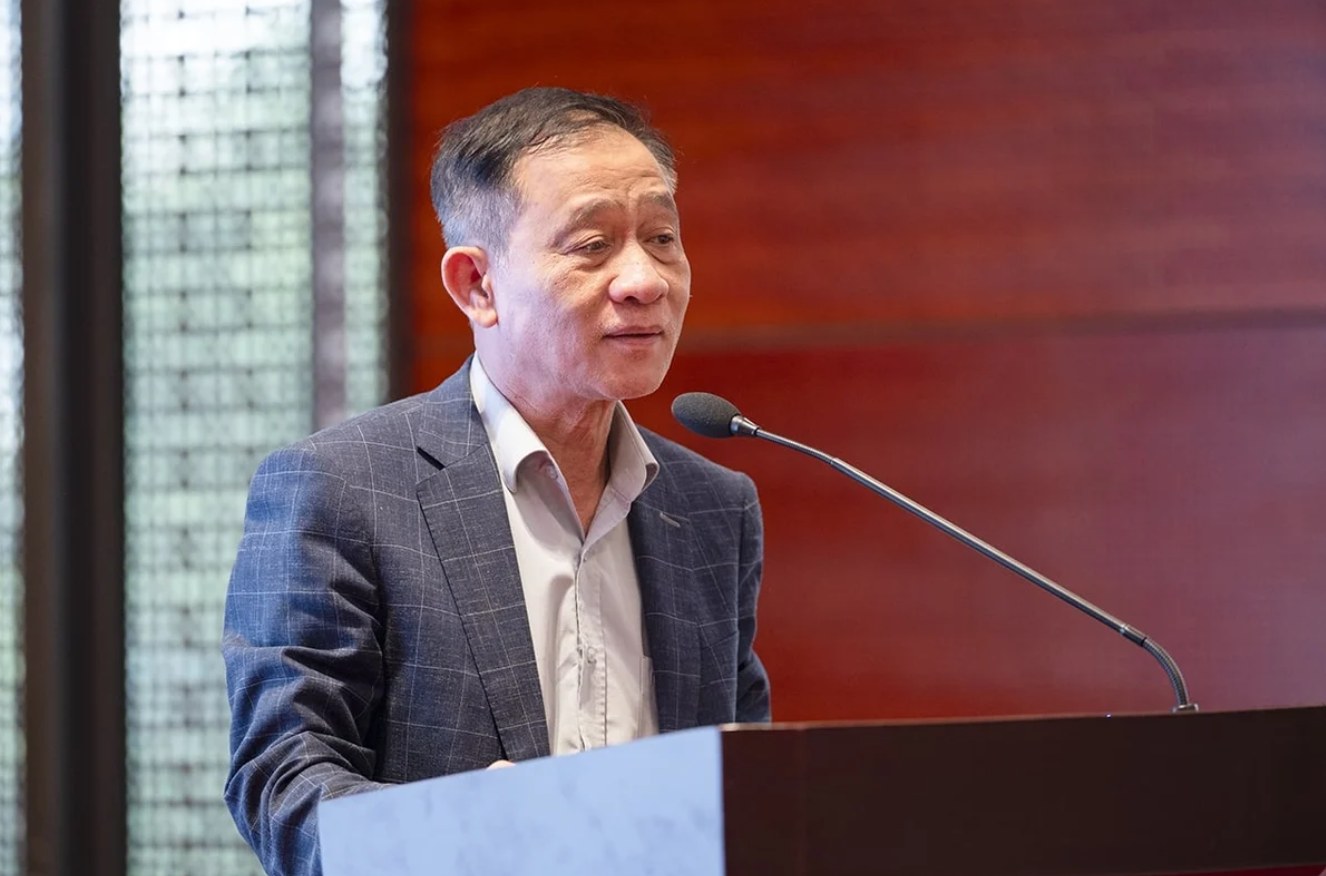 According to Associate Professor Dr. Pham Anh Tuan, digital technology not only improves productivity but also serves as a key tool for monitoring and controlling the entire production process. Photo: Viet Anh.
The sector still faces inherent limitations such as fragmented production, high post-harvest losses, and low value addition. Meanwhile, emerging requirements demand traceability, information transparency, emission reduction, and enhanced product value. The dual pressure from climate change and market competition is forcing the agriculture and environment sector to undergo significant transformation.
In this context, digital technology not only improves productivity but also serves as a critical tool for managing the entire production, storage, and processing chain, helping reduce emissions and improve efficiency. In practice, the adoption of digital technologies has delivered positive results.
In 2025, agricultural, forestry, and fishery exports reached nearly USD 70 billion, while sectoral GDP growth was estimated at around 3.7-3.92%. Technologies such as the Internet of Things (IoT), artificial intelligence (AI), drones, and blockchain have helped reduce production costs by 15-25% and increase productivity by 10-15%.
In Vietnam, under Decision No. 749/QĐ-TTg, agriculture is identified as one of eight priority sectors for digital transformation. This process is gradually shifting from “experience-based production” to “precision management.”
Various technologies have been applied, including IoT for environmental monitoring, drones for spraying, AI for disease forecasting, as well as traceability platforms and agricultural e-commerce. These innovations not only help meet stringent international standards but also enhance product value.
In addition, in low-emission agricultural programs, the digitalization of measurement, reporting, and verification (MRV) processes has created transparent data systems that support carbon credit issuance. This is seen as a new direction, opening up promising green finance opportunities for businesses.
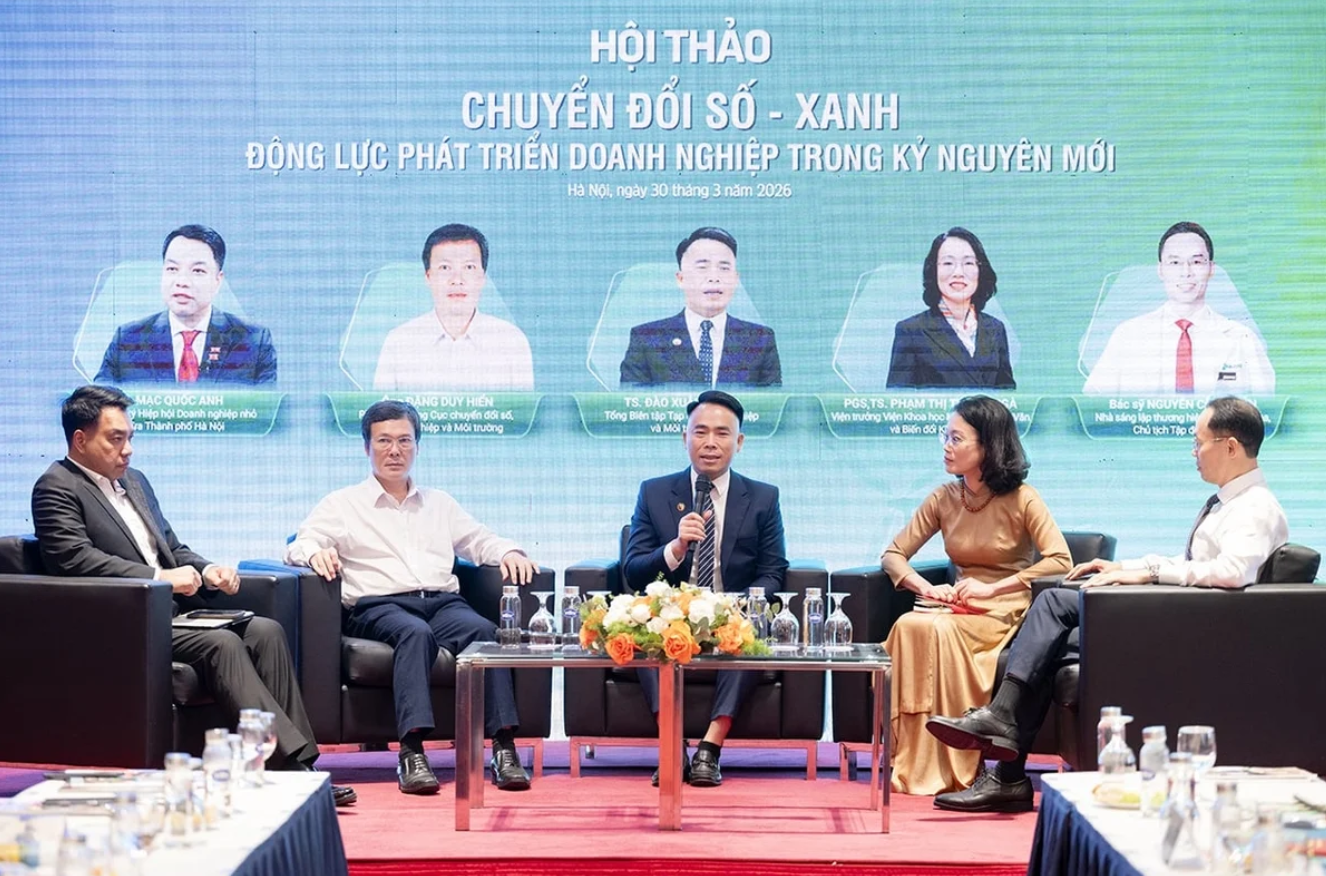 The seminar attracted the participation of numerous experts, policymakers, and businesses. Photo: Viet Anh.
In addition to the achievements, participants at the seminar also candidly pointed out several challenges. Currently, only about 30% of agricultural enterprises have adopted digital technologies, mostly at basic stages, while advanced technologies remain concentrated among a limited number of large companies.
To accelerate the transition, experts recommended completing an integrated policy framework linking digital and green transformation; developing preferential green credit mechanisms; promoting a carbon market in agriculture; and standardizing systems for traceability and emissions assessment.
At the same time, it is necessary to invest in digital infrastructure, expand broadband internet to production areas, and develop sensor systems and digital platforms for management, traceability, and agricultural trade. Human resource development, particularly training in digital skills and raising awareness of sustainable production, was also identified as a key factor.
Bridging the gap between “green claims” and “green action”
According to Ms. Ha Phan Kim Nguyet, CEO of UPGREEN Vietnam, although more than 76% of Vietnamese enterprises have integrated environmental factors, a significant gap remains between commitments and implementation, with risks of “greenwashing” due to a lack of data and measurement systems.
To address this, she proposed focusing on two pillars: circular design to restructure product life cycles, and digital traceability to enhance transparency of environmental data. This combination enables businesses to move from “sustainability marketing” to “proven sustainability” through measurable indicators.
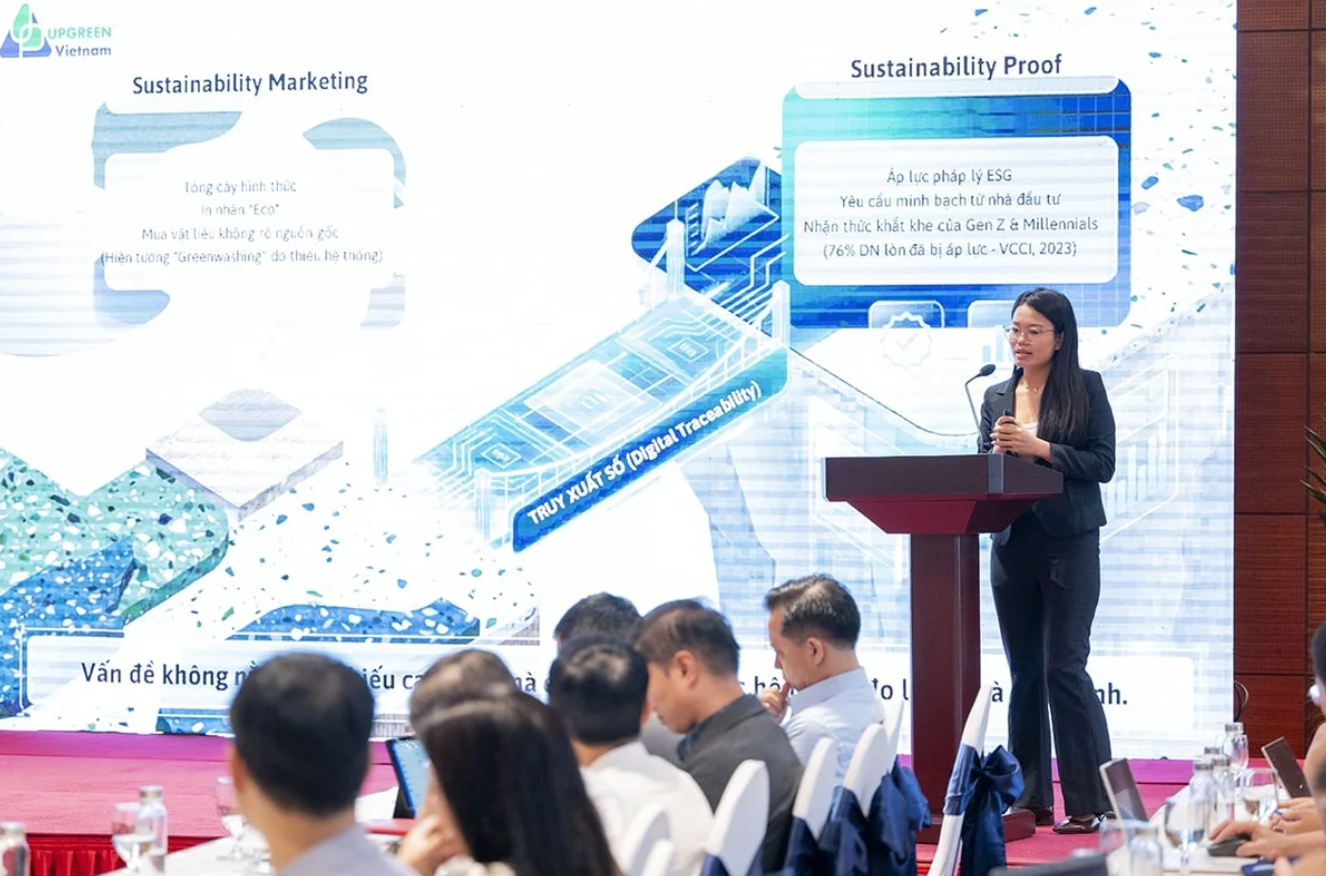 According to Ms. Ha Phan Kim Nguyet, applying recycled materials in combination with digital technologies not only reduces environmental impact but also enhances competitiveness. Photo: Viet Anh.
In practice, the application of recycled materials combined with digital technologies not only reduces environmental impacts but also enhances competitiveness. Businesses are encouraged to start on a small scale, while continuing to improve standards, training, and supportive ecosystems.
Green transformation, therefore, is not merely about technological innovation but also about a shift in mindset, from linear to circular models, and from commitments to data-driven verification.
Despite existing barriers related to resources, technology, and governance capacity, with the support of the government, research institutions, businesses, and communities, the dual digital–green transformation is expected to accelerate in the coming period. This is not only a solution for environmental protection and emission reduction, but also a pathway to increase agricultural value, strengthen competitiveness, and move toward a modern, efficient, and sustainable agricultural sector.