Viet Nam is ready to share practical agricultural experiences in agricultural extension, production organization, and mechanization, tailored to Angola.
On June 22, the South - South Cooperation Working Group (Ministry of Agriculture and Environment) held a wrap-up meeting with Minister of Agriculture and Forestry of Angola Isaac Francisco Maria dos Anjos following his working visit to Viet Nam and discussed future cooperation activities.
Over the past week, the Angolan delegation worked with the Minister of Agriculture and Environment, as well as several agencies, including the National Agricultural Extension Center, the Viet Nam Academy of Forest Sciences, and the Northern Mountainous Agriculture and Forestry Science Institute. The delegation also conducted field visits to Ninh Binh Province and Can Tho City.
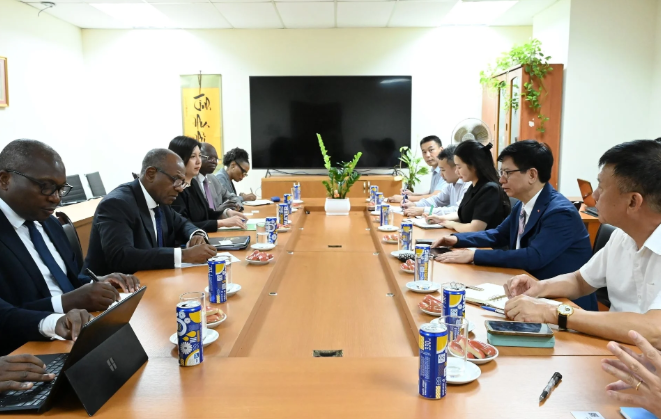 Meeting between the Minister of Agriculture and Forestry and the South - South Cooperation Working Group. Photo: Kieu Chi.
Enhancing capacity through research institutes
Assessing the visit, the Minister of Agriculture and Forestry of Angola, Isaac Francisco Maria dos Anjos, said that the Angolan Ministry of Agriculture and Forestry had gained a wide range of practical and useful information to promote more effective agricultural cooperation between the two countries.
According to the Minister, Angola is facing a very high demand for food and for the development of high-productivity agriculture. The country currently has about 35 million hectares of potential arable land, but only around 6 million hectares are being utilized, of which 2 million hectares are equipped with irrigation systems.
"We have land potential, but we still lack technology, fertilizers, infrastructure, and especially irrigation systems. Even during the rainy season, many areas still face drought, which directly affects crop productivity," he said.
Angola prioritizes large-scale development of key staple crops such as rice, cassava, maize, sweet potatoes, as well as coffee, soybeans, and fruit trees. In addition to ensuring food security, Angola also aims to develop its bioenergy sector based on biomass resources.
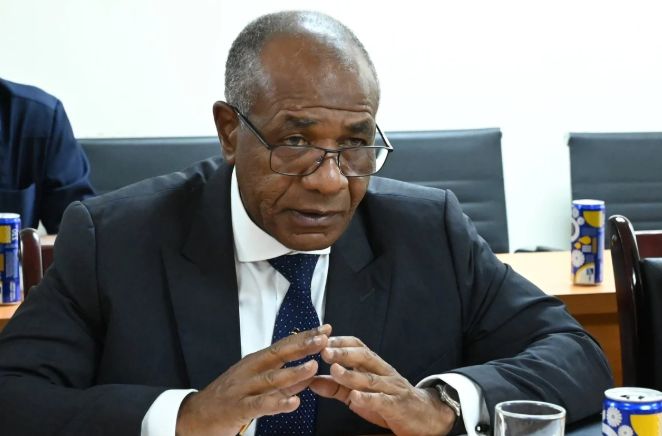 Angolan Minister: “Viet Nam’s experience in production organization, agricultural extension, and training and research is a valuable lesson for Angola.” Photo: Kieu Chi.
The Minister particularly emphasized the role of science and technology, gender issues, and the participation of young people in agriculture. He noted that Angola’s agricultural research institutes need to be strengthened in terms of research capacity, testing, and technology transfer.
Pham Ngoc Mau, Deputy Director General of the International Cooperation Department (Head of the SSC Working Group), said that the Minister’s remarks clearly outlined Angola’s current situation as well as its agricultural development goals. According to him, Angola’s land and water resources have strong potential to support the implementation of agricultural projects.
Proposing future activities, he recommended that priority should be given to connecting the agricultural research systems of the two countries, from research institutes and scientific centers to training institutions. This cooperation could then be expanded to include the business community to mobilize investment for production.
Regarding the project (Canzar, Lunda Norte Province), which is currently of interest to both sides, Deputy Director General Pham Ngoc Mau proposed jointly seeking financial resources to implement it at the earliest opportunity. He also noted that Viet Nam could provide experts, management personnel, and farmers, as well as offer hands-on, on-the-job training for Angolan farmers.
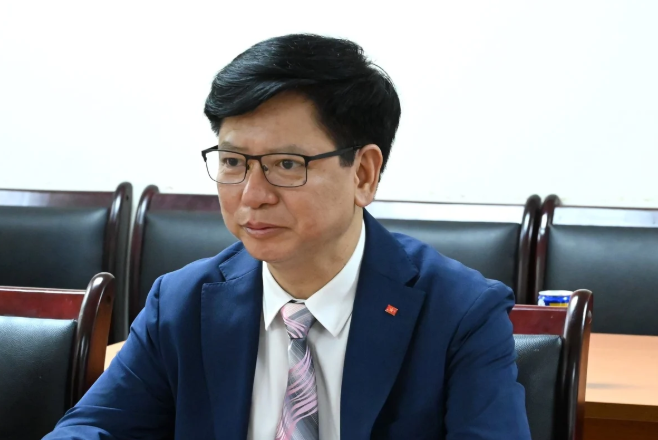 According to the Head of the Working Group, Viet Nam is ready to share practical lessons that are suitable to Angola’s conditions. Photo: Kieu Chi.
SSC working group to work in Angola
The Head of the Working Group has also proposed developing a Viet Nam - Angola agricultural cooperation action plan to concretize the provisions of previously signed agreements. The plan will clearly define specific activities, responsible agencies, implementation resources, and completion timelines.
Alternatively, a consultative group may be established to work with the Angolan Ministry of Agriculture and Forestry on areas such as mechanization and the development of appropriate agricultural tools suited to smallholder farming conditions.
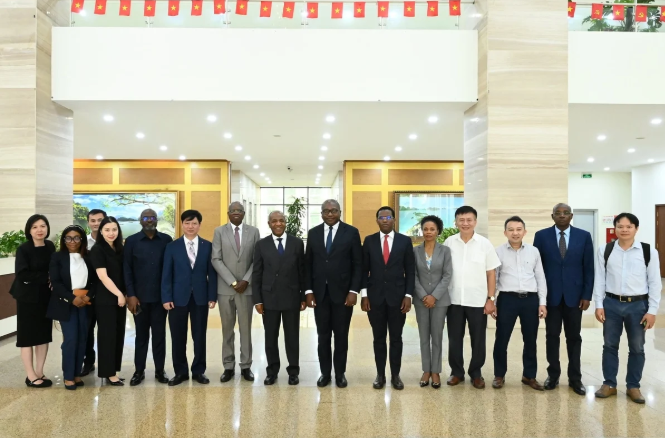 Angolan Minister Isaac Francisco Maria dos Anjos, Angolan Ambassador to Vietnam Fernando Miguel (grey suit), and Pham Ngoc Mau pose for a photo at the Ministry of Agriculture and Environment. Photo: Kieu Chi.
From the business perspective, Pham Ngoc Mau said that investment activities must follow market principles and comply with the legal frameworks of both Viet Nam and Angola. Therefore, the Angolan side was requested to provide support with legal procedures, land allocation, and tax policies for materials, equipment, and agricultural tools used in cooperation projects.
In addition, facilitating access for farmers and technical officers to demonstration models is also considered an important factor in scaling up effective production models.
“South - South cooperation is a form of partnership between developing countries, allowing them to share the most suitable experiences without barriers related to standards, environmental conditions, or labor requirements,” Pham Ngoc Mau affirmed.