The 'Harvesting Potential' project aims to help smallholder farmers transform their farming practices, adapt to climate change, and expand market linkages.
The "Harvesting Potential: Sustainable Agriculture Initiative" project is scheduled for implementation from October 2026 to June 2028 in Hoang Thanh and Nga Son communes, Thanh Hoa province, with total funding of over 2 billion VND. The Thanh Hoa Sub-Department of Plant Production and Protection will serve as the project owner, with direct non-refundable grant financing provided by Cooperative for Assistance and Relief Everywhere, Inc. (CARE in Viet Nam).
The total project budget in Thanh Hoa is 2.019 billion VND, fully funded by non-refundable grant aid with no counterpart funding. These grant funds are categorized as state budget revenue and will be managed, utilized, recorded, and settled by the Thanh Hoa Sub-Department of Plant Production and Protection in accordance with applicable regulations.
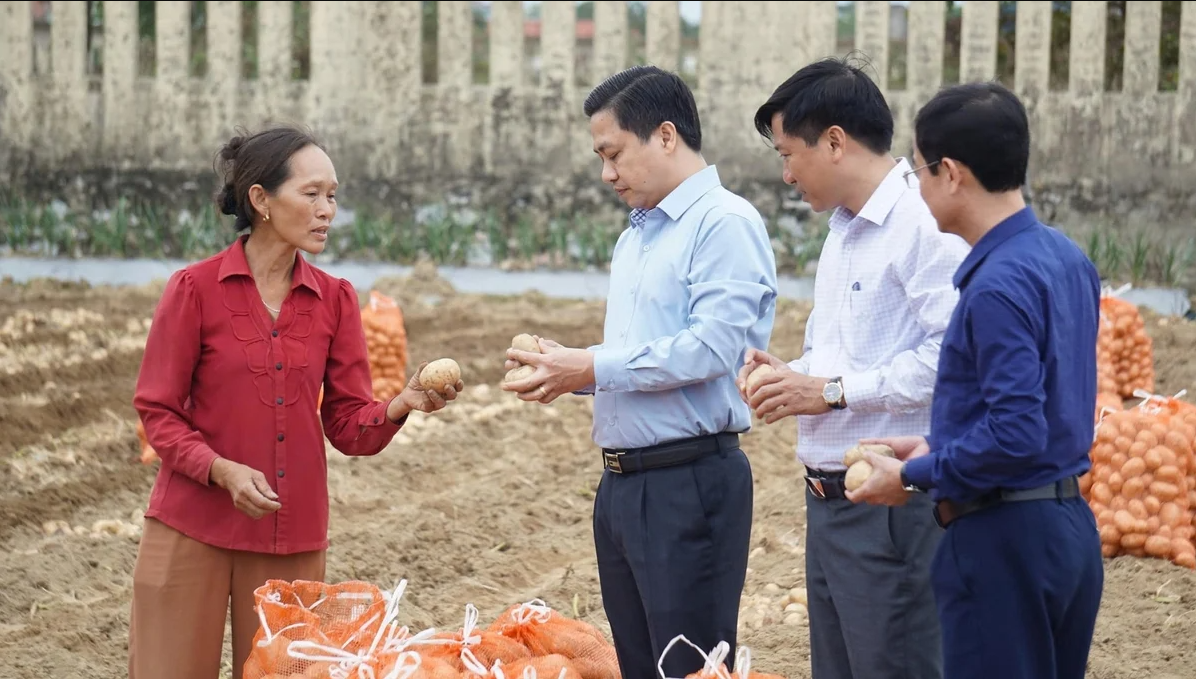 The climate-resilient potato farming model brings high economic efficiency to local farmers. Photo: Quoc Toan.
The primary goal of the project is to enhance the production capacity of smallholder farming households. The project plans to establish 15 production groups tailored to farmers' actual needs. Each group will receive direct support ranging from 15 to 25 million VND, depending on its scale and scope of activity. This support is provided as a direct grant, not a loan, and will not be recouped or converted into a credit or revolving fund.
In addition, the project plans to organize 20 training courses covering integrated soil and water management, pest management, organic composting, weed management, intercropping, and fundamental knowledge of sustainable farming, with a focus on potato production. The project will also set up six demonstration models showcasing sustainable agricultural practices.
The project aims to adopt regenerative farming practices combined with technological solutions to improve soil quality, protect water resources, reduce environmental impact, and enhance biodiversity.
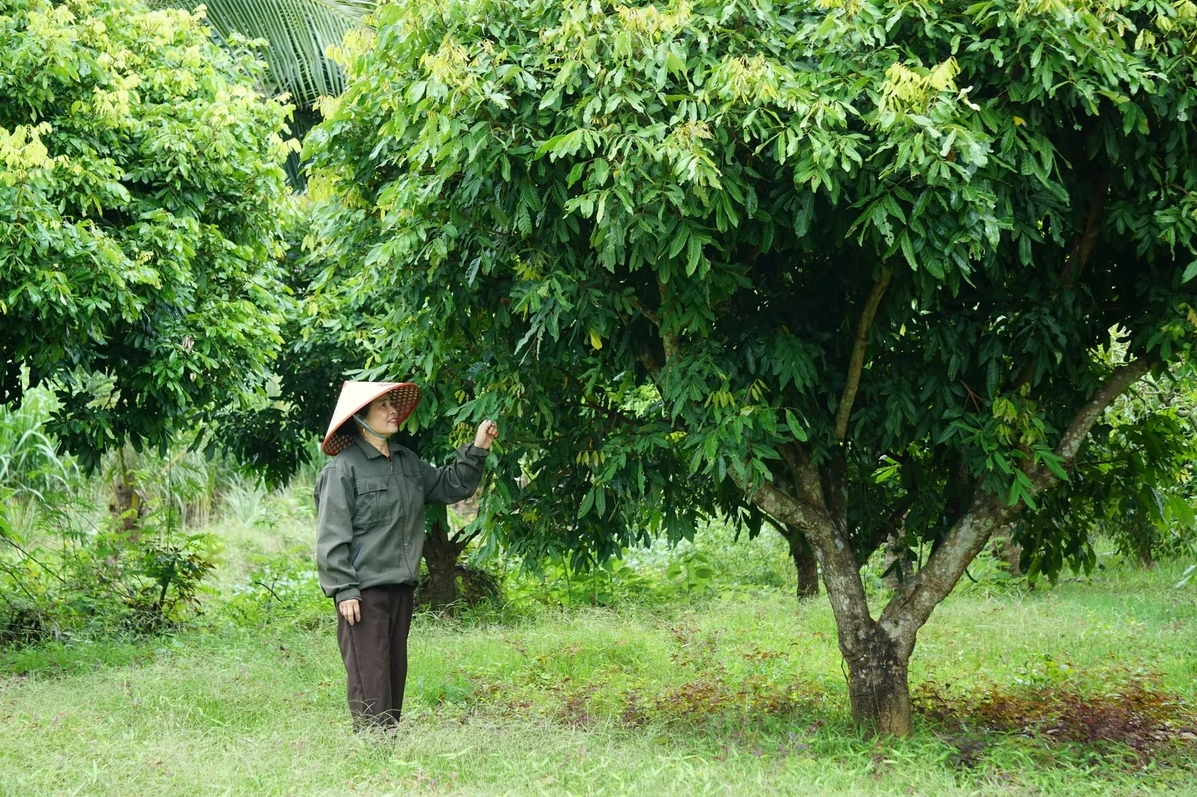 The longan farming model focuses on "soil care and tree nutrition" toward sustainable production. Photo: Quoc Toan.
Planned activities include soil and water management, water conservation, organic composting, integrated pest management, weed control, intercropping, and agricultural byproduct recycling. The project also aims to monitor environmental impacts while ensuring traceability and transparency in production.
Notably, the project plans to pilot 1-3 climate-smart digital technologies in potato production and other potential farming models. Following suitability assessments, the project will fund at least 70% of the equipment costs.
Within the potato value chain, the project aims to build an integrated partnership model involving input suppliers, off-takers, research institutes, government agencies, and financial institutions. PepsiCo Viet Nam is a key stakeholder, serving as the potato off-taker in the supply chain.
By June 2028, the project aims to establish producer groups, implement sustainable farming models, enhance management skills, and expand market linkages. The project will document and share successful practices through specialized agencies, local authorities, and climate adaptation knowledge-exchange platforms, laying the groundwork for scaling up.
The project targets 600 households and approximately 3,000 direct beneficiaries, including smallholder farmers, micro and small enterprises, and startup initiatives supporting women and youth in agriculture.
$ 1 = VND 26,170 - Source: Vietcombank.