From the classroom to every meal, the youth are encouraged to find ways to reduce food waste and turn their ideas into concrete action.
Before becoming waste, food has gone through a process of cultivation, production and transportation, using land, water, energy and the efforts of many people. This was how Mr. Nguyen Tuan Khoi, Chairman of Food Bank Vietnam, opened the discussion at the Dialogue on “Policy Impacts and Solutions to Reduce Food Loss and Waste” on the morning of September 25.
The event was jointly organized by the Youth Union of the Ministry of Agriculture and Environment, Food Bank Vietnam and the Embassy of Denmark in Vietnam to mark the International Day of Awareness of Food Loss and Waste (September 29).
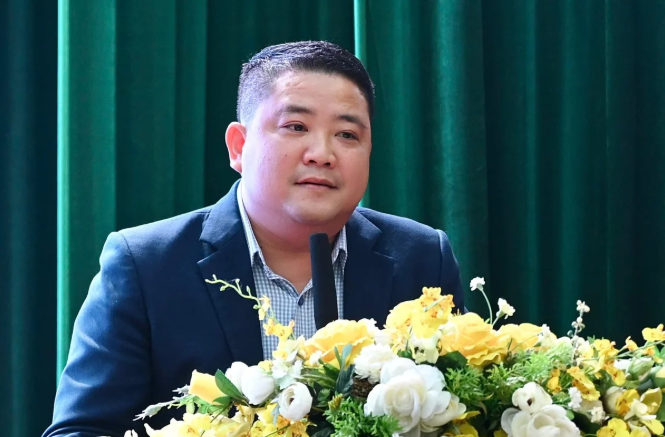 Mr. Nguyen Tuan Khoi, Chairman of Food Bank Vietnam. Photo: Kieu Chi.
According to Mr. Khoi, the issue is not simply how to deal with surplus food, but also how people perceive and use food before it becomes waste. He cited an estimate that around one-third of all food produced is wasted, while many people still do not have adequate access to food. This contrast shows that efforts to reduce food loss need to begin much earlier, rather than waiting until surplus food has accumulated before trying to “rescue” it.
Mr. Khoi said Vietnam has moved beyond the stage of simply ensuring enough food and is now striving for better-quality diets. The question now is how to use food efficiently throughout the entire value chain while promoting a circular economy. This requires identifying potential points of food loss at every stage, while also changing individual consumption habits.
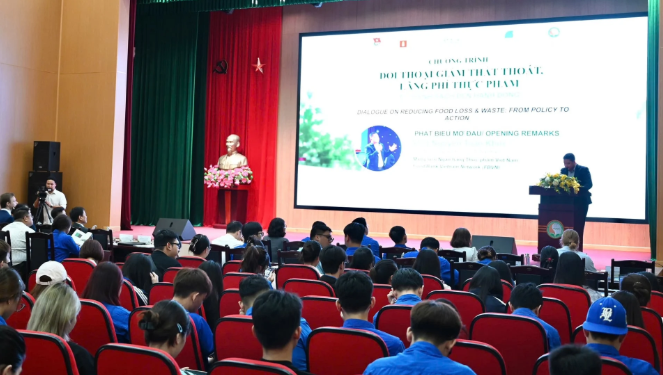 The program is expected to serve as a multi-stakeholder bridge connecting government agencies, businesses, research and educational institutions, farmers, technology providers and young people. Photo: Kieu Chi.
Food Bank Vietnam has implemented initiatives to prevent food loss and waste while connecting surplus food with communities in need. Mr. Khoi also highlighted projects aimed at young people, initiatives that turn by-products into fertilizer, and a guide promoting a greener lifestyle. He expressed his hope that students would not only receive these messages but also become advocates for more responsible food consumption.
From an educational perspective, Assoc. Prof. Dr. Le Thi Trinh, Vice Rector of Hanoi University of Natural Resources and Environment, said that more than one billion tonnes of food are wasted worldwide each year, while hundreds of millions of people still face food insecurity. Discarded food also adds to the volume of waste, placing further pressure on the environment.
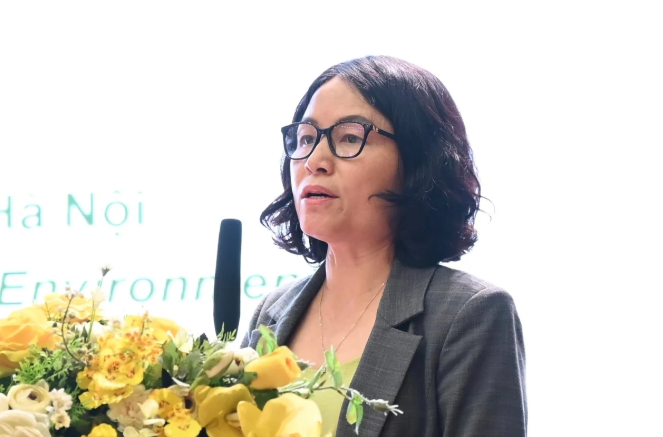 Assoc. Prof. Dr. Le Thi Trinh, Vice Rector of Hanoi University of Natural Resources and Environment. Photo: Kieu Chi.
Assoc. Prof. Dr. Le Thi Trinh said the university has identified three main areas in which it can contribute. First, concepts related to the circular economy, efficient resource use and responsible consumption should be incorporated into education, helping students develop greener lifestyles through their everyday choices.
At the same time, the university is promoting research into waste management and the reuse of agricultural by-products, as well as applying digital technologies, data and artificial intelligence to develop solutions across the food value chain. Partnerships with businesses, local authorities and communities will give students opportunities to identify problems, test new initiatives and scale up effective models.
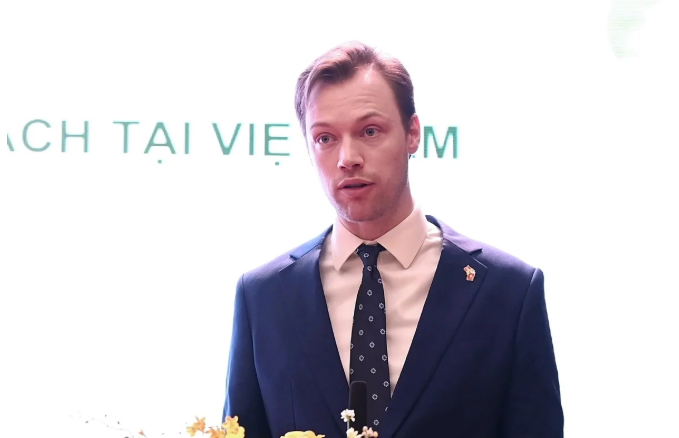 Mr. Morten Jakobsen, Trade and Investment Adviser at the Embassy of Denmark in Vietnam, shares solutions to reduce food loss and waste. Photo: Kieu Chi.
“Policies, technologies and partnership models can only create real value when they are translated into concrete actions,” Ms. Trinh emphasized. For young people, action can begin with valuing every meal, consuming responsibly and proactively proposing new ideas. She hopes students will become “Food Heroes”, turning knowledge into initiatives and initiatives into action.
From an international cooperation perspective, Mr. Morten Jakobsen, Trade and Investment Adviser at the Embassy of Denmark in Vietnam, shared solutions to reduce food loss and waste in connection with the circular economy and sustainable development.
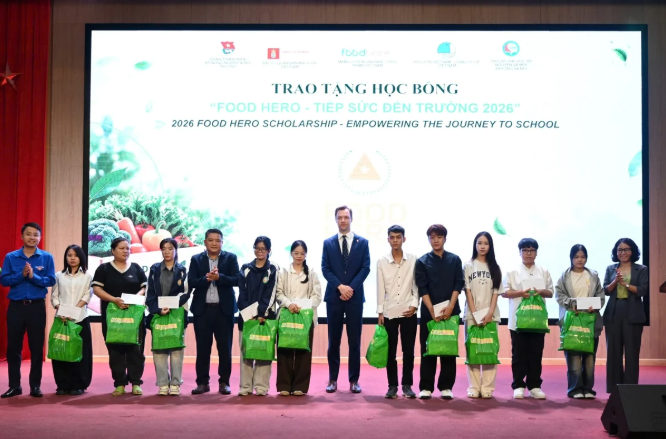
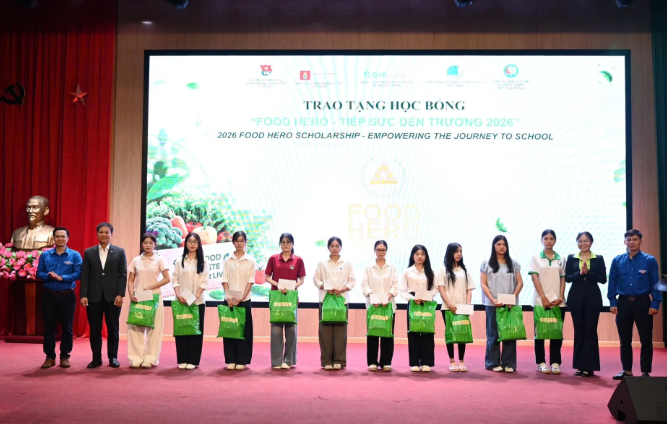 The Organizing Committee and partner organizations present 20 scholarships to hardworking students at Hanoi University of Natural Resources and Environment who have overcome difficult circumstances. Photo: Kieu Chi.
Mr. Ta Hong Son, Secretary of the Youth Union of the Ministry of Agriculture and Environment, delivered remarks and read a letter from the representative of the Food and Agriculture Organization of the United Nations (FAO) in Vietnam to young people working in the agriculture and environment sector and to students. The letter expressed the hope that young people would join the green transition and become drivers of action to reduce food waste.
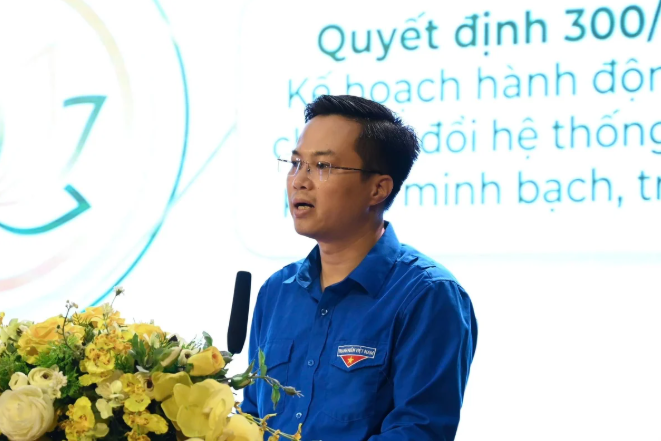 Mr. Ta Hong Son, Secretary of the Youth Union of the Ministry of Agriculture and Environment, said that distinguishing between food loss and food waste is essential to finding the right solutions. Photo: Kieu Chi