This is is a concrete initiative aimed at encouraging more environmentally responsible consumption habits.
In 2026, Denmark marks the 55th anniversary of the establishment of diplomatic relations with Vietnam through a series of notable activities focused on green development and cultural exchange. The “Green Booklet - A Guide to Recycling Food Waste” is a concrete initiative aimed at encouraging more environmentally responsible consumption habits.
Sharing Denmark’s experience at the dialogue on “Policy impacts and solutions to reduce food loss and waste” on September 25, Sanne Høj Andrén, Counsellor for Food and Agriculture at the Embassy of Denmark in Vietnam, said efforts to reduce food waste began with a grassroots movement.
In 2008, the “Stop Wasting Food” movement was launched, gradually attracting greater public attention and sparking broad discussion across Danish society about food loss and waste. What was once a largely overlooked issue gradually became a matter of public concern, prompting changes in consumer behavior.
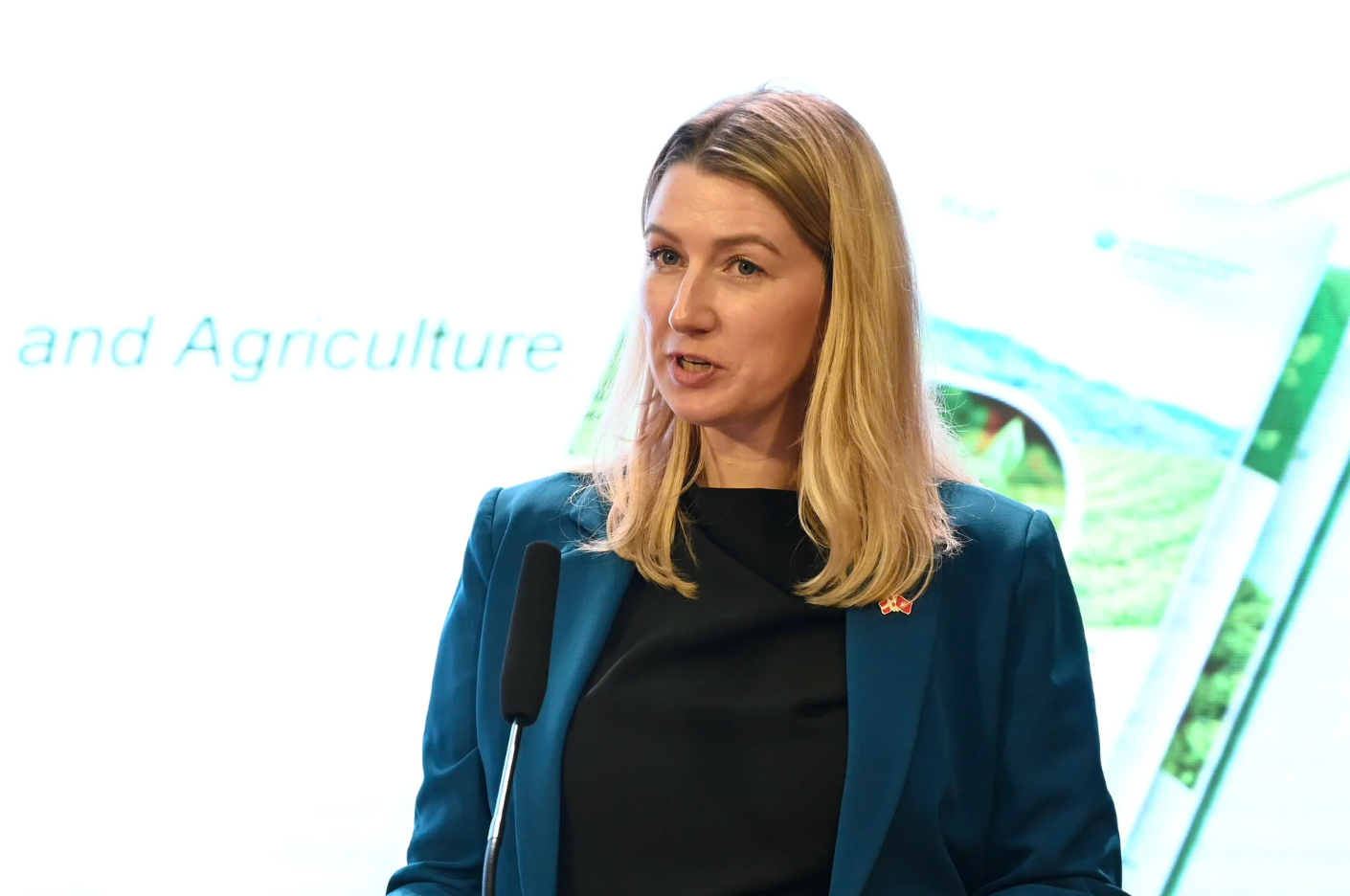 Sanne Høj Andrén, Counsellor for Food and Agriculture at the Embassy of Denmark in Vietnam. Photo: Kieu Chi.
From there, businesses began to see opportunities to get involved. A number of initiatives emerged to make use of surplus food, including platforms such as Too Good To Go, which connect food nearing its expiry date with consumers, and WeFood, a supermarket model that sells surplus food. Retailers have also begun changing the way they operate. Some supermarkets have reduced promotions such as “buy one, get one free”, which can encourage consumers to purchase more than they actually need.
Driven by social pressure and greater business involvement, the issue was subsequently brought to the policy level. According to the Danish representative, this process demonstrates that policy plays an important role, but cannot be separated from changes in society and the market.
The ONE/THIRD model, based on public-private cooperation, has also provided a platform for businesses to discuss food waste reduction initiatives with the Government and relevant ministries and agencies. Many businesses have joined voluntary agreements and begun measuring food waste along the value chain. Food labelling has also received greater attention, particularly the distinction between “use before” and “best before”, giving consumers more information when deciding whether to use a product.
In Vietnam, Nguyen Tuan Khoi, Chairman of the Vietnam Foodbank Network, emphasized that food banks should be developed as a decentralized, widely connected network rather than concentrating all surplus food in a single warehouse. This means surplus food can be donated directly where it arises, from businesses and production facilities to households.
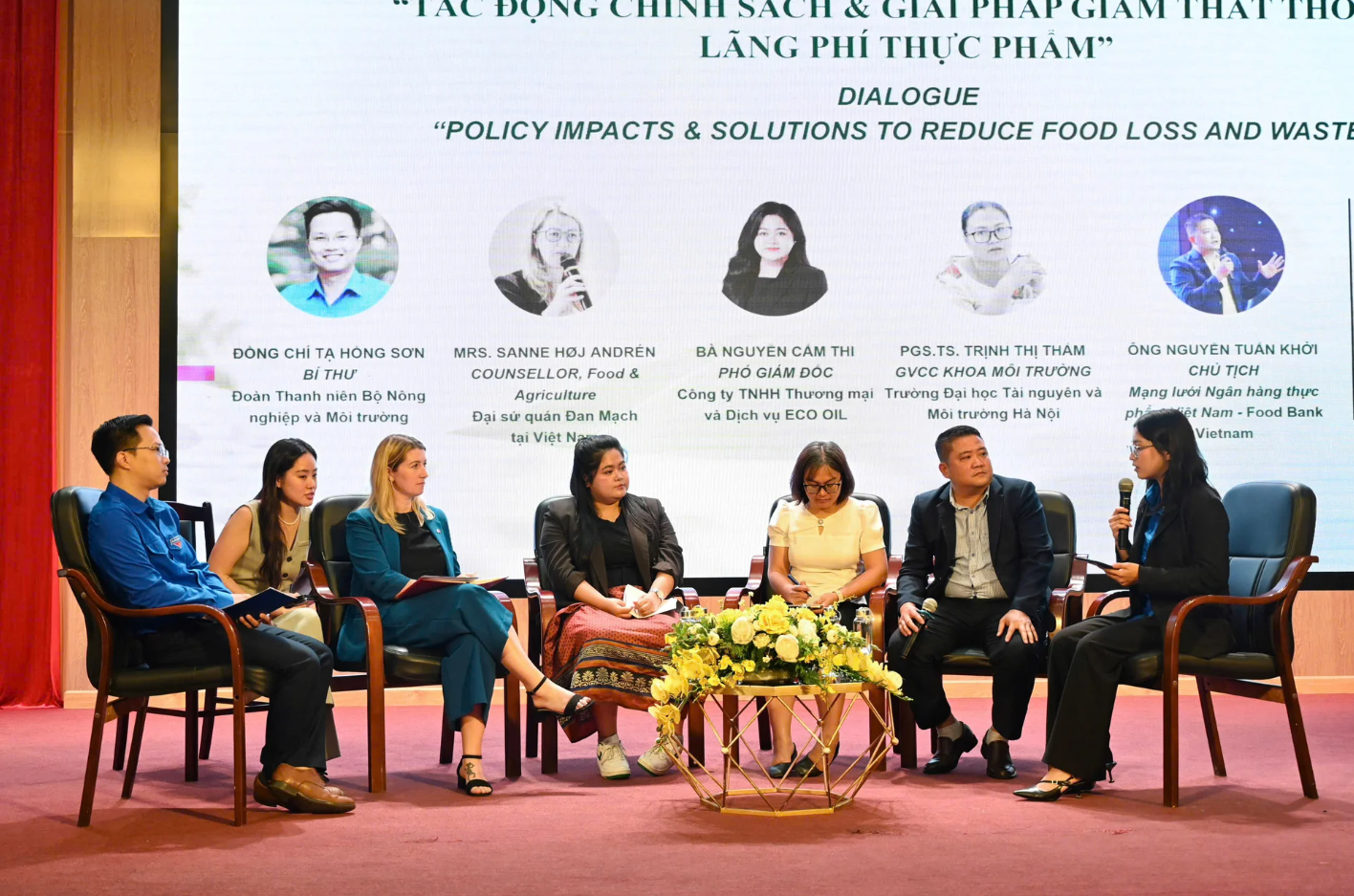 The discussion session on “Policy impacts and solutions to reduce food loss and waste” was held on September 25. Photo: Kieu Chi.
For example, when a business has surplus food that needs to be distributed, the system can connect it with farms, shelters, care homes, nursing homes or other groups in need. Similarly, when a retailer has food that is approaching its use-by date but remains safe for consumption, a connecting platform can help channel the food to appropriate recipients.
This approach also creates opportunities for young people to get involved. They do not necessarily have to start with large-scale models. Students or community groups can build small networks to share surplus food, connect people in need and reduce the amount of food that is thrown away.
As part of the event, the organizers launched the “Green Booklet - A Guide to Recycling Food Waste”, jointly developed by the Vietnam Foodbank Network, the Danish Veterinary and Food Administration (DVFA), and the Embassy of Denmark in Vietnam. The guide aims to provide practical, clear and flexible guidance on how to sort and recycle surplus food safely and effectively.
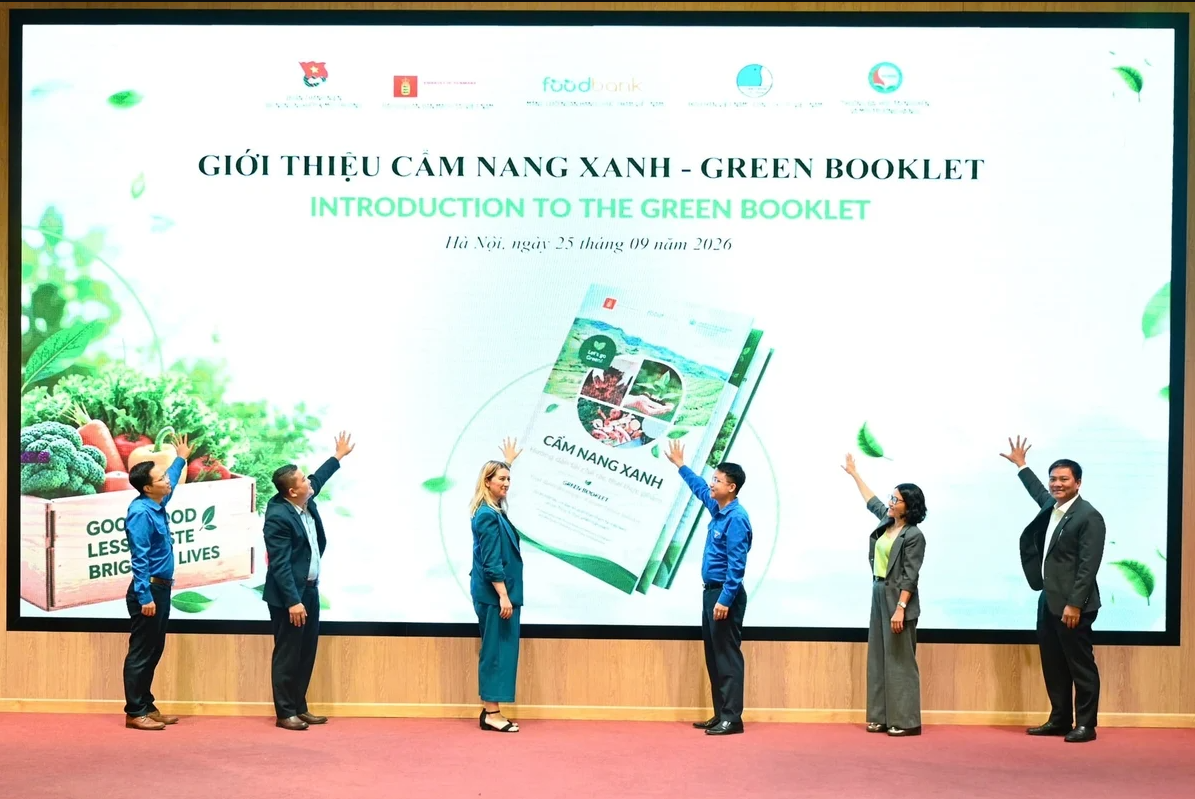 Launch ceremony of the “Green Guide – A Guide to Recycling Food Waste”. Photo: Kieu Chi.
By providing practical knowledge and visual guidance, individuals, households, schools and businesses can implement effective processes for sorting and managing food waste. Together, these efforts can be scaled up, marking an important step towards achieving sustainable development goals in Vietnam.