The conference focuses on solutions to ensure food security, improve nutrition, and strengthen resource connections across the food supply chain.
On October 10 in Ho Chi Minh City, Food Bank Viet Nam held the 2026 Sustainable Food Systems Development Conference, focusing on solutions to ensure food security, reduce food loss and waste, and strengthen coordination among supply-chain stakeholders.
Speaking at the conference, Nguyen Tuan Khoi, founding chairman of Food Bank Viet Nam, said that developing sustainable food systems requires close links across production, distribution, consumption and resource management. Reducing food loss and waste not only uses resources more efficiently but also helps support disadvantaged people.
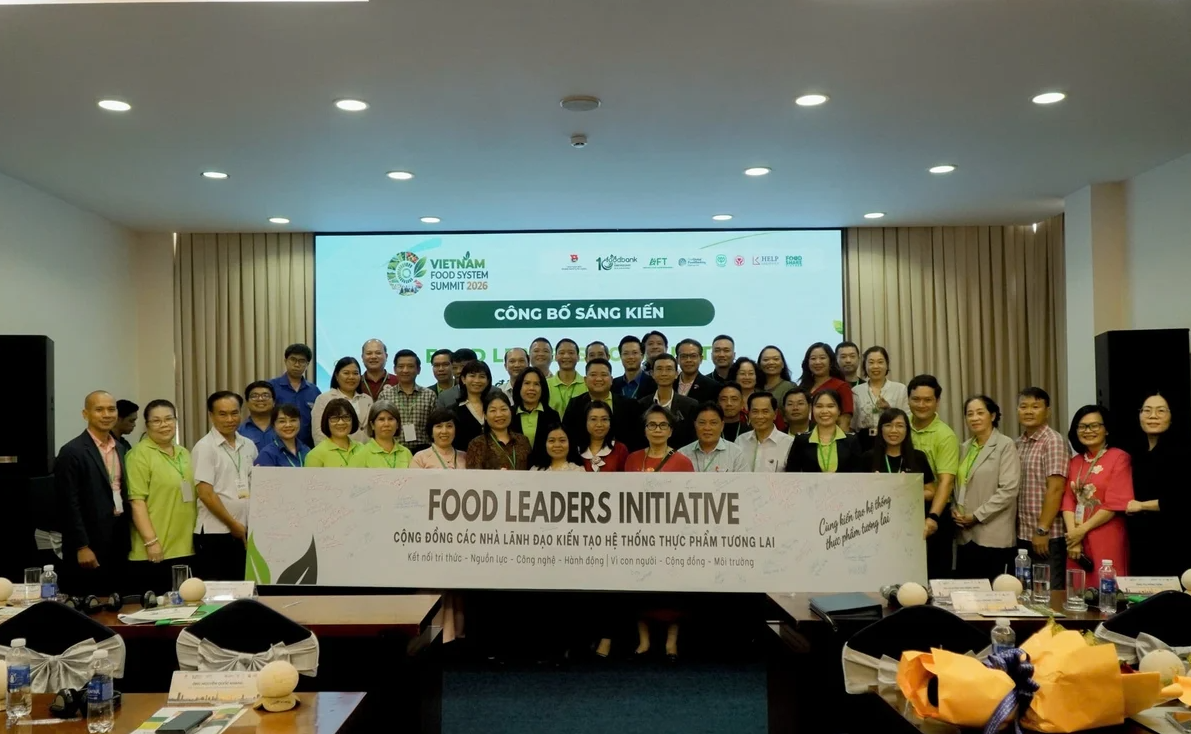 The 2026 Sustainable Food Systems Development Conference focuses on solutions to reduce food loss and waste and strengthen resource connections across the supply chain. Photo: Tran Phi.
Ta Hong Son, a member of the Party Committee Executive Committee of the Ministry of Agriculture and Environment, a member of the Ho Chi Minh Communist Youth Union Central Committee, and Secretary of the Ministry’s Youth Union, praised the significance of the conference and Food Bank Viet Nam’s contributions to mobilizing social resources, reducing food waste, and supporting vulnerable groups.
According to Son, young people should be mobilized to participate in scientific research and technological applications, promote sustainable agriculture and the circular economy, and implement solutions to reduce food loss and waste. He expressed hope that the conference would create practical cooperation opportunities and enable the younger generation to contribute to Viet Nam’s food system development in the coming years.
Speaking at the conference, Nguyen Hoang Truc Linh, CEO of Food Bank Viet Nam, said that over the past 10 years, the network had collected and distributed more than 84 million kilograms of food, provided over 25 million meals to more than 24 million people, and connected with over 862 beneficiary facilities. By 2025, the network had established 25 food banks nationwide.
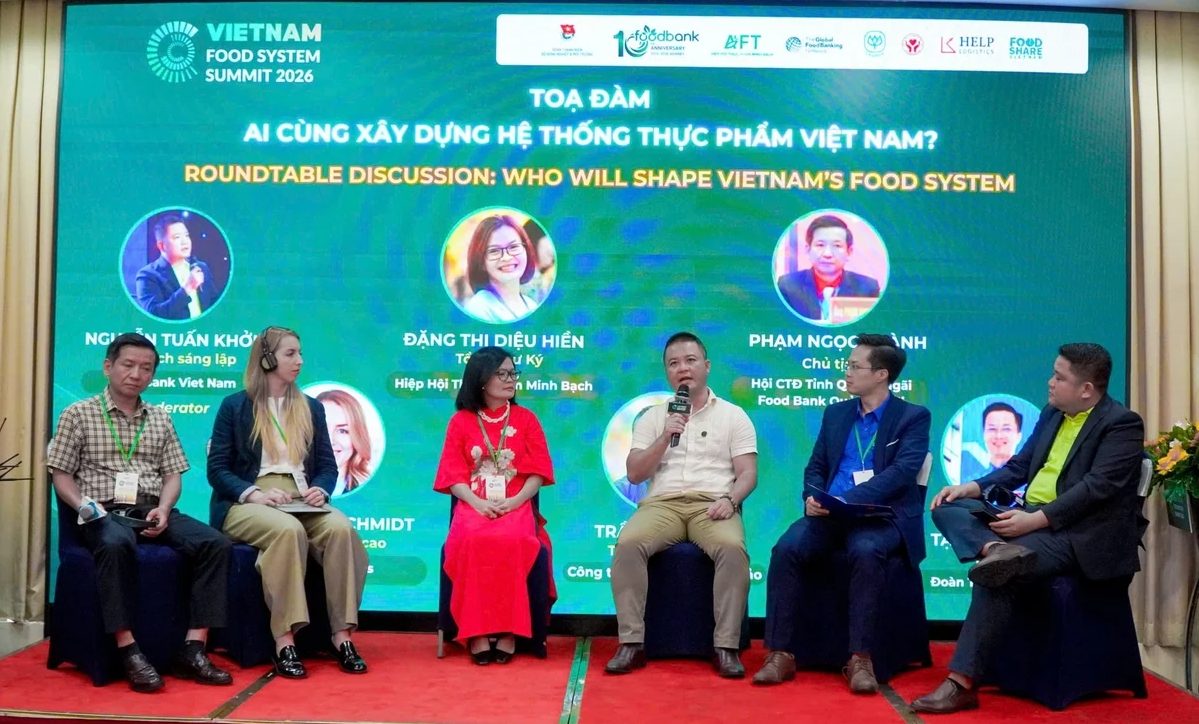 Speakers discuss solutions to reduce food loss and waste, enhance information transparency, and connect resources to promote the development of sustainable food systems in Viet Nam. Photo: Tran Phi.
In 2025 alone, Food Bank Viet Nam coordinated the transportation of more than 400 tonnes of food and essential supplies to support central localities affected by natural disasters. In the coming period, the organization plans to expand technology use, improve logistics efficiency, and strengthen cooperation in food collection and distribution.
According to Nguyen Thi Hong Minh, former Vice Minister of Fisheries and chairwoman of the Transparent Food Association, building a transparent food system requires coordination among government agencies, associations, businesses and social organizations, helping promote greater accountability in food production, trading and consumption.
Presentations and panel discussions at the conference focused on issues including logistics, school nutrition, livelihoods and the agricultural economy. As part of the event, Food Bank Viet Nam and the Transparent Food Association signed a cooperation agreement and introduced the “Food Check by Food Bank” initiative. The organizers also announced the launch of the Food Leaders Community, which aims to connect organizations, experts and businesses operating in the food sector.
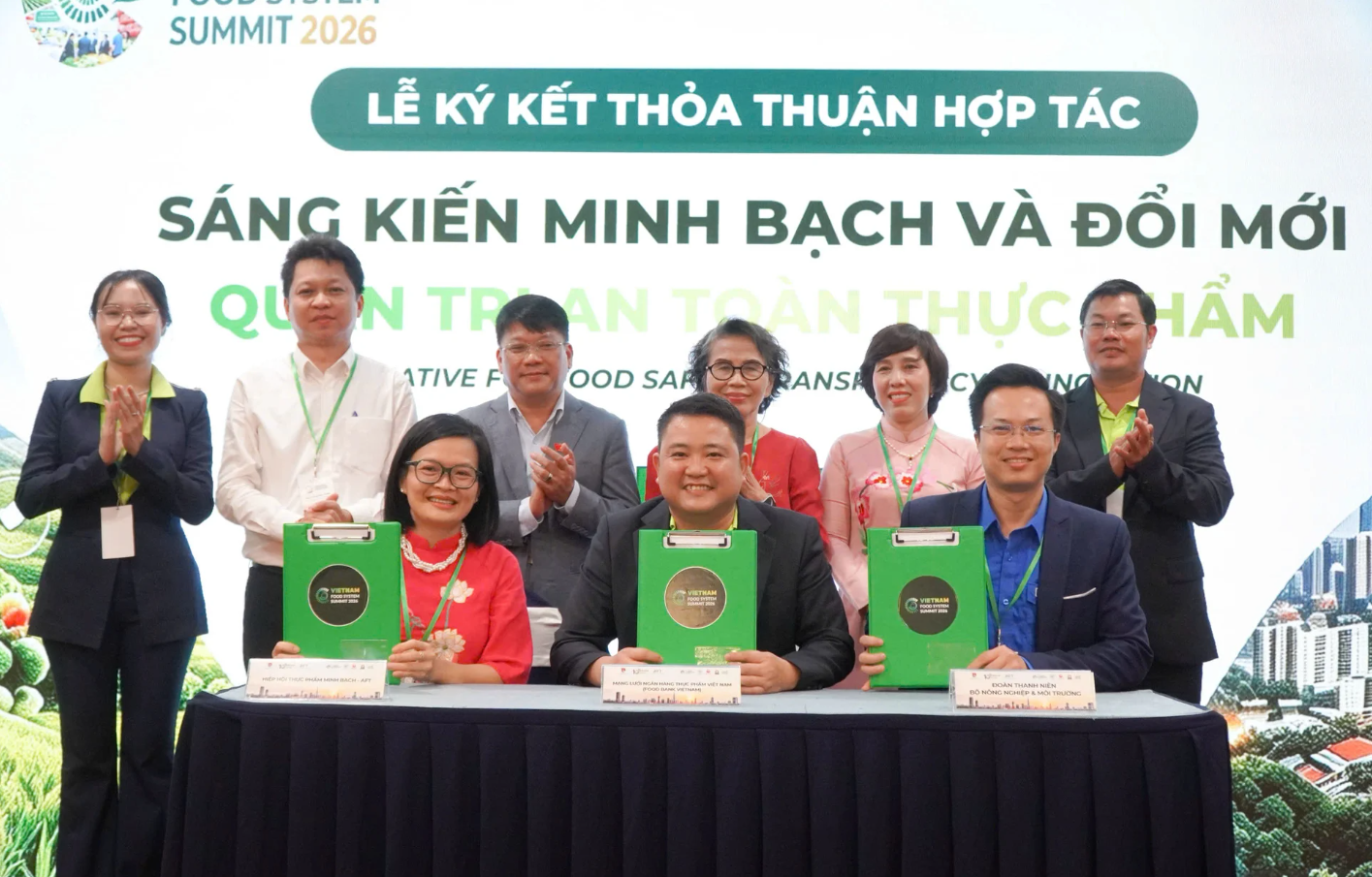 Representatives of Food Bank Viet Nam and the Transparent Food Association sign a cooperation agreement to promote information transparency and strengthen resource connections across the sustainable food supply chain. Photo: Tran Phi.
That afternoon, Food Sharing Day 2026 was held at the Ho Chi Minh City Center for Social Protection, Vocational Training and Employment, with 1,000 nutritious meals and gifts provided to disadvantaged people.
Of these, the center prepared and served 300 meals directly, while food supplies for the remaining 700 meals were distributed to social protection facilities for preparation and serving to beneficiaries. Chefs from the Ho Chi Minh City Culinary Association took part in preparing Vietnamese sizzling pancakes (bánh xèo) and mini savory pancakes (bánh khọt), and interacted with trainees at the center.