According to a study by WWF-Viet Nam, in recent years, schools across Hue City have generated approximately 7 tonnes of waste per day, equivalent to around 0.48 tonnes per day, is plastic waste. Notably, only 10.4% of the total waste generated is non-recyclable, while the remainder has the potential to be recycled, although some materials have low recycling value.
The Hue - Plastic Reduction City in Central Viet Nam Project (TVA Project) is funded by WWF-Norway through WWF-Viet Nam and implemented in coordination with the Hue City People’s Committee. From 2022 to 2026, the project has worked closely with the education sector to promote the “Plastic Reduction Schools” model across Hue City, engaging 180 schools and more than 54,000 students.
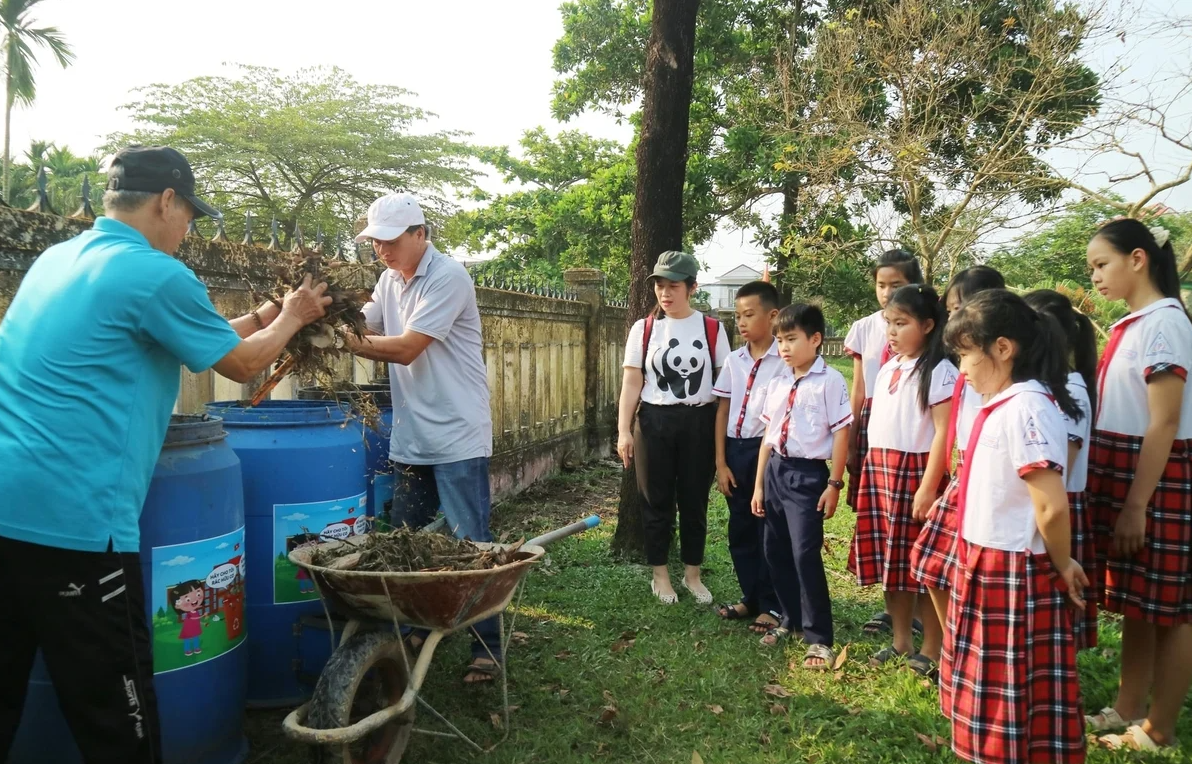 The TVA Project has worked closely with Hue City’s education sector to effectively implement the “Plastic Reduction Schools” model. Photo: Van Dinh.
The TVA Project identifies primary and lower-secondary students as priority groups for plastic reduction education, with the aim of fostering plastic reduction habits and behaviors from an early age and encouraging students to spread these practices within their families and communities.
The “Plastic Reduction Schools” model is built around three main objectives: raising students’ awareness of the impacts of plastic waste and promoting behavioral change toward refusing, reducing, reusing and recycling waste, while encouraging more sustainable lifestyles; developing students’ knowledge and soft skills in teamwork, self-directed learning, creative research and presentations related to environmental awareness; and improving solid waste management in schools, increasing recycling rates and reducing the amount of waste sent to landfills.
To date, the model has collected nearly 30 tonnes of recyclable materials, including more than 5.5 tonnes of plastic, contributing to lasting changes in awareness and behavior toward plastic waste within the education sector.
In addition, the “Plastic Reduction Schools” model has supported 117 “Green Houses” for collecting recyclable waste. Nearly 6,200 students have been introduced to the “Education for Action” approach to promoting plastic reduction, helping participating schools cut their use of single-use plastics by more than 660 kg per month. A comprehensive educational resource library has also been developed, featuring 54 sample lessons and 161 entries submitted to an e-lesson plan competition.
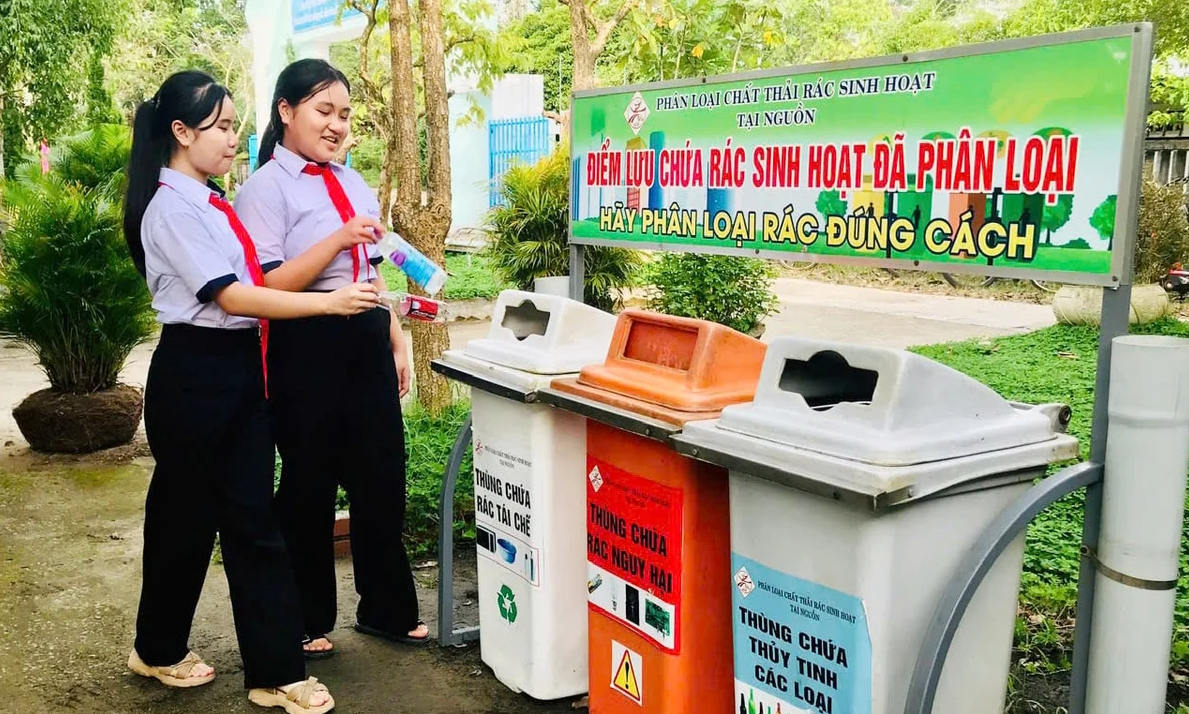 Students are becoming increasingly aware of the impacts of plastic waste. Photo: Van Dinh.
Educational activities aimed at raising awareness among students, teachers and school staff about the impacts of plastic waste have also been implemented in diverse forms under the TVA Project. These include classroom-based activities, such as integrating plastic waste-related content into lessons, as well as a range of extracurricular activities, including waste audits, waste-for-gifts exchanges, “A Day as a Waste Worker” experiences, flag-raising ceremonies, drawing activities and Green Living Days.
Hoang Thi Thuy, Principal of Nguyen Chi Dieu Lower Secondary School (Dong Da Street, Thuan Hoa Ward, Hue City), said that with support from the TVA Project, the school has implemented a number of practical initiatives, including a “Single-use Plastic-Free Day”, a “Green Corner – Waste for Gifts” programme, an “Ecological School Garden” that uses compost made from waste and fallen leaves to care for vegetable and flower gardens on the school grounds, and a “Green House” model for collecting and sorting waste at source.
“Our goal is to turn environmental protection knowledge into concrete actions among students. When students sort waste themselves, collect recyclable materials, care for the school garden or take part in waste-for-gifts activities, they gain a better understanding of the importance of reducing plastic waste. These good habits can then be maintained at school and spread to their families and communities.
“The school will continue to maintain and expand appropriate activities, integrating environmental education into school subjects and experiential activities, and gradually building a green, clean and environmentally friendly school,” Thuy said.
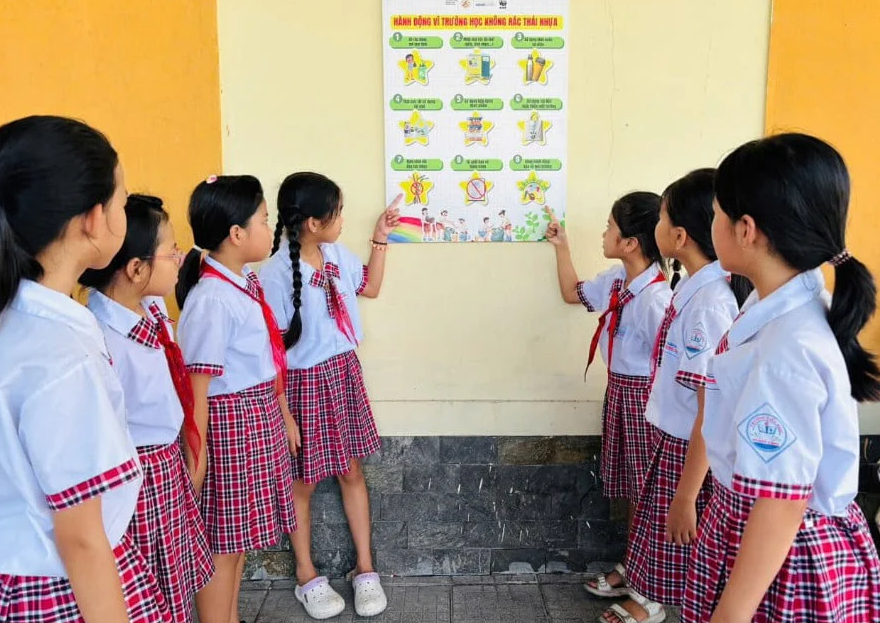 The “Plastic Reduction Schools” model is helping students develop greener lifestyles. Photo: Van Dinh.
According to Hoang Ngoc Tuong Van, TVA Project Manager, the plastic waste reduction models implemented in schools across Hue City have proven effective thanks to the attention and commitment of teachers, the creativity of students in developing and applying new approaches, and timely technical and financial support from the project.
“Every small action, from sorting waste and reducing single-use plastics to inspiring those around us, contributes to nurturing a generation of citizens who embrace greener lifestyles. We hope this model will continue to be maintained and expanded in the future, contributing to a green, clean and bright Hue free from plastic waste,” Van said.
The “Plastic Reduction Schools” model has not only spread across schools but has also helped foster greener and more responsible habits among students from an early age. Its significance lies not only in reducing waste generation and strengthening the sorting, collection and reuse of single-use plastic waste, but also in changing the attitudes and actions of students, teachers and the wider community.