At a thematic seminar under the NPAP Plastic Talk program organized by UNDP Viet Nam, Dr. Pham Van Hieu from the Institute of Meteorology, Hydrology, Environment and Marine Sciences stated that Vietnam still lacks a sufficiently dependable observational data infrastructure to assess the true scale of marine plastic pollution.
Currently, estimates regarding plastic discharges leaking into the sea display substantial variances owing to divergent statistical boundaries, computational methodologies, and modeling assumptions. The vast majority of statistics are extrapolated from terrestrial solid waste data without adequate verification through direct in-situ marine observations.
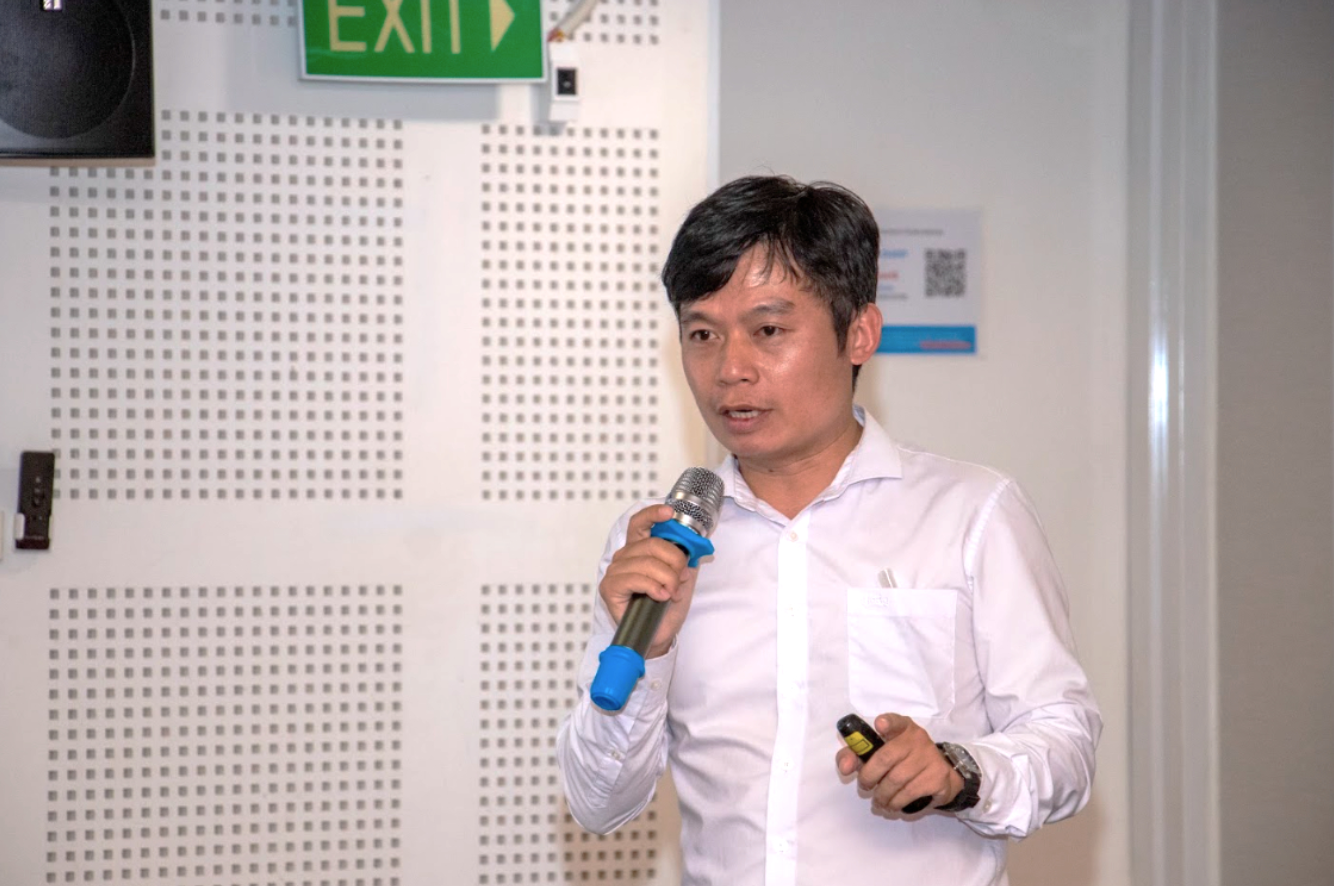 Dr. Pham Van Hieu, Institute of Meteorology, Hydrology, Environment and Marine Sciences, presents on marine plastic waste monitoring. Photo: NPAP Vietnam.
According to studies synthesized in the report, annual plastic waste leakage into the sea is estimated at approximately 0.28-0.73 million tons. Meanwhile, data on microplastics across geographic regions remains difficult to cross-compare because academic studies apply inconsistent sampling methodologies, size cut-off thresholds, and measurement units.
A survey conducted by the International Union for Conservation of Nature (IUCN) across 30 beaches and 10 Marine Protected Areas (MPAs) cataloged over 86,000 litter fragments, with plastics accounting for 92.2% by count. Abandoned, lost, or discarded fishing gear (ALDFG) and single-use plastics constituted the most prevalent categories, representing roughly 30% and 52% of plastic litter logged on surveyed beaches, respectively.
Regarding microplastics, methodological fragmentation surfaces directly across sampling and laboratory analysis. Several studies utilized plankton nets with mesh sizes spanning 25-300 micrometers (µm), with trawl durations oscillating between 2 minutes and 2 hours. Only roughly 35% of surveyed microplastic research institutions evaluated in 2022 possessed analytical instrumentation for polymer composition characterization. Consequently, observational findings between independent studies can diverge multifold, even when sampling identical geographic zones.
Per Dr. Pham Van Hieu, a draft Circular promulgating technical regulations on marine plastic waste surveys is being finalized to institute standardized protocols nationwide. Structured into 3 chapters, 21 articles, and 4 technical annexes, the draft stipulates surveying methodologies for macroplastics and microplastics across five environmental matrices: shorelines, surface water, river mouths, seafloors, and seabed sediments.
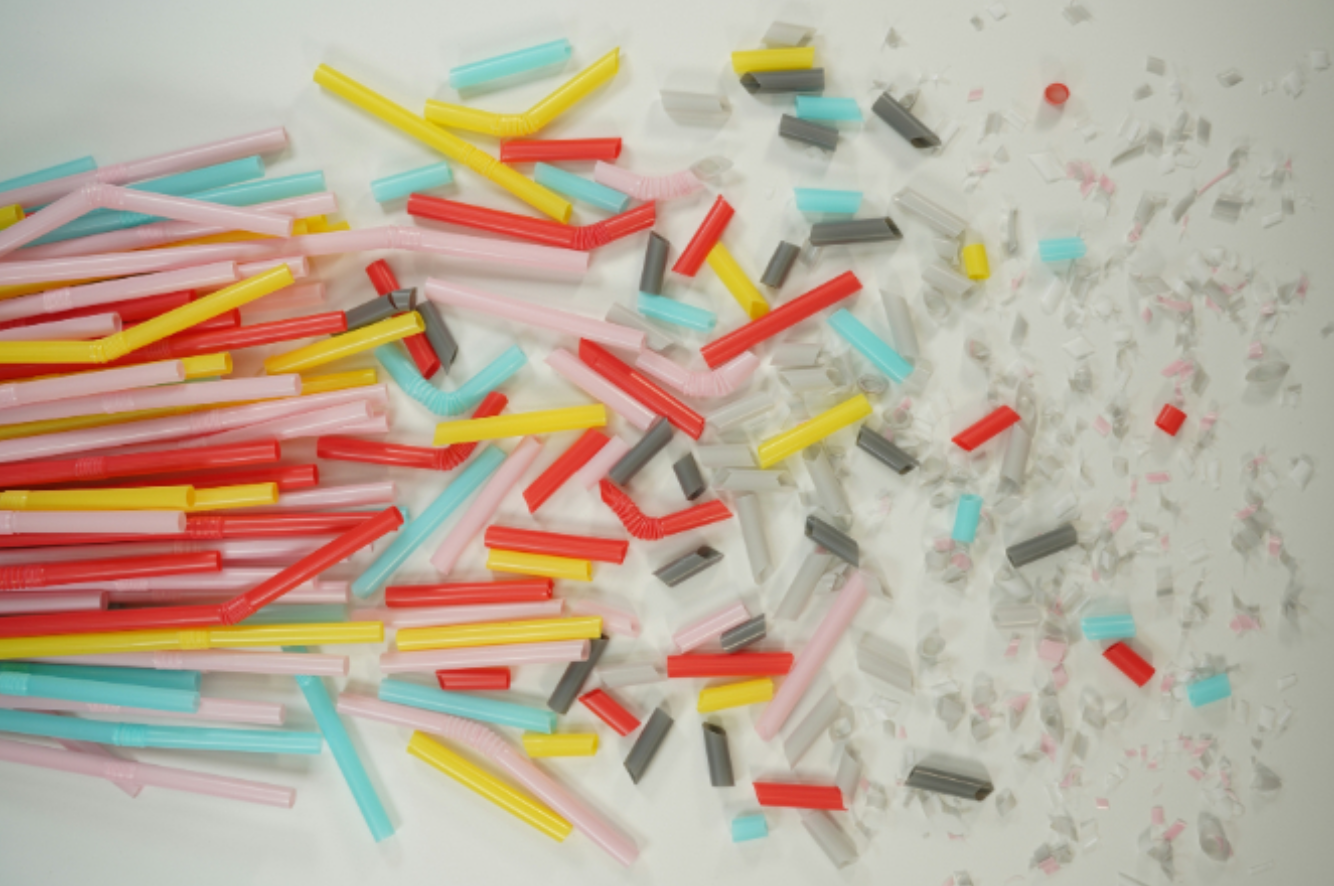 Annual plastic waste leakage into the sea is estimated at roughly 0.28-0.73 million tons. Photo: Scimex.
The investigation workflow is architected into four sequential steps: survey network design; in-situ monitoring and sample collection; laboratory analysis and evaluation; and database construction. Regulations also target standardizing equipment specifications, sampling protocols, metric units, and analytical reporting templates.
Notably, the draft permits adopting regional and international methodologies of equivalent or superior analytical precision, while retaining flexibility to integrate emerging methods when warranted. The database is slated to archive original photography, video footage, and raw survey datasheets to facilitate quality assurance, verification, and benchmarking.
Parallel to standardized surveys, remote sensing technologies, unmanned aerial vehicles (UAVs), stationary optical cameras, and AI are unlocking novel horizons in plastic debris tracking. These technologies aid in identifying large-scale pollution hotspots, detecting floating waste objects, and modeling accumulation zones through hydrodynamic transport simulations.
In Vietnam, several studies have piloted European Space Agency (ESA) Sentinel-2 satellite imagery to detect coastal plastic slicks, combining UAVs and fixed cameras with machine-learning algorithms for riverine plastic tracking. An autonomous surface waste collection apparatus integrated with YOLOv7 algorithms developed by Can Tho University achieved an operational accuracy rate of 80.5%.
Nonetheless, technological deployment confronts structural limits. Satellite imagery and optical cameras primarily record surface debris, unable to detect suspended microplastics or benthic seafloor litter. Detection precision remains heavily contingent upon object dimensions, ambient environmental conditions, and training dataset quality. Thus, AI inference outputs necessitate rigorous validation via empirical field sampling.
Dr. Pham Van Hieu underscored that Viet Nam must promptly finalize and promulgate the Circular, erect a national centralized database, and unify investigative methodologies. Simultaneously, authorities should pilot multi-tiered surveillance architectures, coupling river-mouth fixed cameras, coastal UAV surveys, and wide-area satellite remote sensing, to elevate the systemic monitoring and mitigation of marine plastic pollution.