Accurately measuring carbon sequestration is among the key lessons Viet Nam has learned from transferring forest-based emission reductions.
The forest carbon market is opening up opportunities to generate additional revenue from forest resources. However, according to Pham Hong Luong, Deputy Director General of Viet Nam Administration of Forestry (VNFOREST) under the Ministry of Agriculture and Environment, the key prerequisite is not simply the size of the forest area, but the ability to accurately measure and demonstrate how much carbon the forests have sequestered or how much emissions they have reduced.
 Pham Hong Luong said that to sell forest carbon credits, it is first necessary to measure the amount of carbon sequestered. Photo: Hong Thuy.
From 16.2 million tons of CO₂ to USD 56.5 million from forests
Speaking at the Vietnam Carbon Forum 2026, themed “From Policy to Action,” held on August 14, Pham Hong Luong said forestry has a major advantage because Vietnam has maintained a long-standing system for forest surveys, inventories, monitoring, and reporting on forest status and changes. This provides an important data foundation for calculating emission reductions and subsequently having the results assessed and verified.
The results from the Emission Reductions Payment Agreement for the North Central Region provide a clear example. During the first reporting period, Vietnam achieved a 16.2 million tons of CO₂ emissions reduction, as recognized by the World Bank (WB). Based on these results, Vietnam completed two transfers totaling 11.3 million tons and generated USD 56.5 million in revenue.
These figures show that having a large forest area or high carbon sequestration potential is only the starting point. To turn that advantage into financial value, the amount of carbon sequestered or emissions reduced must be quantified using appropriate methodologies, supported by monitoring data, and assessed and verified.
However, measuring carbon is only part of the equation. According to Luong, another important prerequisite is the establishment of a benefit-sharing mechanism.
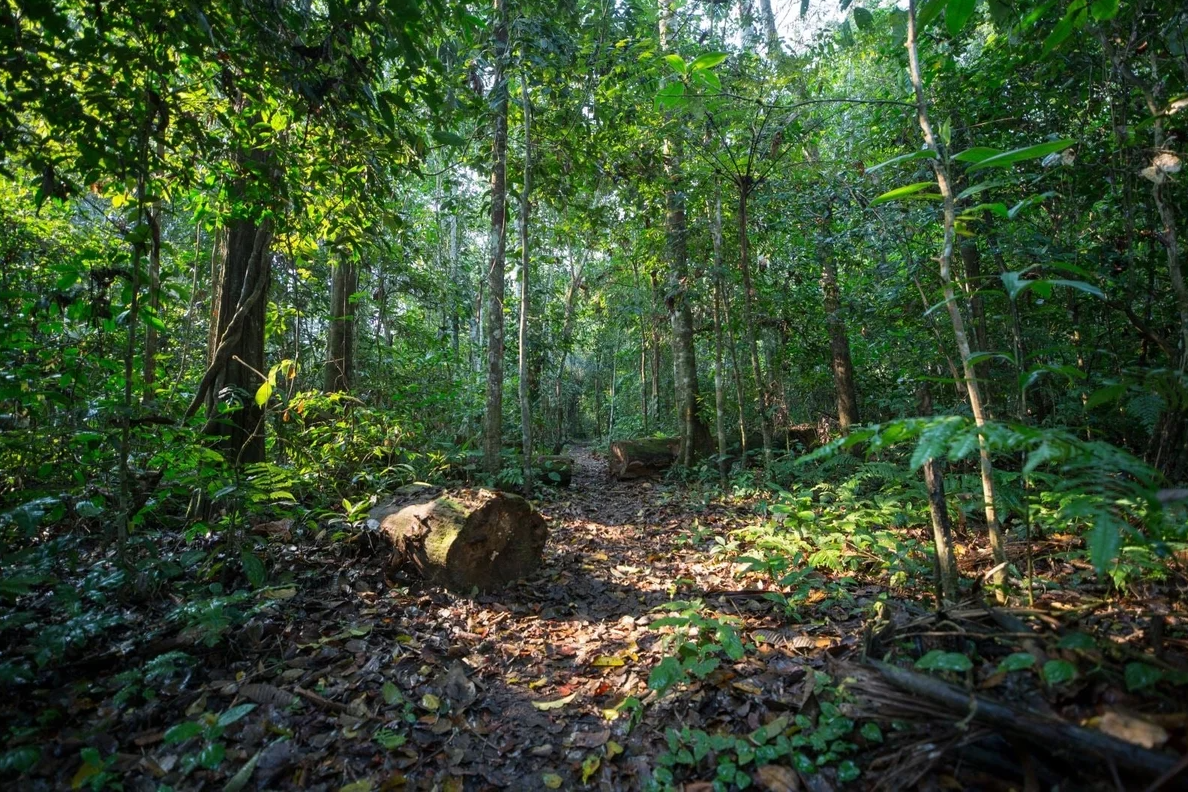 A large forest area or high carbon sequestration potential is only the starting point.
The experience gained from the forest environmental services payment policy has been used to design a mechanism for allocating carbon revenue. Under the North Central Region program, the central government retains 3.5% for management, provinces retain 10%, and the remainder is paid to forest owners and other beneficiaries.
Clearly defining the allocation shares from the outset helps ensure that funds are disbursed transparently and promptly. Revenue from the program has been distributed to around 80,000 forest owners, including approximately 40,000 households, individuals, and communities.
This experience is particularly relevant as the legal framework for forest carbon sequestration and storage services is being developed. Decree No. 180/2026/ND-CP, which took effect on July 15, requires local authorities to prepare data and assess the current status and carbon sequestration potential of their forests.
All forest owners can participate in carbon projects
A key question for many forest owners is who has the right to participate in the carbon market.
According to Pham Hong Luong, Article 7 of the Law on Forestry clearly defines the different categories of forest owners. For forests under public ownership, the State is the representative owner, including forests managed by national forest management boards and protection and special-use forest management boards. Meanwhile, forests allocated to households and individuals are primarily production forests.
 All types of forest owners can cooperate and form partnerships to implement carbon-related projects.
Under Decree No. 58/2024/ND-CP, all types of forest owners can cooperate and form partnerships to implement carbon-related projects. The main difference lies in the form of cooperation, which depends on the forest's ownership and management structure.
For forests under State ownership, cooperation and partnerships must comply with public-private partnership regulations, ensuring transparency, openness, and a consistent mechanism. This is intended to prevent parties from entering into informal agreements without a clear legal basis, which could make it difficult to demonstrate a project's transparency.
For privately owned forests, parties may proactively agree on the form of cooperation or partnership, provided that they comply with the law. Regardless of ownership, carbon projects must still be registered in accordance with regulations. If carbon credits are transferred internationally, the projects must also meet the relevant requirements.
Businesses can partner on provincial-level forest carbon projects
Another approach attracting attention is for businesses to work with specialized agencies and provincial People's Committees to implement forest carbon projects on a larger scale.
The Deputy Director General of the Vietnam Administration of Forestry said that Decree 180 allows forest owners to cooperate with investors or intermediary organizations to develop, register, assess, and obtain recognition for forest carbon credits.
Where forest owners are State organizations, cooperation with businesses may be considered under the public-private partnership (PPP) mechanism and must comply with relevant laws.
For domestic forest carbon projects, specific procedures have been established for registration, assessment, and recognition. Projects involving international transfers must comply with the provisions of Decree 12.
In addition, the authorities have issued Circular 31 on methods for valuing forest carbon credits, while the Ministry of Science and Technology has published national standards on forest carbon.
If the value of forest carbon is viewed solely in terms of revenue from credit sales, its full benefits to businesses may not be reflected.
Nguyen Ngoc Tung, CFA, of VinaCarbon (VinaCapital), said businesses should not focus solely on how many credits a project can sell or how much revenue it can generate. More importantly, they should view environmental obligations as an opportunity to create assets that deliver both economic and environmental value.
 According to Tung, when businesses clearly demonstrate their carbon management capabilities and environmental performance, investors have a stronger basis for assessing risk. Photo: Hong Thuy.
According to Tung, once a business establishes systems and processes to reduce emissions, the resulting reductions must be measurable, verifiable, and transparently demonstrated. This is precisely what international investors are looking for.
When a business can clearly demonstrate its carbon management capabilities and environmental performance, investors have a stronger basis for assessing risk. As a result, the company may gain access to financing at lower costs and longer maturities, while also expanding its investment opportunities.
These indirect benefits may be difficult to translate immediately into monetary terms, but over the long term, they could outweigh the direct revenue generated by selling carbon credits.
This approach also changes the investment equation. Rather than simply calculating how many credits an emission-reduction project can generate and at what price they can be sold, businesses can take into account the broader value of their carbon management capabilities.
A system capable of identifying environmental obligations, measuring emission-reduction results, and transparently demonstrating those results does more than support carbon transactions. It can also enhance credibility, strengthen the company's brand, and provide an additional advantage when accessing green financing.
Therefore, carbon credits should not be viewed merely as a product to be sold. Their greater value lies in turning emission-reduction results into evidence of the environmental performance and capabilities of businesses and forest owners.
The experience of the North Central Region makes the lesson increasingly clear: for forests to generate carbon value, they need data; for carbon to become an asset, it must be measured and verified; and for carbon revenue to be sustainable, it must be accompanied by a transparent benefit-sharing mechanism.
This also provides a foundation for Vietnam to move from simply tapping the carbon sequestration potential of its forests toward building a forest carbon market with real value and transparency, while generating long-term benefits for forest owners, local authorities, and businesses.