Assessing agricultural land sustainability not only reflects current farming practices but also highlights the need for data-driven policy priorities. This was the focus of a consultation workshop on the in-depth analysis of Sustainable Development Goal (SDG) Indicator 2.4.1, jointly organized by the National Statistics Office (NSO), under the Ministry of Finance, and the Food and Agriculture Organization of the United Nations (FAO) on November 6 in Hanoi.
At the workshop, Sangita Dubey, FAO Statistician for Asia and the Pacific, outlined international methodologies for assessing and reporting SDG Indicator 2.4.1. The indicator measures agricultural sustainability through 10 sub-indicators covering three dimensions: economic, environmental, and social.
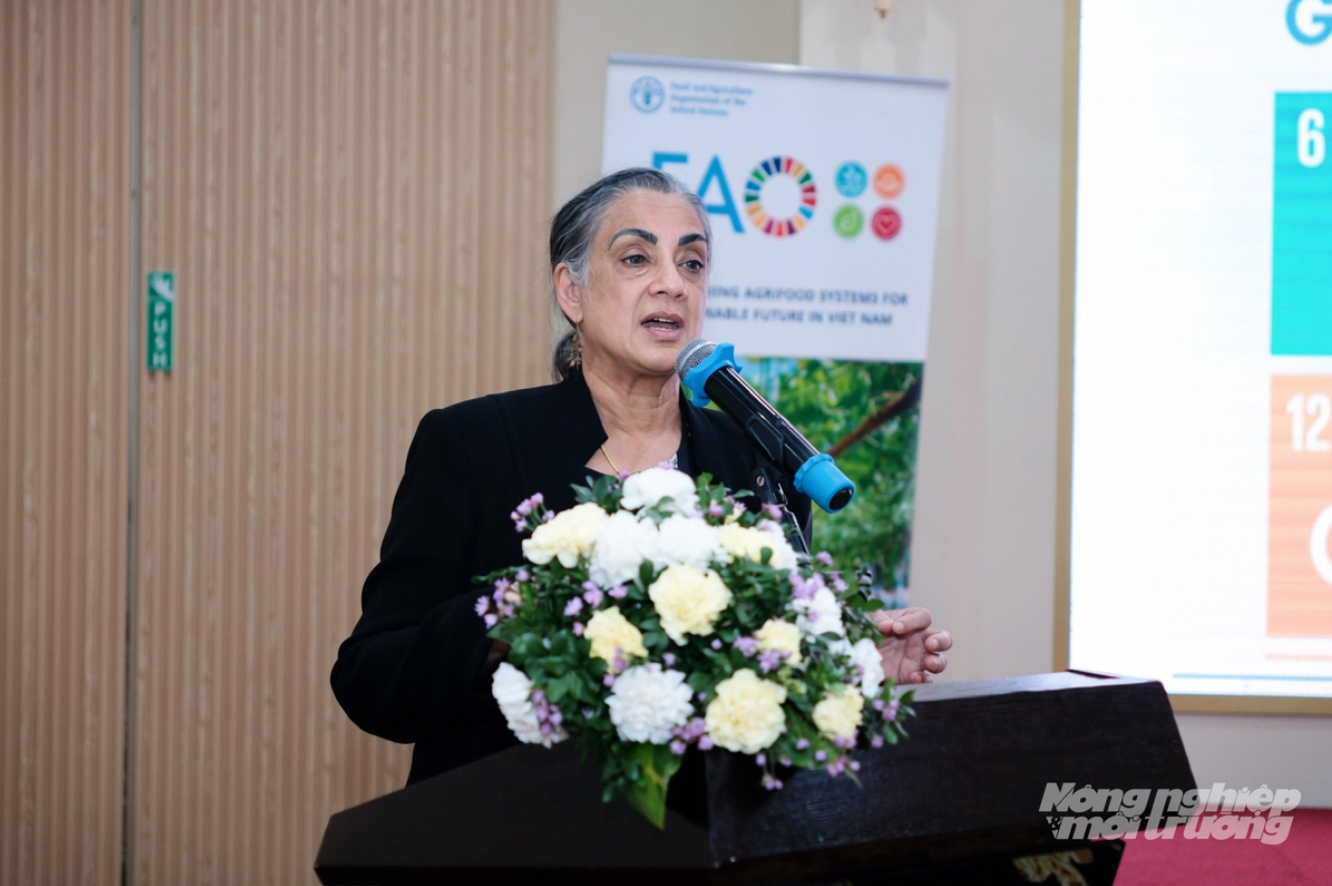 Sangita Dubey, FAO Statistician, presents assessment methodologies and reporting requirements for sustainable development indicators at the workshop. Photo: Thanh Trang.
According to the FAO expert, each indicator has specific thresholds for classifying agricultural production as highly sustainable, sustainable, or unsustainable. Standardized methodologies ensure reliable and comparable data across surveys.
For pesticide management, assessments consider not only pesticide use but also product toxicity and measures to protect human health and the environment. Farms using highly hazardous pesticides may be classified as unsustainable.
During the discussion, Dr. Pham Thanh Nga from the Faculty of Statistics at the National Economics University called for clearer calculation methods and classification thresholds, particularly for agricultural production value per hectare, to ensure transparency and accurate interpretation.
She warned that misunderstanding these methods could lead users to confuse individual indicator results with overall agricultural sustainability. Experts also recommended more detailed analysis by socioeconomic region, farm characteristics, and production type to identify specific areas requiring improvement.
Presenting recommendations for sustainable agricultural transformation, Dr. Truong Thi Thu Trang from the Institute of Strategy and Policy on Agriculture and Environment emphasized the need to transform Viet Nam's agricultural development model, with a vision toward 2050.
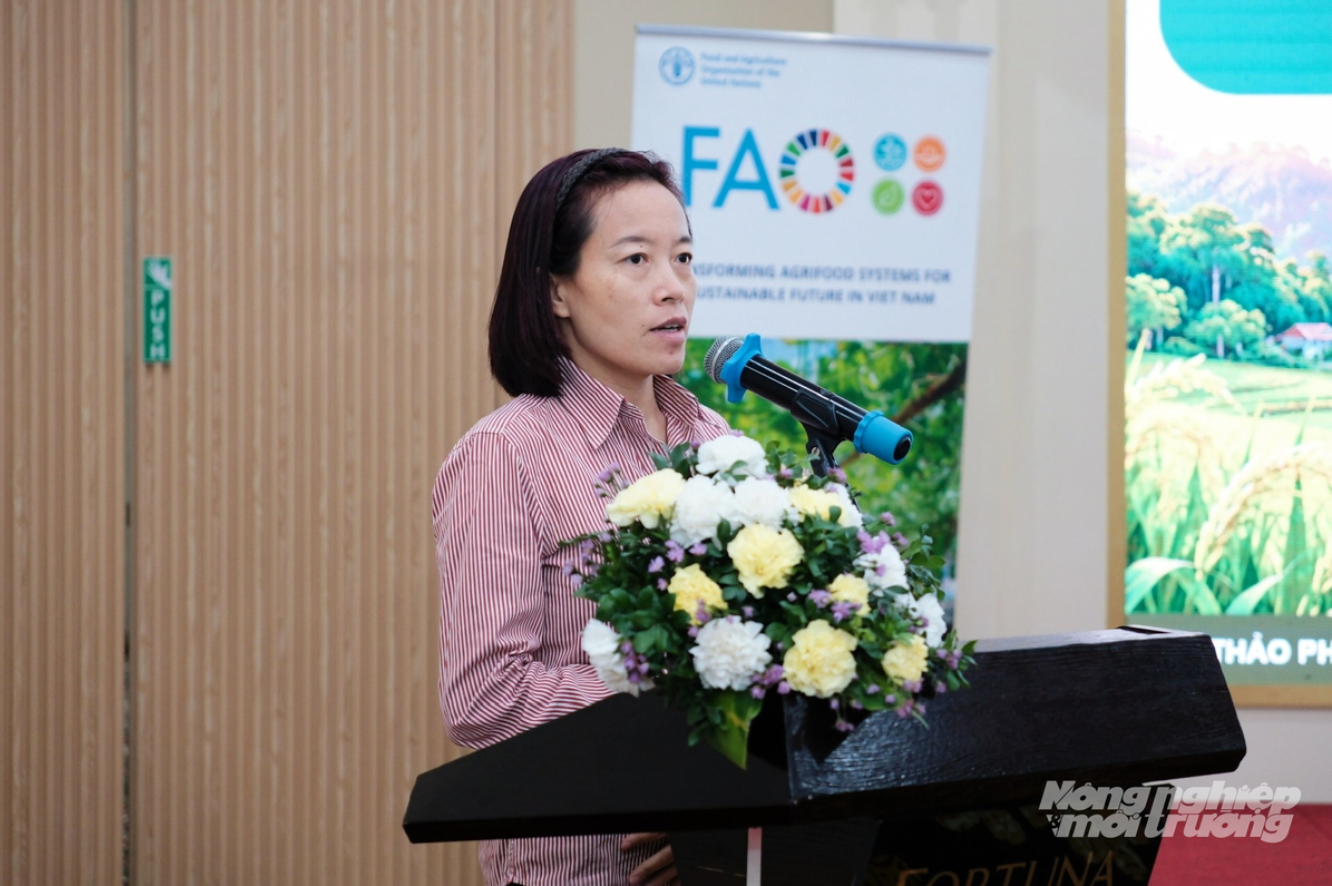 Dr. Truong Thi Thu Trang from the Institute of Strategy and Policy on Agriculture and Environment presents strategies for transitioning toward sustainable, ecological agriculture at the workshop. Photo: Thanh Trang.
This approach calls for balancing economic efficiency with responsible resource use, environmental protection, and climate resilience. Sustainable agriculture must therefore focus not only on productivity but also on growth quality and long-term production viability.
Analysis of SDG Indicator 2.4.1 for 2020-2025 shows improvements in water use and pesticide management. However, production value per hectare, risk mitigation, and biodiversity-supporting practices still require attention.
These findings highlight the need for coordinated agricultural transformation, covering production organization, agricultural value creation, resource management, and environmental protection.
Workshop participants also emphasized using statistical data to identify the causes of sustainability gaps, which may stem from limited technical knowledge, resources, or production conditions. Understanding these factors would enable more targeted policies, including training, technology support, and improved management practices.
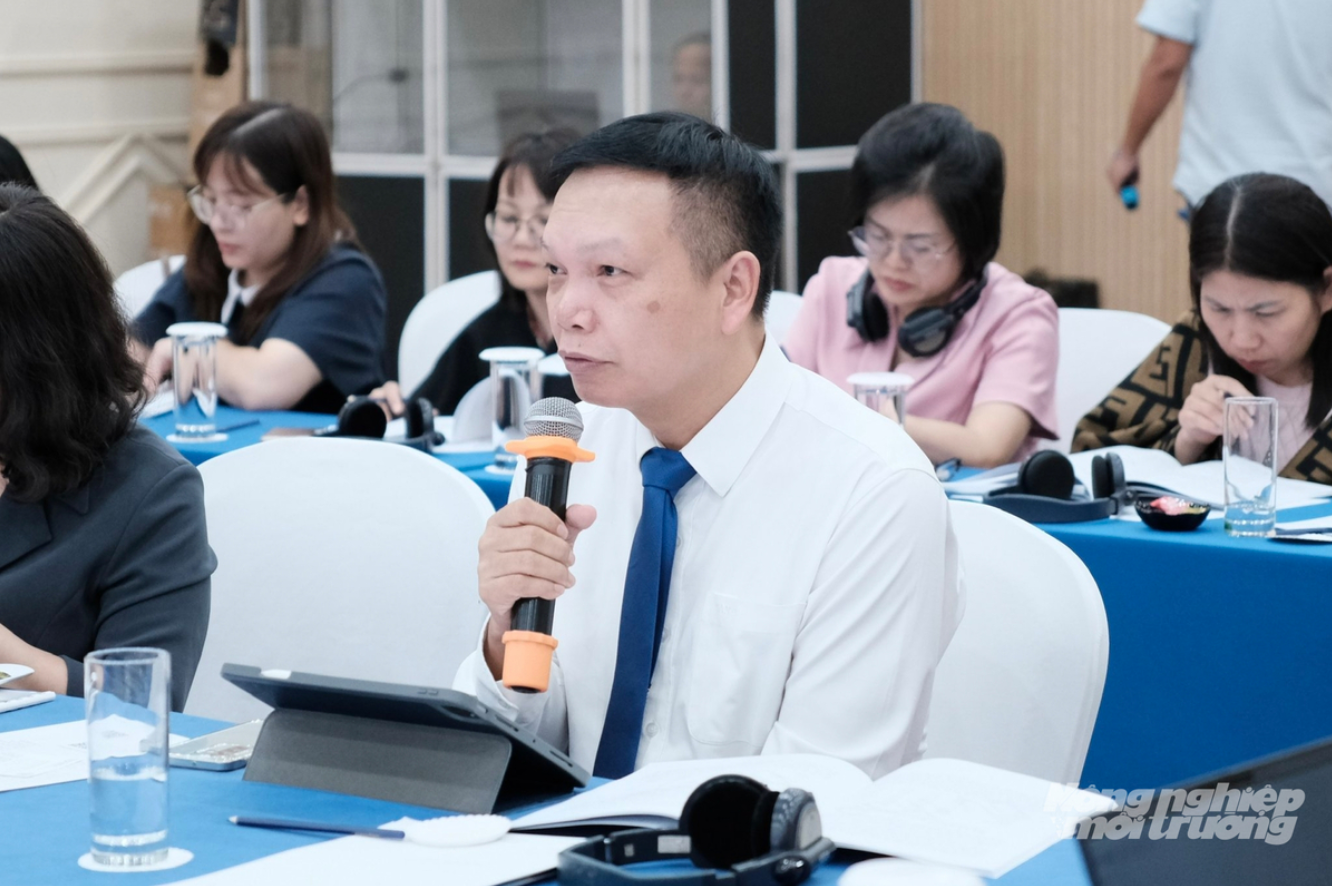 Nguyen Song Ha, Assistant FAO Representative (Programme) in Viet Nam, speaks during a discussion on the analysis of SDG Indicator 2.4.1. Photo: Thanh Trang.
Nguyen Song Ha, Assistant FAO Representative (Programme) in Viet Nam, emphasized the need to regularly update data and strengthen statistical information sharing to support agricultural policy development and adjustment. FAO also expressed its commitment to continued cooperation and in-depth research tailored to Viet Nam's needs.
Workshop discussions highlighted the importance of closer links between statistics and policymaking. More detailed data analysis is needed to identify priority sectors, regions, and producer groups, enabling better resource allocation and targeted solutions.
By integrating statistical findings into policymaking, Viet Nam can move beyond monitoring sustainability progress to guide its agricultural transition toward a more ecological, efficient, and resilient system.