Nordic countries and Viet Nam are strengthening cooperation to promote green growth, innovation and sustainable development in Ho Chi Minh City.
On October 29, the 2026 Nordic-Viet Nam Business Forum was held as part of the 2026 Ho Chi Minh City Autumn Economic Forum, under the theme “A New Decade of Growth: Unlocking Viet Nam’s Potential and Nordic Strengths”.
The event was organized by the Nordic Chamber of Commerce in Viet Nam (NordCham Viet Nam), in cooperation with the embassies of Denmark, Finland, Norway and Sweden, the Ho Chi Minh City Investment and Trade Promotion Center (ITPC), the Viet Nam Chamber of Commerce and Industry - Ho Chi Minh City Branch (VCCI-HCMC), the Ho Chi Minh City Center for the Fourth Industrial Revolution (HCMC C4IR), and other relevant partners. It brought together around 150 representatives from government agencies, diplomatic missions and Vietnamese and Nordic businesses.
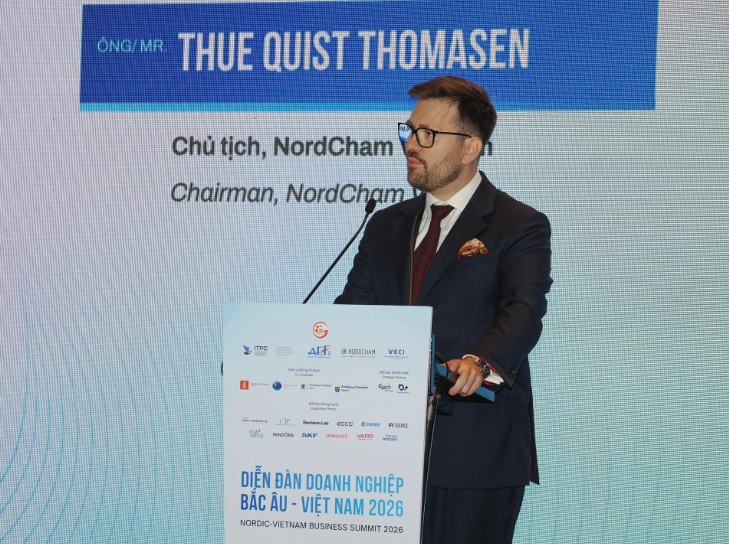 Thue Quist Thomasen, Chairman of NordCham Viet Nam, said Nordic businesses have strengths in long-term investment, workforce development, local supply chain development and the adoption of sustainable production standards. Photo: HT.
Speaking at the forum, Mr. Thue Quist Thomasen, Chairman of NordCham Viet Nam, said relations between Viet Nam and the Nordic countries were built on increasingly strong foundations, marked by several important milestones in recent years.
These include the strategic partnership agreement on science, technology and innovation between Viet Nam and Sweden in June 2025; the establishment of the Viet Nam-Finland Strategic Partnership in 2025; the Viet Nam-Norway Green Strategic Partnership agreement in April 2026; and the elevation of Viet Nam-Denmark relations to a Comprehensive Strategic Partnership.
“Political relations between Viet Nam and the Nordic countries have rarely been on such a strong footing. This forum aims to explore how we can turn that foundation into tangible business cooperation,” Mr. Thomasen said.
He noted that over the coming decade, the key question would not simply be how much foreign investment Viet Nam could attract, but also the quality of that investment and its long-term contribution to the economy.
Viet Nam needs investors willing to establish a long-term presence, reinvest in the country, train local engineers and workers, and develop domestic supply chains. Nordic businesses also have considerable strengths in these areas. With extensive experience operating in competitive markets where productivity, quality and standards are key, many Nordic companies place strong emphasis on effective management, environmental responsibility and sustainability throughout their operations.
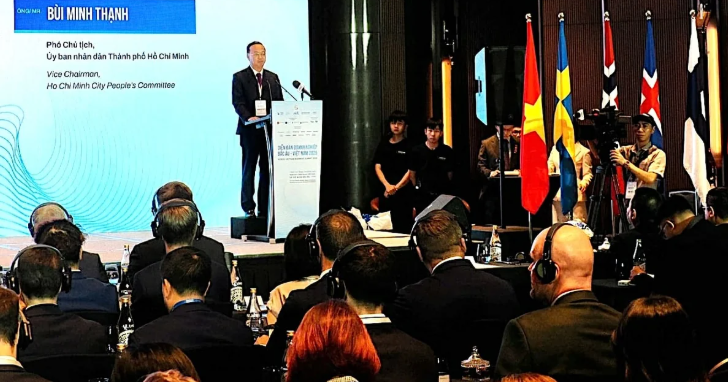 Ho Chi Minh City Vice Chairman Bui Minh Thanh speaks at the 2026 Nordic–Viet Nam Business Forum. Photo: HT.
Nordic companies already have a significant presence in Viet Nam, with projects spanning manufacturing, energy, seaports and consumer goods. LEGO has invested US$1 billion in a factory in Ho Chi Minh City that runs on clean energy. Carlsberg focuses on renewable energy, water efficiency and circular packaging. Copenhagen Infrastructure Partners (CIP) is involved in energy infrastructure development, while APM Terminals operates in the port, maritime and logistics sectors. Pandora, meanwhile, aims to power its factory entirely with renewable energy while using recycled gold and silver.
These projects show how investment cooperation can go beyond capital provision to include technology transfer, improved production processes, and the adoption of sustainability standards. This approach is particularly relevant to Viet Nam as it seeks to improve the quality of economic growth and deepen its integration into global value chains.
With around 200 member companies, NordCham Viet Nam called on participants to move beyond discussions and commitments at the forum by agreeing on at least one concrete follow-up action. These could include a thematic meeting, a field visit, a pilot project or a specific investment commitment. According to Thomasen, practical steps such as these would provide a basis for assessing the effectiveness of cooperation and turning potential into tangible economic value.
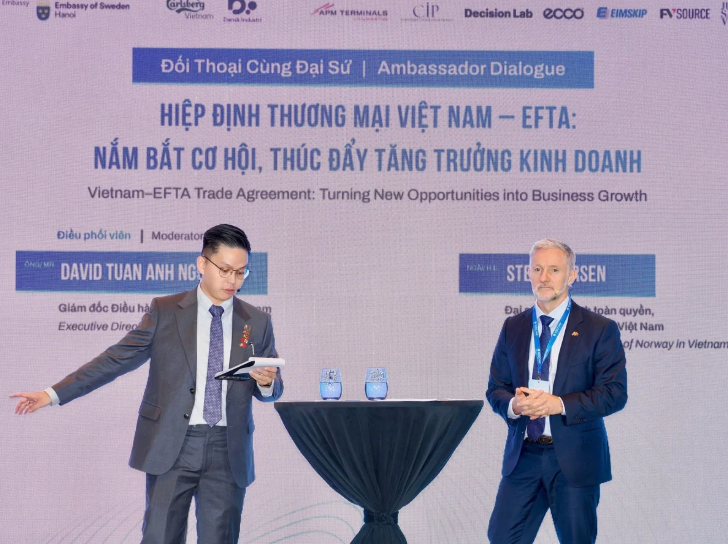 Ambassadors take part in a dialogue on Nordic-Viet Nam trade cooperation. Photo: HT.
Mr. Thomasen outlined three priorities for attracting high-quality investment. “First, Viet Nam needs to maintain a stable, transparent and predictable business environment so investors can make long-term plans with confidence. Second, access to green energy must be expanded, including through mechanisms such as direct power purchase agreements (DPPAs). Third, cooperation between Nordic businesses, Vietnamese authorities and domestic companies should be strengthened to create more opportunities for local businesses to join supply chains,” he said.
Speaking at the forum, Ho Chi Minh City Vice Chairman Bui Minh Thanh said the city wanted Nordic businesses to become strategic partners in trade, investment, technology transfer, innovation and sustainable development.
According to Thanh, the Nordic countries have considerable strengths in science and technology, modern governance, innovation and sustainable development. Viet Nam, meanwhile, offers a large market, strong manufacturing capacity, a dynamic workforce and a clear ambition to grow. Bringing these strengths together could generate new drivers of growth, create new value chains and expand cooperation beyond traditional trade.
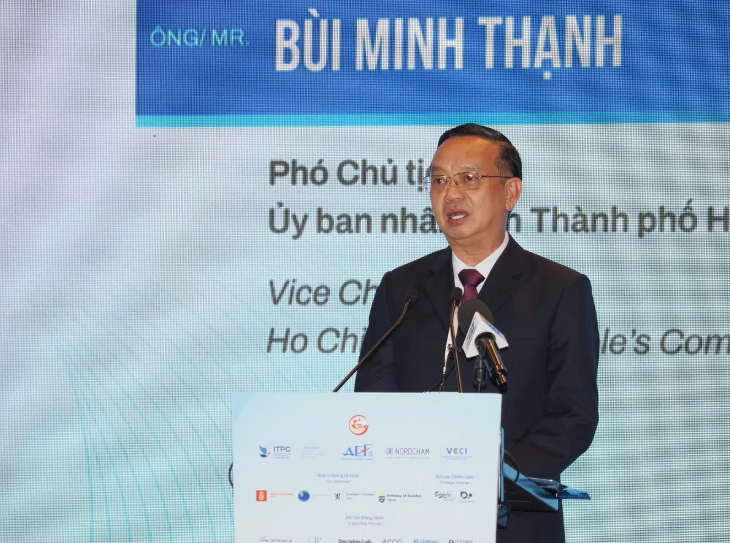 Ho Chi Minh City Vice Chairman Bui Minh Thanh said the city wanted Nordic businesses to become strategic partners in trade, investment, technology transfer, innovation and sustainable development. Photo: HT.
Following its merger with Binh Duong and Ba Ria-Vung Tau, Ho Chi Minh City now covers more than 6,772 square kilometers and has a population of over 14 million. The expanded city brings together major advantages in finance, trade, services, industry, seaports, logistics and the marine economy.
According to city leaders, this is more than an expansion in geographical area and population. It also presents an opportunity to restructure the growth model and develop a multifunctional economic hub with international competitiveness and stronger links to global value chains.
Against this backdrop, Ho Chi Minh City has identified three main directions for cooperation with Nordic partners. The city aims to move beyond conventional trade and investment towards jointly building development capacity; make green and digital transformation, together with innovation, key drivers of long-term cooperation; and turn dialogue and commitments into concrete, practical and sustainable programs and projects.
Priority areas include clean energy, sustainable transport, the circular economy, high-tech industries, environmental solutions and smart cities. These sectors offer opportunities to draw on Nordic companies' technological expertise and management experience while meeting Ho Chi Minh City's own growth transformation needs.
City leaders also highlighted the importance of adopting advanced technologies, learning from international management experience and strengthening innovation capacity. Such cooperation would help Vietnamese businesses improve productivity, enhance product quality, meet increasingly demanding market standards and strengthen their position in global value chains.
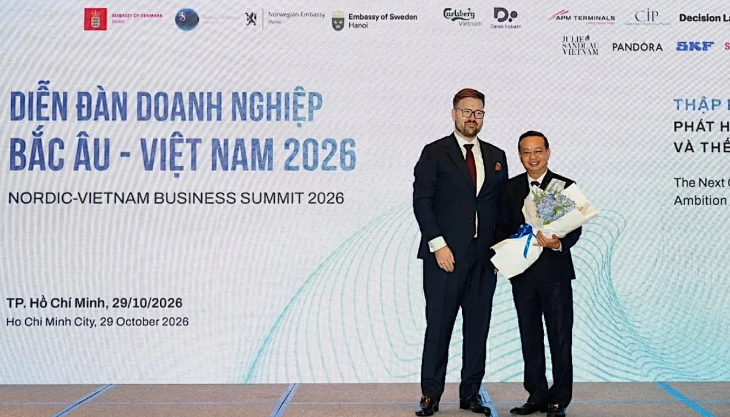 Thue Quist Thomasen presents flowers to Ho Chi Minh City Vice Chairman Bui Minh Thanh. Photo: HT.
To turn these priorities into reality, Ho Chi Minh City pledged to continue improving its investment environment, accelerate administrative reforms, and enhance transparency and governance efficiency. The city also committed to listening to businesses, working alongside them and creating favorable conditions for their long-term growth.