Coral reefs face severe challenges due to climate change and may disappear without timely and practical conservation solutions.
Intense Pressure
Viet Nam’s marine waters are home to about 340 species of coral out of the world’s 800 species, distributed widely from north to south. In recent years, climate change has significantly impacted ecosystems in Viet Nam, causing significant changes in species distribution, structure, and biodiversity levels.
Coral reefs are among the most vulnerable ecosystems under the pressure of climate change. In many marine regions across Viet Nam, corals gradually lose their vibrant pigments and turn stark white due to coral bleaching. This presents an enormous challenge to conserving coral reefs, already severely damaged by human activities.
A clear example can be seen in the coral reefs of Cat Ba National Park, which provide habitat for hundreds of marine species but have experienced a continuous decline in coverage, area, and species quantity over the past 15 years. In addition to rapid tourism growth, overexploitation, and plastic pollution, climate change has directly impacted the coral reef ecosystem in this area.
Dr. Nguyen Dang Ngai, Deputy Director of the Institute of Marine Resources and Environment under the Viet Nam Academy of Science and Technology, states that the coral reefs at Cat Ba are under significant pressure from climate change. He explains that rising sea temperatures are the primary cause of coral bleaching, with more severe effects seen in southern reefs. In northern areas, the phenomenon is less frequent but still impactful. Additionally, storms and large waves destroy shallow-water coral reefs and alter seawater salinity. Heavy rainfall brings sediment from the mainland, increasing internal sedimentation, which clouds the seawater, obstructs photosynthesis of symbiotic algae in corals, and even buries coral reefs.
These challenges demand continuous attention and effort to conserve and restore coral reef ecosystems in Cat Ba, specifically across Viet Nam.
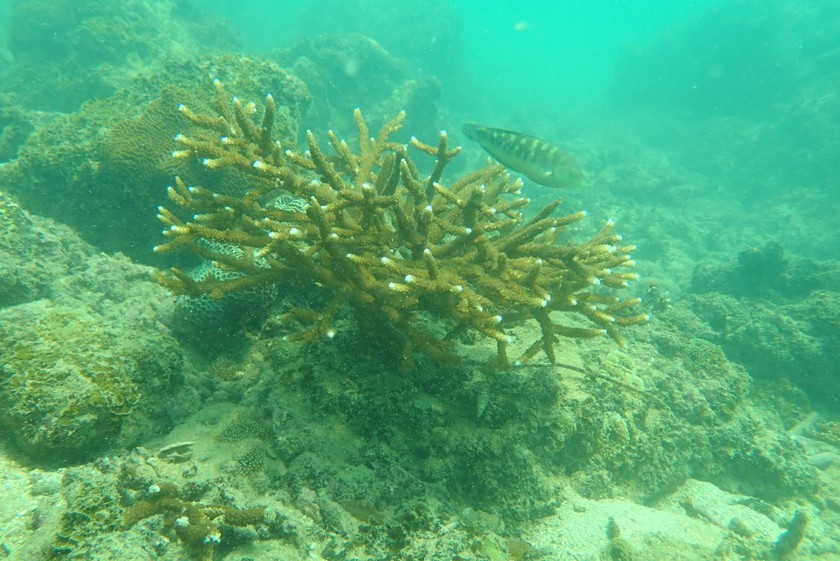
Creating legal frameworks
Viet Nam currently has 12 active marine protected areas, from Cat Ba (Hai Phong) and Con Co (Quang Tri) to Con Dao (Ba Ria - Vung Tau), each with unique ecosystem values. Measures such as monitoring, evaluating, restoring coral reefs, and controlling fisheries activities have been implemented at various levels to mitigate the negative impacts of human activities and climate change.
Conserving coral reefs in Viet Nam is part of the Strategy for the Exploitation and Protection of the Marine and Island Environment until 2030, with a vision toward 2050. The government has issued several legal documents, including the Environmental Protection Law, the Law on Marine and Island Resources and Environment, and related Decrees and Decisions concerning biodiversity conservation. These policies focus on protecting and restoring marine ecosystems, including coral reefs, which are essential resources for maintaining biodiversity and supporting the livelihoods of coastal communities.
Dr. Nguyen Dang Ngai evaluates that to protect and restore coral reefs, multiple measures need to be implemented simultaneously. These include minimizing human impacts such as reducing overfishing, controlling marine pollution, and minimizing aquaculture near coral reef areas. At the same time, it is necessary to combine solutions that strengthen management, monitoring, and enforcement of effective conservation policies, along with implementing coral reef restoration programs to rebuild marine ecosystems sustainably.
In particular, the government also encourages the participation of communities and businesses through public-private partnership programs and domestic and international initiatives to enhance the effectiveness of coral conservation and sustainable development in general.