While China has a large-scale garlic industry, Viet Nam still lacks full data on growing areas, production and market demand.
On September 21, in Jinxiang County, Shandong Province, China, the 2026 Garlic Conference and the Jinxiang Garlic High-Quality Development Promotion Conference were held with the participation of representatives from management agencies, industry associations, research institutes, universities, and businesses.
Speaking at the conference, Dr. Do Quang Tung, Viet Nam's Agricultural and Environmental Counselor to China, shared information on garlic production, consumption and trade in Viet Nam, while proposing several cooperation directions between enterprises of the two countries.
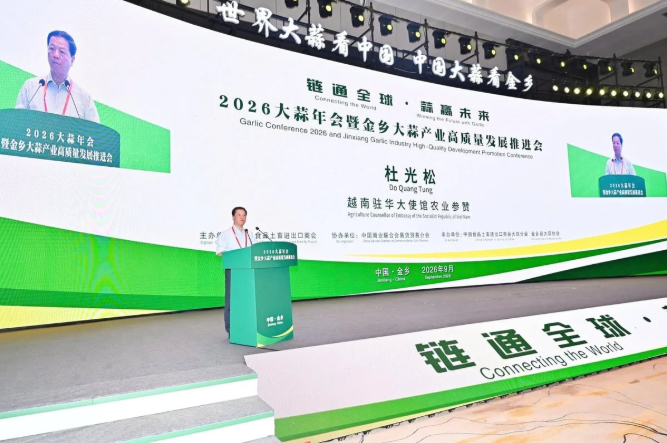 Dr. Do Quang Tung, Viet Nam's Agricultural and Environmental Counselor to China, speaks at the 2026 Garlic Conference. Photo: Organizing Committee.
Compared to rice, coffee, or fruits, garlic is a crop with a relatively small scale in Viet Nam. However, it is an essential ingredient in cuisine and has long been used in traditional medicine.
Viet Nam has a tradition of growing garlic in several central coastal and northern provinces. The most famous is Ly Son garlic, with its distinctive flavor and quality shaped by the island's soil and geographical conditions. Among them, single-clove garlic has a special shape, unique flavor, and high commercial value.
However, Viet Nam still lacks a complete, unified data system on garlic planting area, output, consumption, and imports. Meanwhile, domestic garlic demand is relatively high. Besides fresh garlic used in cooking, dipping sauces, and spices, the market is increasingly interested in black garlic, peeled garlic, dried garlic, pickled garlic, garlic powder, minced garlic, and garlic oil.
Because domestic production is limited and imported garlic is highly competitive, Viet Nam must import large quantities of garlic to meet consumption and processing demand.
According to Dr. Do Quang Tung, Viet Nam - China relations in the garlic sector should not only be viewed from the perspective of an exporter and an importer. The two sides have ample room to form a deeper and broader agricultural value chain.
First is cooperation in cultivation. Chinese enterprises possess experience in large-scale production, mechanization, irrigation, seed selection, and post-harvest handling. Meanwhile, Viet Nam has many local garlic varieties and diverse ecological conditions. The two sides can research and build pilot farming models in areas with suitable conditions.
The second direction is seed research and development. Research institutes, universities, and businesses of both countries can coordinate to select, preserve and improve garlic varieties based on criteria such as yield, flavor, quality, shelf life, pest resistance, and market demand. This process must respect Viet Nam's native genetic resources and geographical indications.
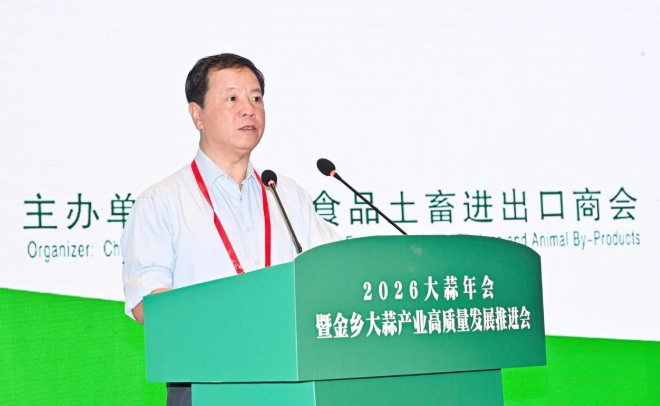 Dr. Do Quang Tung proposes that businesses of the two countries establish direct contact points and exchange information on the garlic market. Photo: Organizing Committee.
The third direction is deep processing. Instead of primarily consuming fresh garlic, the two sides can cooperate to develop peeled garlic, dried garlic, garlic powder, minced garlic, garlic oil, black garlic, and garlic-derived pharmaceutical products. China's technology, capital and market experience can complement Viet Nam's raw materials and production capacity.
Fourth, Chinese enterprises can supply suitable raw materials for processing facilities in Viet Nam. On this basis, Vietnamese businesses can develop products for the domestic market and aim for export to third countries.
Finally, Viet Nam can gradually develop garlic into a valuable export product, especially for those with regional characteristics like Ly Son garlic. Competitiveness depends not only on output but also on quality, traceability, food safety, branding, geographical indications, and processing levels.
At the conference, Shandong Agricultural University and several Chinese research and training institutions in medicine and pharmacy expressed their desire to cooperate with Viet Nam on varieties, production technology, active ingredients, and garlic-derived products. Many businesses are also interested in the possibility of investing in growing areas, processing, and product R&D in Viet Nam. Some exporters wish to connect with Vietnamese partners to promote official trade.
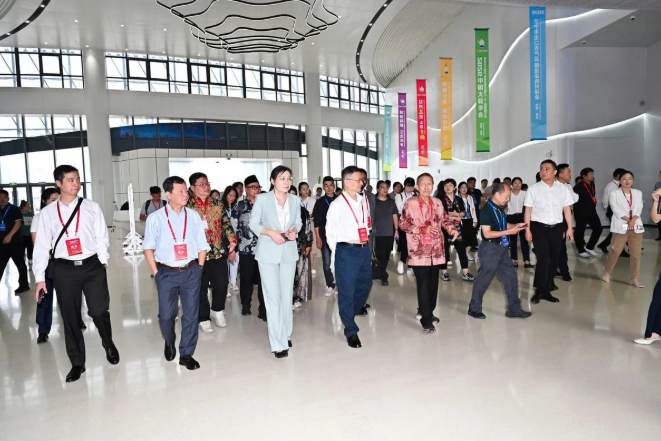 The 2026 Garlic Conference is attended by representatives of management agencies, industry associations, research institutes, universities and businesses. Photo: Organizing Committee.
Dr. Do Quang Tung proposed that businesses from both countries establish direct contact points, exchange information on the market and production, and identify specific pilot projects. Cooperation should also focus on processing, packaging, branding, and market development; while ensuring quality, food safety, traceability, and compliance with the regulations of both countries.
"The garlic sector may not be the largest area in bilateral trade, but it demonstrates the ability to shift from mere commodity exchange to deeper cooperation across the entire agricultural value chain", Dr. Do Quang Tung emphasized.
The Vietnamese Embassy in China stands ready to support connecting Chinese investors, businesses, and research organizations with suitable partners in Viet Nam, thereby promoting cooperation in the garlic industry in particular and the agricultural sector in general.