Hanoi can leverage its cultural values, traditional crafts, and local knowledge in suburban areas to form a 'creative countryside'.
The UNESCO Office in Viet Nam recently held a technical working session with the Hanoi Department of Culture and Sports, the People's Committee of Van Dinh Commune, and relevant agencies to explore ways to leverage local cultural heritage, traditional crafts, and indigenous knowledge to create sustainable livelihoods, develop creative products, and promote tourism in the outskirts of Hanoi.
According to Culture Newspaper, a key feature of this initiative is the shift in focus from the concept of a "creative city" to that of a "creative countryside," recognizing suburban areas not only as agricultural production zones but also as cultural spaces capable of generating new economic value rooted in local identity.
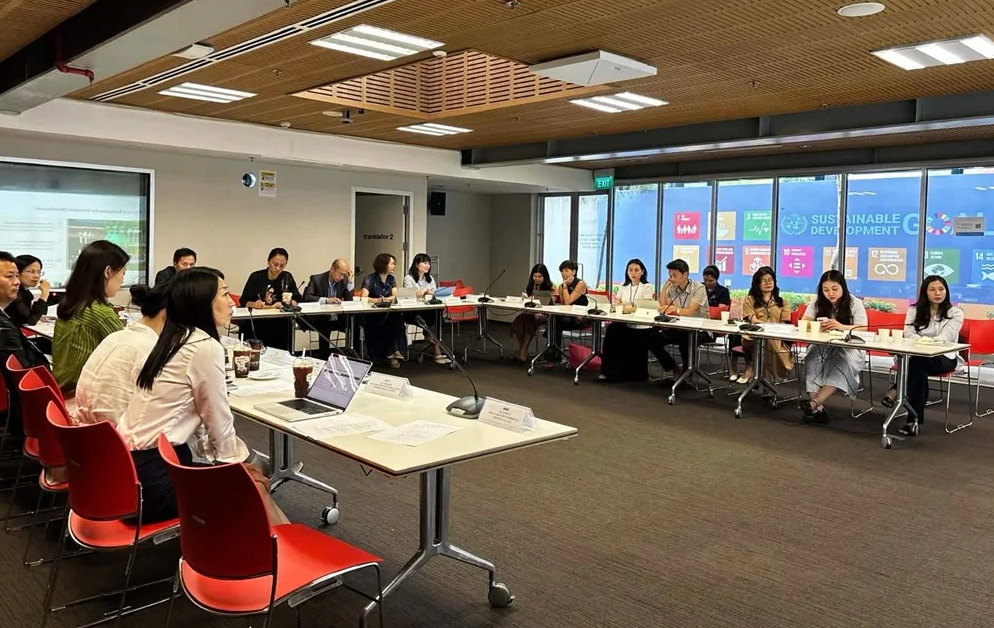 An overview of the working session. Photo: UNESCO Office in Viet Nam.
In recent years, Hanoi has developed several notable models of creative cultural industries in rural areas, demonstrating the potential of leveraging cultural heritage to drive local economic development. One example is Hong Van Commune, home to a four-star OCOP rural tourism model, where agricultural production is combined with cultural experiences to add value to local products and create additional income for residents.
While agriculture was once valued primarily for its output and commodities, its value today is increasingly linked to the experiences it offers. Consumers are no longer looking only for products—they also seek to discover the stories, culture, and way of life behind them. As a result, rural areas can offer not only agricultural products but also distinctive cultural experiences.
According to experts, developing a creative countryside does not mean urbanizing or replacing rural landscapes with concrete infrastructure. Instead, the goal is to preserve traditional village structures, safeguard cultural heritage, and empower local communities. With their knowledge, experience, and deep understanding of local traditions, residents can become "local guides," actively creating and presenting tourism products and experiences that reflect the unique identity of their communities.
For this reason, experts emphasized that culture must be the foundation of any creative countryside initiative. Creativity is not about replacing tradition, but about reinterpreting and revitalizing existing cultural values to meet contemporary needs while generating new opportunities and benefits for local communities.
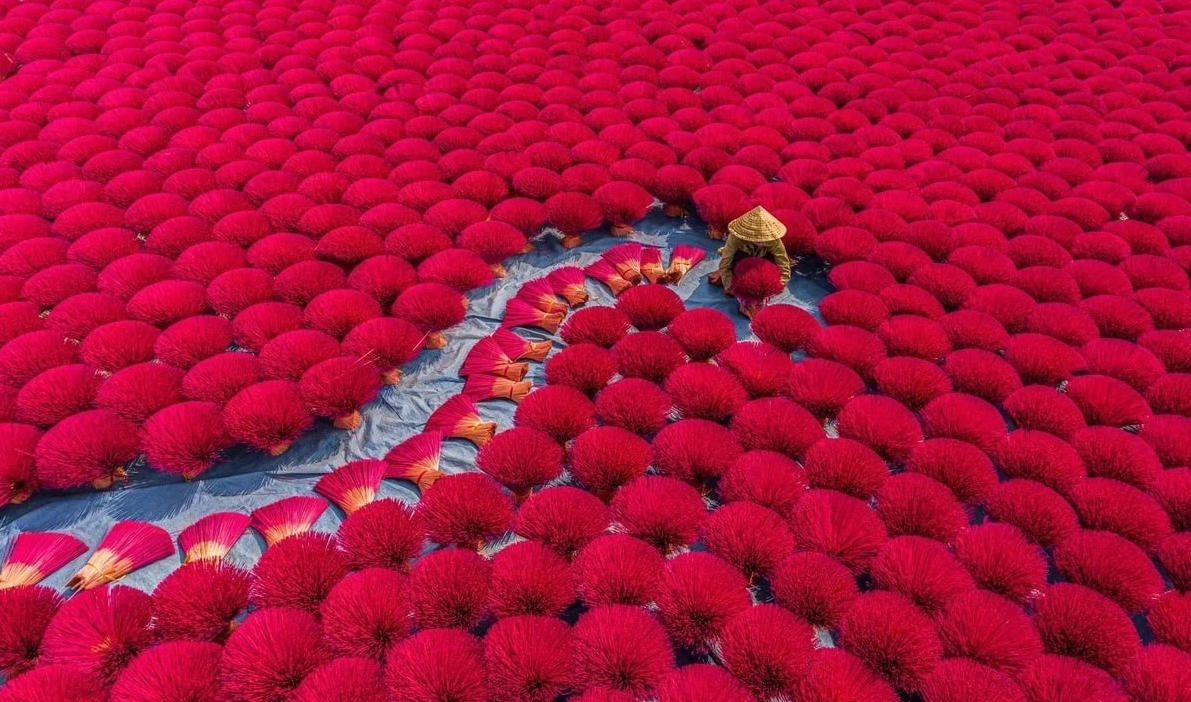 The award-winning photograph Drying Incense, featuring Quang Phu Cau Incense Village, won first prize in Agora's global photography competition under the theme Red, surpassing more than 10,000 entries. Photo: Nong Thanh Toan.
With one of the country's richest concentrations of traditional craft villages, cultural heritage sites, communal houses, pagodas, and indigenous knowledge, Hanoi is well positioned to develop a creative countryside model. By combining heritage with creative design, experiential tourism, and digital technologies, underutilized cultural spaces can be revitalized, giving rise to new cultural products that contribute to local economic development.
This approach also offers a new development pathway for Hanoi's suburban areas. Rather than being viewed solely as agricultural production zones, rural communities can evolve into creative spaces that preserve cultural heritage, generate employment, promote tourism, and contribute to the capital city's economic growth through the sustainable use of local cultural assets.