Viet Nam and the UK are actively resolving trade barriers for agricultural, forestry, and fishery products, bringing concrete substance to the Comprehensive Strategic Partnership between the two nations.
On August 13, in Hanoi, Deputy Minister Nguyen Quoc Tri held a meeting with Martin Kent, His Majesty’s Trade Commissioner for Asia-Pacific, and his delegation to discuss solutions for expanding trade in agricultural, forestry and fishery products between Viet Nam and the United Kingdom.
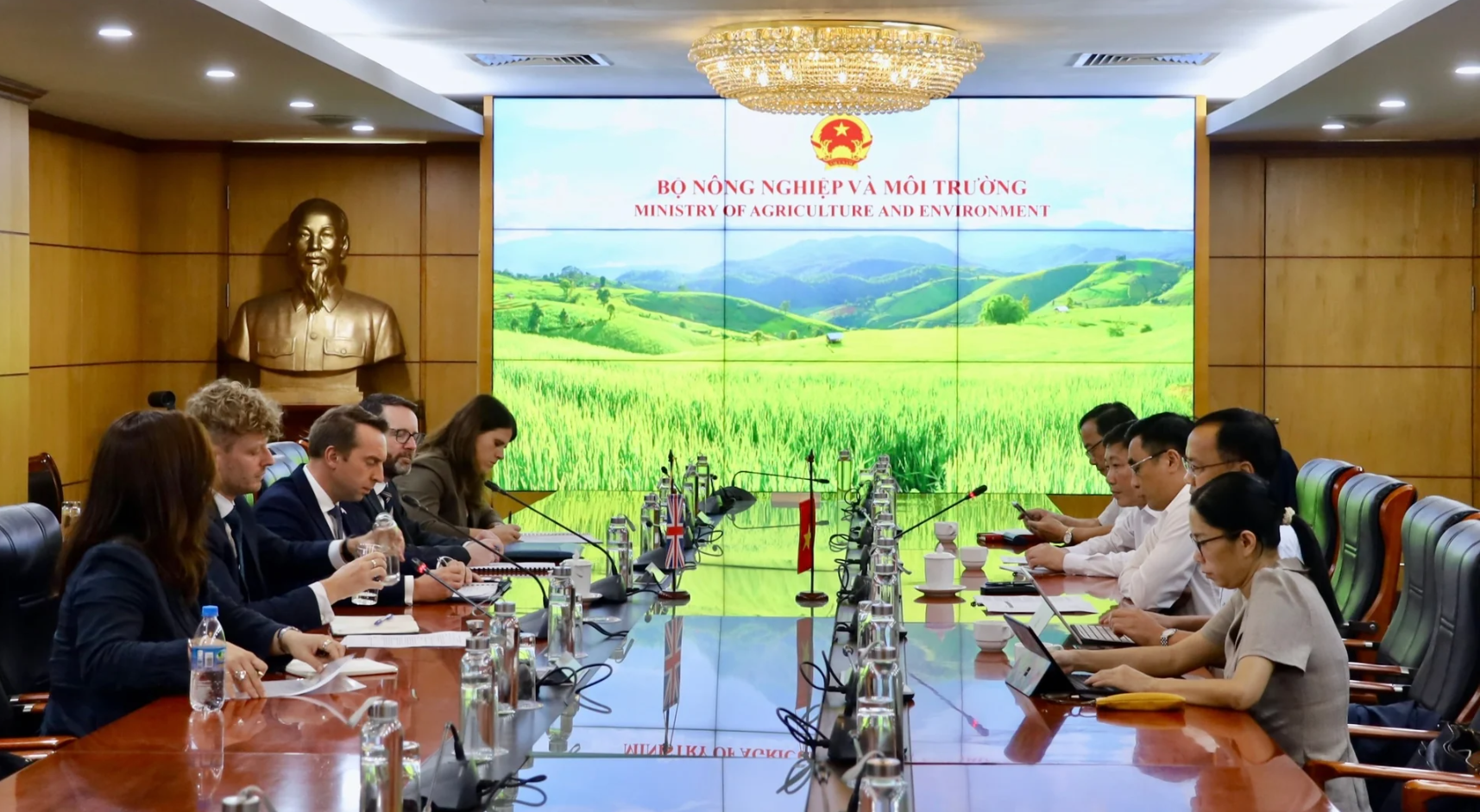 An overview of the meeting between Deputy Minister Nguyen Quoc Tri and Martin Kent, His Majesty’s Trade Commissioner for Asia-Pacific. Photo: Phuong Linh.
Speaking at the meeting, Deputy Minister Nguyen Quoc Tri affirmed that Viet Nam considers the United Kingdom an important trading partner, particularly in the agriculture, forestry and fisheries sector. The elevation of bilateral ties to a Comprehensive Strategic Partnership in 2025 has provided an important foundation for taking agricultural trade cooperation to a new level.
In 2025, bilateral trade in these products reached approximately USD 1.16 billion, up 20% year-on-year. Viet Nam’s exports to the UK alone totaled around USD 1.09 billion, with key products including seafood, timber and wood products, coffee, pepper, and fruits and vegetables.
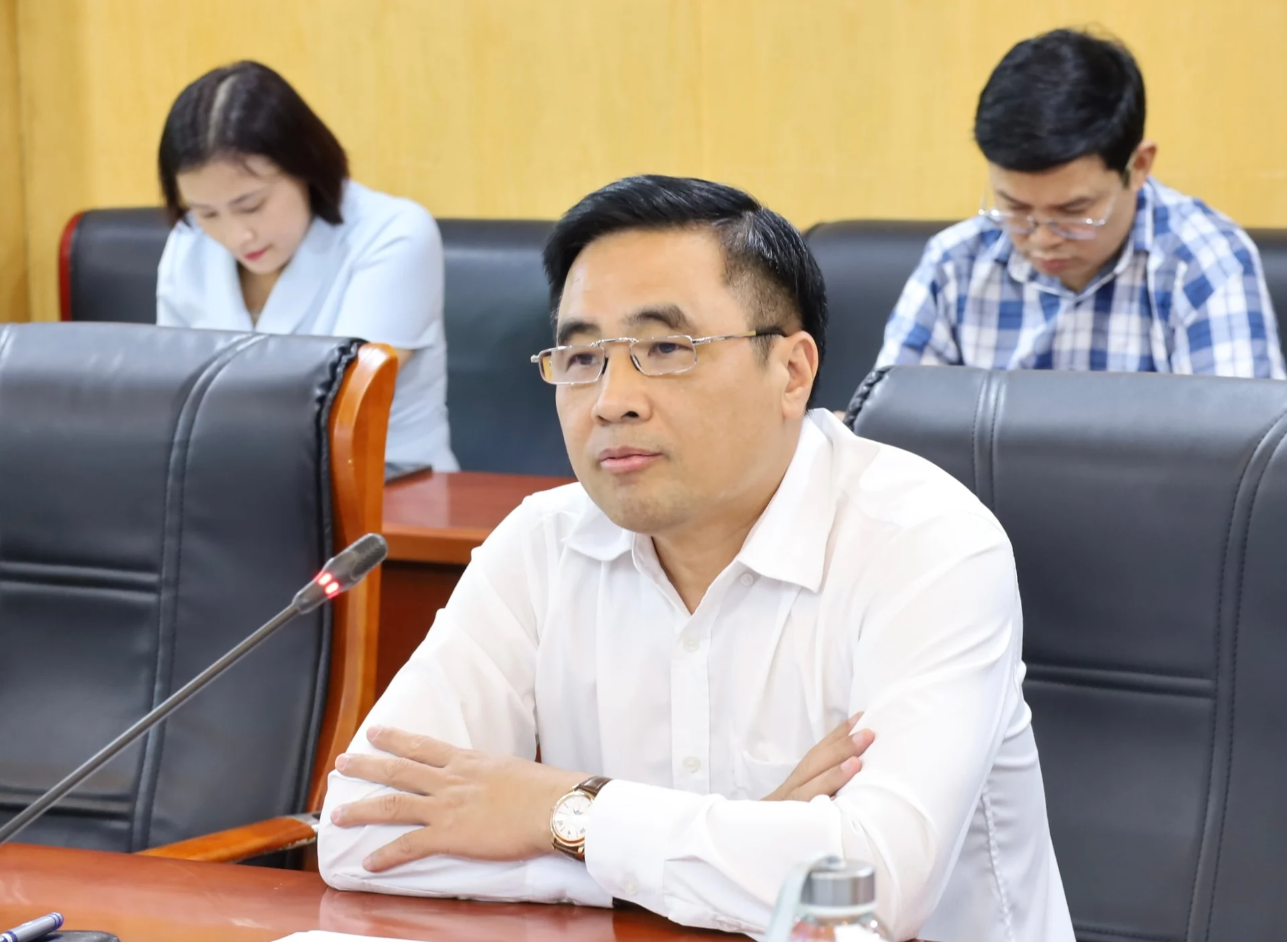 Deputy Minister Nguyen Quoc Tri praised the UK’s contributions to promoting economic and trade relations between the two countries. Photo: Phuong Linh.
“Viet Nam will continue to work closely with the UK to effectively leverage the UK-Viet Nam Free Trade Agreement (UKVFTA) and the Comprehensive and Progressive Agreement for Trans-Pacific Partnership (CPTPP), address technical barriers, expand market access, and facilitate trade for businesses from both countries.
Regarding exports of processed poultry meat, Viet Nam has actively provided information and responded to recommendations following inspection visits. In the spirit of cooperation and trade facilitation, we request that the UK review the dossiers and issue its conclusions soon, enabling businesses that have been assessed as meeting the requirements to access the UK market, while ensuring compliance with the SPS requirements of both sides,” the Deputy Minister said.
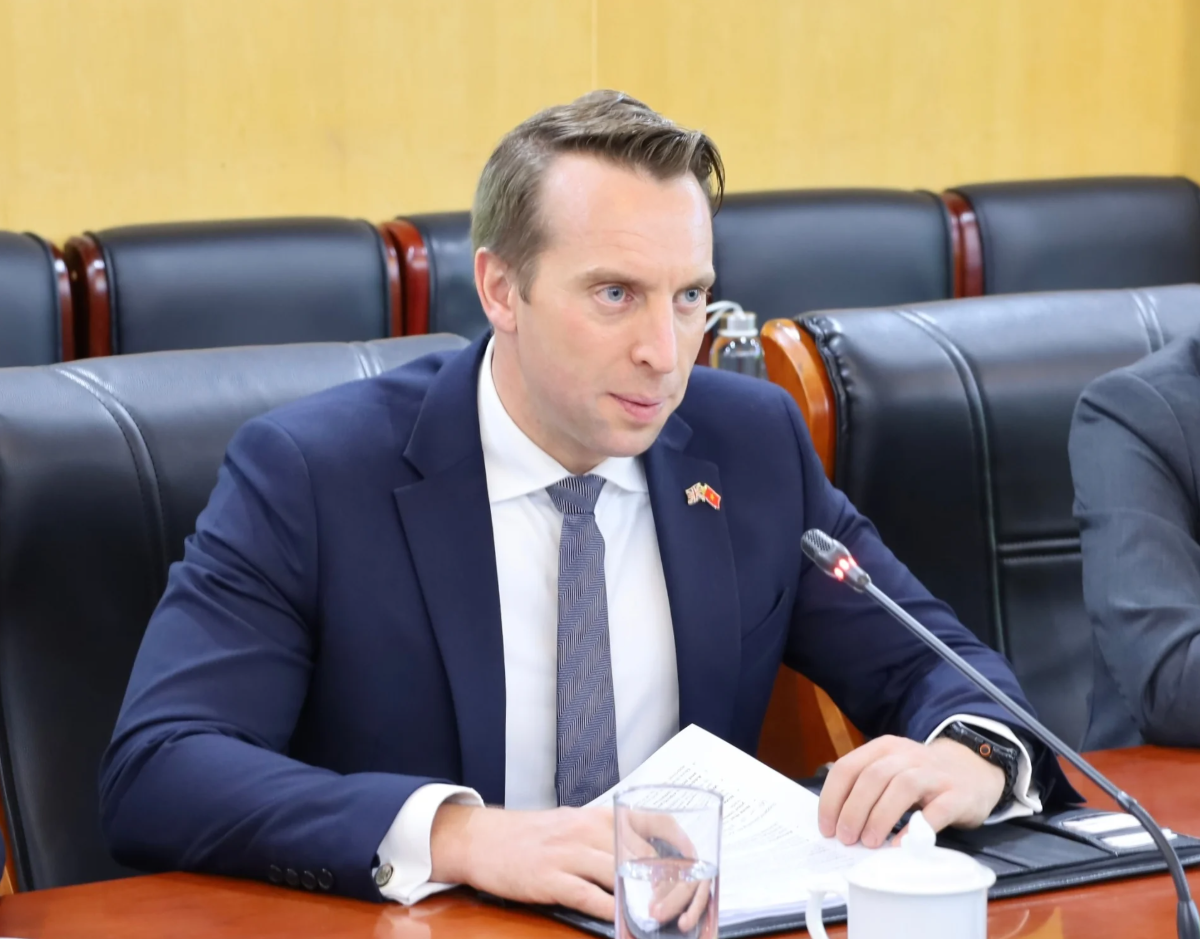 According to Trade Commissioner Martin Kent, Viet Nam is one of the UK market’s important agricultural suppliers, particularly for products such as seafood and cashew nuts. Photo: Phuong Linh.
Trade Commissioner Martin Kent said agricultural trade between Viet Nam and the UK is highly complementary. Viet Nam is one of the UK market’s important sources of agricultural products, with a range of products popular among British consumers, including meat, shrimp and cashew nuts.
However, UK businesses still face some difficulties in registering establishments eligible to export meat and seafood, restoring trade in processed animal protein (PAP) products, and meeting inspection requirements for imported salmon.
Therefore, Trade Commissioner Martin Kent called for the competent authorities of both countries to strengthen exchanges, clarify remaining differences, and seek solutions at an early date that both facilitate trade and ensure food safety, quarantine and international standards requirements.
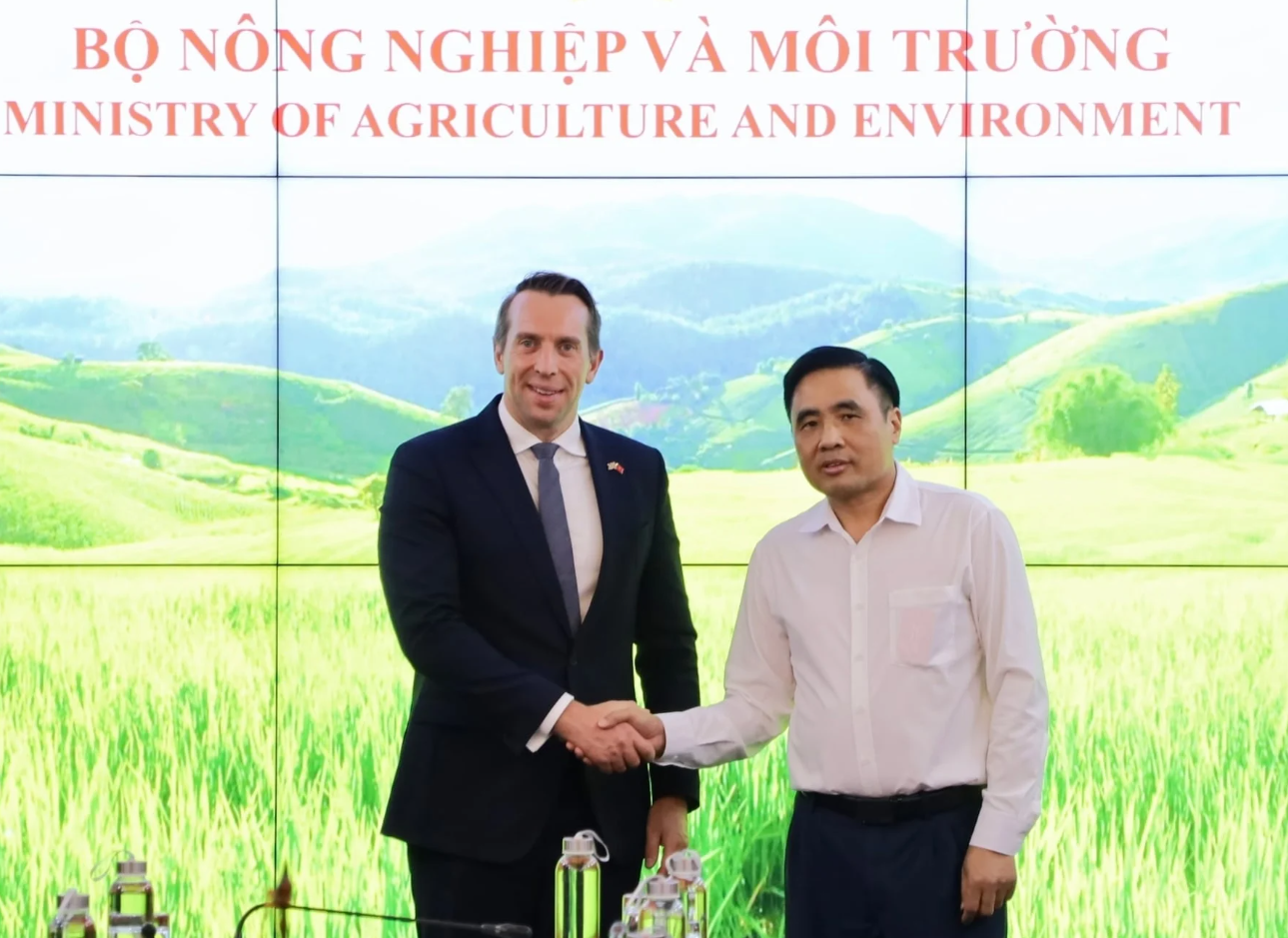 Deputy Minister Nguyen Quoc Tri and Martin Kent, His Majesty’s Trade Commissioner for Asia-Pacific, pose for a commemorative photo. Photo: Phuong Linh.
Addressing these issues, Deputy Minister Nguyen Quoc Tri affirmed that Viet Nam is ready to work with the UK in a constructive and transparent manner, in accordance with each side’s regulations.
Regarding agricultural imports and exports, the Department of Animal Health and Production is continuing to review and process relevant dossiers in accordance with regulations. The Deputy Minister also called on the UK side to provide complete and timely information so that Vietnamese competent authorities have a sufficient basis to conduct assessments and take the next steps.
“We take note of the UK’s export proposals and will review appropriate management and inspection approaches in line with international practices and actual conditions, while ensuring food safety and consumer health,” the Deputy Minister said.