The 8th meeting of the Viet Nam National Plastic Action Partnership (NPAP) Working Group was held at the Ministry of Agriculture and Environment on August 11.
The event marks an important turning point as NPAP transitions to a new phase led by Viet Nam, with an autonomous financial and governance mechanism, aimed at accelerating the transition to a circular plastics economy in Viet Nam.
The meeting was chaired by Deputy Minister of Agriculture and Environment Le Cong Thanh, Head of the NPAP Viet Nam Working Group. Co-chairing were two Deputy Heads of the NPAP Working Group: Mr. Iain Frew, Ambassador of the United Kingdom to Viet Nam, and Ms. Ramla Khalidi, Resident Representative of the United Nations Development Programme (UNDP) in Viet Nam. Attendees included representatives from the Global Plastic Action Partnership (GPAP), the NPAP Secretariat, and ministries, sectors, businesses, international organizations, research institutes, and social organizations.
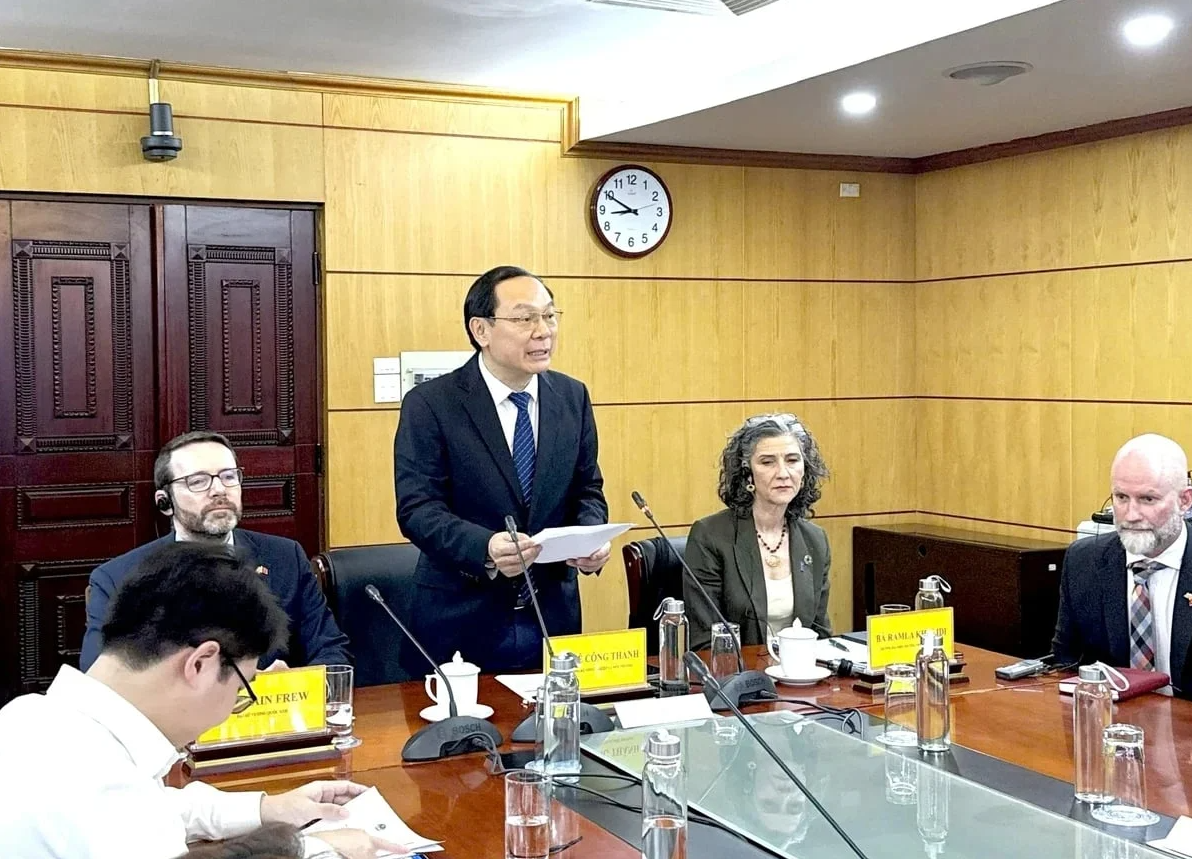 Deputy Minister of Agriculture and Environment Le Cong Thanh, Head of the NPAP Viet Nam Working Group, chairs the meeting. Photo: Trung Nguyen.
5 directions on a multi-stakeholder cooperation platform
The Viet Nam National Plastic Action Partnership (NPAP) was established in 2020 to address the plastic pollution challenge through a multi-stakeholder collaboration model. To date, NPAP has gathered over 200 member partners, connecting state management agencies, the private sector, development organizations, research institutes, and social organizations around a common goal: reducing plastic pollution and building a circular economy in Viet Nam.
During 2025 and the first half of 2026, NPAP Viet Nam actively supported policy dialogues on waste management and at-source waste segregation, while promoting the implementation of the Extended Producer Responsibility (EPR) mechanism. Many key studies have been successfully implemented, including the deposit-refund system (DRS) model, the financial roadmap for plastic actions, the innovation network, and support for the informal waste collection workforce. The platform also created a multi-stakeholder forum to discuss the process of developing the UN Global Agreement on plastic pollution.
In particular, the Financial Roadmap for plastic actions announced by NPAP in late 2025 quantified the financing gap for plastic waste management in Viet Nam at around USD 5.2-7 billion. This is both a major challenge and an opportunity for vast investment space, inviting domestic and foreign partners to join in cooperation and resource transformation.
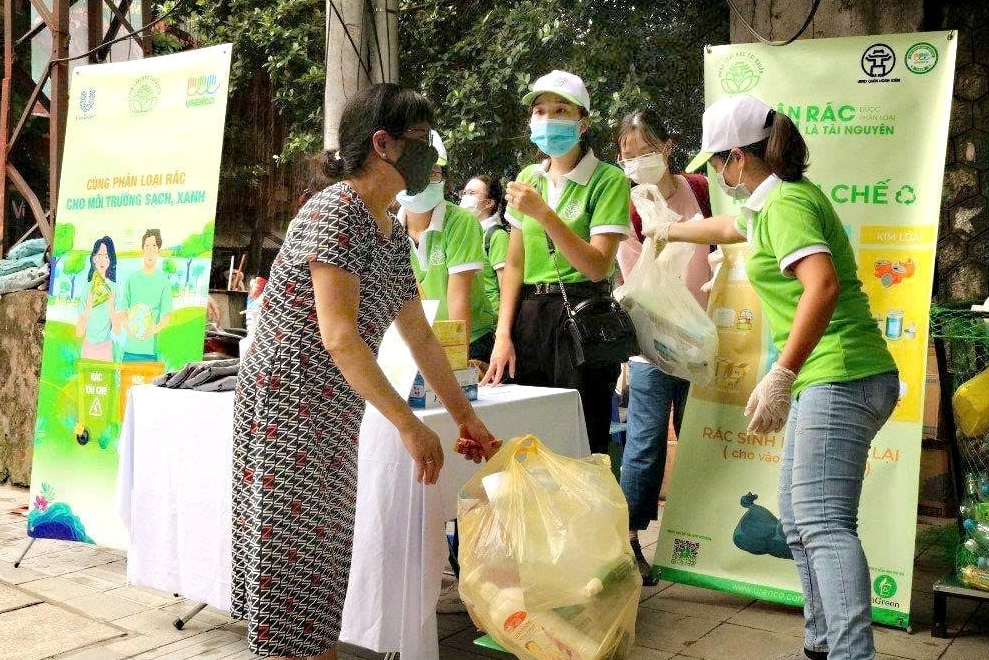 Community-participated used plastic collection and sorting activities. Photo: Hoang Hien.
Deputy Minister of Agriculture and Environment Le Cong Thanh, Head of the NPAP Viet Nam Working Group, stated: Viet Nam is entering a new phase in plastic waste management and circular economy development. Therefore, it is necessary to prepare right now for a new development phase of NPAP, the sustainable maintenance phase, when Viet Nam gradually takes more ownership of institutions, governance, resources, and operational directions.
The Head of the NPAP Viet Nam Working Group outlined 5 guiding pillars for NPAP's development: "Viet Nam leads - Partners accompany - Businesses participate - Diverse resources - Substantial impacts". The Deputy Minister emphasized that NPAP does not focus on the number of activities but must aim for better policies, replicable models, more effective investment flows, and ultimately, a reduction in plastic leakage into the environment.
Commitment to accompany from international partners
Representing a partner country from the early days, Mr. Iain Frew, UK Ambassador to Viet Nam and Deputy Head of the NPAP Working Group, expressed high appreciation for NPAP Viet Nam for creating a reliable and effective multi-stakeholder platform for gathering.
This past July, Resolution No. 20-NQ/TW dated July 28, 2026, of the third conference of the 14th Party Central Committee on building and developing Viet Nam into a strong maritime nation, marked a strategic shift from merely focusing on the marine economy to building a strong maritime nation. The policy context further highlights the significance of the NPAP Program in reducing plastic pollution, especially marine plastic pollution. In the coming period, Viet Nam needs to optimize resources to implement the action roadmap with contributions from all partners. Among them, the private sector plays a central role in implementing the EPR mechanism associated with practical solutions.
According to Ms. Ramla Khalidi, UNDP Resident Representative in Viet Nam, the gradual withdrawal of funding sources is also an opportunity to deepen national ownership, strengthen partnerships, and place NPAP on a sustainable foundation for the future. UNDP will continue to co-chair the NPAP Secretariat alongside the Ministry of Agriculture and Environment to support Viet Nam in implementing EPR and unlocking circular investment capital. Simultaneously, updating the National Action Roadmap on Plastics for the 2026-2030 period towards clearly defining responsibilities, investment needs, and criteria for measuring the roadmap's implementation effectiveness.
Identifying specific actions
At the discussion session, Working Group members, development partners, the business community, and international organizations discussed and pointed out existing difficulties and challenges, while proposing specific cooperation directions for the coming period.
One of the key tasks is to review and update the National Action Roadmap on Plastics for the 2026-2030 period, ensuring it aligns with the new policy context, the objectives of the NPAP Program, and the requirements for transitioning to a sustainable development phase.
The new roadmap is not only a technical guidance document but aims to become a coordinating framework for programs, initiatives, and resources at the national level. Within it, clearly identifying priority goals, key programs, responsibilities of participating parties, resource needs, and mechanisms for monitoring and evaluating implementation results.
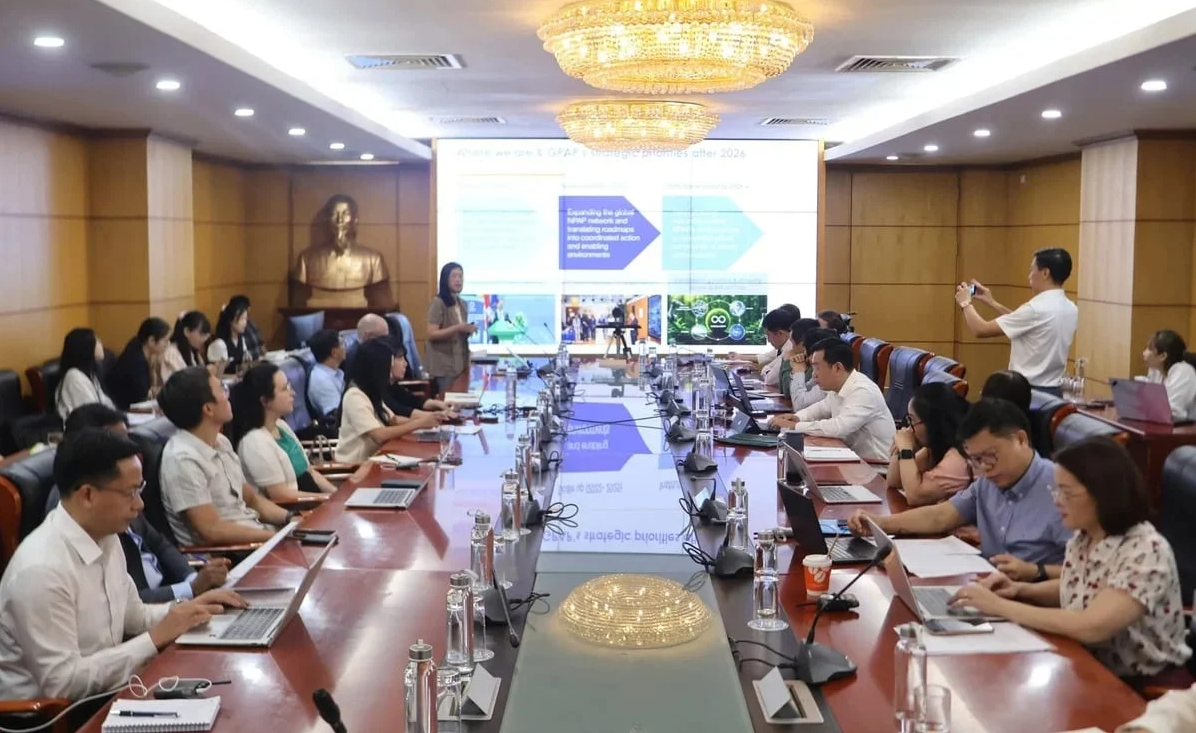 Delegates attending the meeting. Photo: Trung Nguyen.
According to this orientation, the roadmap to 2030 will be built on a tight connection between policy priorities and the investment and practical needs of businesses as they transition to a circular plastics economy. The financial roadmap for plastic actions will be integrated to clearly identify resource needs, investment gaps, and resource mobilization opportunities for priority areas. Thereby, NPAP gradually shifts from a resource mobilization approach for the Program's activities to connecting and coordinating investment resources serving national goals on plastic pollution reduction and circular economy development.
In the immediate future, delegates agreed on the need to prioritize promoting collection and recycling, while continuing to maintain long-term efforts on plastic reduction and reuse. Developing a market for recycled materials, improving the quality of recycled products, and researching suitable solutions for the low-value plastic group were also identified as issues requiring attention in the coming time.
Besides, the effective implementation of EPR, the promotion of circular business models, the development of circular packaging, the deployment of the deposit-refund system (DRS), and the enhancement of plastic data and monitoring will continue to be areas that need to be researched and selected for inclusion in the new Roadmap's priority programs and initiatives. According to the Ministry of Agriculture and Environment's Report, it is possible to consider developing about 6-8 key programs or initiatives, focusing on areas with high potential for impact and the ability to mobilize private-sector participation.
Updating the Roadmap will also be linked to the requirement of measuring substantive results and impacts. Instead of just tracking the number of deployed activities, the monitoring and evaluation system will measure specific changes in policies, investments, collection-recycling capacities, and the extent of plastic pollution reduction, thereby providing a basis for parties to jointly track progress and adjust solutions during implementation.