The 'Empty Chair' dialogue at COP17 called on the international community to create more opportunities for young people to participate in nature conservation and have a greater say in decision-making.
At the 17th session of the Conference of the Parties to the Convention on Biological Diversity (COP17) in Yerevan, Armenia, three Vietnamese youth representatives led a dialogue titled “The Empty Chair: Missing from the Room, Present in the Work” at the Youth Pavilion.
The event was organized by WWF-Viet Nam’s People Powering Biodiversity (PPB) project in collaboration with the Viet Nam chapter of the Global Youth Biodiversity Network (GYBN Viet Nam). It attracted more than 30 international delegates. The three Vietnamese organizers were Hai Anh, Kieu Oanh and Thien Khoa.
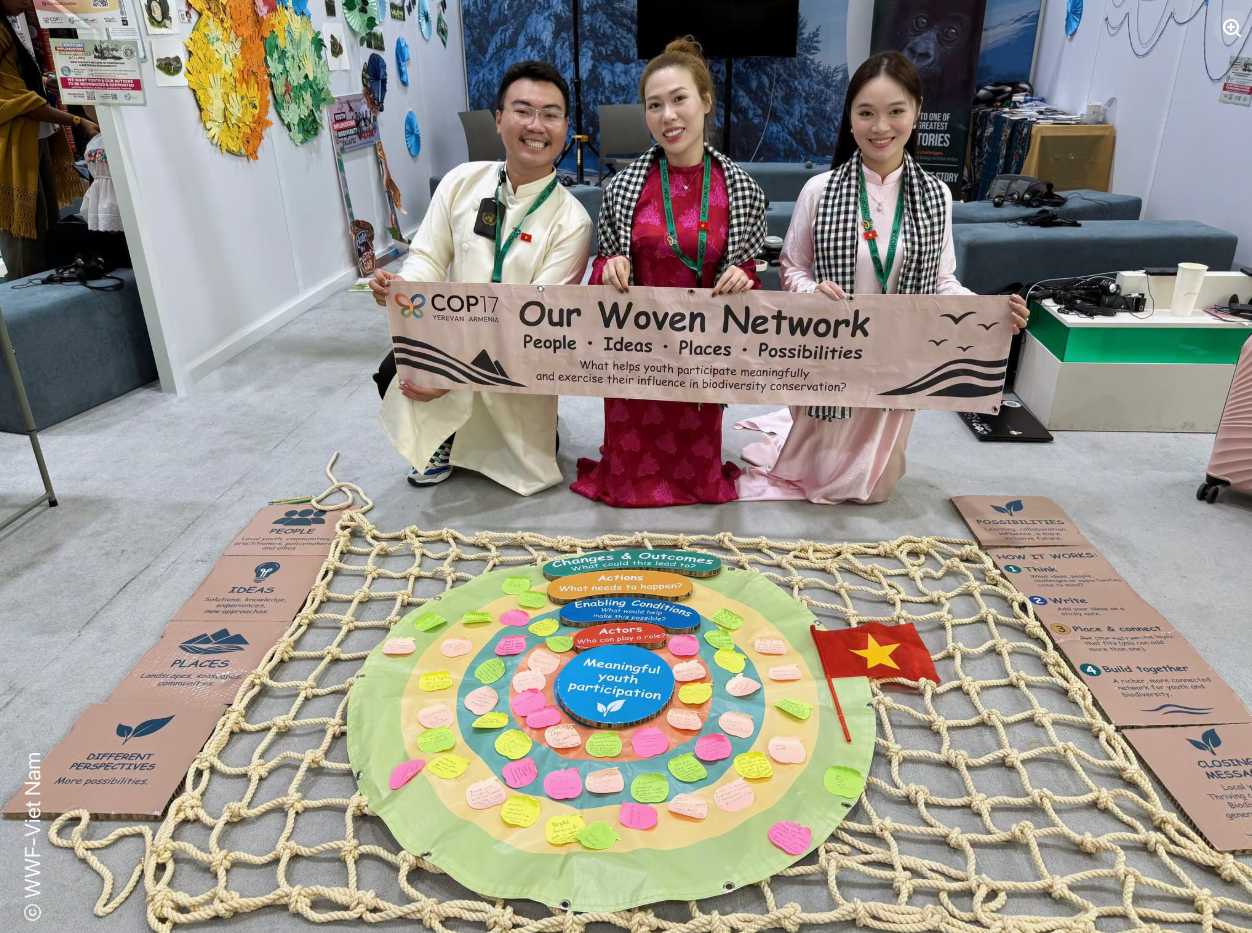 Three Vietnamese youth representatives lead the discussion: Hai Anh (center), Thien Khoa (left) and Kieu Oanh (right). Photo: WWF-Viet Nam.
The dialogue focused on three aspects of youth participation in conservation that are often overlooked: presence and representation; connections and continuity between generations; and the conditions young people need to make meaningful contributions and influence decisions.
Drawing on the experience of the PPB project in Viet Nam, Hai Anh said many young people were already directly involved in conservation efforts in their local communities. The project seeks to strengthen their capacities, provide resources and opportunities, and expand their networks, helping their contributions, experience and voices gain wider recognition.
Kieu Oanh emphasized that young people can remain connected to their communities, local values and traditional knowledge, whether they stay in their hometowns, move away or return later. To strengthen these connections, she said, the foundations must be laid early through education, language and communication skills development, and greater access to hands-on activities.
Thien Khoa argued that having the opportunity to attend a forum does not necessarily mean young people can influence its outcomes. Access to information, networks, mentors, resources and appropriate support can help them move beyond participation to make substantive contributions and help shape future decisions.
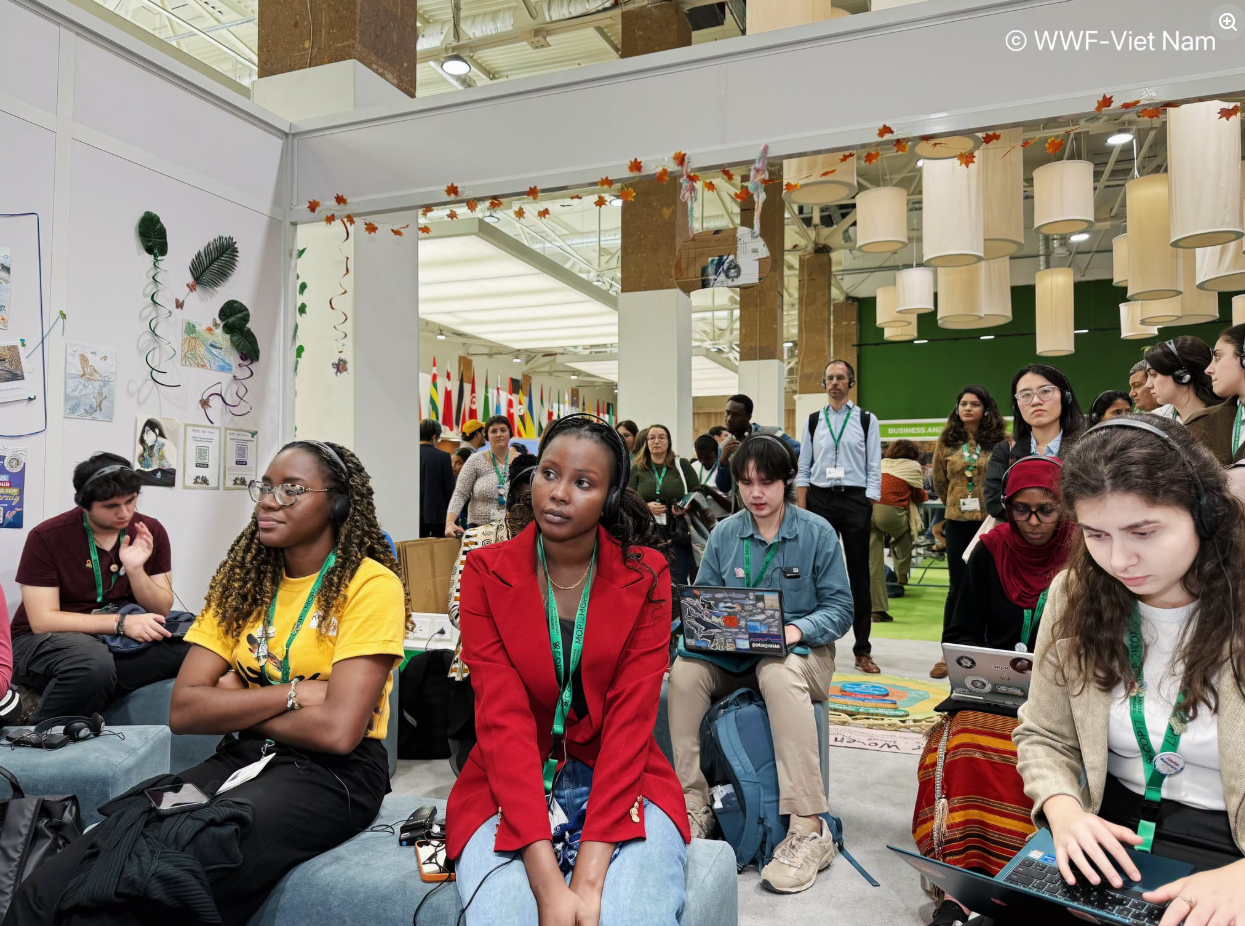 The discussion took place at the Youth Pavilion, with more than 30 international delegates in attendance. Photo: WWF-Viet Nam.
Sharing international perspectives, African representative Sophie Adhiambo highlighted the challenges of connecting local initiatives with broader policymaking processes. She also called for greater investment in young people and more equal partnerships.
Meanwhile, Malaysian representative Mark Liao Jun, founder of Sarawak Eco Warriors and regional coordinator of GYBN Southeast Asia, said young people should be regarded as partners worthy of investment rather than merely as beneficiaries. He also stressed the need to strengthen resource mobilization capacity and diversify funding sources to sustain long-term conservation contributions.
Participants also discussed how contributions rooted in local experience could reach decision-making forums. Although COP meetings give young people a platform to be heard, not everyone can afford to attend. Mechanisms are therefore needed to help those working directly to protect nature and biodiversity in their communities share their experiences, express their views and help shape conservation decisions.
To conclude the dialogue, participants jointly developed the “Woven NETwork” model, bringing together ideas on who should participate, what support is needed, which actions should be taken and what changes are expected. The exercise aimed to promote meaningful participation and strengthen young people's role and influence in nature and biodiversity conservation.