Processing 30 kg of waste daily, the CT-1000 system opens new avenues for leveraging organic waste to produce biogas, electricity, and fertilizer.
Unlocking the value of organic waste
On September 16, in Ha Noi, Viet Nam National University of Agriculture (VNUA), in collaboration with the Japan International Cooperation Agency (JICA) and the consortium of Toyo Fujiko Co., Ltd. and Toyo Energy Solution Co., Ltd. (Toyo), announced the results of a project assessing the potential for sustainable business development in electricity generation and organic fertilizer production using methane fermentation technology to process solid waste in Viet Nam.
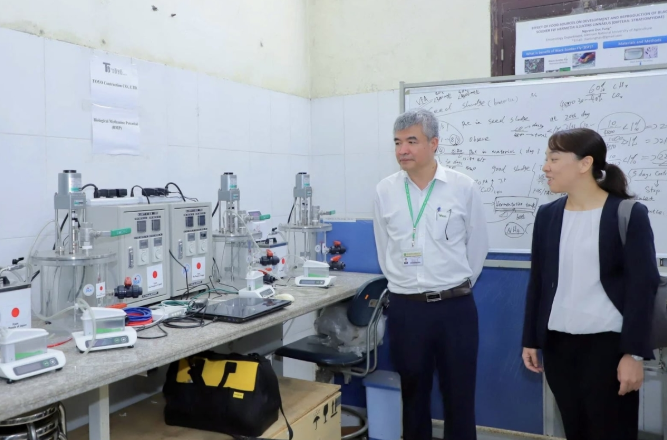 VNUA has mastered the use of a biochemical methane potential (BMP) assessment system. Photo: Lan Chi.
Through the project, Toyo introduced methane fermentation technology at VNUA to raise awareness, promote its adoption in Viet Nam, support a circular resource economy, and contribute to carbon neutrality.
According to Kazuya Matsunaga, Head of the Project Engineering Department at Toyo Energy Solution Co., Ltd. (Japan), methane fermentation uses microorganisms to break down organic waste such as livestock waste, food waste, and sludge in an oxygen-free environment, producing methane and carbon dioxide.
The resulting biogas can fuel boilers or generators to produce heat and electricity, while the digestate can be used as fertilizer. The technology thus treats waste, produces renewable energy, and returns nutrients to agricultural soils.
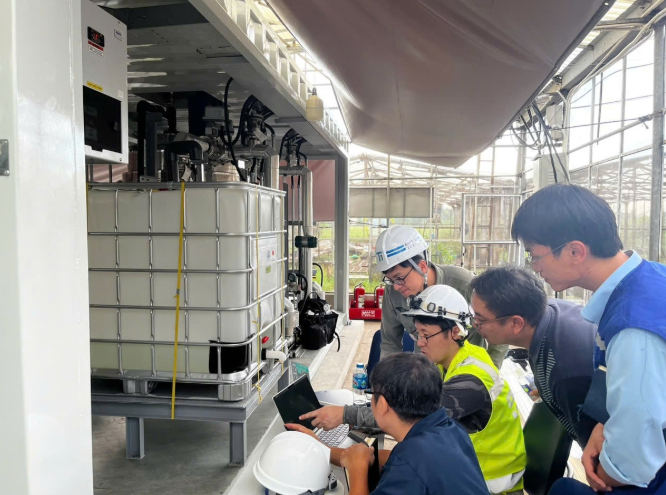 Toyo experts guide VNUA staff in operating the CT system. Photo: VNUA.
Methane fermentation technology is widely used in Europe, Japan, and the United States. Japan has about 300 facilities, with the technology becoming more widespread since around 2000.
At VNUA, the project assessed the methane potential of four common organic waste types, chicken manure, pig manure, food waste, and organic waste, using a biochemical methane potential (BMP) system. The team also completed a process for assessing methane potential for power generation.
The project successfully operated a CT-1000 continuous fermentation pilot system with a capacity of 30 kg of waste per day. The system stably treated organic waste and produced high-quality biofertilizer meeting quality standards.
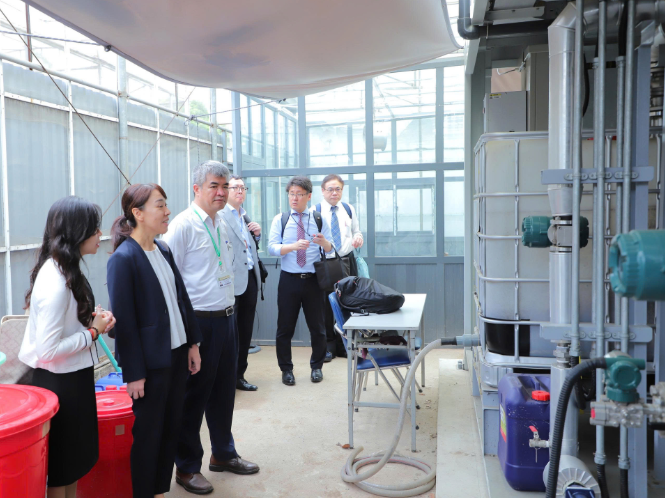 Representatives from VNUA, JICA, and Toyo visit the continuous fermentation pilot system. Photo: Lan Chi.
Organic products processed by the CT-1000 system were tested on four crops, rice, tomatoes, cabbage, and water spinach, to assess their potential as agricultural fertilizer.
The project also transferred equipment and trained staff from the Faculty of Agronomy and Faculty of Environment and Natural Resources to operate the BMP and CT-1000 systems. Initial results show that the university has mastered the BMP process and can operate CT-1000 effectively.
The model helps treat daily household and agricultural waste while producing safe fertilizer, returning nutrients to the soil, and supporting clean agriculture.
Developing systems suited to local conditions
Kazuya Matsunaga said most organic waste in Viet Nam is still disposed of in landfills, which can cause odors, soil pollution, and environmental sanitation problems.
Methane fermentation can help address these issues while turning organic waste into high-quality fertilizer and renewable energy. Waste that was once discarded can thus become a valuable resource.
Producing fertilizer and energy domestically could also reduce reliance on imports and create new business opportunities in Viet Nam.
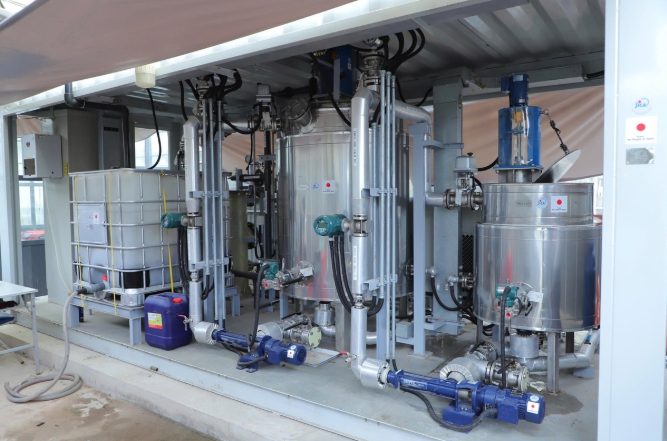 The continuous fermentation pilot system can process 30 kg of waste per day. Photo: Lan Chi.
Toyo plans to continue working with VNUA on education, awareness-raising, and promotion of methane fermentation technology. The university will use the transferred BMP system to assess methane potential from different organic feedstocks.
It also plans to study the use of CT-1000 digestate as crop fertilizer and develop a livestock waste treatment model that produces methane for electricity or fuel, while using the digestate as fertilizer.
Matsunaga said Toyo successfully developed a small-scale methane fermentation system for the first time through the project, gaining valuable practical experience. The company plans to offer both large- and small-scale solutions tailored to customers, local conditions, and the Vietnamese market.
However, Matsunaga noted that Viet Nam still lacks comprehensive regulations and licensing mechanisms for methane fermentation technology. While Europe and Japan have relatively established legal frameworks, Viet Nam needs to further develop regulations from the national to local levels to facilitate wider adoption of the technology.