Following the success of the Can Tho workshop, the Organizing Committee will host the next “ASEAN Eco-Schools Connect, Training, and Experience Sharing - Plastic Waste-Free Schools” session in Hue City later this October.
The ASEAN Eco-Schools Connect, Training, and Experience Sharing Workshop has set the tone for a series of events under the 2025 ASEAN Eco-Schools Award Vietnam, marking the start of a broader movement to promote green initiatives within schools across the country, beginning in Can Tho.
The workshop, titled “ASEAN Eco-Schools Connect, Training, and Experience Sharing - Plastic Waste-Free Schools,” was organized by the Vietnam Agriculture and Nature Newspaper under the direction of the Ministry of Agriculture and Environment, in cooperation with the Green Future Fund and related partners.
 Deputy Editor-in-Chief of Nong nghiep va Moi truong Newspaper, journalist Vu Minh Viet, delivers the concluding address at the ASEAN Eco-Schools Connect, Training, and Experience Sharing Workshop. Photo: Le Hoang Vu.
The event provided schools in the Mekong Delta, especially in Can Tho City, with practical guidance on applying the ASEAN Eco-Schools criteria in teaching, management, and extracurricular programs. Experts and school representatives discussed ways to develop plastic waste-free campuses that are green, safe, sustainable, and resilient to climate change, ultimately creating an optimal environment for students to learn, live, and play.
According to journalist Vu Minh Viet, Deputy Editor-in-Chief of Nong nghiep va Moi truong (Vietnam Agriculture and Nature Newspaper), the 2025 ASEAN Eco-Schools Award Vietnam is an opportunity to strengthen collaboration among stakeholders and inspire young people to take action for the environment.
“These students are the future environmental ambassadors”, Viet said. “By starting with small steps, waste sorting, plastic collection, tree planting, we are sowing the seeds of a greener Vietnam and building a sustainable future through environmental protection and climate action”.
The workshop focused on practical instruction and a clear implementation roadmap for schools and education departments nationwide to follow when adopting the ASEAN Eco-Schools standards.
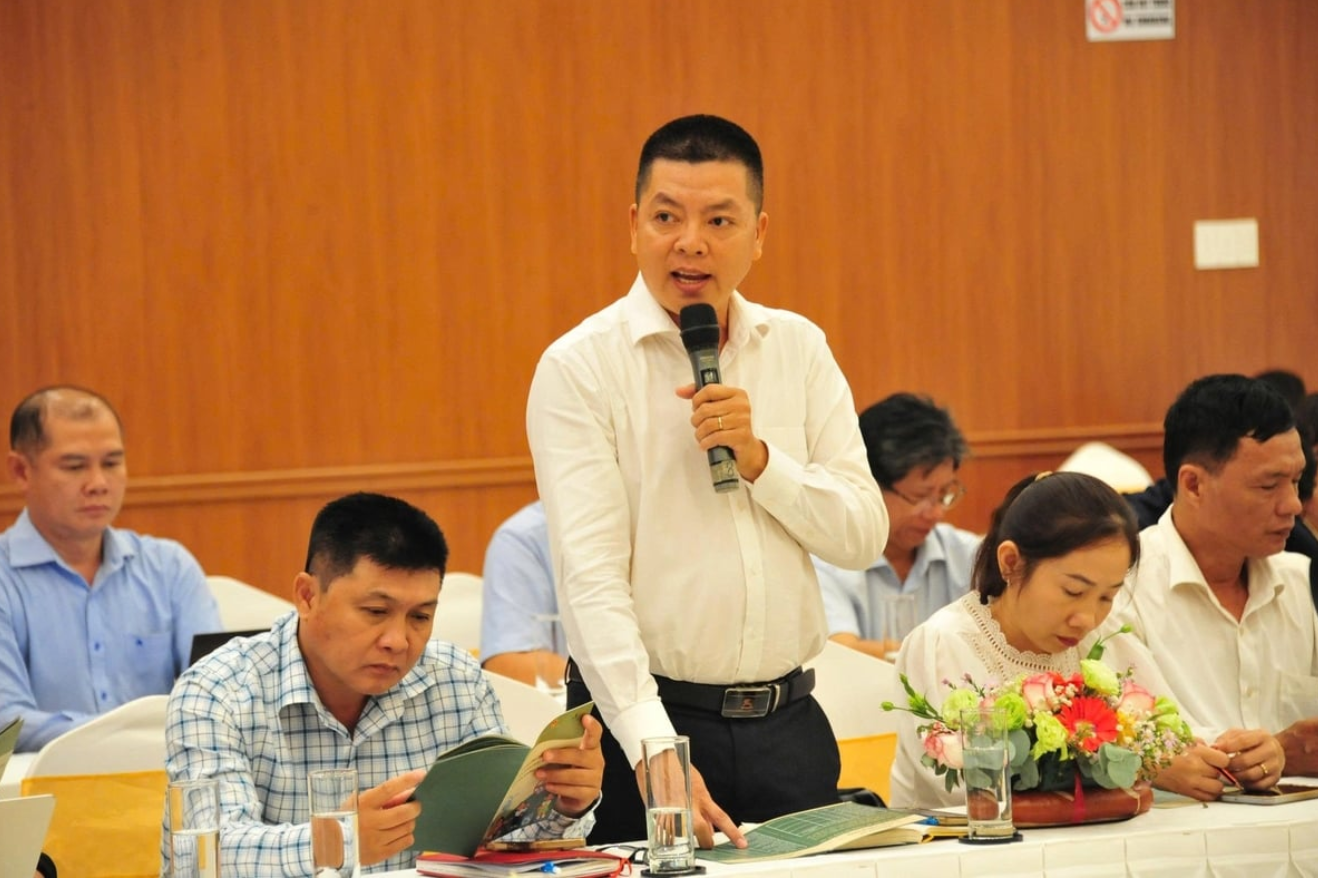 Delegates exchange experiences and learn about eco-school implementation criteria during the workshop. Photo: Le Hoang Vu.
The Organizing Committee encouraged the Departments of Education and Training, along with primary, secondary, and high schools, to actively participate in upcoming events of the Award series in Hue and Hanoi, either in person or online. Schools are also invited to continue registering for the 2025 ASEAN Eco-Schools Award Vietnam, with the Vietnam Agriculture and Nature Newspaper ready to support applicants with any questions or technical issues during the submission process.
“The 2025 ASEAN Eco-Schools Award Vietnam will only succeed when we act together,” Viet emphasized. “With strong engagement from schools and students nationwide, the movement can grow into a lasting, practical force that contributes to building a bright, green, clean, and beautiful Vietnam”.
Later the same day, participants visited Viet My Primary, Secondary, and High School in Hung Phu Ward, Can Tho City - the winner of the 2024 ASEAN Eco-Schools Award Vietnam. At the school, students showcased how environmental education is integrated into daily activities: organizing environmental weeks, sorting waste in classrooms, creating recycled crafts from fruit peels, and participating in STEM clubs focused on sustainability.
 A representative of Viet My School shares their experience in building an eco-school model. Photo: Kim Anh.
Following the success of the Can Tho workshop, the Organizing Committee will host the next “ASEAN Eco-Schools Connect, Training, and Experience Sharing - Plastic Waste-Free Schools” session in Hue City later this October.
The Green Future Fund serves as the strategic sponsor of the 2025 ASEAN Eco-Schools Award Vietnam. This marks the second consecutive year the Fund has partnered with the Ministry of Agriculture and Environment to expand the ASEAN Eco-Schools initiative nationwide.
Founded in 1994 by the Foundation for Environmental Education (FEE), Eco-Schools has expanded to over 67 countries, with approximately 19 million students and over 51,000 schools participating.
The Government's adoption of the National Program of Action on Climate Change to 2050 (NPAP) has brought a new level of significance to the expansion of Eco-Schools in Vietnam. This comprehensive strategy emphasizes the importance of education, community capacity-building, and awareness-raising in tackling climate change.