According to statistics in Viet Nam, only 13 products received new Eco-label certification in 2024–2025 under the 2020 Law on Environmental Protection. Meanwhile, the global eco-label market is forecast to reach USD 2.7 billion by 2033.
Mr. Nguyen Dinh Dap from the Viet Nam Academy of Social Sciences said the 2020 Law on Environmental Protection laid the foundation for promoting eco-products, eco-labels, and green public procurement. The Government has introduced many incentives, including environmental tax and fee frameworks, to encourage the development of eco-labels.
Under the Law on Public Procurement and the Law on Bidding, environmentally friendly goods, services, and products with eco-labels are given priority in public procurement packages. The Government has also issued a list of prioritized green public procurement goods and services, aiming for 35% green products by 2035.
 Mr. Nguyen Dinh Dap from the Viet Nam Academy of Social Sciences.
The next priority lies in access to green finance. The Government has issued a catalogue of green finance and a list of green sectors. This helps producers of eco-friendly products gain access to green capital sources. The legal framework is already in place. The question now is how to implement it effectively.
Explaining why the number of certified eco-label products remains modest, with only 13 certified in 2024-2025, Mr. Nguyen Dinh Dap said the Law on Environmental Protection replaced the former “Green Label” with the broader “Eco-label.” This was not a simple technical change. It reflects a shift in perception and management mindset. The former Green Label often assessed only part of a product’s life cycle, usually at the final stage. The Eco-label, however, requires full life-cycle assessment. It evaluates raw materials, production processes, usage, and disposal. It must also meet EU standards and other international benchmarks.
The evaluation process also poses difficulties. Viet Nam allows only six months to maintain documentation, while certification processes can take six months to a year to complete. This creates challenges for businesses.
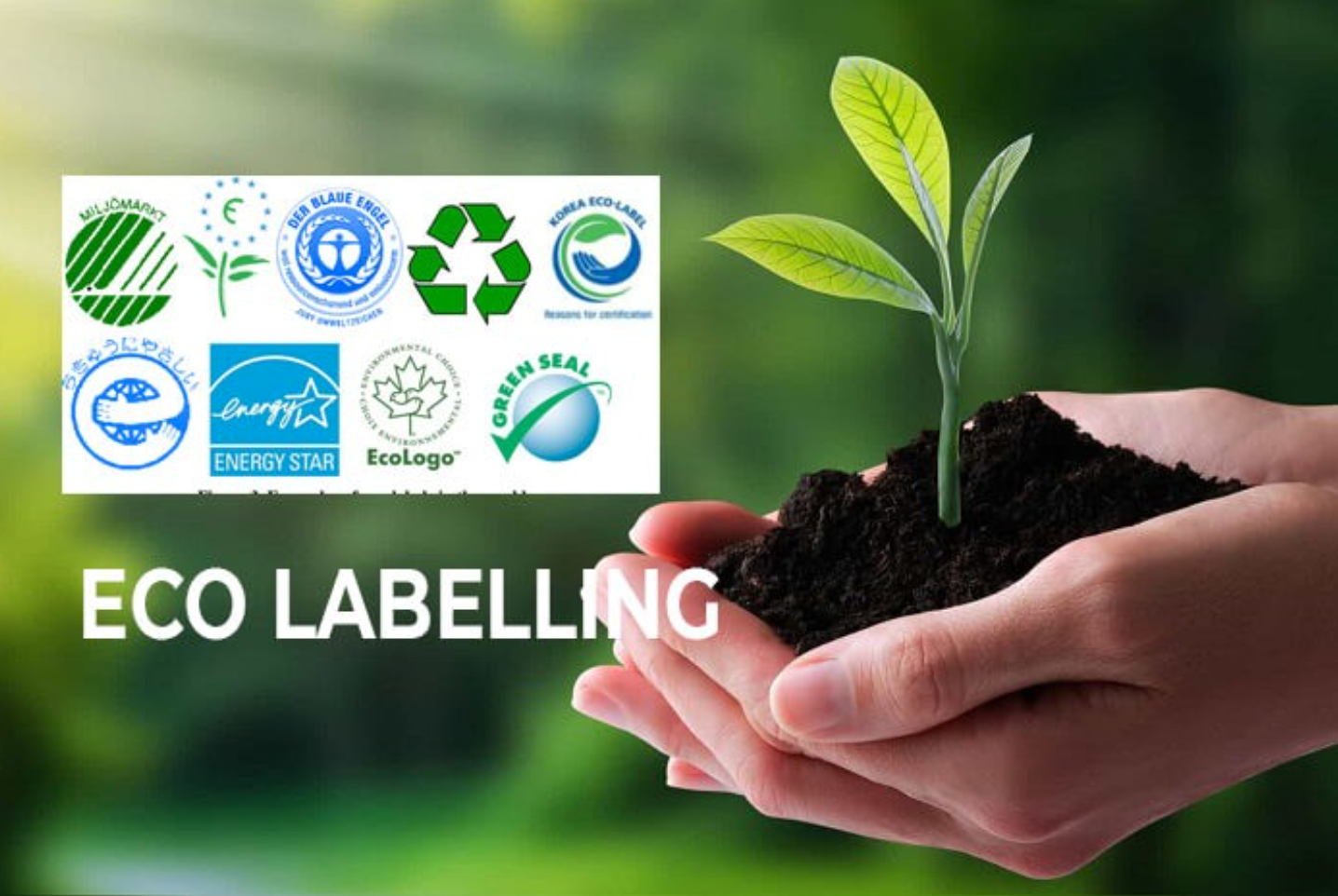 Eco-labels certify products and services that are environmentally friendly.
Although application for eco-label certification is currently free, most businesses cannot complete evaluation procedures on their own. They often need to hire consultants, which increases costs and becomes a barrier.
Sharing the same view, Associate Professor Nguyen The Chinh said the Eco-label concept was only introduced in the 2020 Environmental Protection Law, and it came into effect in 2022. Classification criteria were only finalized in 2025. Therefore, the process cannot be rushed. It also involves awareness and financial capacity of enterprises. Communication has also been limited, so many businesses still do not understand what the eco-label is. Europe spent more than 15 years shaping its eco-label market, so Vietnam cannot expect rapid results.
“At this stage, the Government needs to strengthen communication. Today, brands combine marketing and communication, making eco-labeled products easy to recognize. Sony, for example, shifted from ISO 9000 to ISO 14000 standards and established strong monitoring systems, making it impossible to fake. Vietnamese businesses must also value communication and promotion if they want to gain market share. This is a crucial step,” Associate Professor Nguyen The Chinh emphasized.