The National Blue Carbon Action Partnership (NBCAP) contributes to identifying key conditions for investment in the conservation, restoration, and sustainable management of carbon-rich ecosystems.
Recently, in Ha Noi, The International Cooperation Department (ICD) of Viet Nam’s Ministry of Agriculture and Environment (MAE), the United Nations Development Programme (UNDP) in Viet Nam, through the National Blue Carbon Action Partnership (NBCAP), in collaboration with Flinders University (Australia), convened the dialogue “Advancing Blue carbon action in Viet Nam: From evidence to strategic action”.
The event brought together representatives from government agencies, diplomatic missions, international organisations, development partners, businesses, financial institutions, academia, and national and international experts to advance policy dialogue and identify the enabling conditions needed to mobilise investment in conservation, restoration, and sustainable management of blue carbon ecosystems.
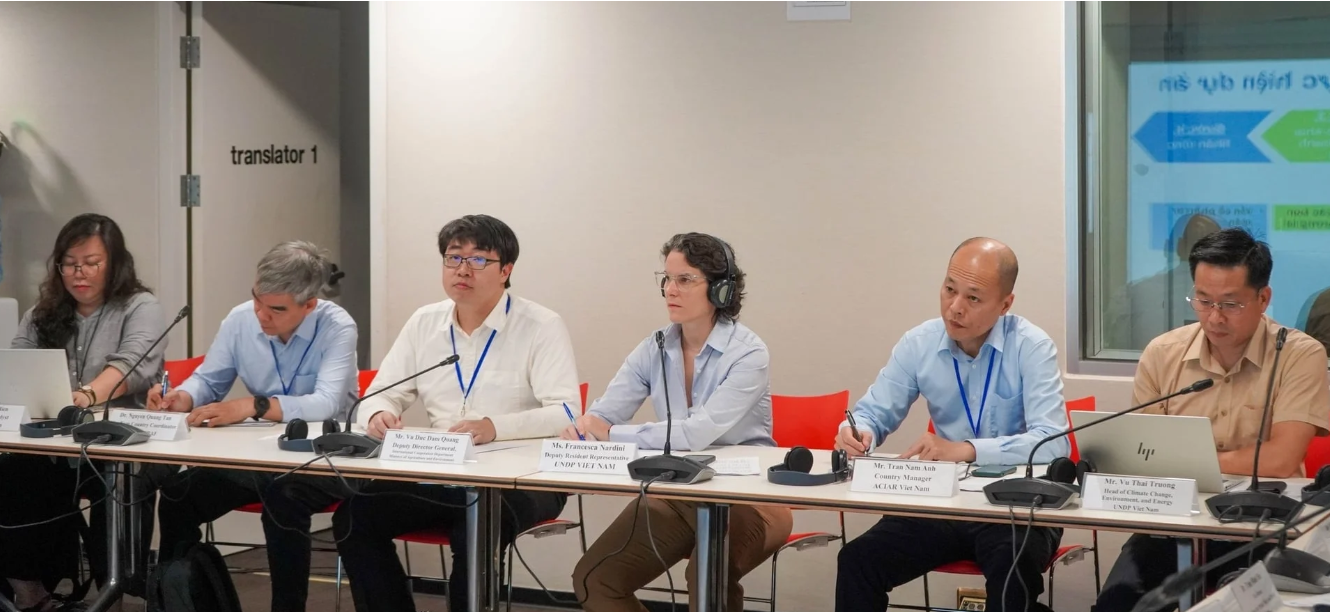 An overview of the dialogue “Advancing Blue carbon action in Viet Nam: From evidence to strategic action”. Photo: ICD.
As Viet Nam accelerates its commitments on green growth, carbon neutrality, and sustainable development, blue carbon ecosystems, including mangroves, seagrasses, and tidal marshes, are increasingly recognised as strategic economic and climate assets. However, gaps remain between this potential and the mobilisation of investment opportunities. Existing challenges in policy frameworks, resource mobilisation, and fragmented initiatives continue to hinder the effective valuation and utilisation of blue carbon in Viet Nam.
During the dialogue, discussions focused on practical solutions to remove barriers and unlock investment for blue carbon in the country. Key priorities discussed included strengthening the legal framework on carbon rights, enhancing national data systems, harmonising Measurement, Reporting and Verification (MRV) standards, and promoting blended finance models. Participants also underscored the importance of developing business models that ensure equitable benefit-sharing for coastal communities.
Representing MAE, Dr. Vu Duc Dam Quang, Deputy Director General of the International Cooperation Department highlights: “The potential of blue carbon should not be viewed solely through the lens of carbon credits or emissions reduction targets. More importantly, these ecosystems serve as a ‘natural shield’, protecting coastlines, conserving biodiversity, and securing the livelihoods of communities that rely on them.
The dialogue comes at a timely moment, as it helps shape priority actions for NBCAP’s next phase while reinforcing the regulatory frameworks to attract investment - a critical enabler for conserving and restoring Viet Nam’s marine and coastal ecosystems.”
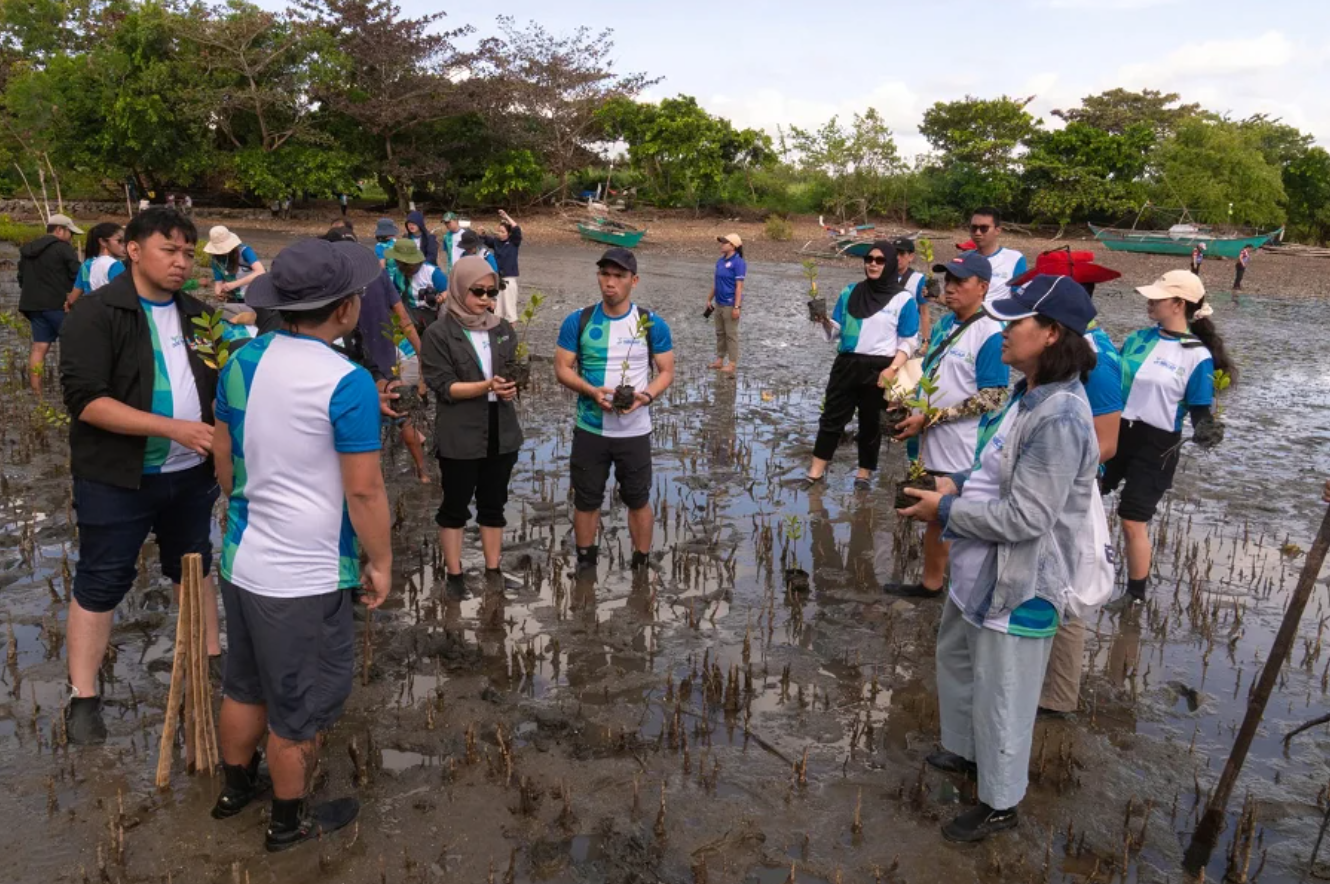 The Ministry of Agriculture and Environment delegation conducted a field visit to mangrove conservation and restoration models in Western Visayas (Region VI). Photo: ICD.
According to Ms. Francesca Nardini, Deputy Resident Representative of UNDP in Viet Nam, blue carbon is a critical nexus, where climate, nature, and development objectives converge. The challenge today is no longer only technical - it is about moving from pilots to systems that can operate at scale, by aligning policy, finance, and implementation.
"In this context, UNDP is proud to host the NBCAP Secretariat in close collaboration with MAE and the World Economic Forum (WEF). We remain fully committed to supporting Viet Nam in accelerating blue carbon solutions that are grounded in local realities, inclusive by design, and financially viable, thereby delivering multiple, lasting benefits," she said.
Since its launch in January 2026, NBCAP Viet Nam has focused on laying a robust foundation through a series of technical workshops and stakeholder consultations across science, policy, and finance. To date, the partnership has engaged more than 350 institutions and experts from the public sector, international organisations, think-tanks, businesses, and communities. Concurrently, NBCAP has been working closely with relevant stakeholders to conduct baseline assessment and develop its coordination mechanism, including the establishment of Leadership Board.
The recommendations and insights generated from the dialogue will inform Viet Nam NBCAP’s action roadmap and define priority workstreams for the next 12-24 months. Priorities include strengthening a transparent legal framework, developing a pipeline of bankable projects, designing appropriate financial instruments, and strengthening national data systems.
Through these efforts, NBCAP aims to foster public-private partnership, expand investment opportunities, and strengthen the linkage between climate action and a sustainable blue economy.