On June 12, the Department of Climate Change organized a workshop titled 'Promoting International Cooperation on Carbon Credit Trading Toward National and Corporate Emission Reduction Commitments'.
On April 1, 2026, the Government of Viet Nam issued Decree No. 112/2026/ND-CP on the international transfer of greenhouse gas emission reduction outcomes and carbon credits, which officially came into effect on May 19, 2026. This is Viet Nam’s first dedicated legal framework for implementing Article 6 of the Paris Agreement. The decree was developed based on the 2020 Law on Environmental Protection, Decree No. 06/2022/ND-CP, and Decree No. 119/2025/ND-CP.
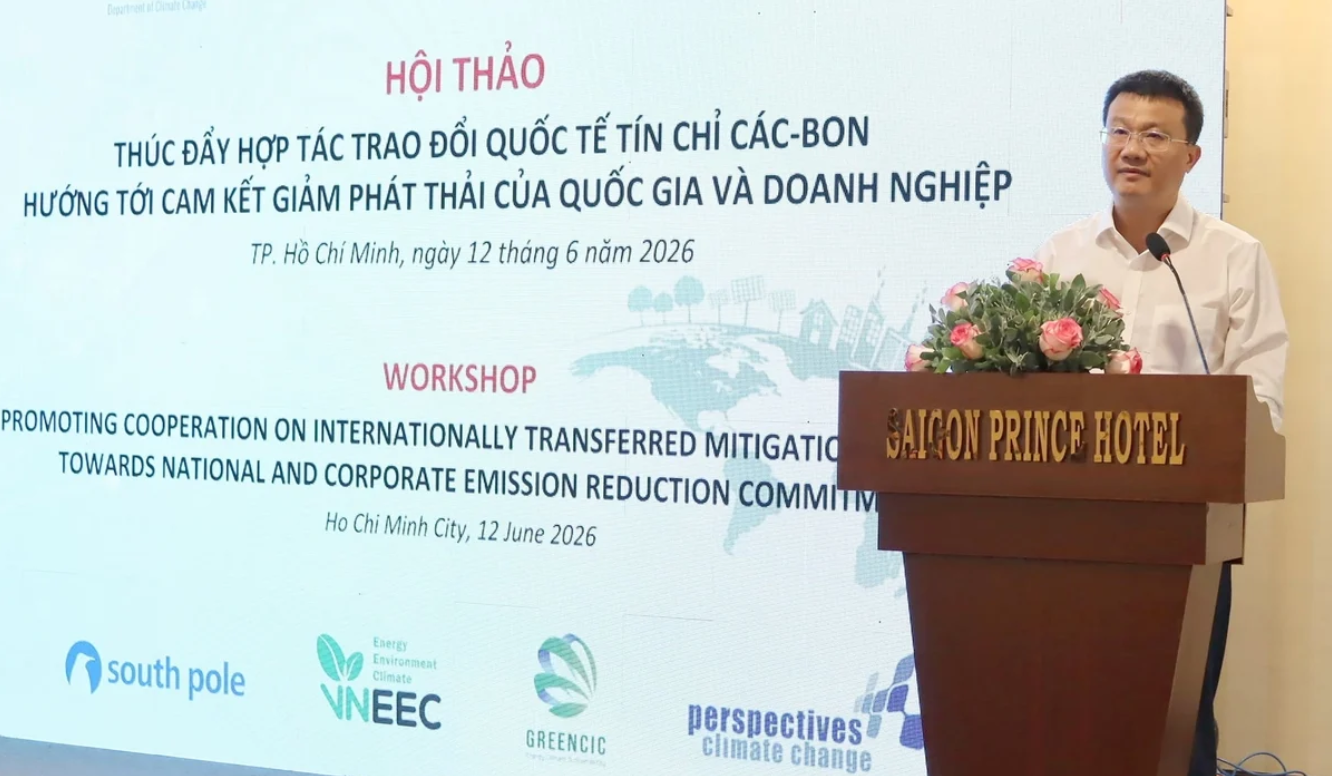 Mr. Nguyen Tuan Quang, Deputy Director General of the Department of Climate Change under the Ministry of Agriculture and Environment, speaks at the workshop on June 12. Photo: Tuong Tu.
During the drafting process of Decree No. 112/2026/ND-CP, the technical assistance project “Enhancing Readiness for Article 6 Implementation and Strengthening the Carbon Offset Credit Standards Framework”, led by the Energy Transition Partnership (ETP) through a consortium of consultants including VNEEC, GreenCIC, Perspectives Climate Group, and South Pole, supported the Ministry of Agriculture and Environment in consolidating international experience, assessing Viet Nam’s readiness, and conducting technical reviews of the draft decree.
Building on this support, the Department of Climate Change, in collaboration with ETP, organized the workshop under the theme “Promoting International Cooperation on Carbon Credit Trading Toward National and Corporate Emission Reduction Commitments”.
Speaking at the event, Mr. Nguyen Tuan Quang, Deputy Director General of the Department of Climate Change under the Ministry of Agriculture and Environment, stated that the workshop is part of a series of activities aimed at improving carbon credit standards and represents a further step toward the effective implementation of Decree No. 112/2026/ND-CP in practice.
The workshop sought to achieve several objectives, including: disseminating and updating stakeholders on the latest provisions of Decree No. 112/2026/ND-CP; assessing Viet Nam’s potential and opportunities for participation in international carbon markets; facilitating dialogue between government agencies and international development partners regarding expectations and support mechanisms for Viet Nam; and updating participants on emerging trends, quality requirements, and transparency standards in the global carbon market in the context of Article 6 implementation.
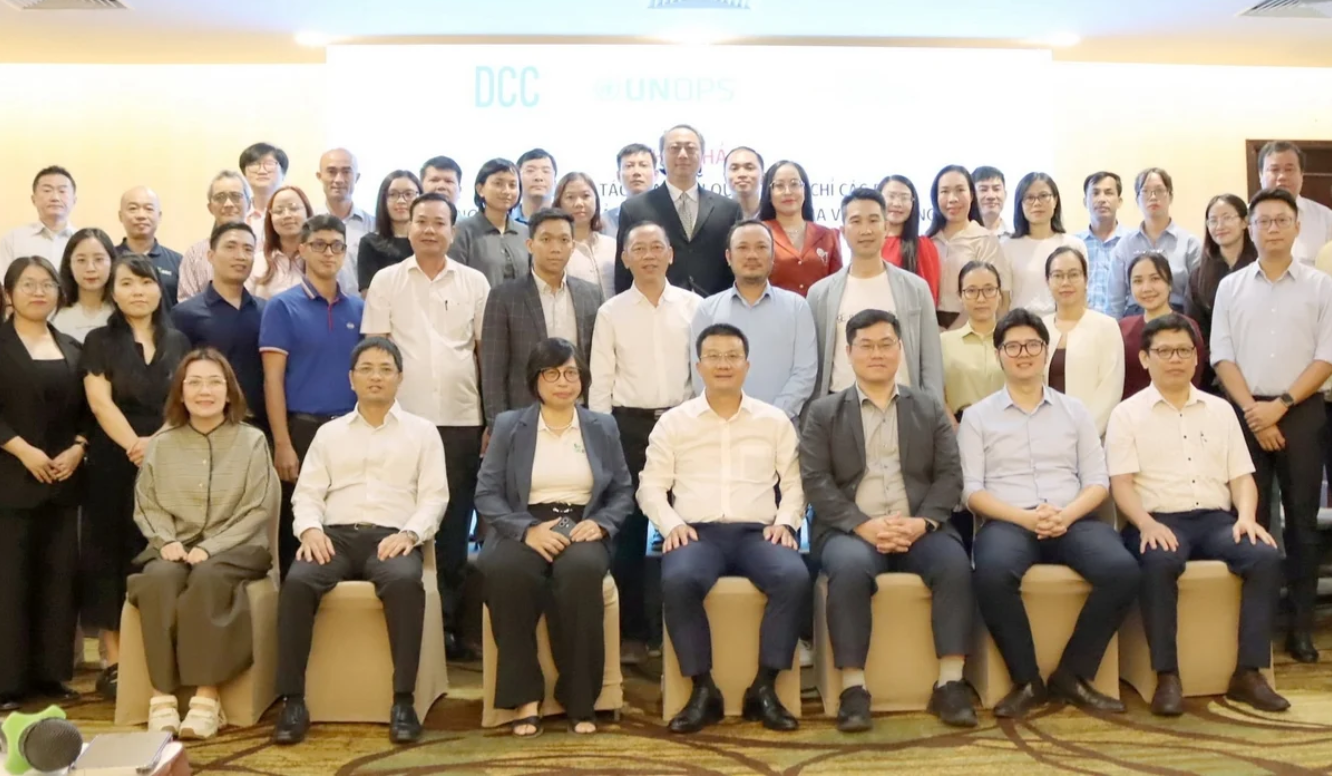 Leaders of the Department of Climate Change (Ministry of Agriculture and Environment) and delegates attend the workshop. Photo: Tuong Tu.
At the workshop, leading domestic and international experts on carbon markets and carbon exchanges presented key topics, including: Viet Nam’s regulations on the international transfer of greenhouse gas emission reduction outcomes and carbon credits under Decree No. 112/2026/ND-CP; analysis of Viet Nam’s potential participation in international carbon markets; international cooperation supporting carbon market development and the country’s transition toward net-zero emissions.
Discussions also covered lessons learned and priority support needs for Viet Nam, the readiness of the private sector for Article 6 transactions, expectations of project developers and buyers regarding Viet Nam’s regulatory framework, a case study on the readiness of AWD rice cultivation projects for international carbon credit transactions, and global carbon market trends following the operationalization of Article 6, particularly in relation to quality, transparency, and implications for Viet Nam.
Through the workshop, representatives of the Department of Climate Change encouraged organizations and businesses - especially those intending to engage in international carbon credit transactions through the Carbon Credit Exchange - to thoroughly study Decree No. 112/2026/ND-CP on the international transfer of greenhouse gas emission reduction outcomes and carbon credits. This will facilitate international carbon credit cooperation and trading while supporting the emission-reduction commitments of both the nation and enterprises in the years ahead.