Quang Ngai’s coastal brown seaweed beds are conserved and developed into value-added products while also being linked with community-based tourism.
Every year, when brown seaweed reaches maturity, the nearshore waters of Van Tuong Commune come alive as local residents harvest this “gift from the sea.” Across the rocky reefs, golden-brown seaweed beds sway with the waves, creating a distinctive seascape along the eastern coast of Quang Ngai Province.
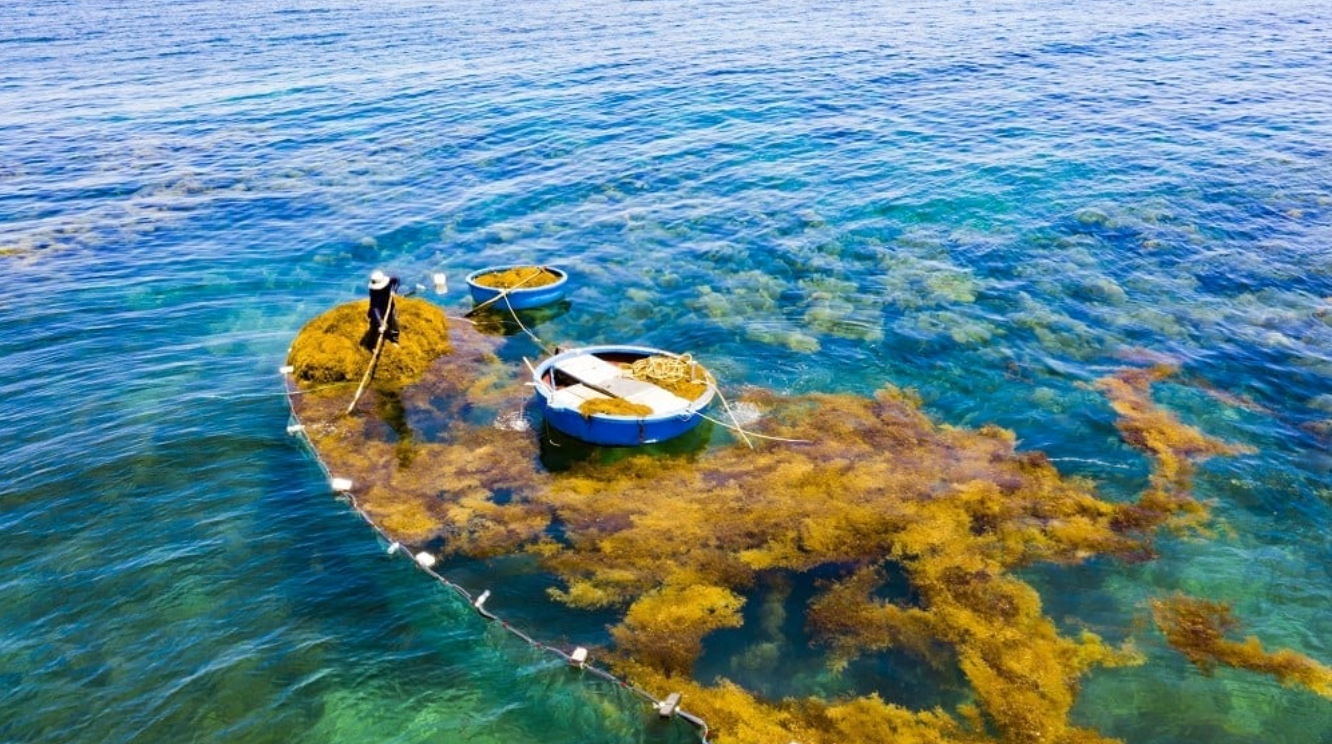 Brown seaweed beds along the coastal waters of Quang Ngai Province. Photo: V.H.
Protecting 'green forests beneath the ocean'
With support from the United Nations Development Programme (UNDP), the Quang Ngai Union of Science and Technology Associations, together with scientists, is working alongside local communities to develop a sustainable value chain for brown seaweed.
According to UNDP research, seaweed beds are often described as underwater forests because of their vital role in mitigating the impacts of climate change. They absorb significant amounts of carbon dioxide helping to reduce greenhouse gas emissions and slow global warming. At the same time, healthy seaweed ecosystems are essential for maintaining rich and diverse marine biodiversity, providing food sources and breeding grounds for a wide range of marine species.
According to statistics, Van Tuong currently has nearly 300 hectares of naturally distributed brown seaweed. Of this area, 151 hectares are located along the coast bordering the villages of Thanh Thuy and An Cuong; 67 hectares lie in the waters adjacent to Phuoc Thien and Le Thuy villages; and the remaining 72 hectares are distributed around Hon Coc, Suoi Khoai, Lan Khe, and Bai Ngao in the Tuyet Diem area.
For many coastal households, brown seaweed provides a significant source of annual income. Depending on yield and market prices, a single harvesting season can generate earnings ranging from several tens of millions of Vietnam Dong.
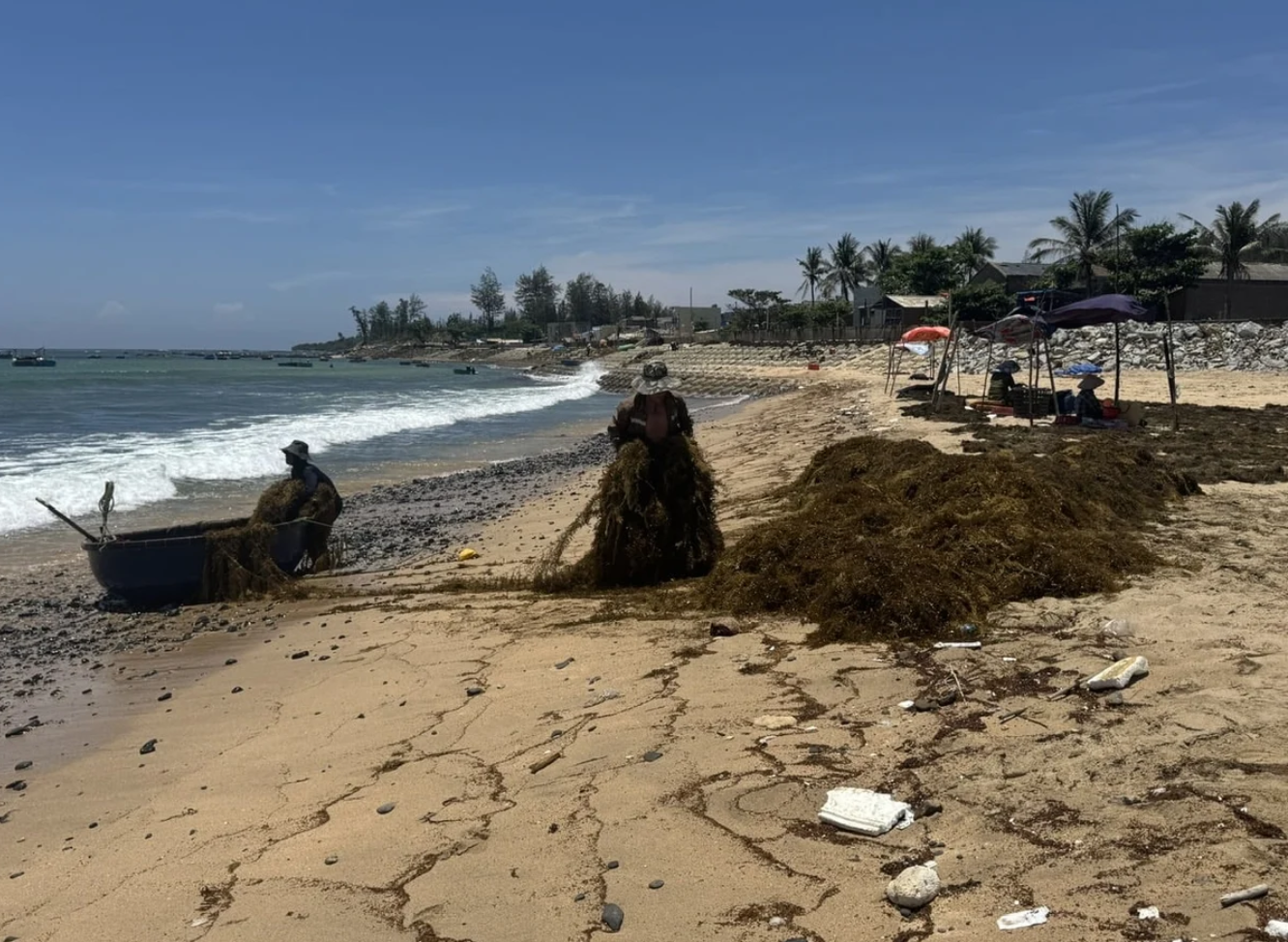 Residents of Van Tuong Commune harvest brown seaweed during the designated harvesting season. Photo: V.H.
Not only Van Tuong, but Dong Son Commune also possesses nearly 190 hectares of brown seaweed concentrated in the coastal waters of Chau Thuan Bien, An Hai, and Phu Quy villages. These vast seaweed beds have become a familiar part of daily life for local fishing communities.
Scientific studies show that brown seaweed serves as habitat, shelter, and feeding grounds for many aquatic species. Healthy seaweed ecosystems help maintain marine biodiversity and contribute to restoring coastal fishery resources, which have been showing signs of decline.
However, this resource has not always been harvested sustainably. In the past, brown seaweed collection was often carried out spontaneously, and at times harvesting occurred before the seaweed had fully matured, negatively affecting its natural regeneration capacity.
Communities join hands to restore marine resources
To protect seaweed beds, local authorities have strengthened community-based management efforts in recent years.
In Dong Son Commune, a Community Group for Fisheries Resource Protection, Brown Seaweed Conservation, and Community-Based Tourism was established in April 2026. Group members regularly conduct awareness campaigns, inspections, and monitoring activities in areas where brown seaweed thrives.
According to Mr. Tran Chau Dung, Head of the group's representative board, regular patrols have helped raise public awareness of the need to protect fisheries resources and to harvest brown seaweed in compliance with regulations.
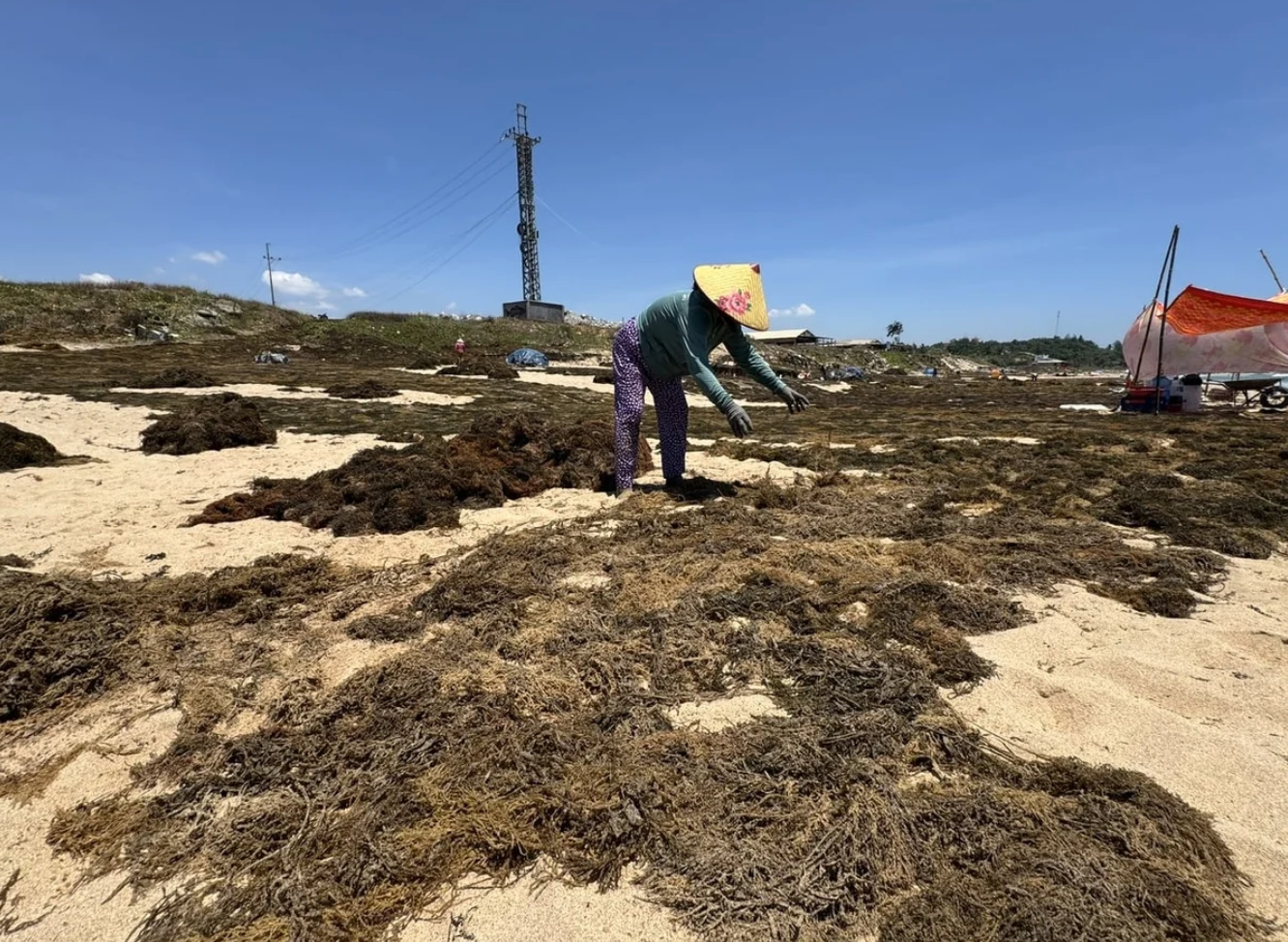 Brown seaweed provides a significant source of income for many coastal households in Quang Ngai Province. Photo: V.H.
Meanwhile, in Van Tuong Commune, residents are only permitted to harvest brown seaweed between June 1 and November 30 each year, when the seaweed has reached maturity and can regenerate for the following season.
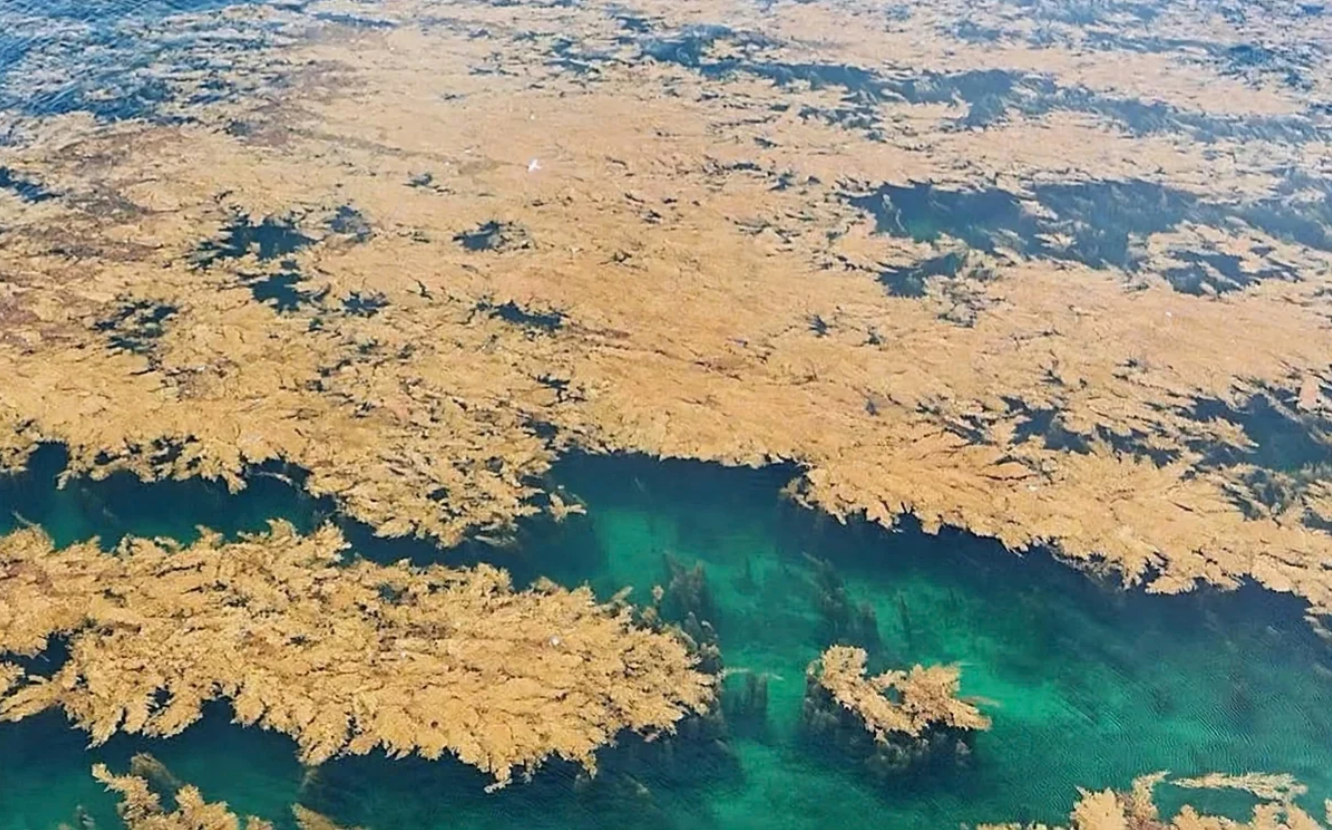 Quang Ngai is promoting the sustainable utilization of brown seaweed resources as part of its broader strategy for developing a blue economy. Photo: V.H.
According to Chairman of the Van Tuong Commune People's Committee, conserving brown seaweed is not merely about protecting a marine plant species. It is a long-term strategy for restoring fisheries resources, safeguarding biodiversity, and sustaining the livelihoods of coastal communities.
Whereas brown seaweed was once sold primarily as a raw material, local authorities are now seeking ways to unlock greater value from this marine resource through deeper processing and diversified product development.