On July 28, the United Nations Development Programme (UNDP) in Viet Nam, together with the Embassy of the Kingdom of the Netherlands and the Institute of Environmental Science and Engineering (IESE) under the Hanoi University of Civil Engineering, launched a Technical Guideline and shared the results of a pilot project and a feasibility study on industrial wastewater reuse.
The activities are part of the Advancing Circular Economy for Businesses (ACE-Biz) project.
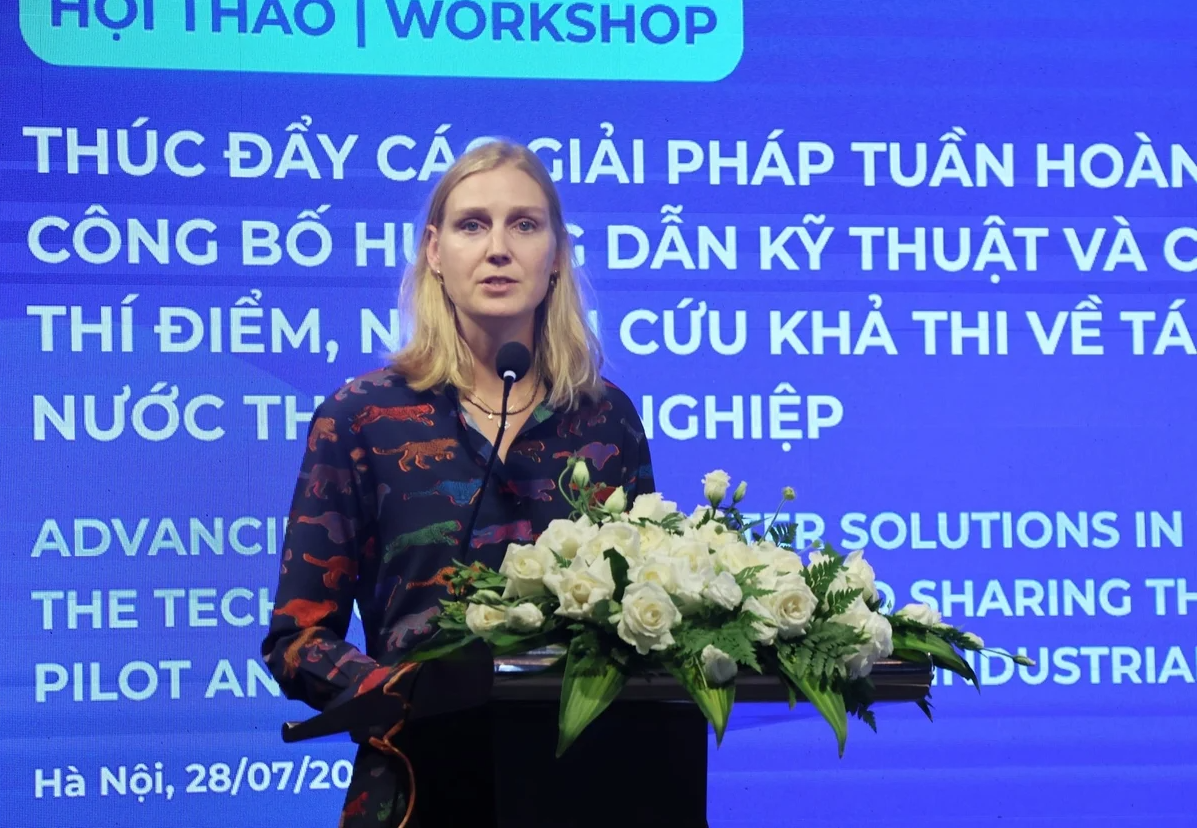 Ms. Fleur Gribnau, First Secretary of the Embassy of the Kingdom of the Netherlands in Viet Nam, speaks at the workshop. Photo: Trung Nguyen.
The pilot system has been operating at Dinh Vu Industrial Park (DEEP C1) in Hai Phong City. With a treatment capacity of 1,000 cubic meters per day, it reuses part of the wastewater treated at the park's centralized wastewater treatment plant, which has a total capacity of about 6,000 cubic meters per day. The reclaimed water undergoes additional treatment before being supplied for different uses within the industrial park.
The research team developed three reuse scenarios. Treated water can be used for cooling systems, landscaping and road cleaning, or be further purified for industrial production and part of domestic water demand. Each option was assessed in terms of technical requirements, financial performance, environmental benefits, and health safety, helping businesses choose solutions that match their operational needs and investment capacity.
One of the study's key features is its use of a health risk assessment approach rather than focusing only on the quality of treated water. The researchers evaluated the entire process - from technology selection and system operation to water quality monitoring and distribution management - to ensure the reclaimed water is safe and suitable for its intended use while minimizing risks to both people and the environment.
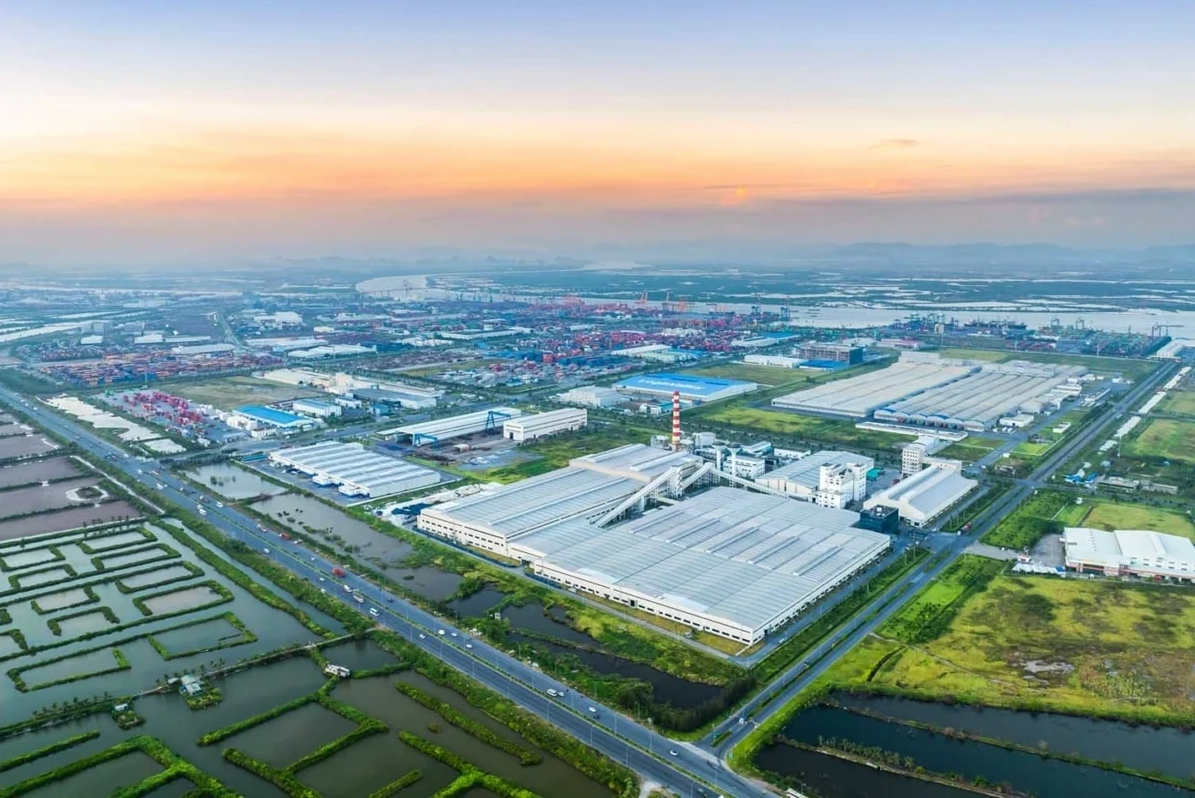 A pilot project on reusing treated wastewater has been implemented at the Dinh Vu Industrial Park (DEEP C1) in Hai Phong City. Photo: Dinh Vu Industrial Park.
According to Prof. Dr. Nguyen Viet Anh, Director of the Institute of Environmental Science and Engineering at the Hanoi University of Civil Engineering, wastewater reuse in Viet Nam is evolving from scattered, in-house initiatives into a strategic solution for water security, pollution control, the circular economy, and stronger supply chain competitiveness.
Although the technology is technically feasible, adoption remains limited and uneven. Industrial manufacturing as well as tourism and service sectors have shown greater willingness to adopt wastewater reuse. In contrast, industrial park infrastructure, urban systems, and livestock production still face significant institutional, financial, and operational barriers.
"The biggest obstacle is not the lack of technology, but the absence of a comprehensive operational framework", Prof. Nguyen Viet Anh said.
Bruno Jaspaert, CEO of DEEP C Industrial Zones, shared a similar view. He noted that complex regulations may discourage companies from investing in wastewater reuse. Viet Nam still lacks dedicated technical standards for reclaimed water, clear tax policies, mechanisms for water allocation, and effective measures to prevent cross-contamination between reclaimed water and clean water systems. As a practical first step, he suggested allowing industrial parks to produce and use reclaimed water within their own premises for cooling, irrigation, and manufacturing. This would ensure that thousands of cubic meters of water are put to productive use instead of being wasted.
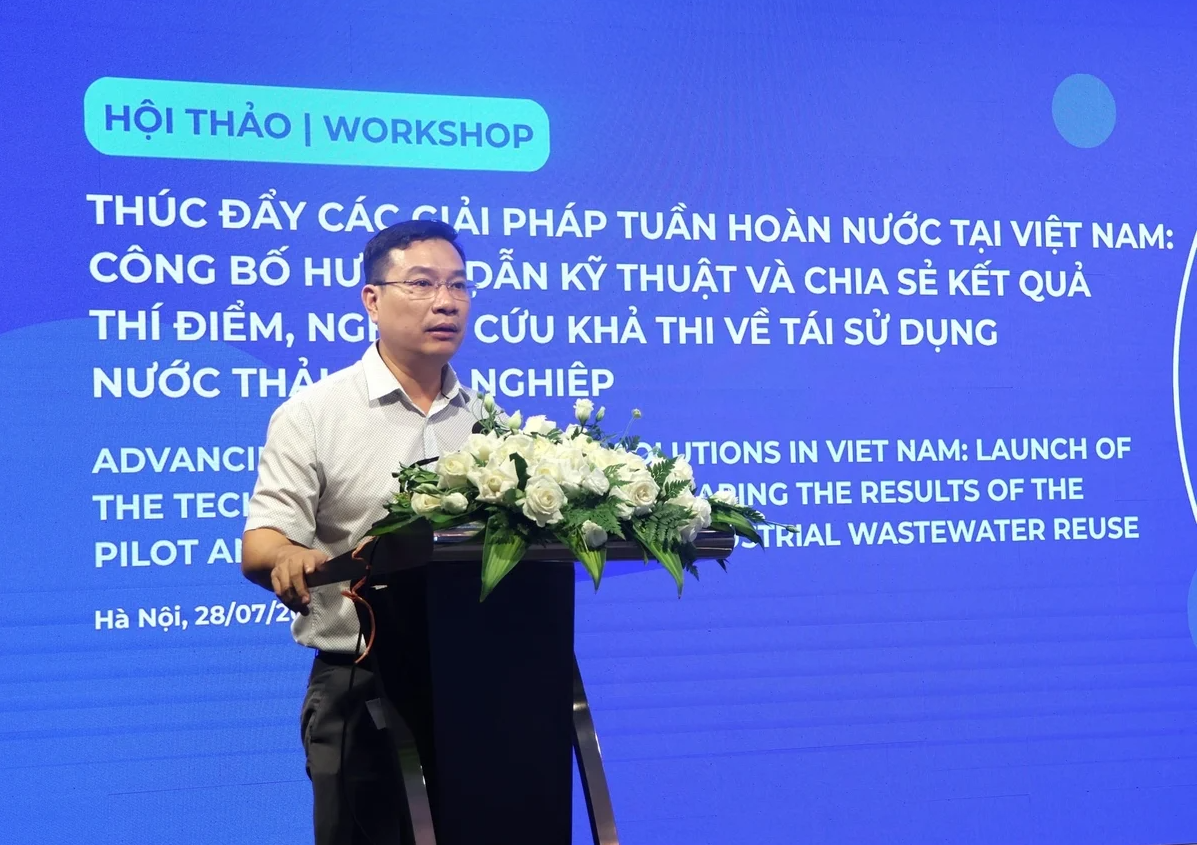 Mr. Ho Kien Trung, Deputy Director General of the Department of Environment under the Ministry of Agriculture and Environment, speaks about the positive findings of the feasibility study. Photo: Trung Nguyen.
Mr. Ho Kien Trung, Deputy Director General of the Department of Environment under the Ministry of Agriculture and Environment, praised the pilot project and its feasibility study. He described the DEEP C model as a practical solution with strong potential for wider adoption. According to him, the project's findings provide valuable evidence to support ongoing revisions to the Law on Environmental Protection and its implementing regulations. Introducing clear legal provisions on wastewater reuse would encourage broader application, not only in industrial production but also across other sectors. This would improve water resource management, reduce pollution, and deliver both environmental and economic benefits.
Ms. Fleur Gribnau, First Secretary of the Embassy of the Kingdom of the Netherlands in Viet Nam, said wastewater reuse helps reduce dependence on raw water sources and improve water efficiency. She stressed that investing in water reuse is an investment in the long-term sustainability of businesses. The Netherlands remains committed to sharing its expertise in water management and advanced technologies with Viet Nam.
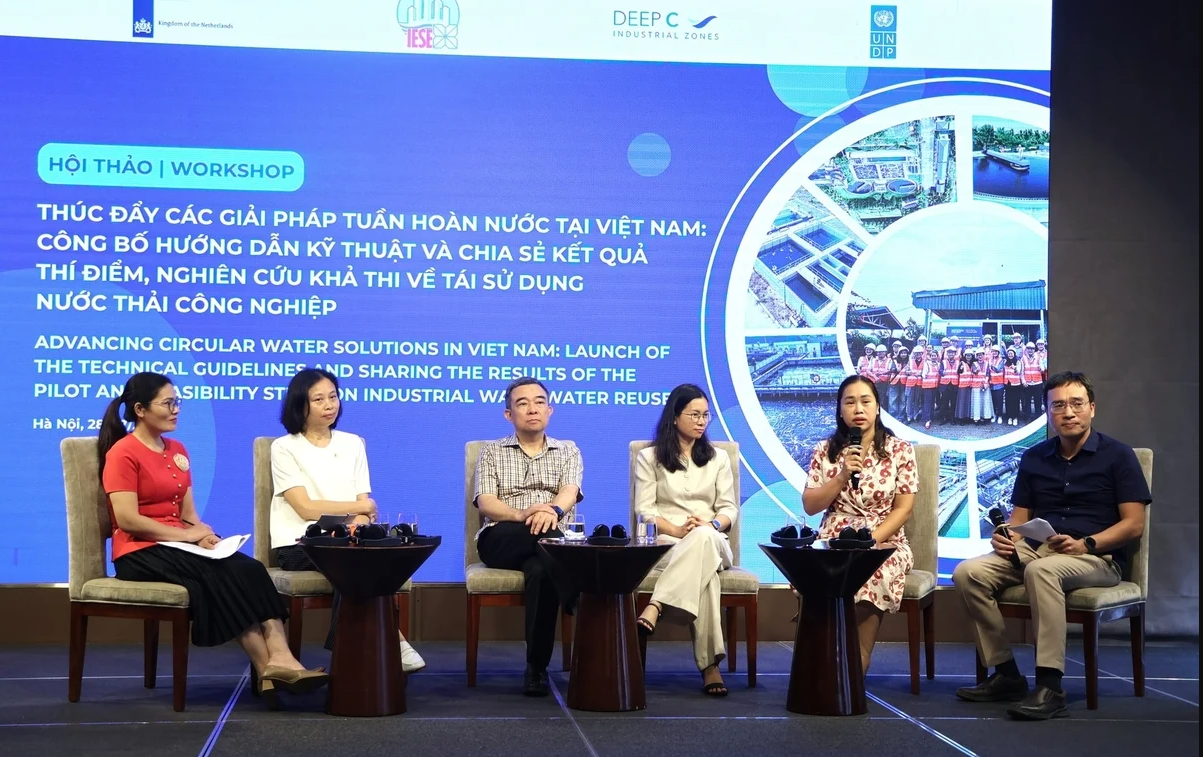 Representatives from government agencies, research institutes, industrial parks, businesses, and development organizations discuss the key conditions needed to advance water circularity in Viet Nam. Photo: Trung Nguyen.
During the event, Vietnamese and international experts introduced the new Technical Guideline on wastewater and sludge reuse. They also presented lessons learned from the pilot program and the results of the feasibility study. The guideline is designed to help industrial park developers and businesses choose suitable technologies, manage risks, operate systems safely, and maintain water quality that meets environmental requirements. It is expected to provide a technical foundation for expanding water circularity models in industrial production across Viet Nam.
Mr. Vu Thai Truong, Head of Climate Change, Energy and Environment at UNDP Viet Nam, emphasized: "When water is reused more efficiently, we not only reduce pressure on water resources but also strengthen climate resilience, promote the circular economy, and improve business competitiveness. UNDP hopes that the Technical Guideline launched today will help industrial parks and businesses design and implement wastewater reuse projects across Viet Nam".