US enterprises put forward proposals on livestock and veterinary practices, crop production and plant health, EPR, land policies, and specialized technical inspections.
On 30 July, a high-level delegation from the Agriculture and Food Industry Committee of US-ASEAN Business Council (USABC) met with the Ministry of Agriculture and Environment (MAE) to discuss measures to strengthen cooperation, promote investment, and expand business opportunities in Viet Nam's agriculture and environment sectors.
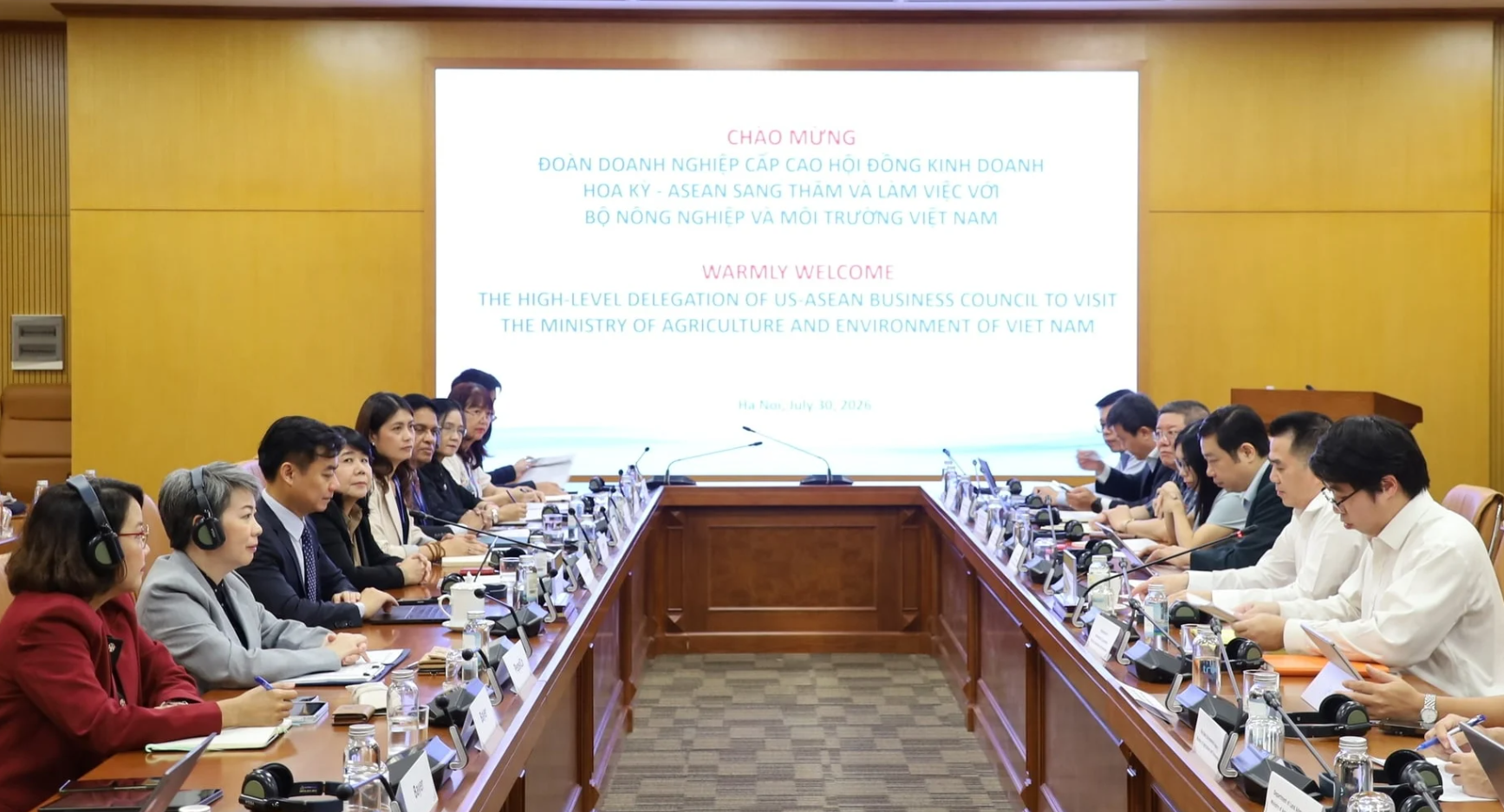 Overview of the meeting between the high-level delegation of US-ASEAN Business Council and the Ministry of Agriculture and Environment. Photo: Phuong Linh.
In his opening remarks, Deputy Minister Dang Ngoc Diep reaffirmed MAE's commitment to supporting the business community, including U.S. companies, by fostering a favorable environment for long-term investment and sustainable business development in Viet Nam. The meeting focused on strategic issues, policy implementation challenges, and solutions to further improve the country's investment and business climate.
Representing the USABC delegation, Mr. Vu Tu Thanh, Acting Regional Managing Director and Chief Country Representative of USABC in Viet Nam, acknowledged the Vietnamese Government's efforts to reform its institutional and regulatory framework in recent years. However, he noted that businesses continue to encounter implementation challenges that increase compliance costs and administrative burdens.
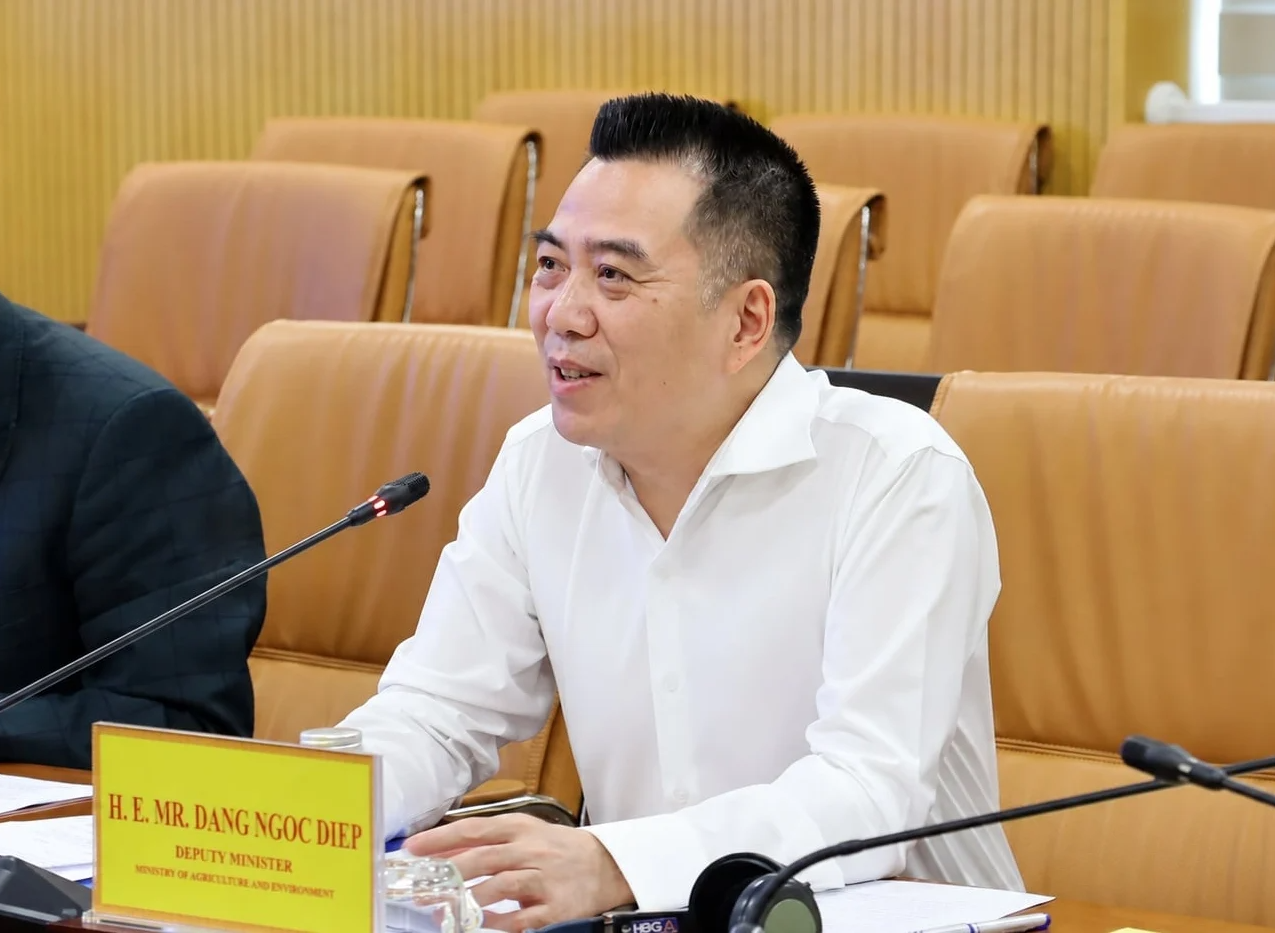 According to Deputy Minister Dang Ngoc Diep, achieving Viet Nam's growth targets will depend significantly on the contributions and cooperation of the business community. Photo: Phuong Linh.
Call for greater policy consistency and predictability
Business representatives emphasized the need to further improve the regulatory framework by making it more consistent, transparent, and predictable. They also called for the simplification of administrative procedures, accelerated digitalization of public services, and more consistent implementation of regulations across government agencies.
Responding to these recommendations, Mr. Phan Quang Minh, Deputy Director General of the Department of Animal Health and Production, said the Ministry is continuing to upgrade its electronic management systems, which are expected to become fully operational in August 2026. At the same time, the Ministry is reviewing and updating sector-specific regulations to facilitate business operations.
For issues falling under the jurisdiction of other ministries and agencies, the Department will continue to coordinate closely with relevant authorities to harmonize implementation approaches, reduce regulatory overlaps, and ensure the effective enforcement of existing regulations.
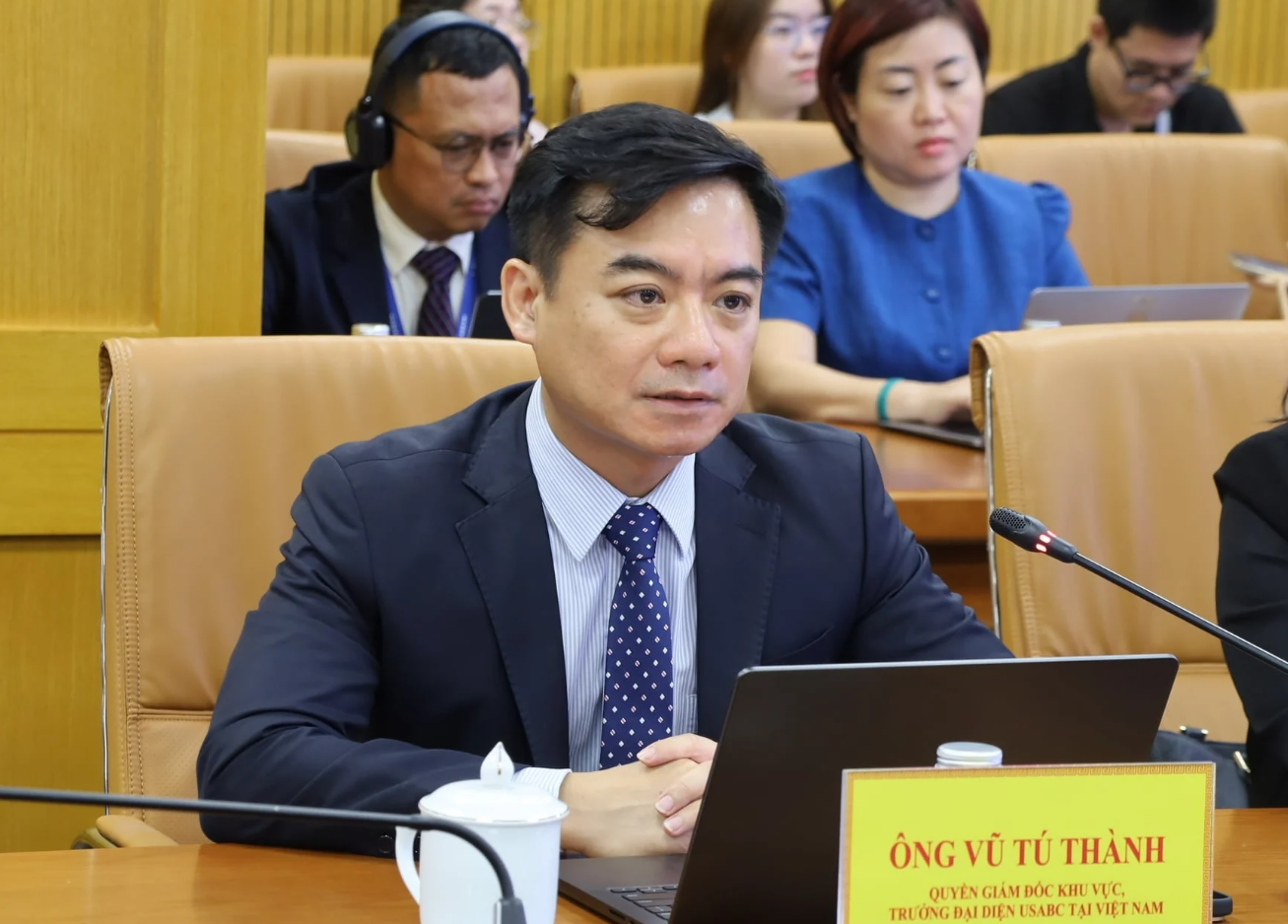 Mr. Vu Tu Thanh, Acting Regional Managing Director and Country Representative of USABC in Viet Nam, commended the country's ongoing reform efforts. Photo: Phuong Linh.
Facilitating seed imports and expanding market access
In addition to addressing administrative bottlenecks, many companies expressed interest in expanding cooperation on low-emission and climate-resilient agricultural models. They also proposed removing barriers related to plant variety imports, market access, phytosanitary requirements, and the development of regulatory frameworks for emerging agricultural technologies.
Responding to these proposals, Ms. Nguyen Thi Thu Huong, Deputy Director General of Plant Production and Protection Department, said the Ministry will continue promoting resource-efficient and climate-resilient farming practices while strengthening public–private partnerships (PPPs) to develop sustainable agricultural value chains.
She also encouraged businesses to provide detailed information on technical challenges encountered in importing plant varieties so that the Department can address them promptly. In addition, enterprises were requested to identify their target export markets, enabling the Department to work with the plant protection authorities of importing countries to prepare the necessary technical dossiers and advance market access negotiations.
Regarding proposals on biotechnology and gene editing, representatives of the Department of Science and Technologysaid that the legal framework is being progressively refined. The revised approach will clearly distinguish genetically modified organisms (GMOs) from gene-edited organisms, laying the foundation for the development of Viet Nam's biotechnology industry.
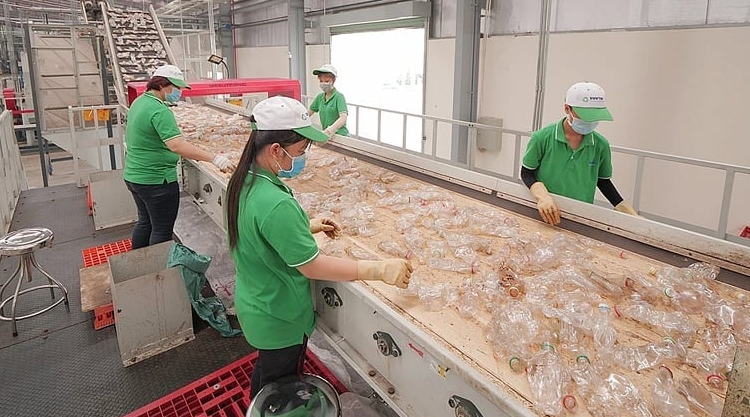 MAE is upgrading the National EPR Information System to facilitate businesses' compliance with their recycling obligations. Illustrative photo.
Further refining environmental policies
Addressing the business community, Mr. Le Hoai Nam, Deputy Director General of the Department of Environment, said that many of the recommendations put forward by enterprises have been incorporated into the ongoing revision of relevant legal documents.
These include policies on green finance, incentives for producing recycled materials, mechanisms for offsetting Extended Producer Responsibility (EPR) obligations, and adjustments to recycling targets, all of which are being refined to better reflect the practical needs of implementation.
Regarding land administration and environmental permitting, Mr. Nam said the Department will strengthen coordination with local authorities and relevant agencies to ensure more consistent implementation and to promptly resolve issues that arise during the licensing process.
The recommendations presented at the meeting reflected not only the business community's need for immediate solutions to operational challenges, but also its broader expectation for a transparent, predictable, and stable investment environment.