The 2026 HCMC Plastic Circularity Journey features a pact on at-source solid waste sorting and a plastic circularity innovation solutions contest.
On August 26, the HCMC Department of Agriculture and Environment, the HCMC Women's Union, and Unilever Viet Nam organized the launch event of the Plastic Circularity Journey 2026. At the same time, the parties signed a cooperation agreement on at-source waste sorting and opened the registration portal for the Plastic Circularity Innovation Solutions 2026 competition (PCIC 2026).
Innovation unblocks bottlenecks in plastic waste management
Speaking at the event, Mr. Vu Dinh Nam, Deputy Director of the Department of Environment, said selecting HCMC as the launchpad for the Plastic Circularity Journey 2026 has practical significance. As a major hub for economy, innovation, and startups, it converges numerous factors to connect plastic circularity initiatives with technology, investment resources, businesses, and the market.
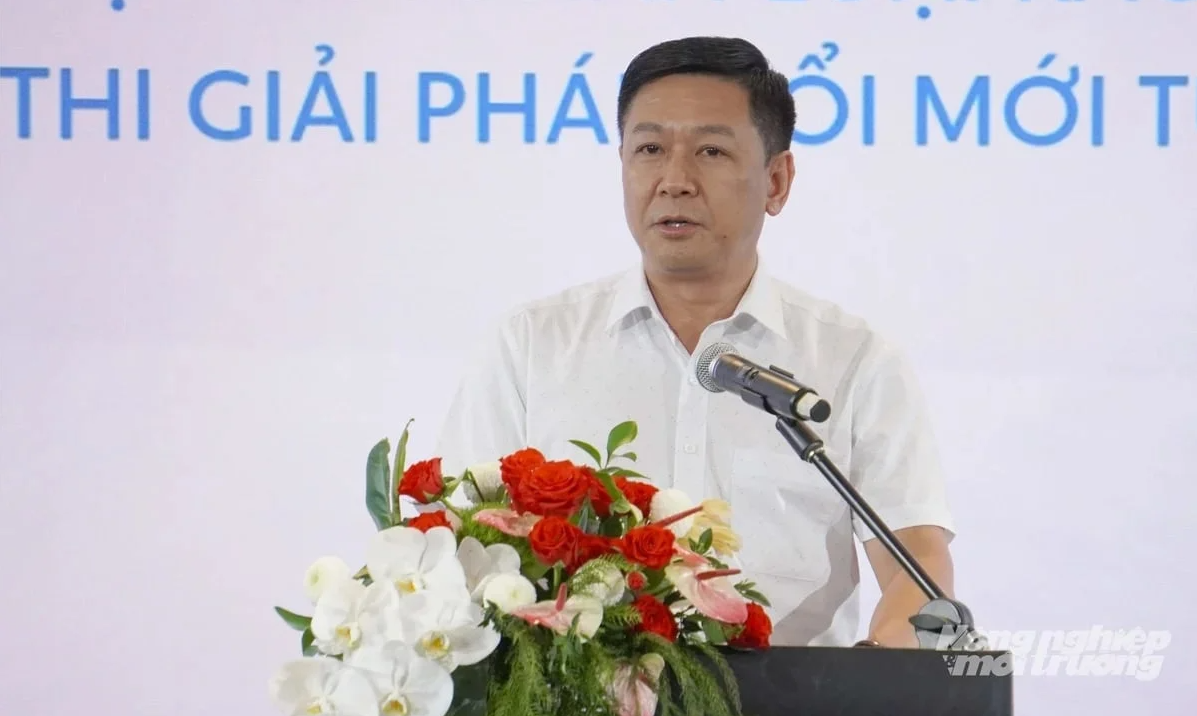 Mr. Vu Dinh Nam emphasized the need to bring circular economy policies into practice through implementable and scalable models, technologies, and solutions. Photo: Le Binh.
According to Mr. Nam, the circular economy is becoming a crucial orientation in transitioning the growth model toward a green and sustainable direction. Viet Nam has gradually perfected its mechanisms and policies, including the National Action Plan for implementing the circular economy to 2035, issued by the Prime Minister in early 2025, and regulations on Extended Producer Responsibility (EPR) under the 2020 Law on Environmental Protection.
However, Mr. Nam emphasized that perfecting policies is only the first step. The key is to put these policies into practice through specific models, technologies, and solutions that are deployable, scalable, and capable of creating substantial impact.
Mr. Nam also suggested that the State plays a role in institutional creation, while scientists provide knowledge and technology. Enterprises bring initiatives into production, business, and the market, whereas investors and innovation support organizations provide resources to develop and scale up potential solutions.
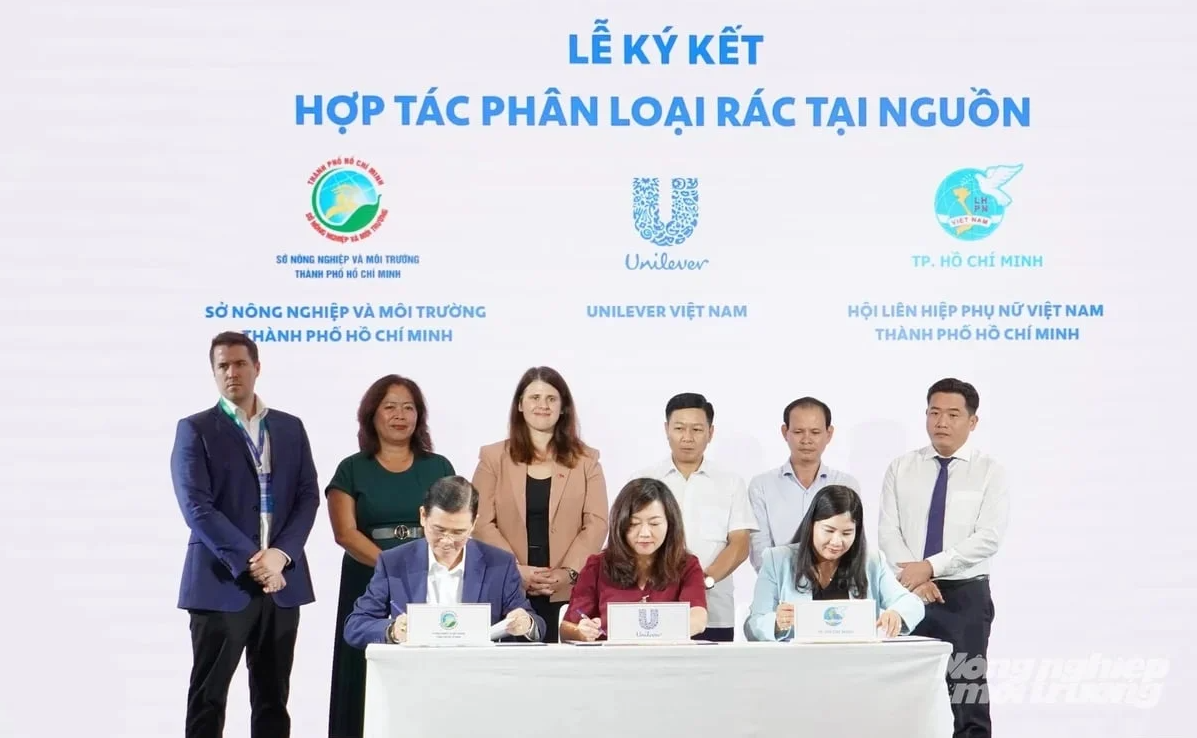 The HCMC Department of Agriculture and Environment, HCMC Women's Union, and Unilever Viet Nam sign a cooperation agreement for the 2026-2030 period, promoting at-source domestic solid waste sorting. Photo: Le Binh.
Ms. Nguyen Thi Bich Van, Country General Manager of Unilever Viet Nam, noted that according to a late 2025 report, Viet Nam generates about 5.64 million tons of plastic waste annually, but only about 0.62 million tons are recycled, equivalent to approximately 11%. Thus, nearly 90% of plastic waste has not been effectively exploited to re-enter the recycling process.
Notably, Viet Nam still imports around 400,000 tons of materials each year to meet domestic recycling production needs. These figures reveal a paradox where a large volume of post-consumer materials exists in the market but is not effectively utilized to ensure a stable, high-quality, and large-scale supply for the recycling industry.
From this reality, innovation is identified as one of the critical directions to untangle bottlenecks in sorting, collection, and recycling, thereby enhancing the economic value of recovered plastics and creating momentum for developing the recycling market.
Seeking and implementing plastic circularity initiatives
Within the program's framework, the Department of Environment and Unilever Viet Nam officially launched the Plastic Circularity Innovation Solutions 2026 (PCIC 2026) competition. This year's contest expands its participants to research institutes, universities, startups, innovative enterprises, and corporate research and development departments.
The teams selected for the next rounds will have the opportunity to connect with businesses, investors, experts, and partners within the value chain to further refine their solutions, verify feasibility, and enhance commercialization capabilities.
PCIC 2026 will broaden its participant scope: Besides startups and universities, this year's contest is open to internal Research & Development (R&D) teams at enterprises, those directly facing the challenges of costs, materials, and practical production lines.
Additionally, the competition will strengthen ecosystem connections aimed at ensuring potential solutions not only receive awards but are also directly linked to demand-driven businesses, recycling units, and investment funds to advance toward testing and commercialization.
The total estimated prize value is up to 600,000,000 VND, including cash and solution development support packages.
Expanding sorting models to recover recyclable materials
Alongside promoting technological initiatives, the program also places emphasis on a very specific stage: at-source domestic solid waste sorting.
At the event, the HCMC Department of Agriculture and Environment, the HCMC Women's Union, and Unilever Viet Nam signed a Memorandum of Understanding for the 2026 - 2030 period to promote at-source domestic solid waste sorting.
At-source sorting is a starting point for recovering, reusing, and recycling waste and returning it to the economy. More importantly, this activity brings environmental protection and circular economy guidelines closer to every household, residential area, and community.
In reality, HCMC has implemented a pilot model for recovering recyclable materials. In just 3 months, it collected over 5.5 tons of recyclable materials with more than 700 citizens participating. Notably, the return rate remained high.
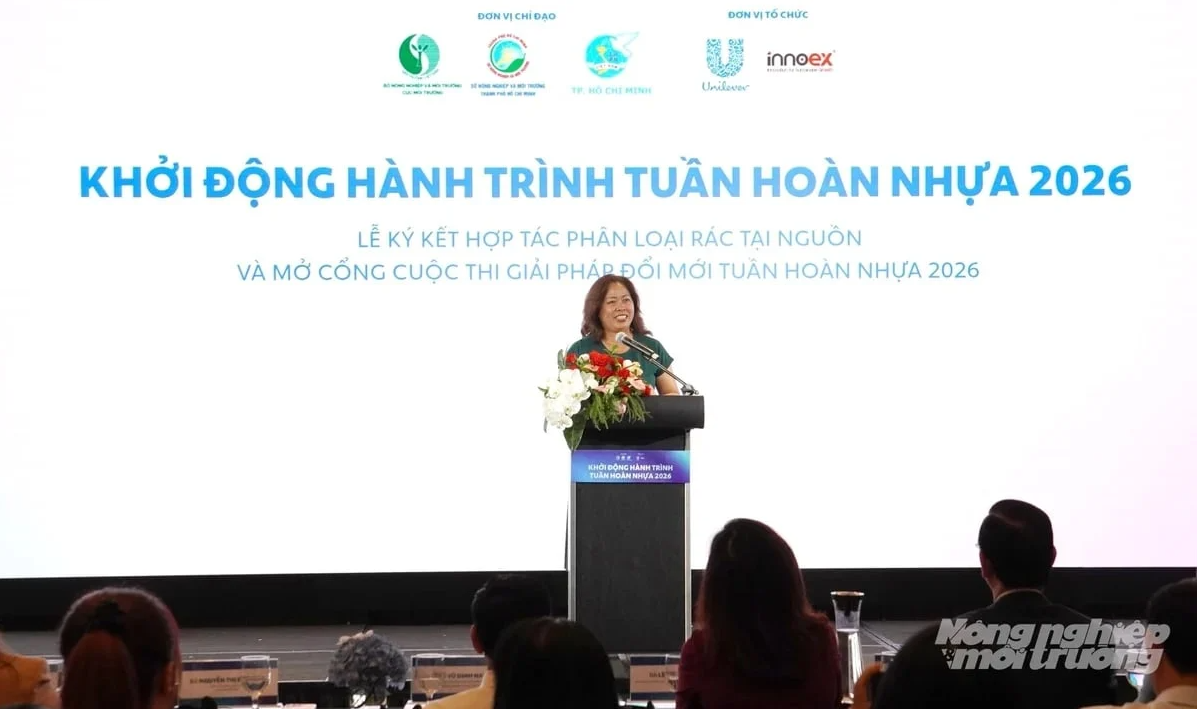 Ms. Nguyen Thi Bich Van stated that Viet Nam generates about 5.64 million tons of plastic waste annually, but only about 11% is recycled. Photo: Le Binh.
The model's value lies not only in the volume of recovered materials but also in the data collected on material quality, citizens' participation methods, and the factors needed to boost community involvement. This serves as a basis for identifying bottlenecks in receiving and sorting recyclable materials.
Innovation, therefore, is not solely about generating a new idea but must also aim to bring solutions out of laboratories or individual enterprises, reach the market, and participate substantively in the supply chain.
Unilever Viet Nam announced it will continue to promote packaging recovery and recycling, thereby generating additional demand for recycled materials and helping boost the domestic recycling market. As demand increases, the collection, treatment, and recycling sectors will also gain more momentum for development.