The dual transition helps small and medium-sized enterprises (SMEs) become stronger, more productive, and better prepared to meet the evolving demands of global value chains.
Facilitating green transformation for businesses
On September 10, the Agency for Private Enterprise and Cooperative Development under the Ministry of Finance, in collaboration with the German Agency for International Cooperation (GIZ), held a workshop titled “The Dual Transformation Journey for Small and Medium-sized Enterprises.” The event introduced SMEs to transformation roadmaps, support mechanisms and opportunities, while connecting them with experts across the ecosystem. It was organized under the “Dual Transformation Center - Digital Transformation and Innovation for Environmental and Climate Protection in Viet Nam” project.
For small and medium-sized enterprises, digital and green transformation often come with significant pressure in terms of costs, human resources, and limited capacity. To address these challenges, the “Dual Transformation Center - Digital Transformation and Innovation for Environmental and Climate Protection in Viet Nam” project adopts an approach that places business data and practical needs at the center.
Rather than rushing to invest in new technologies, businesses are supported in reviewing their current operations, identifying areas for improvement and setting priorities based on data.
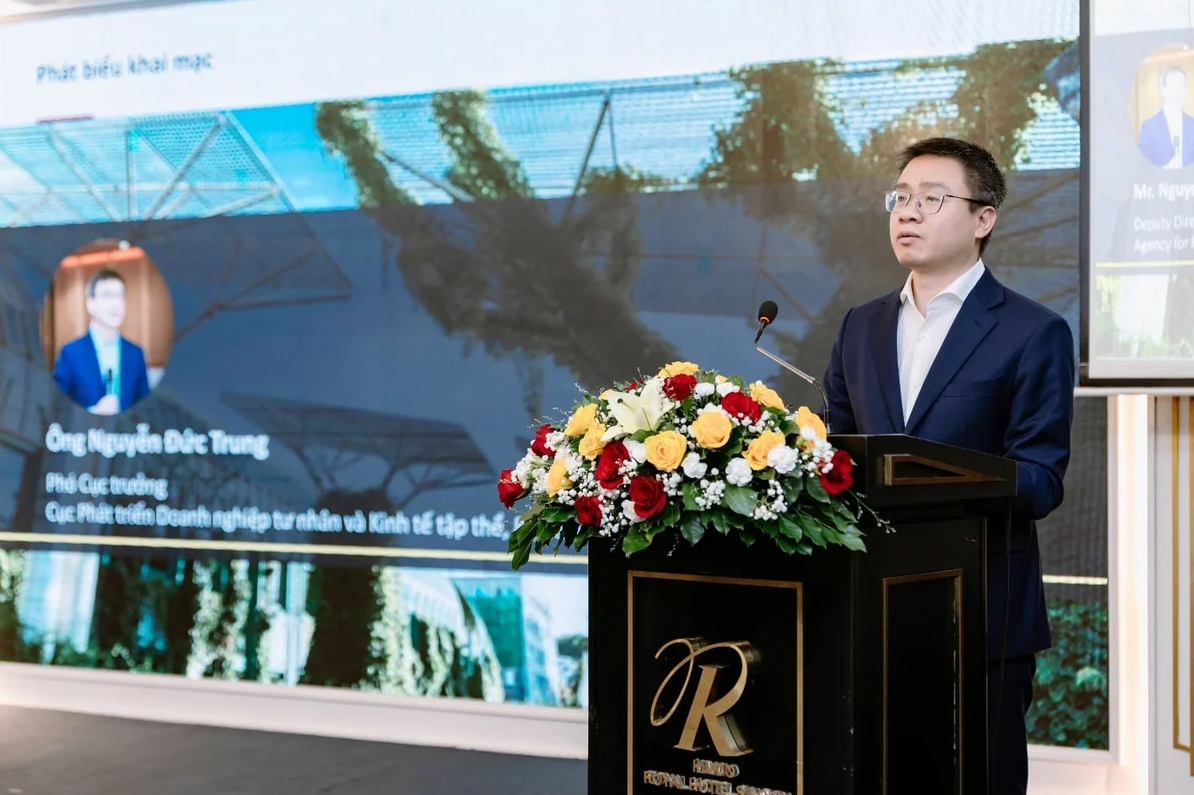 Mr. Nguyen Duc Trung, Deputy Director of the Agency for Private Enterprise and Cooperative Development, speaks at the event on support orientations for businesses. Photo: Thuc Vy.
Speaking at the event, Mr. Nguyen Duc Trung, Deputy Director of the Agency for Private Enterprise and Cooperative Development, said that during Phase 1, the “Dual Transformation Center - Digital Transformation and Innovation for Environmental and Climate Protection in Viet Nam” project gradually developed foundational programs and business support tools. A key initiative is the dual transformation maturity assessment tool, a free assessment tool that enables businesses to evaluate their current status, identify areas for improvement and establish a basis for developing appropriate transformation plans.
The Agency for Private Enterprise and Cooperative Development is currently promoting cooperation with international organizations in green transformation and ESG, with a view to using and recognizing business data and results declared through the dual transformation maturity assessment platform. This would make it easier for businesses, particularly exporters, to meet green transformation and ESG requirements while saving time and costs.
“We expect Phase 2 of the project to bring dual transformation closer to businesses’ day-to-day operations. In addition to continuing to provide knowledge and tools, the project will strengthen training, consulting and in-depth support, helping businesses move from assessing their current status to identifying priorities, developing action plans and gradually implementing appropriate solutions.”
Building on this direction, Dr. Matthias Grossmann, Director of the Sustainable Economic Development Programme at GIZ Viet Nam, emphasized that the dual transformation journey is not simply about adopting new technologies or meeting sustainable development requirements. It is a process that helps SMEs build stronger, more productive and resilient businesses that are better prepared to respond to the evolving demands of global value chains.
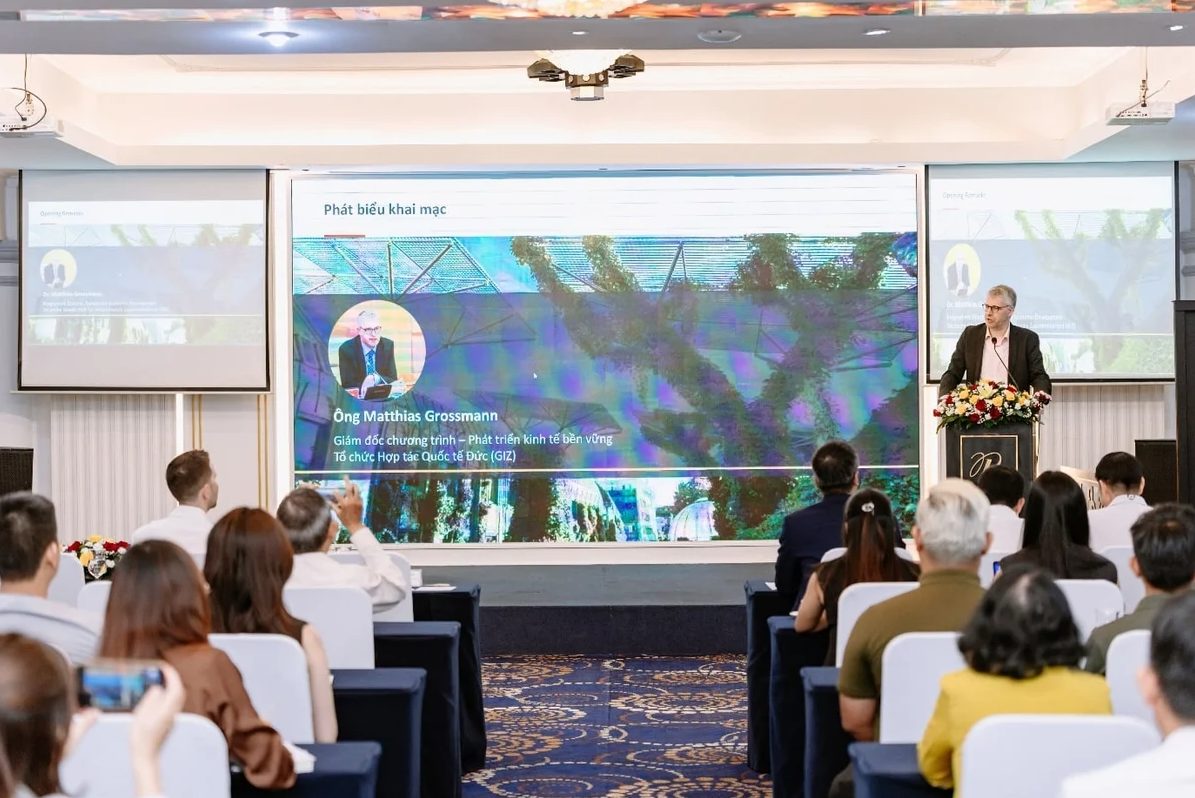 Dr. Matthias Grossmann, Director of the Sustainable Economic Development Programme at GIZ Viet Nam, shares the organization’s commitment to supporting small and medium-sized enterprises. Photo: Thuc Vy.
Working directly with businesses
A representative of Trong Duc Cocoa Co., Ltd. said that dual transformation is not merely a long-term goal, but can begin with practical changes in how businesses manage data, improve operational efficiency and meet increasingly demanding market requirements.
A practical example from Cohort 1 (2025-2026) shows that, through piloting dual transformation solutions, the company gradually built an integrated data system covering procurement, fermentation and drying, as well as ESG records. This reduced duplicate data entry and improved information management. The data system also supports traceability down to individual farming households, enhances transparency in payments and lays the groundwork for an “export passport” through a digital evidence system, with the aim of meeting EUDR and GlobalG.A.P. requirements, Japanese market regulations and carbon inventory requirements.
Experts will work closely with businesses to address challenges related to data, technology and resource constraints. The resulting initiatives will then be assessed for feasibility and financial effectiveness to develop specific implementation roadmaps aligned with defined objectives and timelines. This reflects the core spirit of the “Dual Transformation Journey”: a continuous process of assessment, prioritization and practical implementation.