Recently, Deputy Prime Minister Ho Quoc Dung chaired a meeting on the progress of drafting a Resolution of the Party Central Committee on environmental protection and climate change response, as well as policy directions for carbon credit management.
Attending the meeting were Deputy Minister of Agriculture and Environment Le Cong Thanh; leaders of ministries and sectors; and representatives from the Office of the Party Central Committee, the Office of the Government Party Committee, and the Central Policy and Strategy Commission.
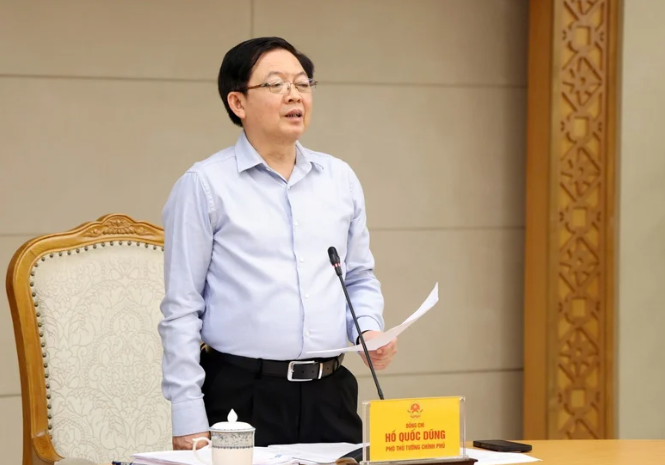 Deputy Prime Minister Ho Quoc Dung chairs a meeting on the progress of drafting a Resolution on environmental protection, climate change response, and policy directions for carbon credit management. Photo: VGP/Gia Huy.
12 years of implementing Resolution No. 24-NQ/TW
According to the 2026 working agenda of the Politburo and the Secretariat, as well as the work program of the Government Party Committee, the Party Committee of the Ministry of Agriculture and Environment has been assigned to lead the drafting and submission of a Resolution on environmental protection and climate change response.
The new Resolution will replace Resolution No. 24-NQ/TW dated June 3, 2013, issued by the 11th Party Central Committee on proactively responding to climate change, strengthening natural resource management, and environmental protection.
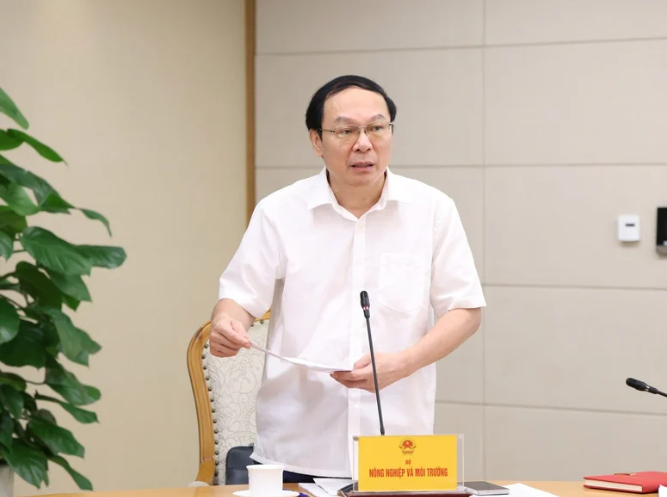 Deputy Minister of Agriculture and Environment Le Cong Thanh delivering a report. Photo: VGP/Gia Huy.
To meet the requirements of the new development phase, the Ministry of Agriculture and Environment has proposed that the draft Resolution include 2035 goals focused on building a modern governance system, restoring ecosystems, and promoting green transformation. Looking toward 2050, Vietnam aims to become a country with a healthy living environment, where the green economy and circular economy play a leading role, and where net-zero emissions are achieved.
Based on these goals, the Ministry has proposed 11 key groups of tasks and solutions, including: strengthening Party leadership and promoting the role of mass organizations; improving institutions and policies; reforming state management methods; promoting green markets and emissions management; strictly controlling pollution sources; thoroughly addressing environmental hotspots; conserving nature and biodiversity; proactively adapting to climate change; advancing science, technology, and innovation; mobilizing and effectively utilizing resources; and enhancing international cooperation.
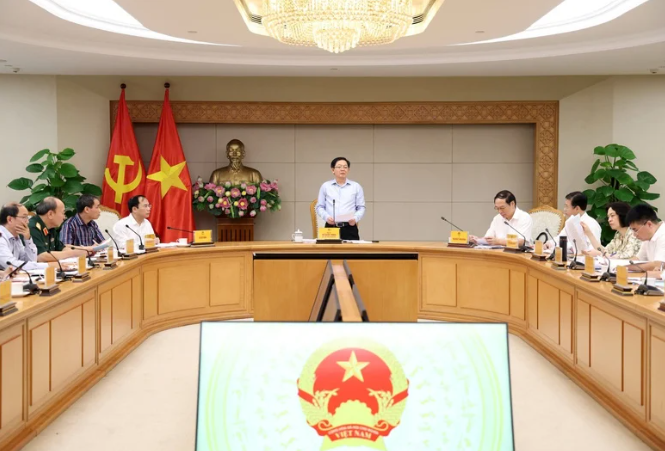 The Deputy Prime Minister requested that the draft Resolution clearly identify key priorities, emerging issues, and breakthrough measures to ensure it meets the requirements for rapid and sustainable development in the coming period. Photo: VGP/Gia Huy.
According to the Deputy Prime Minister, the drafting of the new Resolution stems from development requirements in the new phase, particularly the goal of achieving double-digit economic growth while ensuring environmental protection, sustainable development, and effective climate change adaptation.
Therefore, the Ministry of Agriculture and Environment is required to fully incorporate feedback from ministries and sectors to further refine the draft Resolution, while also clarifying the scientific basis, practical foundations, and new requirements necessitating the replacement of Resolution No. 24-NQ/TW.
To finalize the Resolution in the next stages, the Deputy Prime Minister requested that the draft clearly identify key issues, new challenges, and breakthrough measures to ensure it meets the demands of rapid and sustainable development in the coming period.
In particular, it is necessary to establish a substantive evaluation mechanism with measurable implementation outcomes, clearly assigning responsibilities to heads of agencies and aligning with current decentralization and delegation requirements. Environmental protection must be recognized as a responsibility of the entire political system, including all levels of government, sectors, businesses, and society as a whole.
The Deputy Prime Minister also emphasized the need to build a culture of environmentally responsible behavior, beginning with raising awareness and consciousness among citizens. Accordingly, communication campaigns and public movements should be strengthened to foster environmentally friendly habits and behaviors throughout society, considering this a key factor in improving the effectiveness of environmental protection efforts.
Regarding implementation resources, the Deputy Prime Minister called for continued research and improvement of mechanisms to mobilize resources for environmental protection and climate change response, with state resources playing a leading role in attracting broader social investment.