A survey identified 426 ha of brown seaweed, with an estimated fresh biomass of more than 9,000 tonnes, providing a basis for establishing conservation zones and managing harvesting sustainably in conjunction with community livelihoods.
Quang Ngai Union of Science and Technology Associations has held a closing conference for the project “Protecting, harvesting and developing brown seaweed in the coastal communes of Van Tuong and Dong Son, Quang Ngai Province, in association with sustainable community livelihoods.” The project was funded by the United Nations Development Programme/Global Environment Facility’s Small Grants Programme in Viet Nam (UNDP/GEF SGP), with funding of more than VND 1.17 billion, and was implemented from August 2024 to September 2026.
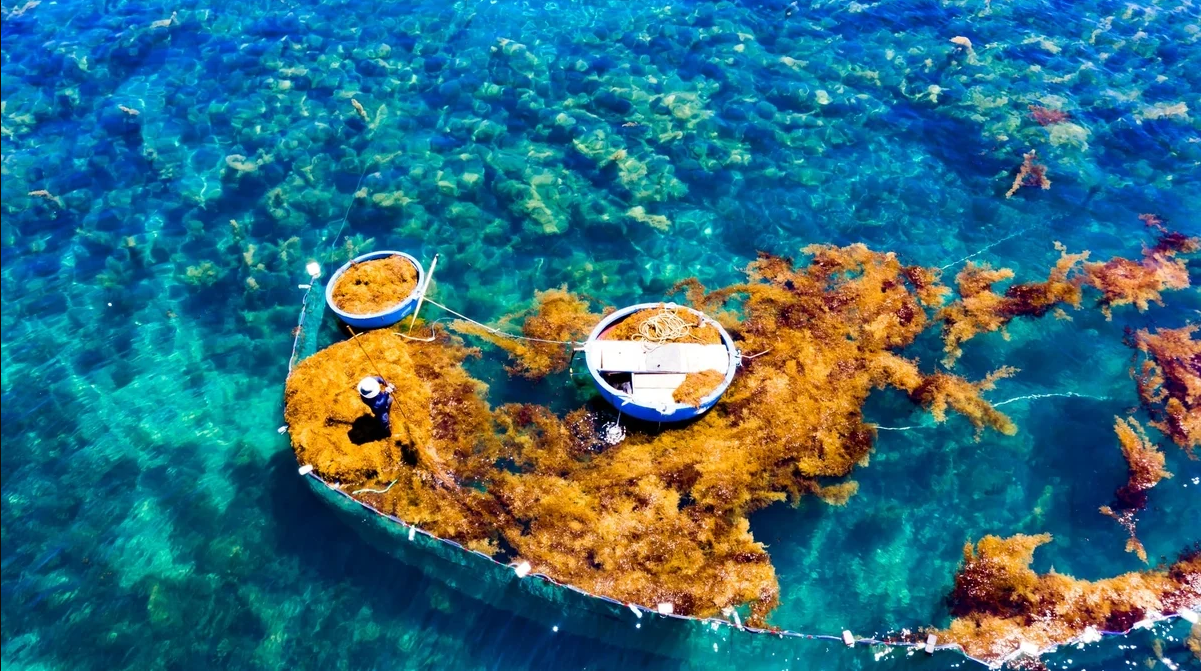 A 2026 survey found a total of 426 ha of brown seaweed in Van Tuong and Dong Son communes, Quang Ngai province, with an estimated 9,030 tonnes of fresh seaweed. Photo: Pham Anh.
Across two surveys conducted in 2025 and 2026, the project gradually established a clearer picture of brown seaweed distribution, growth and reproductive timing, providing a basis for determining suitable harvesting seasons and methods.
The 2026 survey identified approximately 273 ha of brown seaweed in Van Tuong and 153 ha in Dong Son, for a combined area of 426 ha and an estimated fresh biomass of around 9,030 tonnes.
Monitoring results showed that the proportion of brown seaweed individuals entering the reproductive stage rose from around 15% in March to 42% in April, and 58% in May, reaching 100% in June and July. Based on these findings, experts recommended harvesting after the main reproductive season - around early June in Dong Son and between June 10 and 15 in areas of Van Tuong.
Harvesting is to follow the principle of avoiding immature seaweed, leaving the holdfasts and approximately 10 centimetres of the seaweed stems intact, and retaining 10-20% of the seaweed beds to support recovery and maintain habitat and breeding grounds for aquatic species.
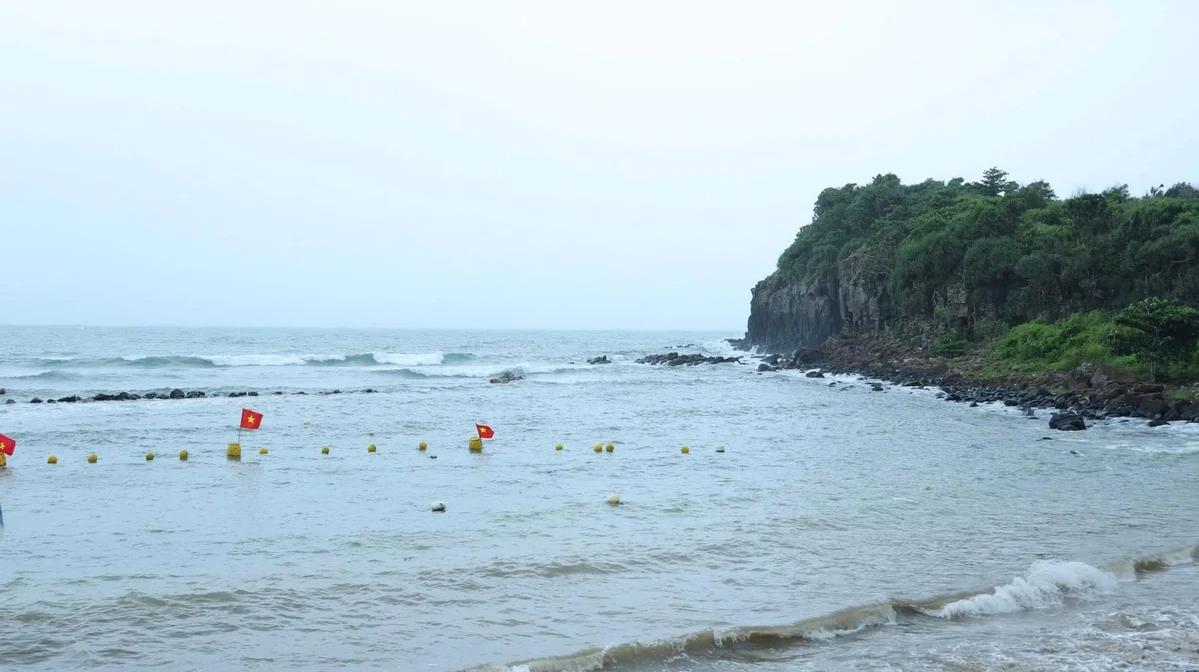 Rope buoys mark off a conservation zone for brown seaweed and aquatic resources in Van Tuong Commune. Photo: N.D.
Alongside scientific surveys, the project selected three pilot conservation zones for brown seaweed: 6.9 ha at Ganh Yen, 6.1 hectares at Hon Coc, and 44 ha around the red-rock headland - Ba Lang An cape in Dong Son. These zones enable communities to monitor seaweed growth, protect aquatic resources and gradually adopt controlled harvesting practices.
One of the project’s key achievements was the establishment of three community groups in Ganh Yen, Hon Coc and Dong Son, with a total of 37 members on their representative boards. Recognised by local authorities, the groups were granted co-management rights and are involved in protecting brown seaweed, aquatic resources and coral reef ecosystems, as well as developing community-based tourism.
Previously focused mainly on seasonal harvesting, local residents are now increasingly involved in developing rules, monitoring, patrolling and coordinating resource protection. This provides a foundation for strengthening community responsibility and limiting activities that could harm coastal ecosystems.
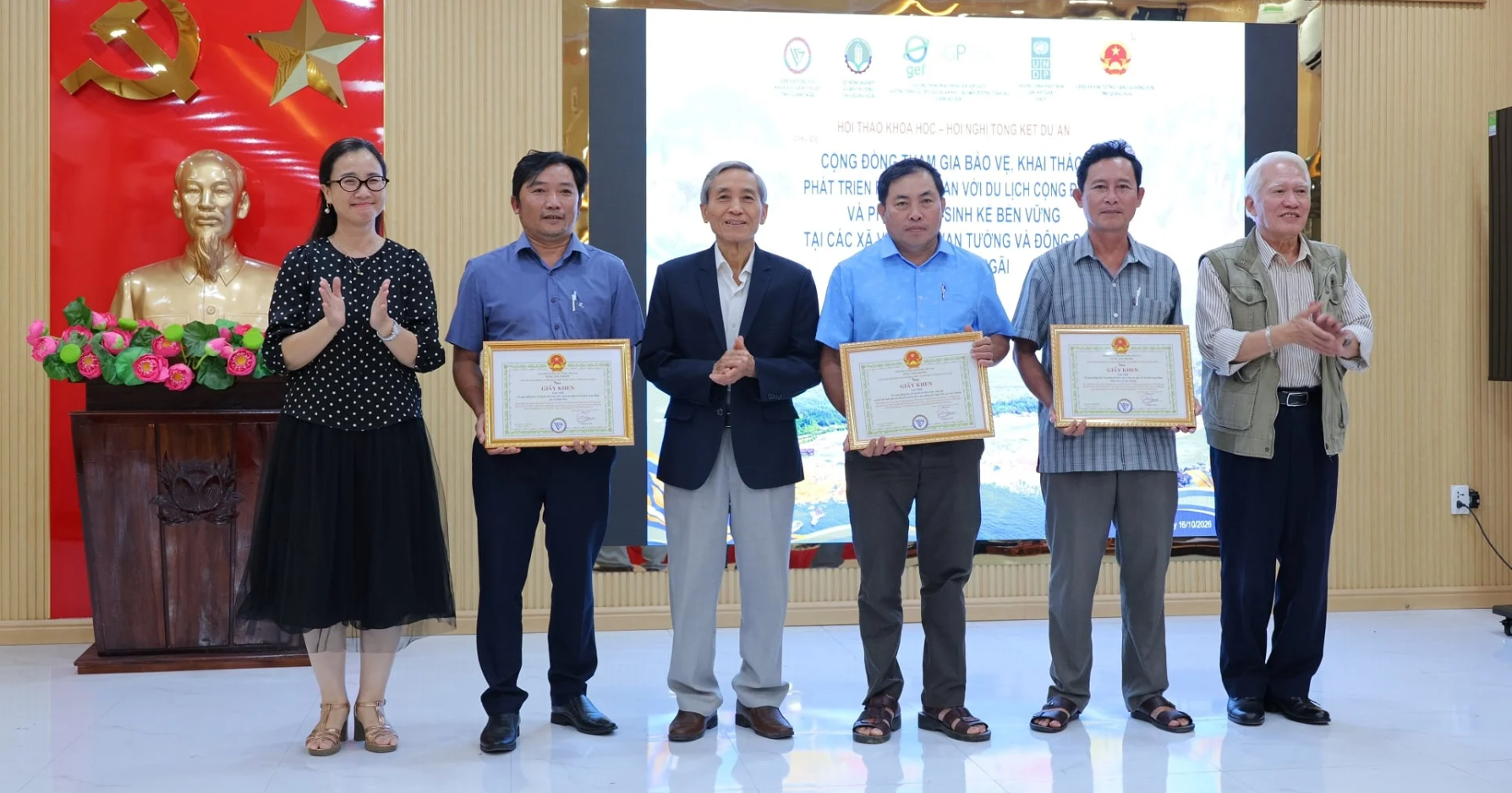 Collectives and individuals recognised for their contributions to the project. Photo: Organizing committee.
The project also prioritised livelihood development linked to conservation. Around 100 residents received training in harvesting, cleaning, drying, preserving and packaging brown seaweed. Potential products - including clean dried seaweed, seaweed powder, food products and biofertilizers - were researched and discussed to increase the economic value of this raw material.
In addition, community-based educational tourism is being developed around local natural and cultural assets, including brown seaweed, coral reefs, nipa palm forests, maritime livelihoods and local cuisine. This could create more opportunities for residents to provide tourism services, while introducing visitors to the area’s landscapes and biodiversity and raising awareness of environmental protection.
According to the project’s assessment, its stated objectives were largely achieved. The establishment of three officially recognised community groups with co-management rights was a particularly notable result.
However, for the model to remain effective after the funding ends, local authorities will need to sustain the community groups’ activities, ensure funding for patrols, maintain the zone-marking buoy system and continue surveying the ecosystem before each harvesting season. The development of seaweed products and community-based tourism should also follow a realistic roadmap aligned with local capacity, market demand and conservation requirements.
$ 1 = VND 26,060 - Source: Vietcombank.