Southeast Asia’s agricultural sector is facing mounting pressure from climate change, while financial tools designed to support it have yet to fully meet real-world demand. This issue was highlighted by delegates at a workshop marking the 80th anniversary of Viet Nam’s Cooperative Day and sharing international experience on financing climate risk in agriculture, held on the morning of April 8 in Hanoi.
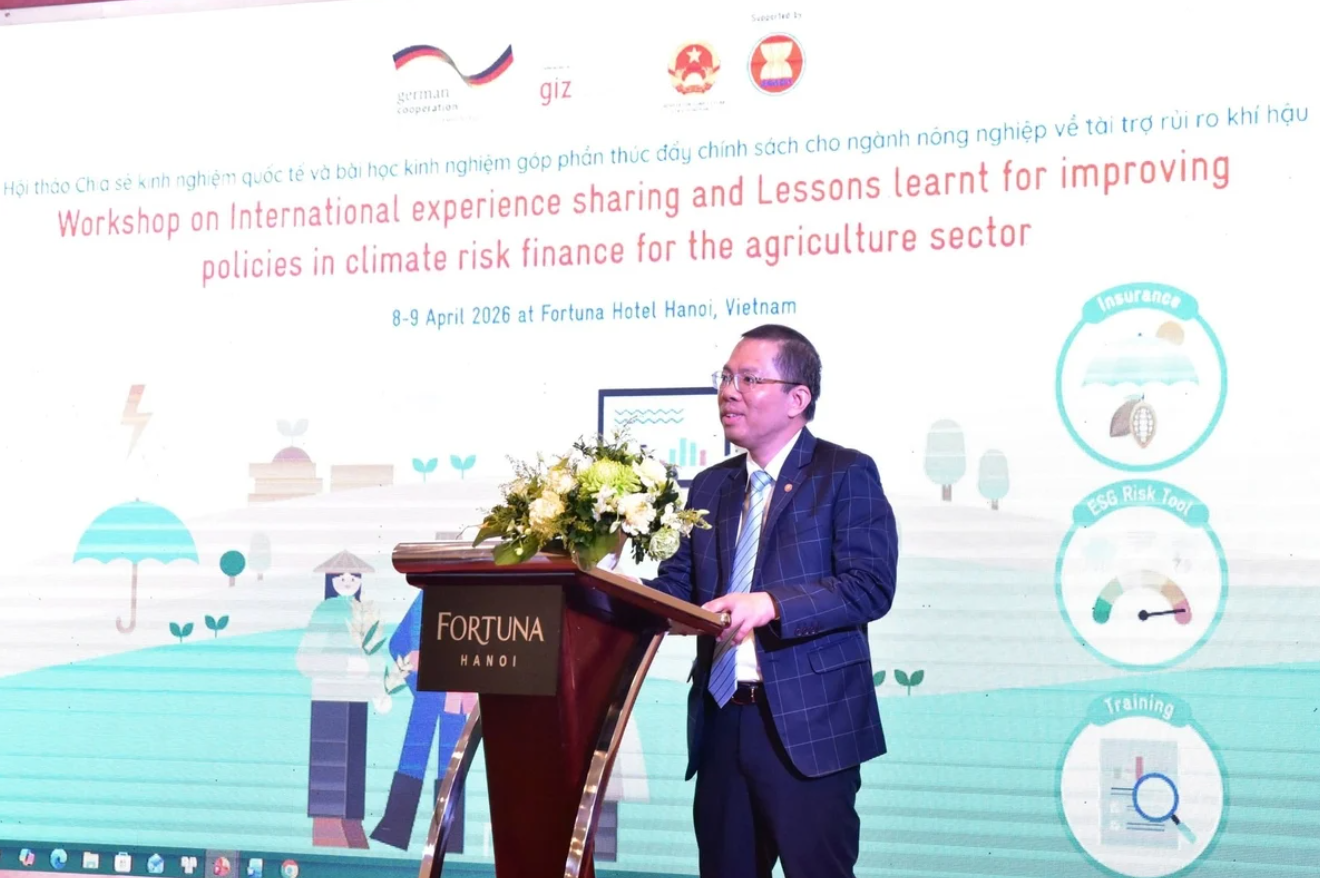
 Deputy Minister of Agriculture and Environment Vo Van Hung speaks at the event. Photo: Pham Hieu.
Speaking at the event, Deputy Minister of Agriculture and Environment Vo Van Hung said agriculture in Viet Nam and across ASEAN is entering a period of profound transition, shaped simultaneously by climate change, natural disaster risks, market volatility, and increasingly stringent standards.
In this context, he said, agricultural development can no longer rely on fragmented policies but requires a systemic, integrated approach. A modern agricultural sector must be built on closely linked pillars, including value chain-based production organization, transparent markets, science and technology and digital transformation, alongside an agricultural finance system tied to risk management.
“Tools such as agricultural insurance, credit, green finance and climate data need to be designed in a synchronized policy ecosystem,” he said, emphasizing that climate risk financing has become essential to protecting farmers’ livelihoods and enabling a transition toward climate-resilient production models.
Within this framework, cooperatives are identified as key institutions, serving as a bridge between farmers, markets, technology and financial services, thereby strengthening risk management capacity at the grassroots level.
 Pham Quang Minh, Director of the Agriculture and Forestry Division (FAFD), ASEAN Secretariat. Photo: Pham Hieu.
From a regional perspective, Pham Quang Minh, head of the Agriculture and Forestry Division at the ASEAN Secretariat, noted that agriculture remains the backbone of ASEAN economies, contributing significantly to rural livelihoods and food security. However, extreme weather events such as droughts and floods are directly affecting productivity and farmers’ incomes.
Addressing climate risk, he said, cannot be done in isolation within individual sectors but requires a cross-sectoral and regional approach. ASEAN has been advancing a range of agricultural initiatives, with climate risk finance seen as a key tool to help farmers recover from shocks and move toward sustainable development.
Pilot models in Indonesia, Thailand and Viet Nam, including agricultural insurance and parametric insurance, have shown initial effectiveness with the participation of private sector actors and financial institutions. However, Minh noted that this remains a complex field requiring close coordination among multiple ministries, particularly between agriculture and finance.
Looking ahead, ASEAN plans to further promote initiatives in agricultural insurance and reinsurance, while strengthening the sharing of data, technology and risk management experience among member states.
From an international cooperation standpoint, Jens Schmid-Kreye, First Secretary for Development Cooperation at the German Embassy in Viet Nam, said agriculture accounts for roughly 10 to 12 percent of ASEAN’s GDP and supports the livelihoods of more than 100 million people. Yet the sector is increasingly affected by climate change, with floods, droughts and sea-level rise becoming more frequent and severe.
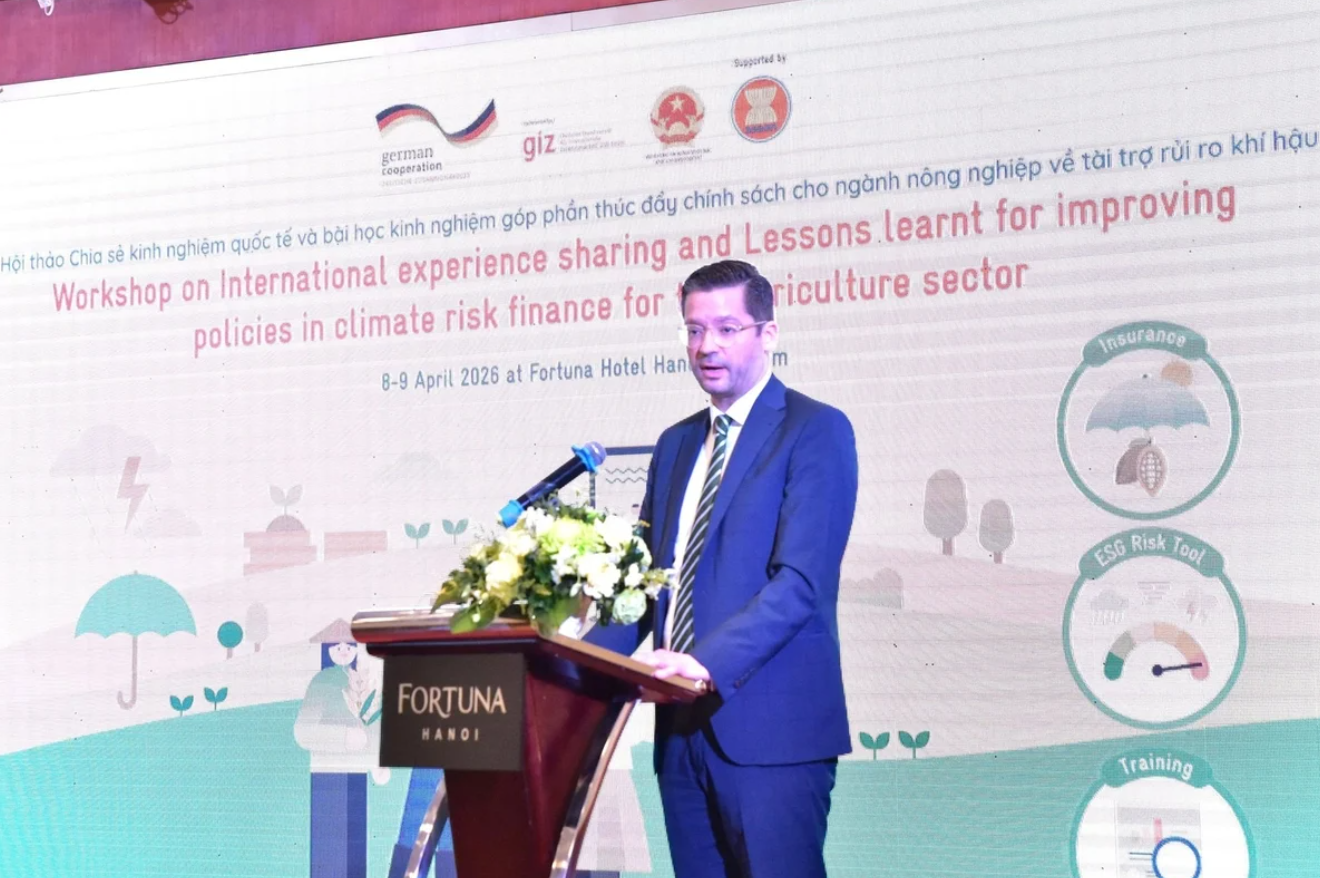 Jens Schmid-Kreye, First Secretary for Development Cooperation at the German Embassy in Viet Nam. Photo: Pham Hieu.
One of the key challenges, he noted, is that many financial products remain too complex and inaccessible for small-scale farmers. There is therefore a need to develop financial solutions that are inclusive, accessible and scalable.
Tools such as parametric insurance, climate-linked credit, and the use of technology and remote sensing data can help improve both efficiency and transparency in agricultural finance systems. At the same time, stronger public-private partnerships are needed, with governments providing enabling policy frameworks while private sector and financial institutions deliver solutions.
The German representative also emphasized the role of cooperatives in helping farmers access finance, reduce transaction costs and improve the adoption of risk management tools. Drawing on its experience in cooperative development, Germany is ready to share models and support countries in the region in strengthening operational capacity.
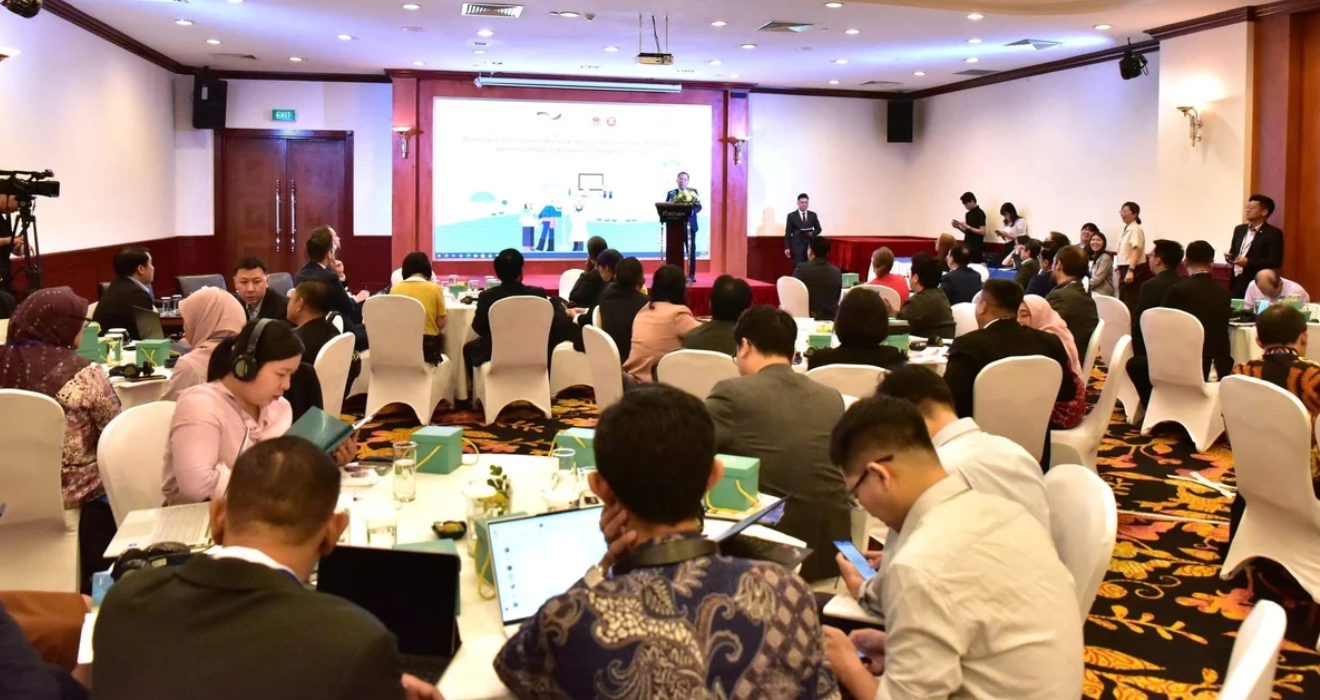 Panoramic view of the workshop marking the 80th anniversary of Vietnam’s Cooperative Day and sharing international experience on climate risk financing in agriculture, held on the morning of April 8. Photo: Pham Hieu.
Despite the growing number of initiatives and resources being deployed, building an effective agricultural finance system capable of responding to climate risk remains a significant challenge. It will require closer coordination among governments, international organizations and the private sector, along with policy solutions tailored to the realities faced by farmers.