Agricultural insurance is not just a compensation tool
At the workshop “Agricultural Insurance Linked to Risk Management for Agricultural Value Chains and Viet Nam’s Orientation for 2026 - 2030,” held on April 7, experts said the country must shift from a reactive, post-disaster support approach to proactive risk management, with agricultural insurance as a central component.
 Truong Thu Trang shared her views at the workshop “Agricultural Insurance Linked to Risk Management for Agricultural Value Chains and Viet Nam’s Orientation for 2026-2030.” Photo: Linh Linh.
According to Truong Thu Trang, Deputy Director of the Institute of Strategy and Policy on Agriculture and Environment (ISPAE) under the Ministry of Agriculture and Environment, risks in agriculture are no longer isolated shocks such as natural disasters or disease outbreaks, but have become systemic in nature.
Pressures from climate change, green growth requirements, and internal weaknesses, including small-scale production, weak value chain linkages, lack of data transparency, and limited logistics, are spreading risk across the entire chain, from production to consumption.
“Agricultural insurance cannot remain merely a compensation mechanism; it must become a risk management tool for the entire value chain,” she said.
Trang noted that this requires insurance to be designed in tandem with the reorganization of production. In this context, cooperatives play a pivotal role, acting as an “extended arm” that helps policies reach farmers, reduces transaction costs, and enhances implementation credibility.
Integrating insurance into the agricultural ecosystem
From an international comparative perspective, experts emphasized that successful models are defined not by specific products, but by how insurance is integrated into the broader agricultural ecosystem.
Trang cited Thailand as an example, where insurance is directly linked to agricultural credit through the Bank for Agriculture and Agricultural Cooperatives. Farmers who take out loans receive subsidies covering up to 100 percent of rice insurance premiums.
“This approach has rapidly expanded coverage, adding about 1.49 million participating households and increasing insured acreage by 45 percent. Insurance is no longer a standalone option but part of the agricultural finance system,” she explained.
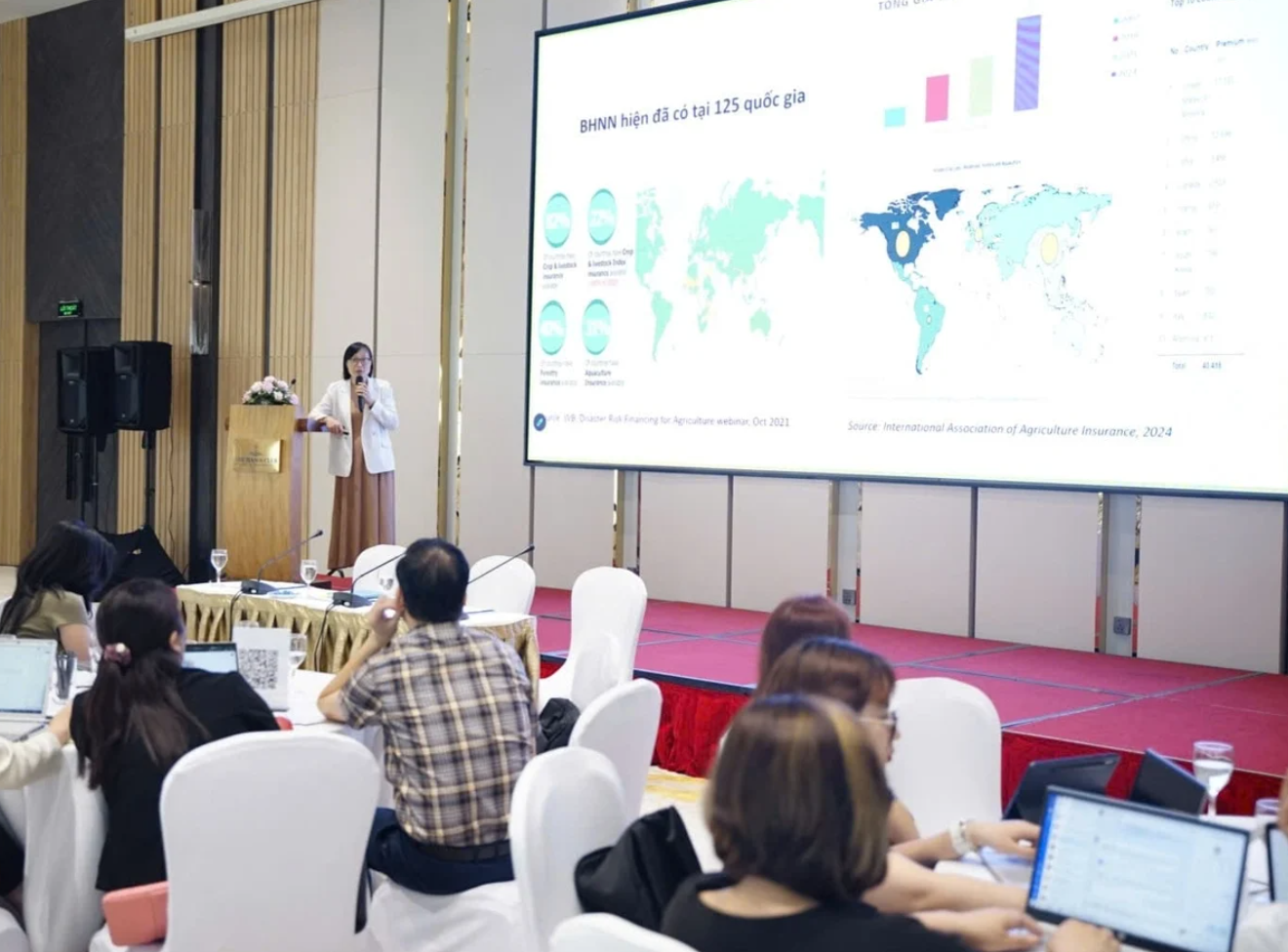 Le Thanh A shared insights on China’s agricultural insurance experience. Photo: Linh Linh.
Meanwhile, Le Thanh A, a GIZ consultant, pointed to China’s long-term, iterative approach. The country initially relied on state-led models, then experimented with market-driven mechanisms, before adopting a hybrid system.
“What stands out is that China allowed time for piloting and evaluation, rather than locking into a single model from the outset,” she said.
Once stabilized, China gradually expanded from insuring key crops to more complex products such as production cost insurance, income insurance, and weather index insurance.
A consistent feature across these models is the strong role of the state. Premium subsidies are almost a prerequisite for market formation, not only supporting farmers but also creating sufficient scale for the market to function.
Countries have also established layered risk-sharing mechanisms. Large-scale and catastrophic risks are transferred through domestic reinsurance layers and then to international markets, preventing systemic collapse in the event of widespread disasters.
At the same time, heavy investment in data and technology has been critical. China has deployed remote sensing, big data, and artificial intelligence to improve pricing, loss assessment, and claims processing, reducing disputes and operating costs.
“The lesson is not which model to choose, but how to embed insurance within the broader agriculture–finance–technology ecosystem,” A said.
Linking insurance with value chains and credit
From a business perspective, Vu Thi Kim Thanh, Head of Insurance Operations at PVI Holdings, said agricultural insurance in Viet Nam has yet to move beyond the pilot stage, despite more than a decade of implementation.
Companies have developed various products, including insurance for rice, livestock, aquaculture, and weather index insurance. However, the market remains small and lacks sufficient scale.
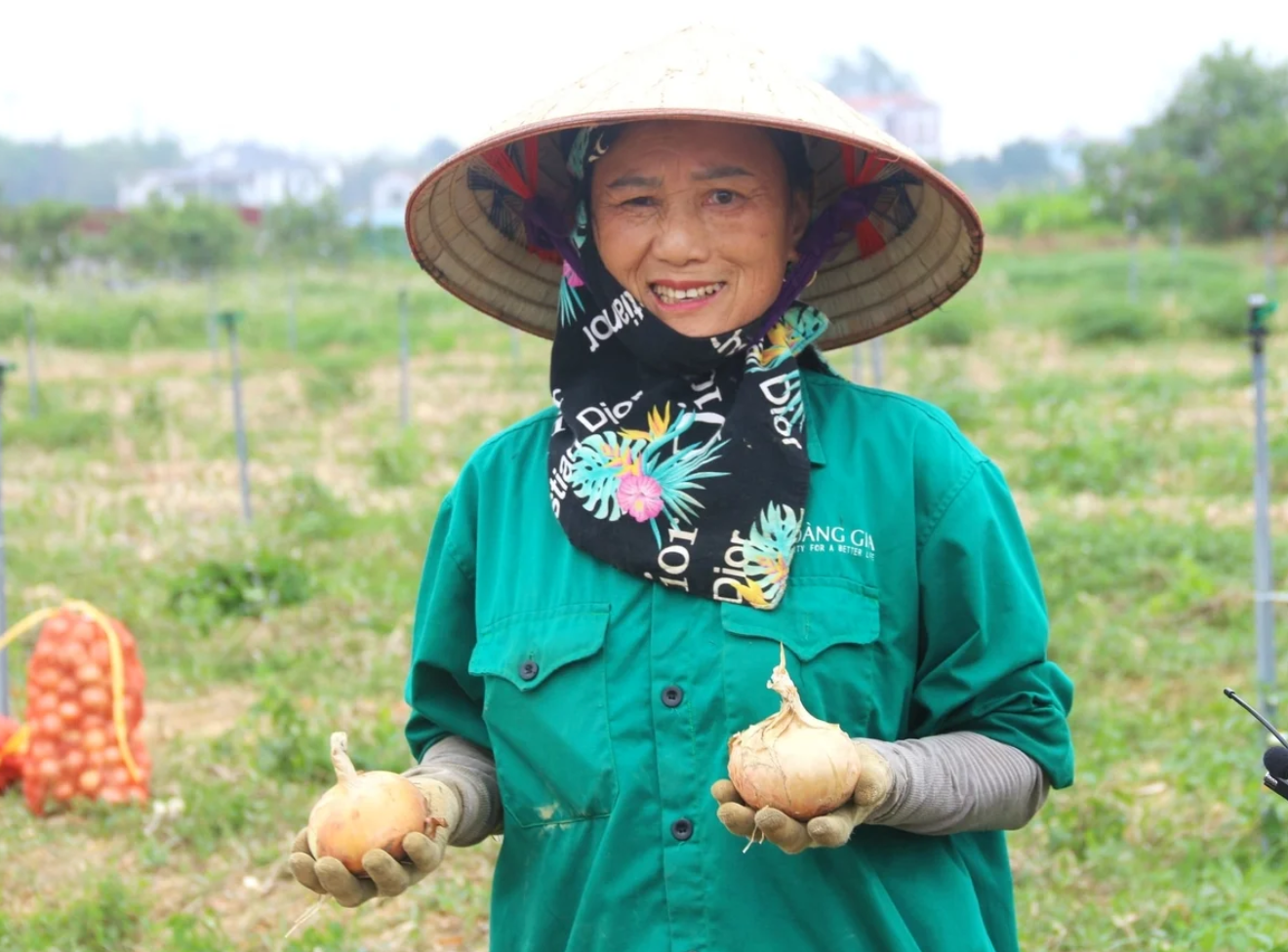 Agricultural insurance not only reduces losses but also helps reorganize production, enhance farmers’ management capacity, and promote the transition to green agriculture. Photo: Trung Hieu.
According to Thanh, the core issues are data and cost. Agricultural insurance is inherently high-risk, yet there is insufficient loss data to support accurate pricing. Assessment and administrative costs are high, while implementation networks remain underdeveloped.
“Without data, accurate pricing is impossible; without proper pricing, market expansion cannot happen,” she said.
In addition, product inconsistency across insurers complicates government premium subsidy payments. Farmers, meanwhile, remain hesitant due to costs, limited understanding of insurance, and continued reliance on post-disaster support.
Thanh also highlighted the lack of strong intermediaries. Cooperatives need to be restructured to serve as implementation hubs for insurance, rather than functioning solely as production units.
“The shift must be from selling products to building an ecosystem,” she said.
Insurance can be integrated into value chains by linking it with input supply, credit, or off-take contracts. Technology should also be incorporated, enabling cooperatives to participate in loss assessment, update data, and accelerate claims processing.
Experts agreed that in the 2026–2030 period, agricultural insurance cannot develop if it continues to be implemented in a fragmented manner. A comprehensive approach is needed, linking insurance with value chains and credit, establishing stable premium subsidy mechanisms, investing in data and digital infrastructure, strengthening the role of cooperatives as primary delivery channel, and building layered risk-sharing and reinsurance systems.
According to Trang, when properly positioned, agricultural insurance not only mitigates losses but also contributes to restructuring production, strengthening farmers’ governance capacity, and accelerating the transition to green agriculture.
“This is no longer a support tool, but a policy lever,” she said.
Without a shift in approach, agricultural insurance will remain limited in scale. But if properly integrated, it can become a foundational pillar enabling Viet Nam’s agriculture to adapt to climate change and enhance long-term competitiveness.