On September 24, Lam Dong held a training to boost management capacity for commune and ward officials within the Dak Nong UNESCO Global Geopark area.
The program took place over two days, September 24-25, focusing on four thematic topics. These include an overview of the Dak Nong UNESCO Global Geopark, management work and local government responsibilities, implementing UNESCO's recommendations and preparing for the 2027 revalidation, and promoting the Geopark's values linked with sustainable tourism development and community livelihoods.
UNESCO recognized Dak Nong UNESCO Global Geopark in 2020, covering an area of about 4,760 km². Following the administrative rearrangement in July 2025, the Geopark spans 22 communes and wards in western Lam Dong province.
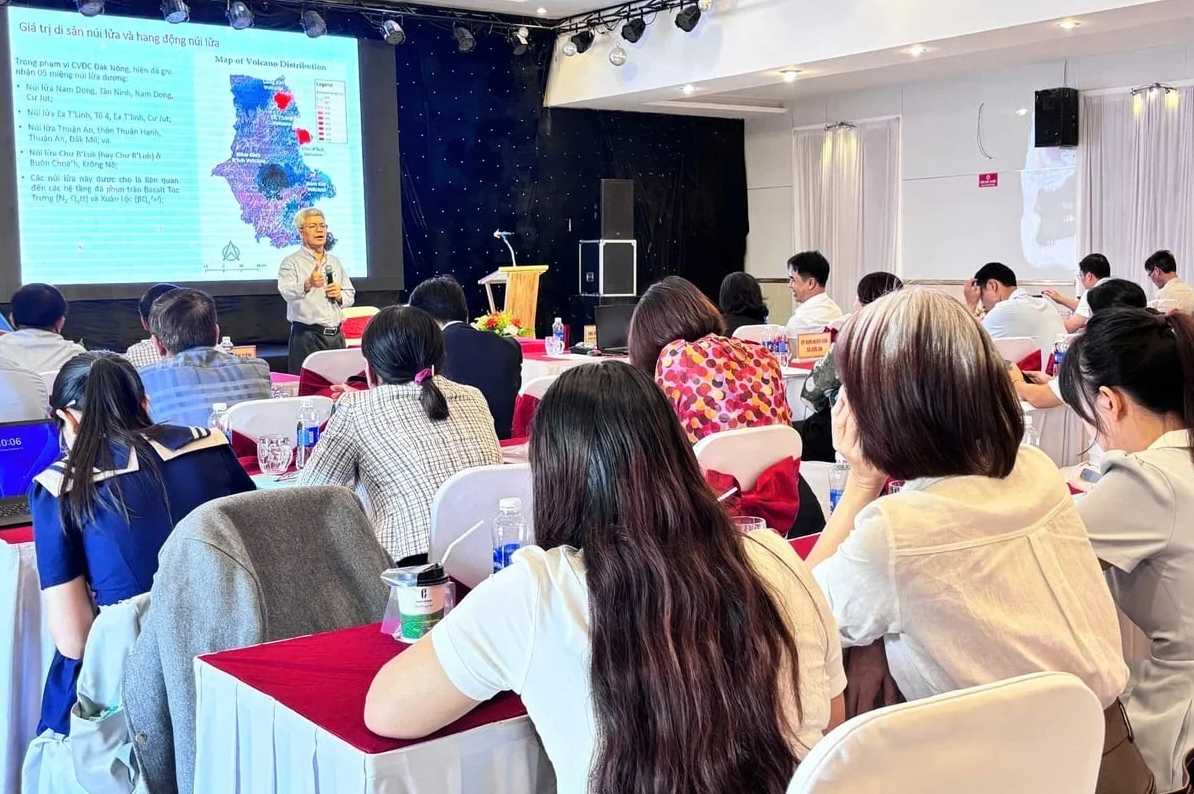 Assoc. Prof. Dr. Tran Tan Van, Chairman of the Viet Nam UNESCO Global Geoparks Network, shares knowledge on geological heritage values at the training conference. Photo: P. Hoai.
Through thematic sessions, grassroots officials were updated on Geopark management requirements and the locality's responsibilities for heritage, landscape, and environmental sites. The training content also addressed the coordination among local authorities, management agencies, the community, and relevant stakeholders in conserving and promoting the Geopark's values.
Speaking at the conference, Mr. Le Thanh Hiep, Director of the Dak Nong Geopark Management and Cultural Center, Lam Dong province, said the Geopark is formed by a combination of geological, geomorphological, landscape, cultural, and biodiversity values, intertwined with the community's life and livelihoods. Following the rearrangement of administrative units, the scope of management, organizational structure, and staff have changed significantly. Updating knowledge, unifying awareness, and clarifying the roles and responsibilities of grassroots authorities are necessary.
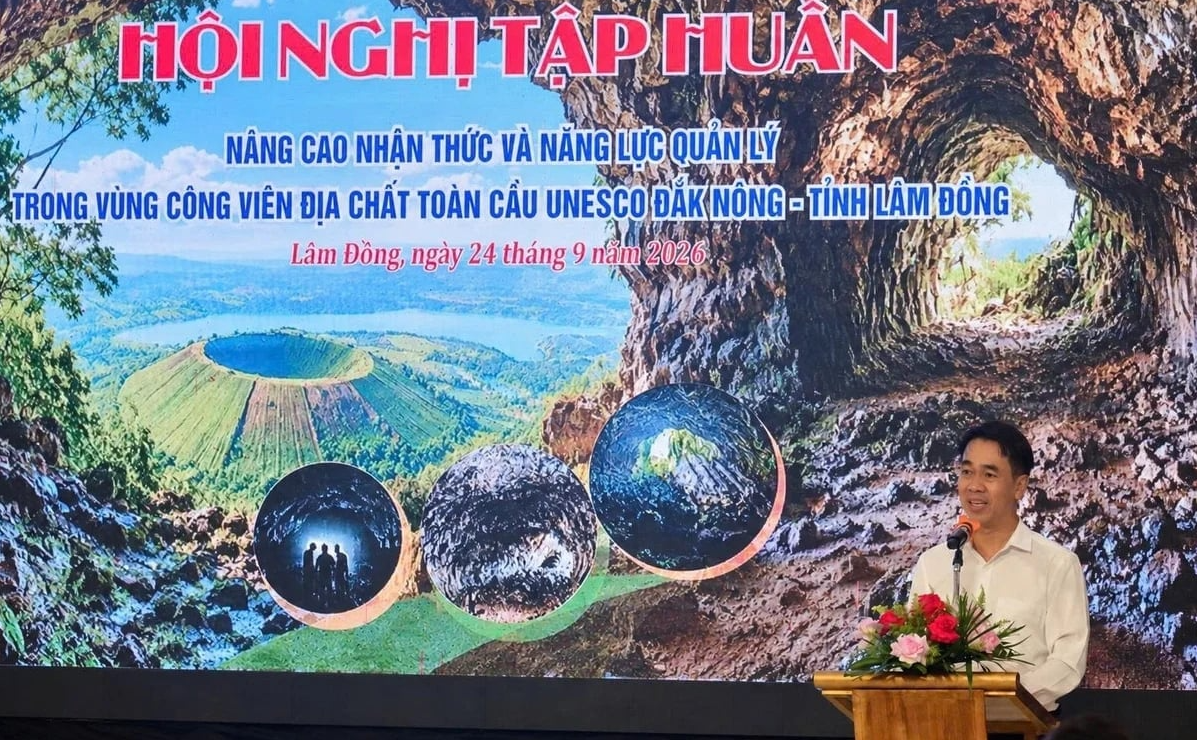 Mr. Le Thanh Hiep, Director of the Dak Nong Geopark Management and Cultural Center, Lam Dong province, speaks at the training conference. Photo: L.K.
"Importantly, the Geopark is not only manifested through the UNESCO title, but its value is created from the very heritages, landscapes, communities, and activities regularly taking place in the area. Therefore, managing and promoting the Geopark's values is not the sole task of a single agency or unit, but requires the participation, coordination, and responsibility of all levels, sectors, local authorities, and the community", Mr. Hiep emphasized.
Concurrently, preparing for the 2027 revalidation was raised with many contents that need further refinement. These include implementing UNESCO's 7 recommendations from 2023, improving management quality, identifying and interpreting heritage sites, gradually completing facilities, developing geotourism, expanding the partner network, and fostering community participation.
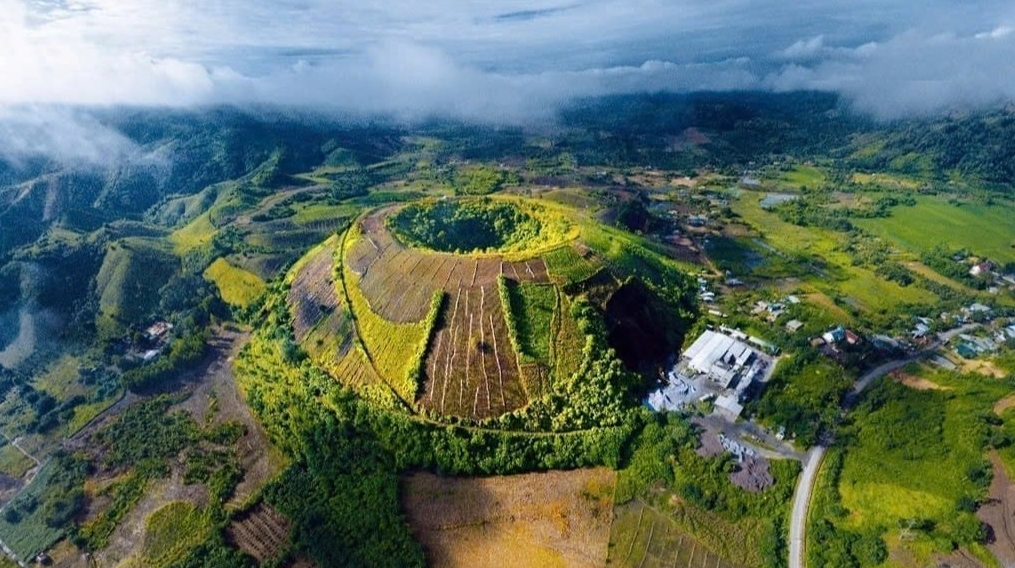 A volcanic crater, one of the characteristic landforms within the Dak Nong UNESCO Global Geopark space. Photo: P.H.
Besides the thematic topics, delegates exchanged and discussed difficulties and obstacles in grassroots management practices. The program also organized field surveys of several heritage and representative sites within the Dak Nong Geopark area to connect knowledge with reality, identify values needing conservation, issues requiring remediation, and appropriate ways to promote them in each locality.