Recent years have seen improvements in forest fire prevention and control, with both the number of incidents and the area of forest affected trending downward. However, according to Official Dispatch No. 2515/BNNMT-LNKL, risks remain high, particularly under increasingly extreme weather conditions.
Meteorological forecasts indicate that temperatures across many regions will rise significantly, with prolonged heat expected to heighten the risk of widespread forest fires.
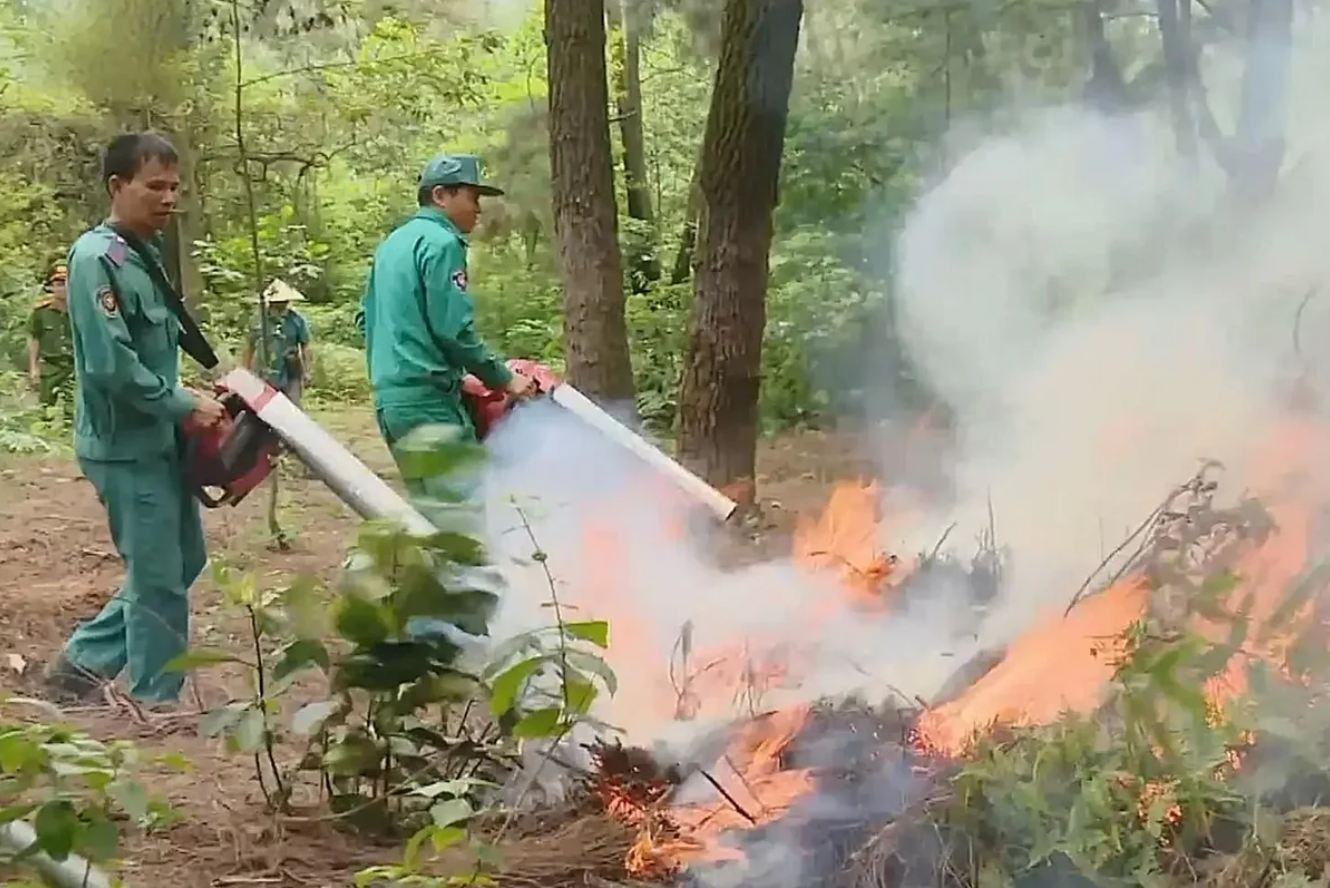 Forest fire prevention drill in Soc Son district, Hanoi. Photo: Ngoc Anh.
Beyond weather conditions, human activity continues to pose significant pressure on forest protection efforts. The use of fire in and near forests, especially slash-and-burn practices and vegetation clearing, remains a leading cause of forest fires.
In many localities, oversight of these activities remains inadequate, while public awareness among some communities is still limited.
In response, the Ministry has called on provincial and municipal People’s Committees to strengthen enforcement of forestry laws and to review and refine forest fire prevention and response plans to better reflect on-the-ground realities.
The role of commune-level authorities and relevant forces has been emphasized, with regular monitoring identified as a core task during the dry season.
Localities are required to intensify inspections in high-risk areas, proactively allocate personnel, equipment, materials, and logistical support, and remain ready to respond to emergencies.
The “four on-the-spot” principle, local command, local forces, local resources, and local logistics, continues to be highlighted to ensure rapid, on-site response and prevent fires from spreading.
Close coordination among forest rangers, police, and military forces is also essential, particularly in complex incidents or areas with difficult terrain.
The Ministry also stressed the need to expand the use of technology in fire prevention efforts. Geographic Information Systems (GIS), remote sensing technologies, and early warning systems are being encouraged to detect risks at an early stage.
Regular monitoring of official warning channels, including those from the Forestry and Forest Protection Department, is critical to improving preparedness.
Alongside technical measures, public communication has been identified as a decisive factor. Authorities are urged to strengthen guidance on the safe use of fire, strictly regulate high-risk activities, and impose penalties for violations.
In the event of a fire, localities must swiftly mobilize forces and equipment to contain and extinguish it, minimize damage, and conduct investigations to determine causes and assign responsibility in accordance with regulations.
As extreme weather events become more frequent, the Ministry emphasized a shift from reactive response to proactive prevention. Early, coordinated, and comprehensive preparation is seen as key to reducing risks and safeguarding existing forest resources.