According to Minister, investment in disaster prevention and control infrastructure is an investment in sustainable development, ensuring safety for people and the economy.
Minimize economic and social losses
Speaking at the National Conference on Disaster Prevention and Control 2026, Minister of Agriculture and Environment Tran Duc Thang stated that 2025 saw exceptionally complex and severe natural disasters that occurred across wide areas and lasted for extended periods, causing heavy damage. However, under the close guidance of Party and State leaders and with the spirit of “all for the people,” response efforts achieved many positive results.
Regarding tasks for 2026 and the near future, Minister Tran Duc Thang proposed three key solution groups. First, there is a need to build a unified understanding of the relationship between disaster prevention and control and economic development.
 Minister Tran Duc Thang speaking at the conference. Photo: Nhan Dan Newspaper.
Disaster prevention, response and risk reduction
“Disaster prevention, response, and risk reduction must be recognized as crucial factors for safeguarding development achievements and promoting sustainable growth. Experience shows that effective prevention and timely response can significantly reduce economic and social losses,” Minister Tran Duc Thang emphasized.
Second, continue to finalize institutional and legal frameworks for disaster prevention and control in a coordinated and consistent manner. This includes reviewing and clearly defining the functions and responsibilities of central ministries and agencies to avoid overlap. Strengthen decentralization and delegation of authority tied to local responsibilities under a two-tier governance model, enhancing the effectiveness of local management.
Third, ensure that resource allocation and investment align with the growing demands of disaster prevention and control in the context of climate change. The Minister stressed: “Investment in disaster prevention infrastructure should be seen as investment in sustainable development, ensuring safety for people and the economy.”
Many localities seek investment in key infrastructure
From a local perspective, Mr. Vuong Quoc Tuan, Chairman of the People’s Committee of Thai Nguyen Province, noted that in 2025 alone, the province faced numerous major natural disasters, with about 35 events directly affecting the area, including 70 heavy rainstorms causing significant damage.
 Thai Nguyen Province faced multiple major natural disasters in 2025. Photo: Ngoc Tu.
In light of this reality, Thai Nguyen Province has been implementing several key measures. These include focusing on medium-term projects such as the renovation and upgrading of reservoirs, constructing embankments to prevent erosion and completing a comprehensive flood prevention plan for the provincial central area.
Alongside infrastructure investment, the province is also prioritizing the development and refinement of reservoir operation procedures to ensure downstream safety, strengthening inspections and safety assessments, and proactively preparing emergency response plans.
In addition to local efforts, the Chairman of the Thai Nguyen People’s Committee has proposed that the Government and the Ministry of Agriculture and Environment provide support and resources for key projects, particularly flood regulation and mitigation works.
Mr. Vuong Quoc Tuan also recommended conducting a comprehensive study and assessment of the causes of flooding across the Cau River basin to propose synchronized, long-term solutions. At the same time, he urged increased investment in monitoring and warning systems, as well as equipment for disaster prevention and control, particularly in areas frequently affected by natural hazards.
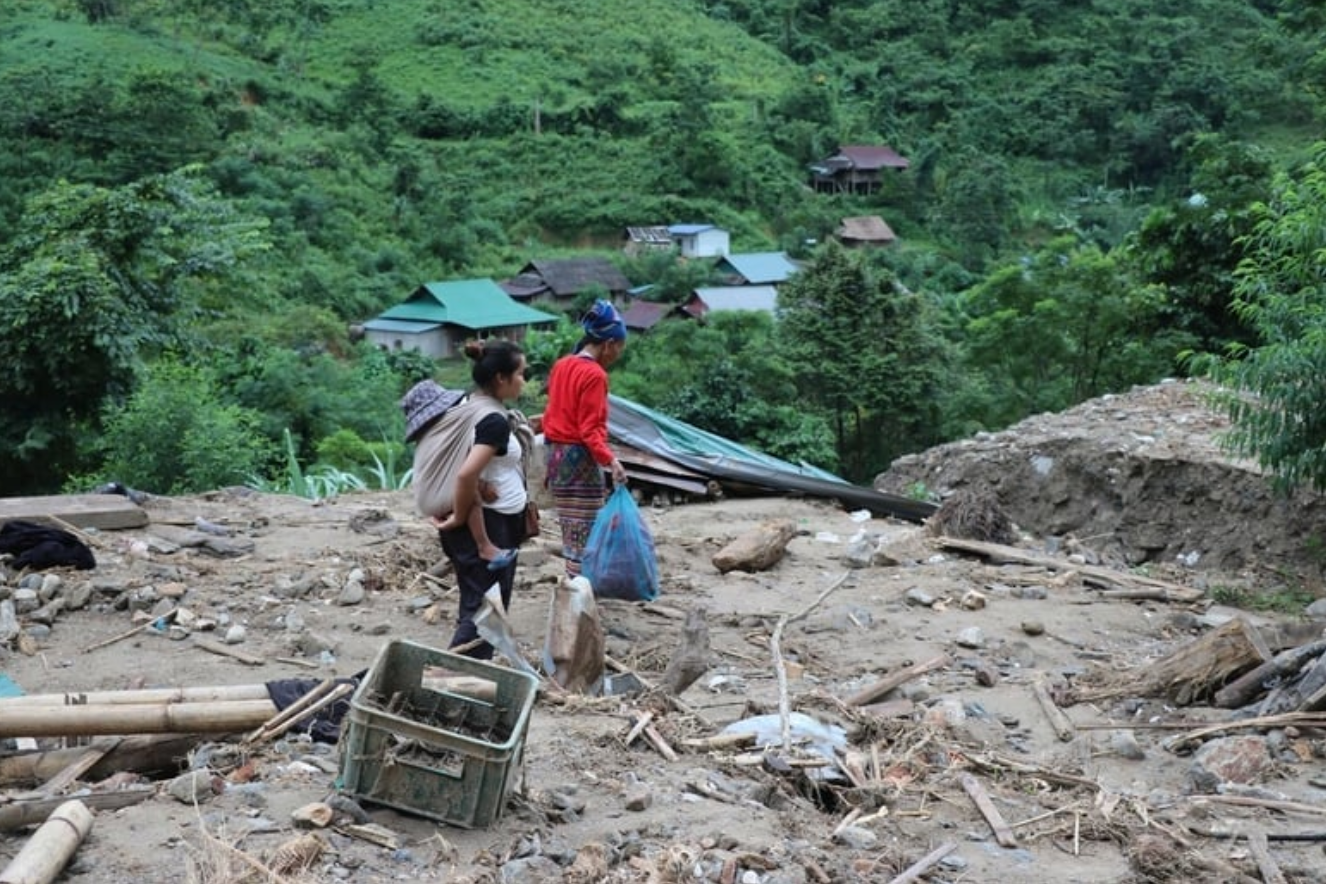 2025 was considered an exceptionally complex year for natural disasters in Nghe An. Photo: VGP.
Similar to Thai Nguyen, Nghe An was affected by 15 storms, 6 tropical depressions, 11 heavy rainfall events, and multiple floods along the Ca River system. At times, inflows into reservoirs exceeded their design capacity, putting tremendous pressure on operations and infrastructure safety. Many areas experienced widespread and prolonged flooding.
“Experience shows that relying solely on conventional response scenarios will always leave us reactive in the face of increasingly extreme and unpredictable disasters,” a representative of the Nghe An People’s Committee said.
Accordingly, Nghe An identified several key tasks for the coming period. The first is to enhance forecasting and early warning capacity. This includes investing in monitoring and automated warning systems and applying digital transformation and big data in disaster management.
The province also plans to continue reviewing and updating response plans according to different risk levels. Ensuring the safety of dikes and reservoirs is a priority, along with proactively arranging and relocating residents in high-risk areas.
Nghe An is focusing on strengthening grassroots disaster response teams, equipping them with rescue and relief tools, and organizing realistic drills. At the same time, the province aims to develop climate-adaptive infrastructure, upgrading dikes and reservoirs, and integrating disaster prevention measures into socio-economic planning and development.
Community awareness and education efforts will continue to be strengthened, expanding safe-practice models and training citizens in disaster response skills to ensure proactive preparedness in all situations.
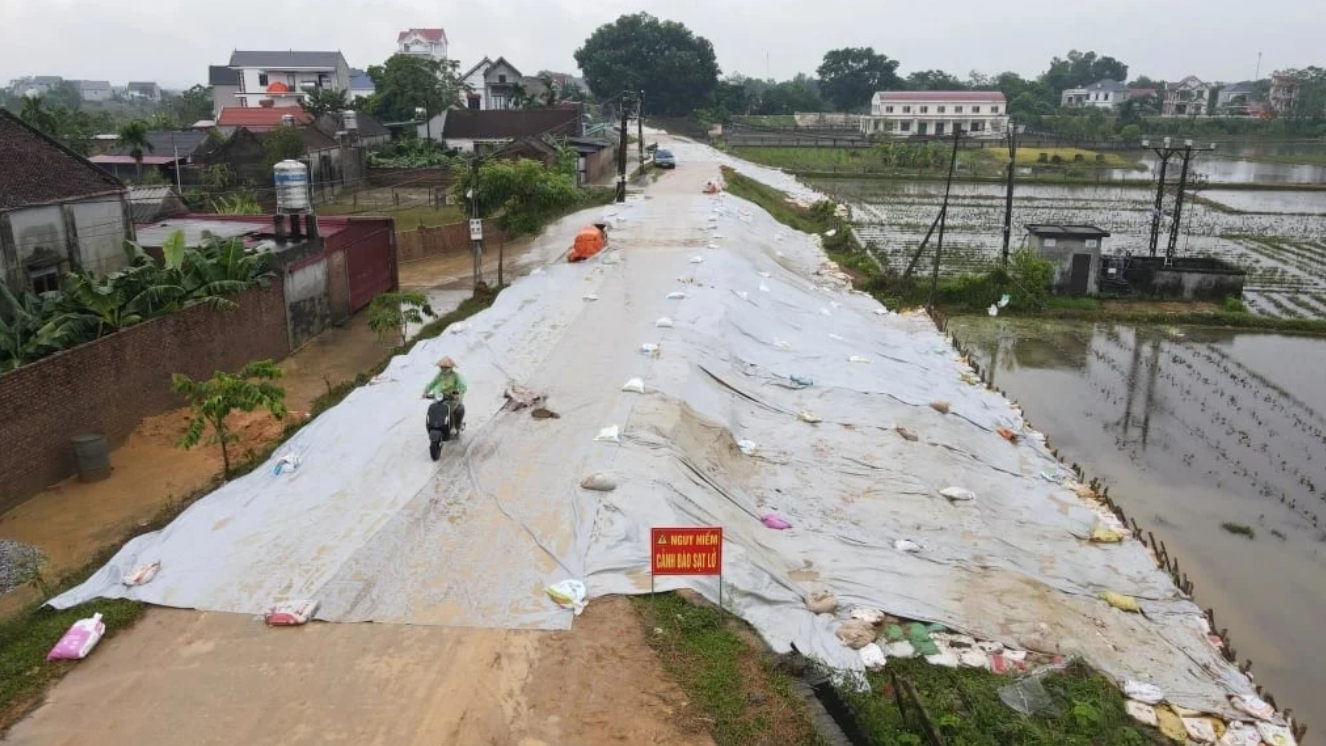 Dike damaged after historic flooding in Bac Ninh, October 14, 2025. Photo: Giang Huy.
To enhance the effectiveness of disaster prevention and control, Nghe An Province has proposed that the Government allocate investment resources for key infrastructure projects and establish special mechanisms to support localities that are frequently and severely affected by natural disasters.
In addition, provincial leaders have requested that central ministries and agencies strengthen support for upgrading forecasting and warning systems, providing rescue and relief equipment and vehicles. In particular, they emphasized improving the quality, accuracy, and timeliness of forecasts so that localities can respond more proactively.