Viet Nam National University of Agriculture (VNUA) has proposed developing agricultural cooperation with Ivory Coast by identifying the country’s most pressing needs, launching pilot projects and evaluating their results before scaling them up. The cooperation will focus on three overarching goals: strengthening food self-sufficiency, increasing the value created from agricultural products in Ivory Coast, and developing officials, scientists and experts who can adopt, master and further develop agricultural technologies and policies.
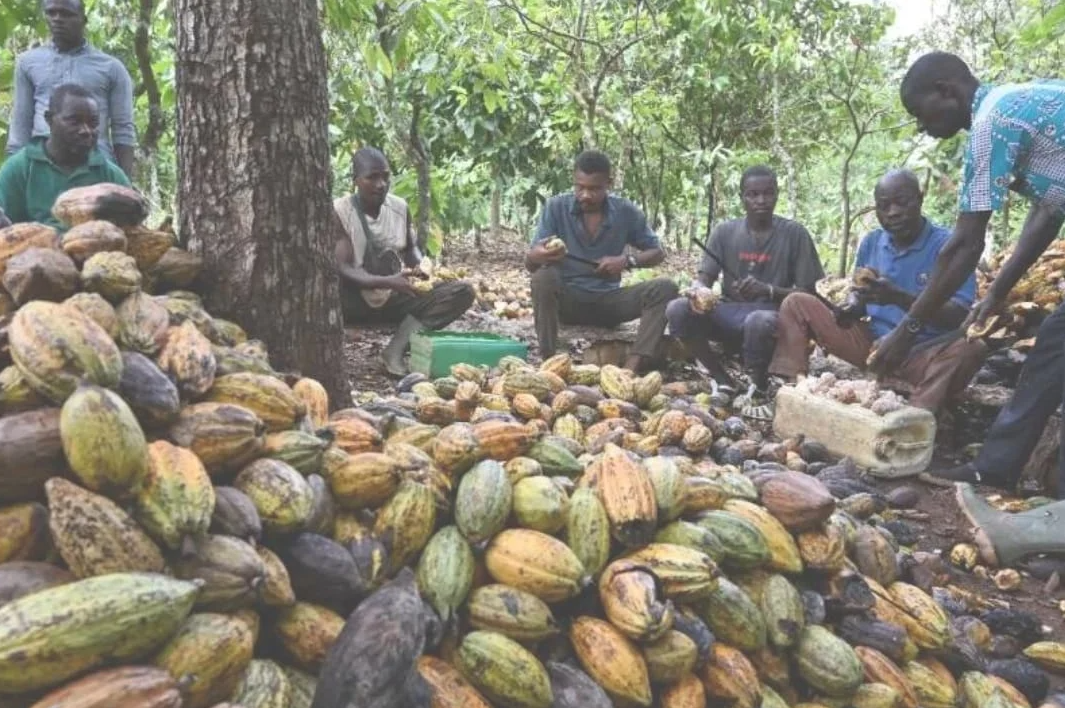 Cocoa is not only an agricultural commodity but also a pillar of Ivory Coast’s economy. Photo: Phys.
The 2026-2030 cooperation framework identifies five priority areas: rice production and food sovereignty; value chains and processing of tropical agricultural products; livestock, veterinary medicine and One Health; digital agriculture and climate change adaptation; and human resource development and agricultural policy innovation.
Turning cooperation potential into practical results
Speaking at a meeting with the delegation of the National Assembly of Ivory Coast at VNUA on the afternoon of August 24, Prof. Dr. Nguyen Thi Lan, President of VNUA, said cooperation should begin with Ivory Coast’s actual development needs, rather than simply focusing on what VNUA has to offer. The program will only be meaningful when the country’s needs match the university’s expertise, and the results can be applied in practice.
Based on this approach, Prof. Dr. Nguyen Thi Lan outlined three pillars of cooperation: “Food - Value - People”. The goal is not only to improve productivity and production efficiency, but also to promote processing, retain more value from Ivory Coast’s high-potential agricultural products, and train a workforce capable of adopting, adapting and further developing technologies.
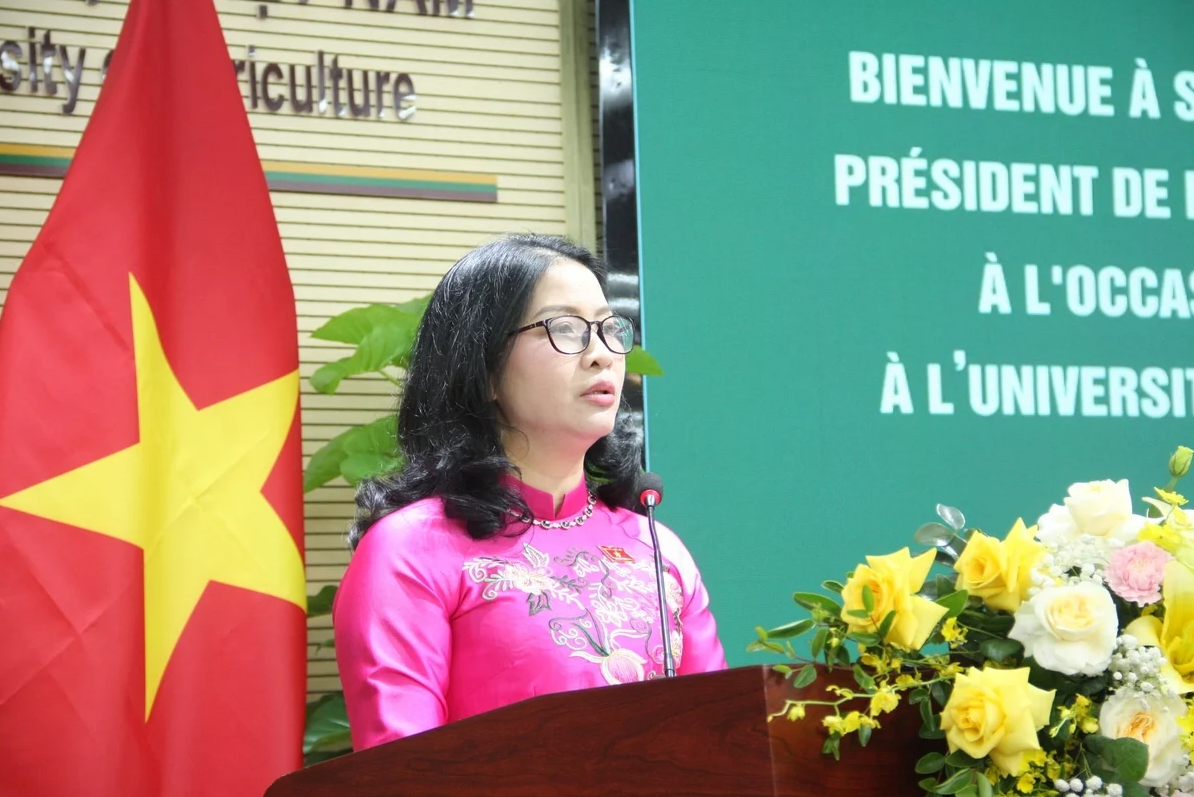 According to Prof. Dr. Nguyen Thi Lan, President of Vietnam National University of Agriculture, cooperation should begin with Ivory Coast’s actual development needs rather than simply focusing on what the university has to offer. Photo: Mai Dan.
The VNUA president stressed that cooperation should not be spread too thin. Vietnamese experience, crop varieties and technologies can only deliver real value when the two sides work together to adapt them to Ivory Coast’s conditions. The success of cooperation should therefore be measured not only by signed agreements, but also by pilot models put into practice, the training of officials and students, joint research activities, and tangible benefits for local people and businesses.
Assoc. Prof. Dr. Nguyen Cong Tiep, Vice President of VNUA, said the two countries have clearly complementary strengths. Viet Nam and VNUA have extensive experience in rice production, crop varieties, biotechnology, livestock and veterinary medicine, post-harvest technologies, processing and training. Meanwhile, Ivory Coast has abundant tropical agricultural products, strong processing potential and a strategic position as a gateway to West Africa.
He said VNUA’s approach is to match each area of expertise with a specific need, ranging from food security and higher productivity to processing and traceability, rather than presenting a generic list of technologies.
Ivory Coast’s interest in cooperation stems from the significant gap in agricultural productivity and efficiency between the two countries. Patrick Achi, President of the National Assembly of Ivory Coast, cited figures showing that Viet Nam produces around 45 million tonnes of rice each year, compared with about 2 million tonnes in Ivory Coast, despite the two countries having relatively similar land areas.
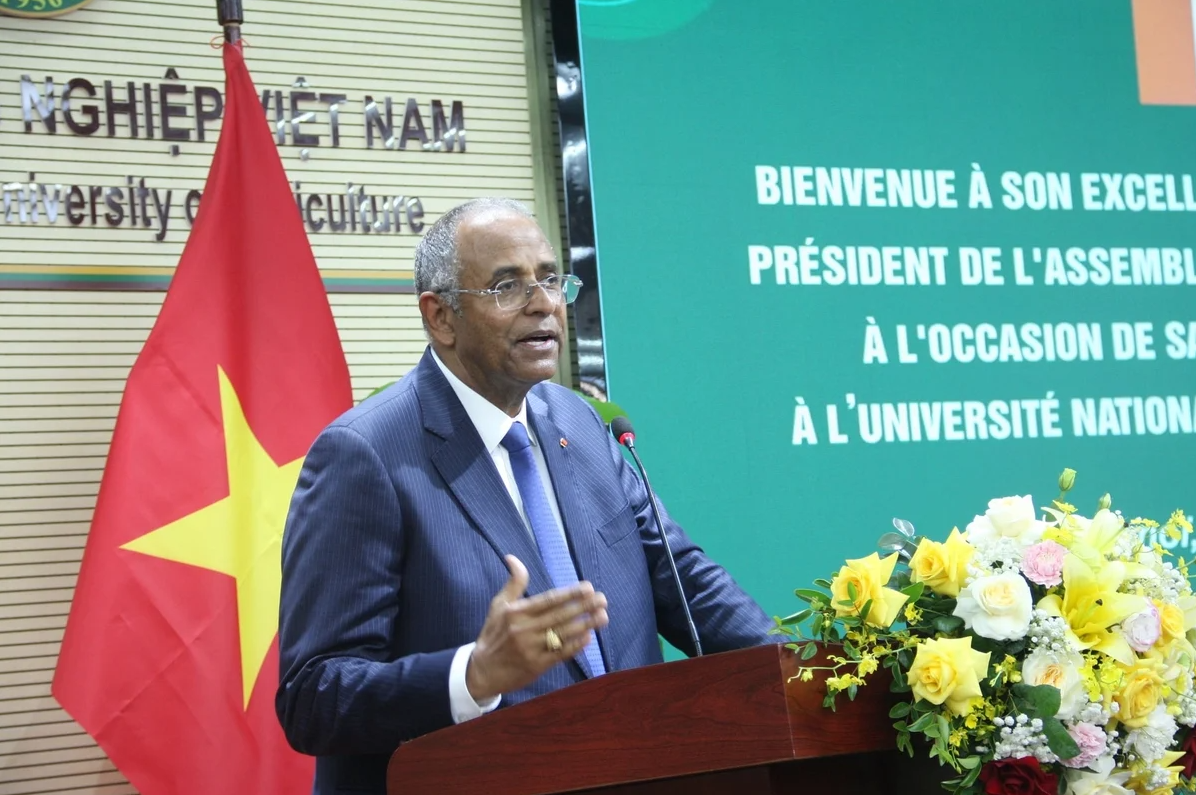 President of the National Assembly of Ivory Coast Patrick Achi proposed that the two sides work with relevant agencies to develop policies and pilot projects in local communities across Ivory Coast. Photo: Mai Dan.
Ivory Coast produces more than 1.2 million tonnes of cashews each year, well above Viet Nam’s 350,000 tonnes. However, Viet Nam generates much greater added value from the commodity. In coffee, Viet Nam produces around 2 million tonnes annually, while Ivory Coast’s output has fallen significantly. The West African country is now implementing policies to improve the situation.
Patrick Achi said Ivory Coast wants to learn from Viet Nam not only how to increase agricultural output, but also how to develop processing, expand exports and reduce rural poverty. He proposed that the two sides work with relevant agencies to develop policies and pilot projects in local communities across Ivory Coast.
Three initiatives to launch within 12 months
To quickly turn the cooperation framework into practical action, VNUA has proposed initially focusing on three initiatives rather than implementing all five priority areas at once.
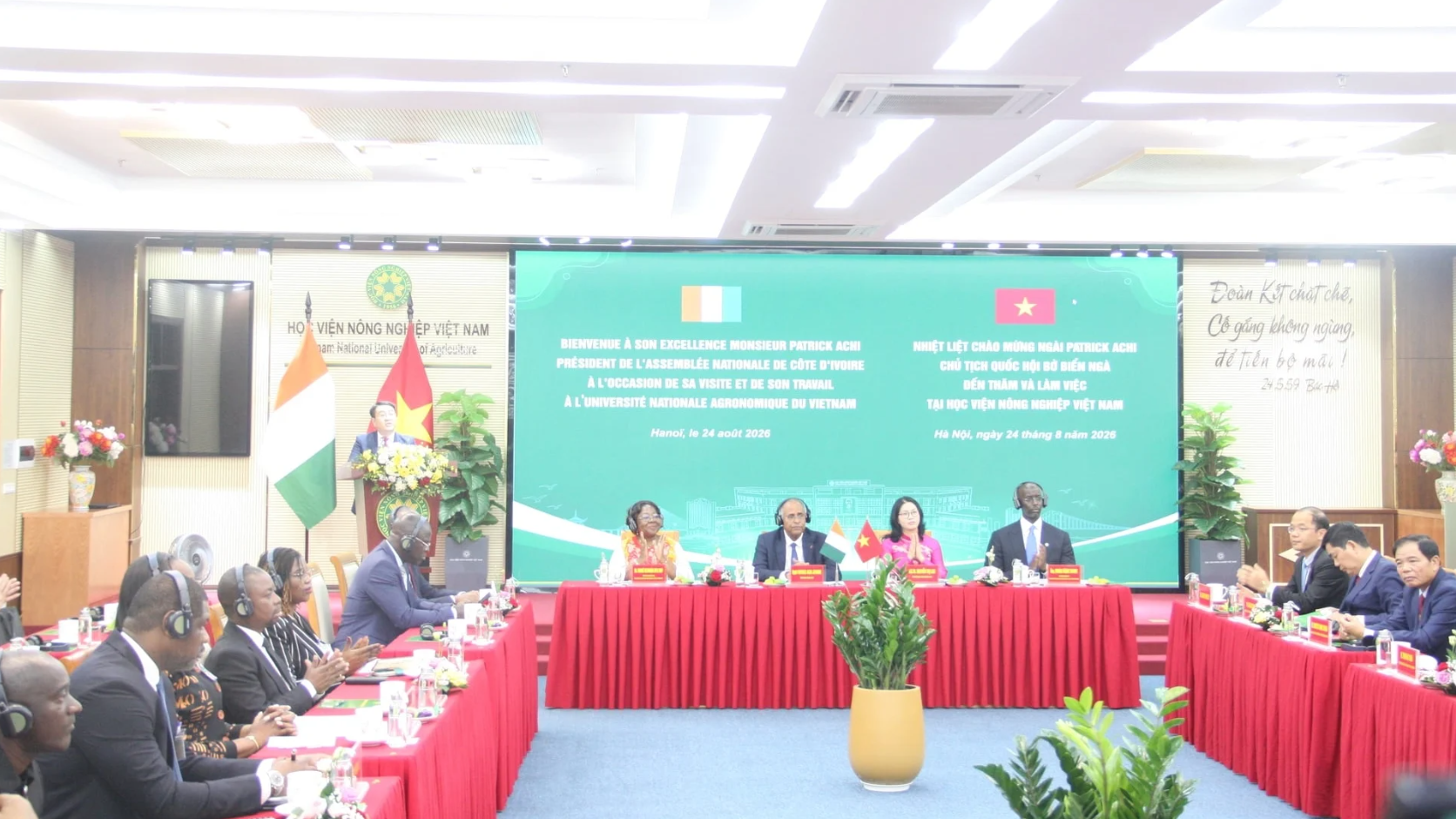 On the afternoon of August 24 in Ha Noi, the delegation of the National Assembly of Ivory Coast visited and held a working session at Vietnam National University of Agriculture. Photo: Mai Dan.
The first initiative is to develop a pilot rice production model in Ivory Coast. It would cover soil, water, and climate assessments, variety selection, and the integration of farming techniques, irrigation, mechanization, and post-harvest practices. The large-scale introduction of Vietnamese rice varieties would not be predetermined, but would depend on the results of local trials.
The second initiative would focus on one value chain among cocoa, cashews, coffee and cassava. The two sides would identify stages where losses occur or value is reduced, then select solutions for storage, processing, quality control and traceability. Businesses would be encouraged to participate from the outset rather than only becoming involved at the commercialization stage.
The third initiative is to establish a regular mechanism for training and agricultural policy research. This would include undergraduate and postgraduate training, capacity building for key officials, expert exchanges and joint research. According to Assoc. Prof. Dr. Nguyen Cong Tiep, technologies can be transferred over a limited period, but well-trained officials, scientists and experts can continue creating value for decades.
Under the proposed roadmap, the two sides would appoint focal points during the first month, establish working groups in months 1-3, conduct surveys and identify priorities in months 3-6, finalize projects in months 6-9, and launch the first activities between months 9 and 12. After 12 months, the results would be evaluated to determine which activities have delivered sufficient results to be scaled up.