New OM rice varieties currently undergoing trials in the South Central Coast have demonstrated initial potential for high yields and superior quality, signaling a significant opportunity to diversify regional seed structures.
Diversifying seed structures
The Nha Ho Research Institute for Cotton and Agricultural Development, based in Khanh Hoa Province, recently collaborated with the Cuu Long Delta Rice Research Institute (CLDRRI) to host a workshop showcasing promising new rice varieties for the South Central Coast. The event aimed to evaluate short-term, high-yield, and disease-resistant varieties suitable for production in the South Central Coast and Southeast regions. It also served as a platform for research institutions to share data on the OM rice series currently under trial, focusing on agronomic characteristics, pest resistance, yield potential, and real-world adaptability.
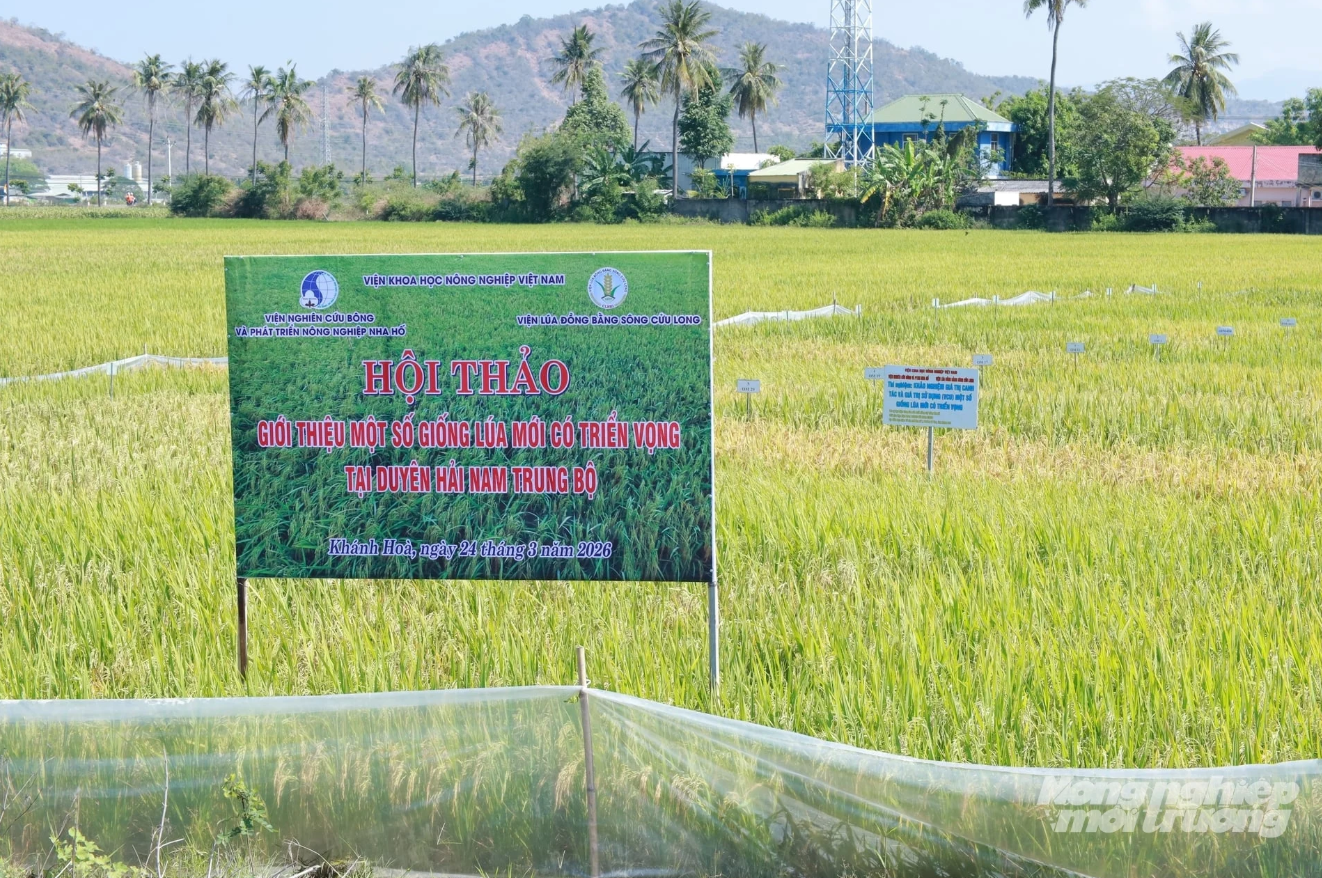 The Nha Ho Institute, in collaboration with the Mekong Delta Rice Research Institute, organizes trials for new rice varieties. Photo: Phuong Chi.
Dr. Phan Cong Kien, Deputy Director of the Nha Ho Institute, noted that the current rice seed structure in the South Central Coast remains limited and lacks diversity, particularly regarding varieties for industrial processing and high-quality consumption. This gap has historically hindered production value and the market competitiveness of the local rice sector. According to Dr. Kien, diversifying the seed catalog is a critical task to improve production efficiency and meet modern market demands. Recently, the MDRRI and the Nha Ho Institute have implemented a research and transfer cooperation program, focusing on introducing high-quality and processing-grade varieties to South Central production.
During the 2025-2026 Winter-Spring crop, the Nha Ho Research Institute collaborated with various research entities, most notably the MDRRI, to test rice varieties developed in the Mekong Delta within Khanh Hoa and other South Central provinces. This is viewed as a vital step toward establishing a seed portfolio tailored to local ecological conditions while boosting farmer income. The trial involved 12 promising varieties, including those already certified for circulation, those currently in testing, and several nearing official announcement. Initial observations indicate that approximately four varieties show broad adaptability to the conditions of Khanh Hoa specifically, and the South Central Coast and Central Highlands in general.
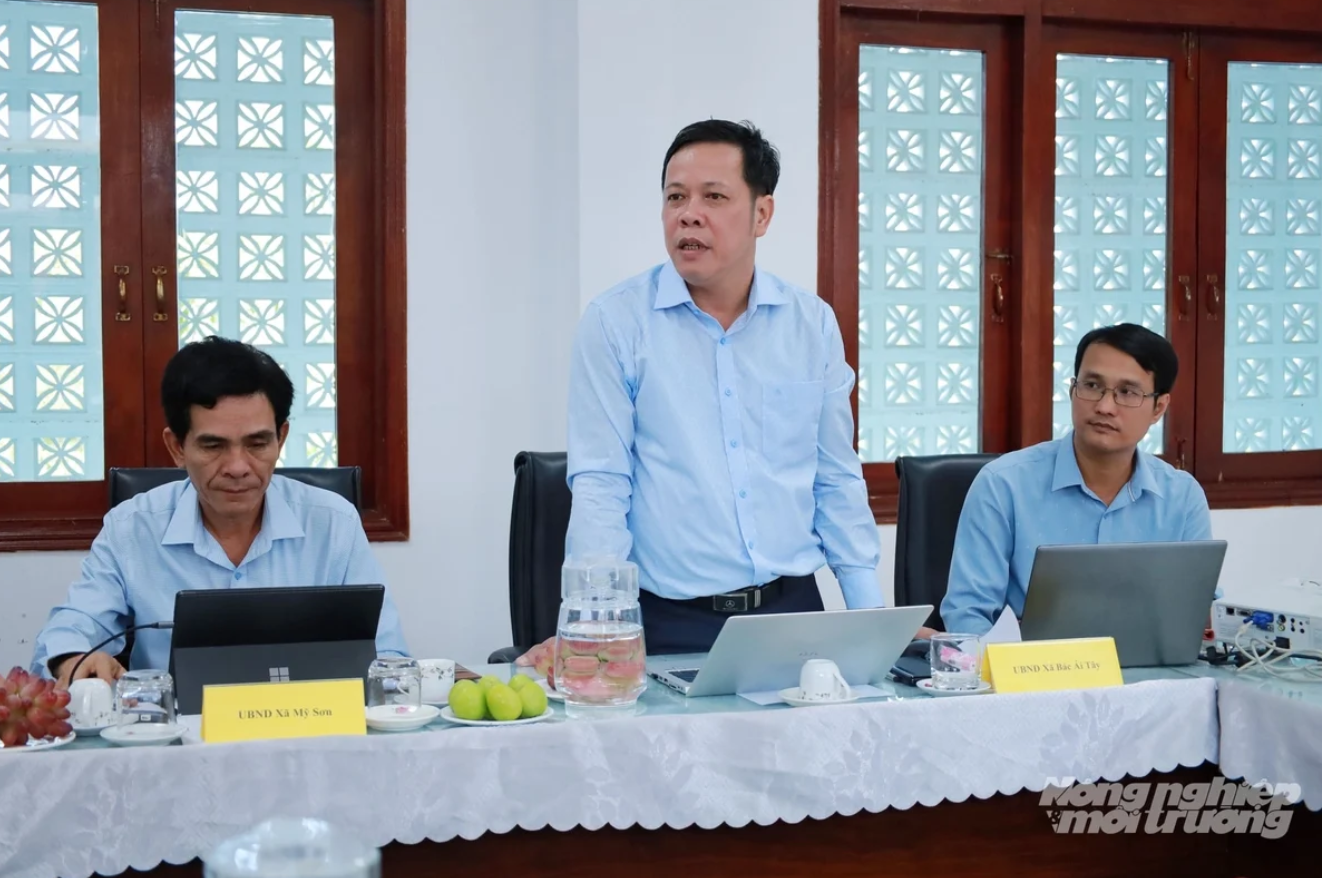 Dr. Phan Cong Kien, Deputy Director of the Nha Ho Institute, speaking at the workshop. Photo: Phuong Chi.
Preliminary results show that many of the trial varieties possess high yield potential and excellent quality, garnering interest from agricultural authorities, enterprises, and farmers.
These findings provide a solid foundation for the swift transfer and scaling of these varieties, eventually forming high-quality raw material zones in the region. Alongside the trials, agencies are developing demonstration models, refining cultivation techniques, and partnering with businesses to accelerate production.
Dr. Phan Cong Kien assessed that the yield potential of these varieties is on par with those grown in the Mekong Delta, while the grain quality is superior, enhancing value per unit area and creating opportunities for local high-quality rice products.
Specific high-quality varieties such as OM19, OM74, and OM344 have shown strong initial adaptability, while the OM29 variety, intended for the processing industry, also shows promise for development in the South Central region. Technical staff report that yields have reached approximately 700 to 800 kilograms per 500 square meters, which is considered quite high for the region's production conditions.
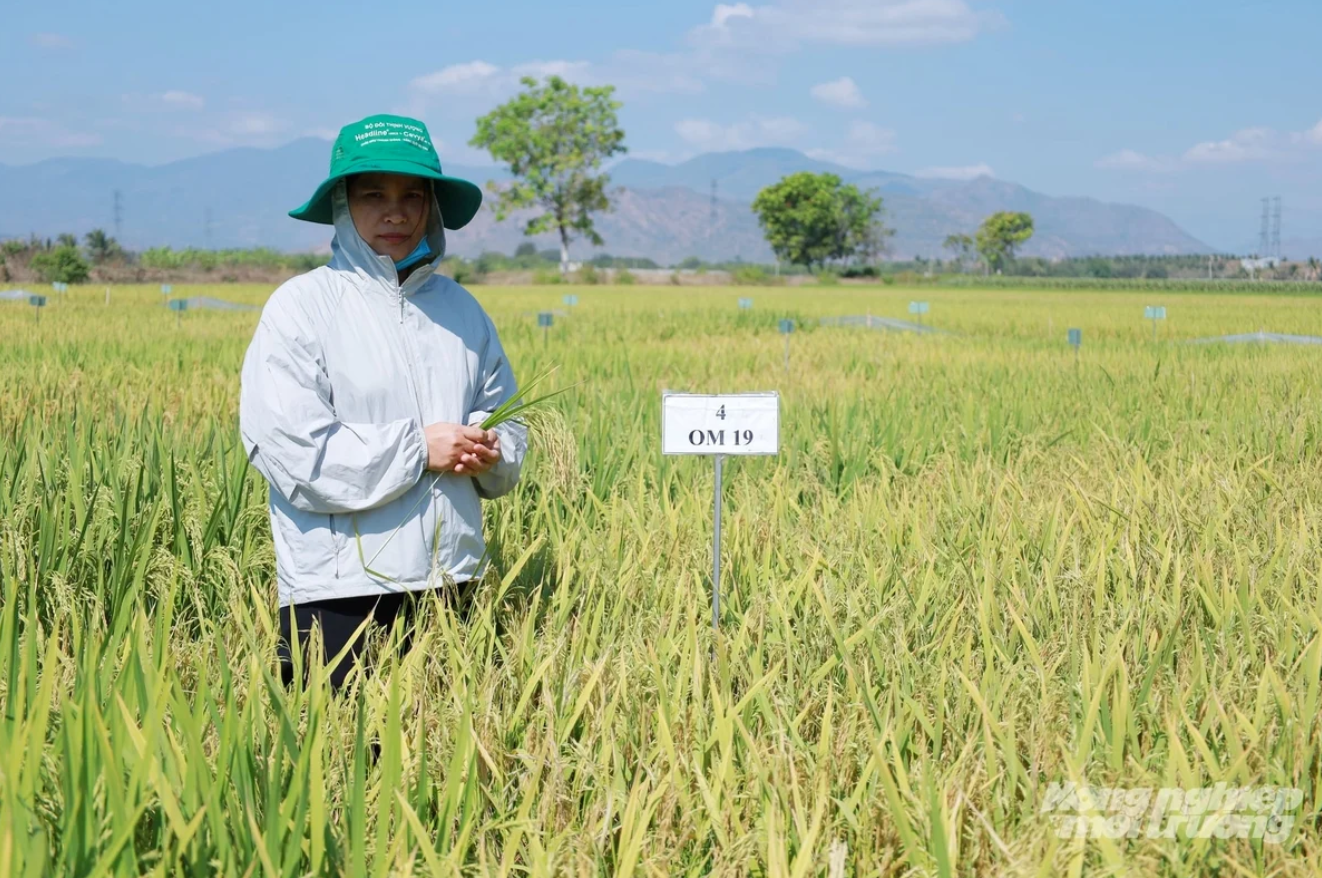 Preliminary evaluation results indicate that several rice varieties currently under trial exhibit high yield potential and superior quality. Photo: Phuong Chi.
Dr. Tran Ngoc Thach, CLDRRI Director, stated that monitoring results show many trial varieties have growth cycles and yields relatively well-suited to Central Vietnam’s farming conditions. However, due to differences in climate and soil, some varieties exhibit longer growth periods, requiring further research to align them with local seasonal structures. Dr. Thach noted that a cold spell during the 2025-2026 Winter-Spring crop caused some varieties to react differently than they would in the Mekong Delta. Nevertheless, after overcoming the adverse weather, most varieties developed well, demonstrating strong adaptability and high yield potential.
Moving forward, the CLDRRI will continue to work with the Nha Ho Institute to expand trial scales and diversify seed sources to select the most compatible varieties for mass production. Establishing groups of fragrant, high-quality, and commodity rice varieties will provide farmers with more options, enhancing efficiency and meeting market needs.
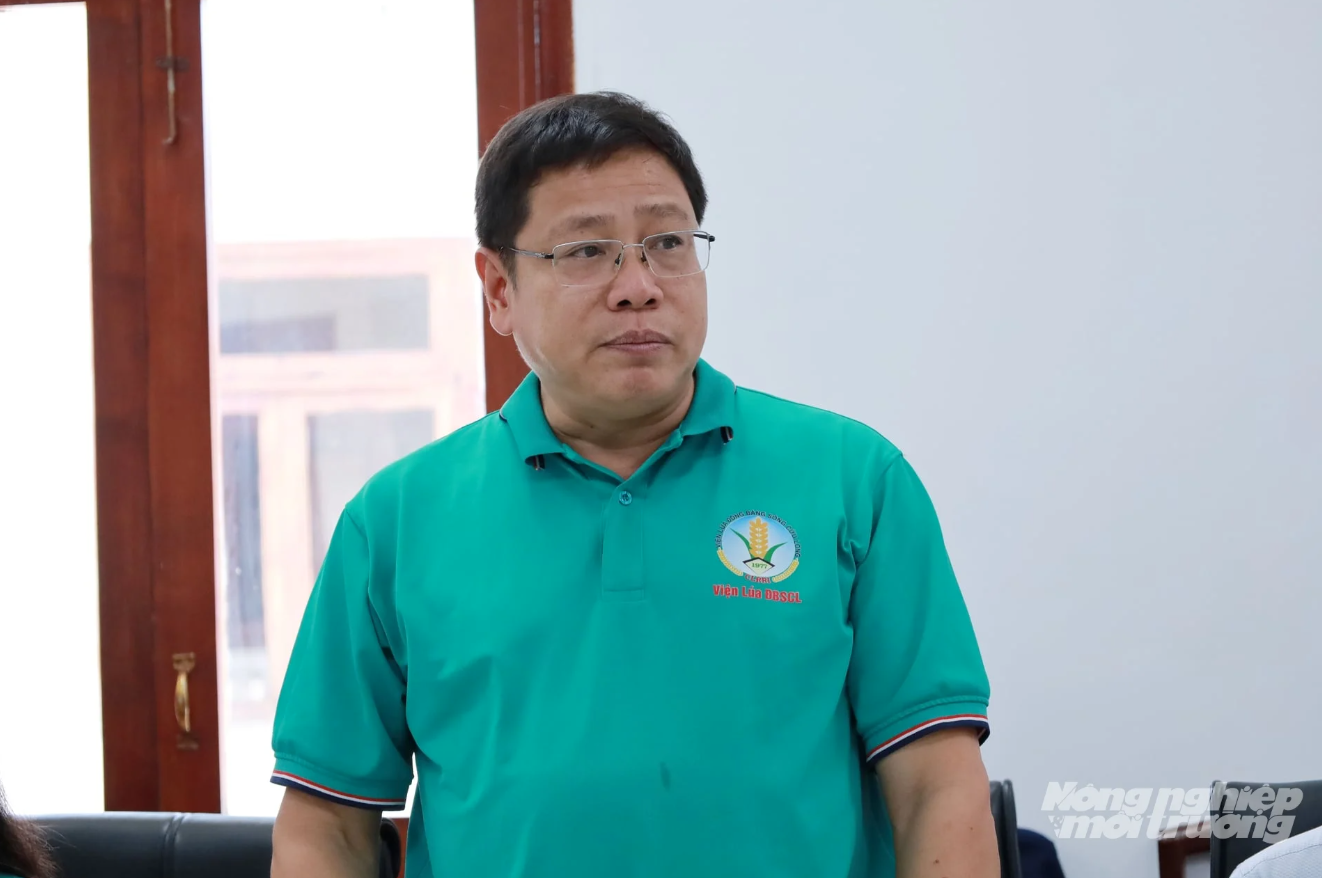 Dr. Tran Ngoc Thach, Director of the Mekong Delta Rice Research Institute, stated that the institute will continue to coordinate with the Nha Ho Institute to expand trial scales. Photo: Phuong Chi.
Assessing the overall trial results, Dr. Mai Van Hao, Deputy Director of the Vietnam Academy of Agricultural Sciences, described the initial signals as very positive. Many high-quality varieties outperformed traditional ones in yield and disease resistance.
Crucially, no lodging, the flattening of stalks, was recorded, which is a vital factor for rice production in Central Viet Nam, where crops are frequently subjected to strong winds.
Dr. Hao emphasized that as a pioneer in national rice research, the CLDRRI evaluates thousands of new lines annually.
Therefore, proactive engagement from local authorities, businesses, millers, and exporters in ordering specific research will help orient seed development toward practical needs, thereby accelerating the transition to production.
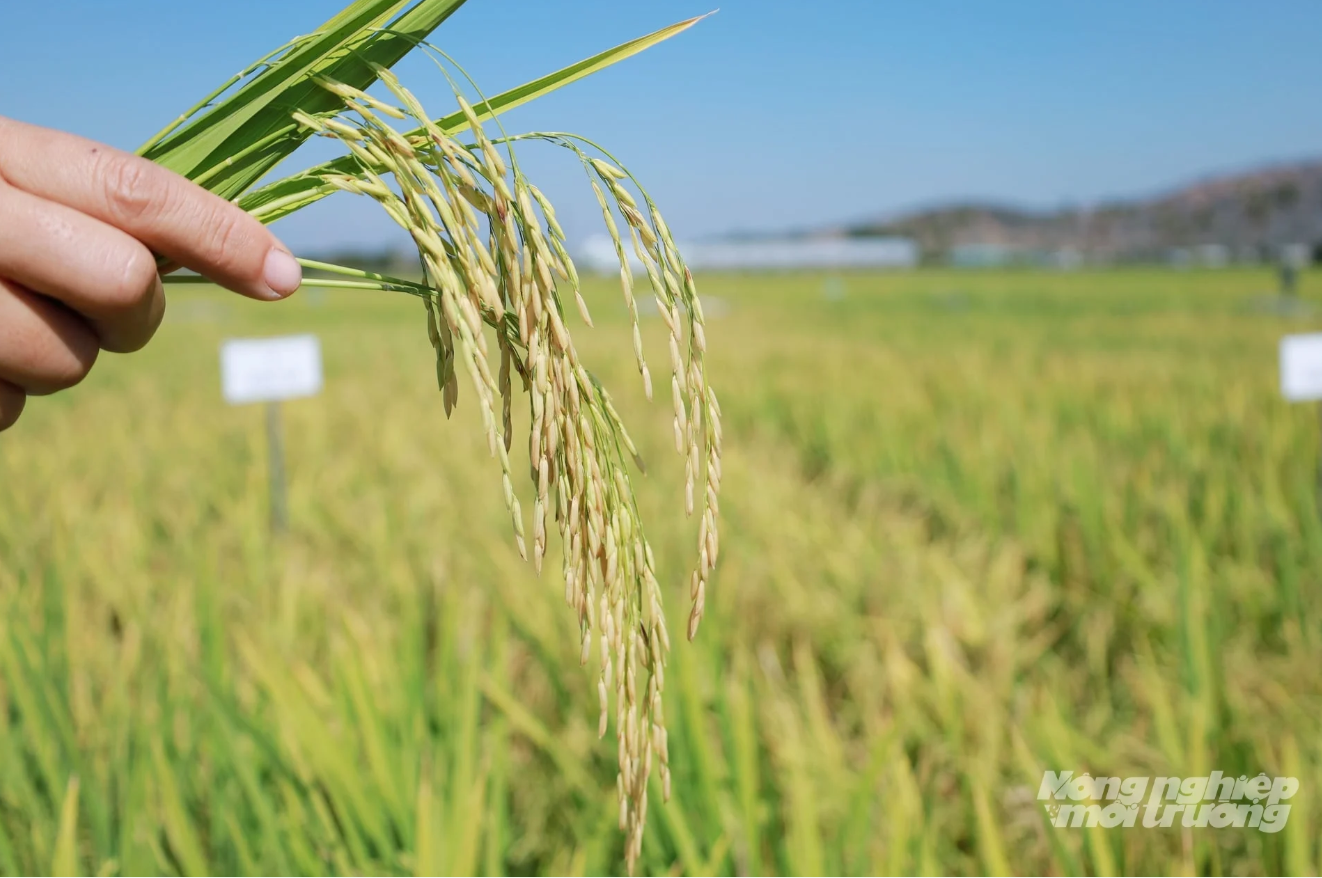 Several high-quality rice varieties under testing have demonstrated strong adaptability to the climatic conditions of Khanh Hoa. Photo: Phuong Chi.
For the Central region, beyond yield and quality, rice varieties must prioritize resistance to lodging and brown planthoppers, adapt to low-chemical cultivation, and ensure stable grain quality after processing. These factors are essential for building local rice brands and increasing sectoral value.
 Dr. Mai Van Hao, Deputy Director of the Viet Nam Academy of Agricultural Sciences, assesses the initial trial results as very positive. Photo: Phuong Chi.
In the coming period, the Viet Nam Academy of Agricultural Sciences will continue to coordinate with the CLDRRI, the Nha Ho Institute, and local provinces to expand trials across various ecological zones in the South Central Coast and Central Highlands. The objective is to select the best varieties for production structures while building high-quality raw material zone.
Dr. Mai Van Hao added that forming integrated value chains, linking seeds, techniques, and production to procurement, processing, and consumption, is a core strategy. Production models will be tied to enterprises and mills to gradually establish signature rice brands for each locality, contributing to the sustainable development of the rice industry.