Prolonged heat and plunging humidity have pushed many regions into Level V forest fire alerts, the maximum danger level in this April 2026.
April 2026 has seen peak heatwaves in multiple regions across the country, consequently driving the risk of forest fires to an all-time high.
According to reports from the Department of Forestry and Forest Protection, daytime temperatures widely range from 36 to 40°C. In some parts of the North Central Coast, temperatures can exceed 41°C when the Foehn wind is highly active. Concurrently, air humidity has dropped well below 50%, even falling below 30% on dry, windy days, creating favorable conditions for wildfires to ignite and spread rapidly on a large scale.
Many localities are currently under Level V warnings - the extremely dangerous tier, which is the maximum level on the forest fire warning scale.
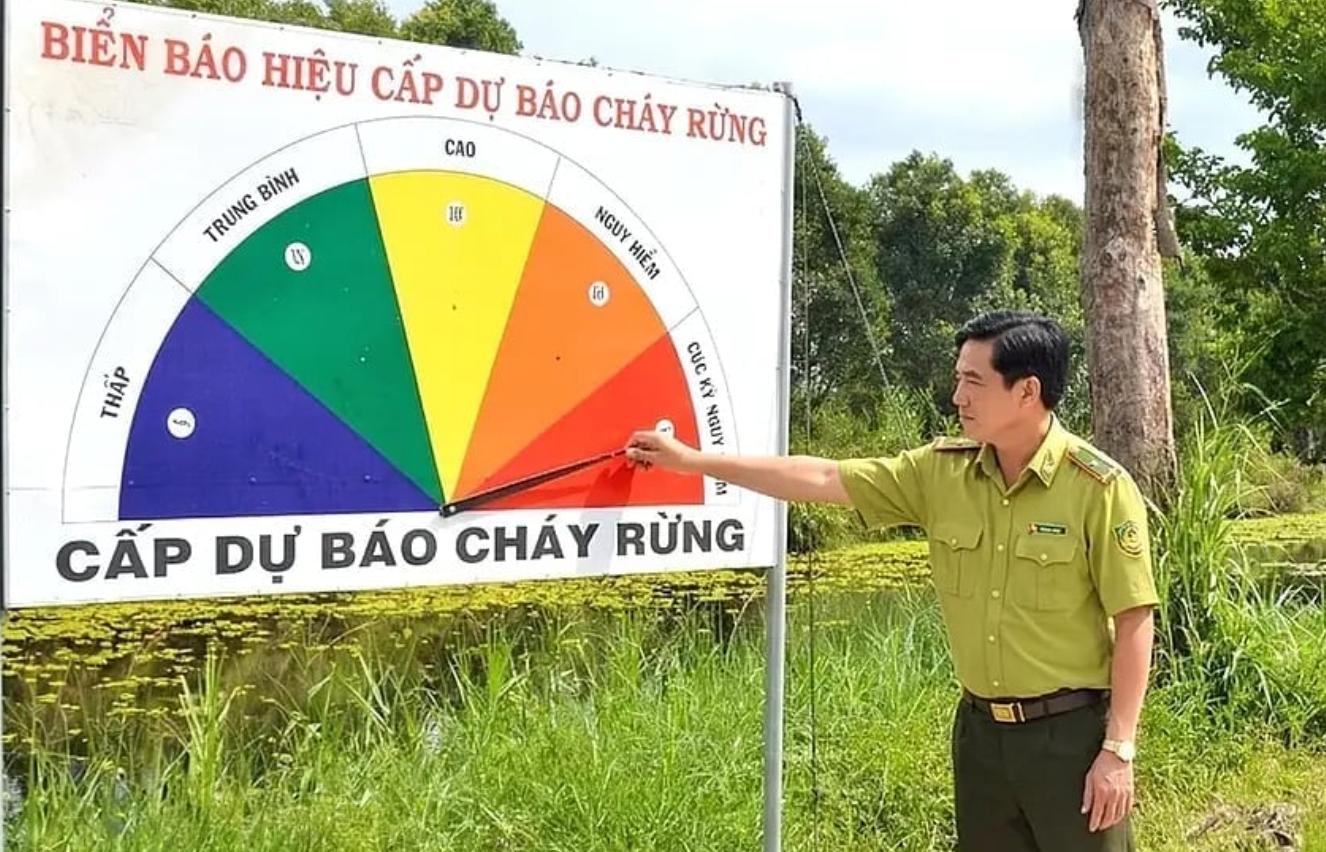 Forest rangers in An Giang province raise the forest fire warning level. Photo: Trung Chanh.
The threat of forest fires is distinctly present across various regions nationwide. North Central region is the most severely affected by the Foehn wind. Provinces such as Nghe An, Ha Tinh and Quang Tri have continuously recorded large-scale forest fires in previous years. The prevalence of pine and acacia forests, combined with a dry grass underbrush, makes them highly susceptible to ignition and rapid spreading.
In the Central Highlands, April marks the end of the dry season. Vegetation, consisting of grass and dry leaves, has accumulated densely after months without rain, exacerbating the fire risk in Gia Lai, Dak Lak and Lam Dong provinces, particularly within pine and dipterocarp forests.
In the Southeast region and the Mekong Delta, melaleuca forests such as U Minh Thuong, U Minh Ha and several special-use forests in An Giang and Ca Mau are on high alert. Notably, the dry peat layer beneath the melaleuca forests, once ignited, can smolder for days and is extremely difficult to extinguish.
In the Northern Midlands and Mountains, provinces such as Son La, Dien Bien, Lai Chau, and Lao Cai are also facing an elevated risk of forest fires due to arid weather, especially as local residents enter the early-season slash-and-burn farming period.
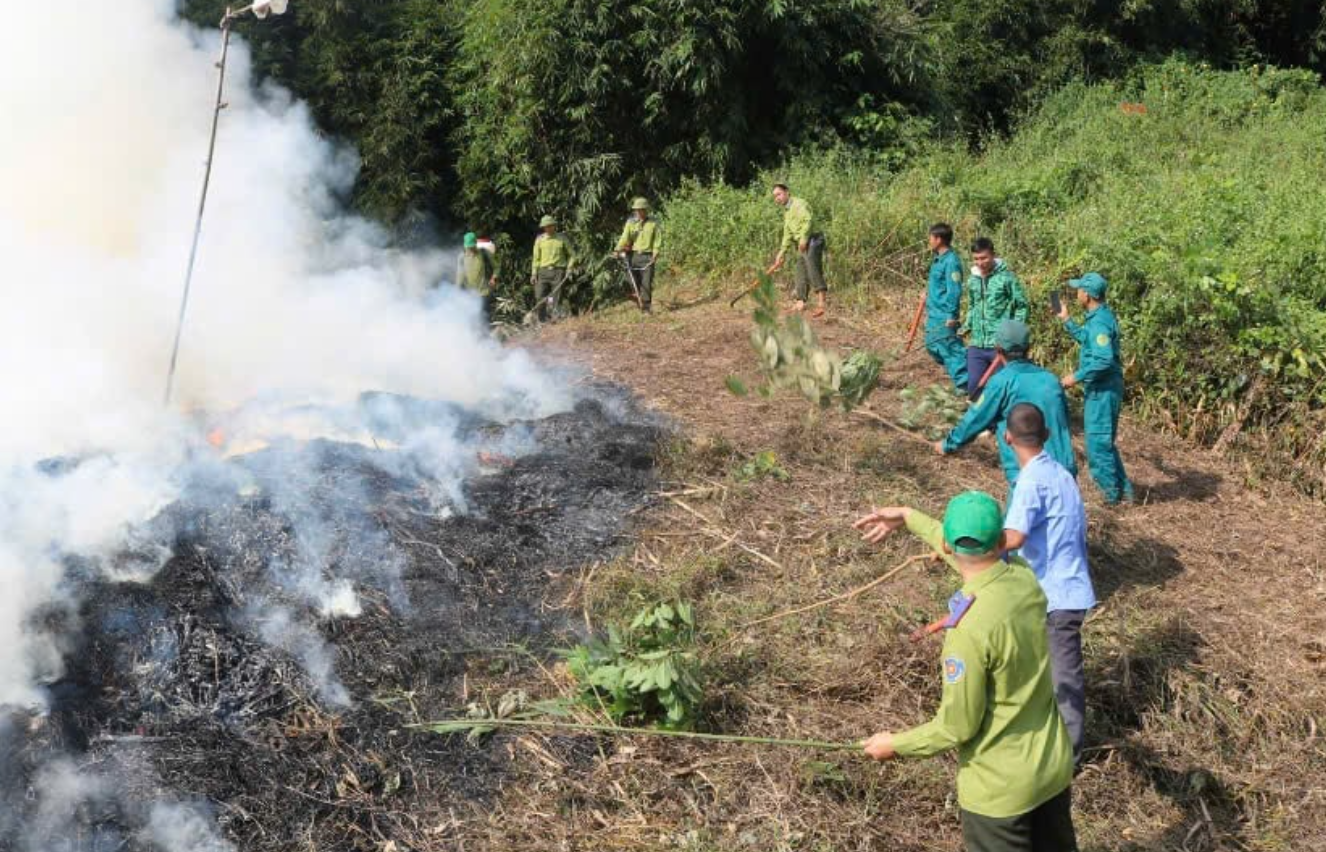 Forest rangers and local people practice forest fire response, proactively responding from the moment a fire breaks out. Photo: Hoang Chau.
In addition to weather factors, the Department of Forestry and Forest Protection notes that human activities remain a primary cause of forest fires during the hot season. Slash-and-burn agriculture and the burning of vegetation are the most common catalysts, becoming especially hazardous when strong winds quickly drive the flames into forests.
Numerous localities have issued bans on slash-and-burn practices during the dry season, particularly in the Northern Midlands and Mountains. Furthermore, domestic negligence, such as discarding cigarette butts, burning votive papers, or cooking near forests on dry, windy days, can also spark fires.
Under extreme weather conditions, when temperatures exceed 40°C and humidity falls below 30%, the fire hazard escalates; even minor impacts can become ignition sources.
Given this reality, the Department of Forestry and Forest Protection strongly advises the public to absolutely refrain from lighting fires or smoking in and near forests during the hot dry season and to avoid slash-and-burn practices during strong winds or without authorization from functional agencies.
Simultaneously, citizens must promptly notify forest rangers and fire police upon discovering a fire. Unauthorized entry into forests during Level IV or Level V fire alerts should also be restricted.
For forest owners and management units, the core mission is to intensify patrols and guard duties in critical areas, especially on days with high-level fire warnings. They must clear firebreaks and remove dry vegetation near residential areas. Adequate preparation of firefighting vehicles and equipment is required, along with strict readiness to coordinate with forest rangers, police and military forces in emergencies.
In Viet Nam, the forest fire warning system is classified into 5 levels, ranging from low to extremely dangerous, where Level IV is dangerous and Level V is extremely dangerous. This classification is based on factors such as temperature, air humidity, the dryness of the vegetation cover and the practical risk of ignition sources occurring.
To strengthen national resilience, the Government has consistently implemented strict directives, notably Official Dispatch No. 25/CĐ-TTg issued on March 22, 2025.
This urgent mandate followed a tragic wildfire in Hoang Khai Commune, Yen Son District, Tuyen Quang Province, which resulted in one fatality and over 20 hectares of forest loss. Under this decree, the Prime Minister emphasized the 'Four On-The-Spot' strategy (local command, local forces, local equipment, and local logistics) as the cornerstone of fire suppression.
For 2026, the Ministry of Agriculture and Environment continues to enforce these protocols, mandating rigorous 24/7 surveillance in high-risk zones and strict penalties for unauthorized slash-and-burn activities to prevent such tragedies from recurring.