In April, Viet Nam’s Department of Forestry and Forest Protection, IUCN Viet Nam and the Critical Ecosystem Partnership Fund (CEPF) organized a study tour on rewilding at Siam Pang Wildlife Sanctuary in Stung Treng, Cambodia.
The delegation was led by Mr. Doan Hoai Nam, Deputy Director General of the Department of Forestry and Forest Protection. The visit was part of Viet Nam’s National Rewilding Plan project, implemented by IUCN in partnership with Re:wild and co-funded by CEPF.
Lessons from Siam Pang
At Siam Pang, the delegation observed first-hand habitat restoration models, species reintroduction processes and biodiversity monitoring systems. The sanctuary is considered one of Cambodia’s leading conservation sites, applying an integrated approach that combines nature conservation with local livelihood development.
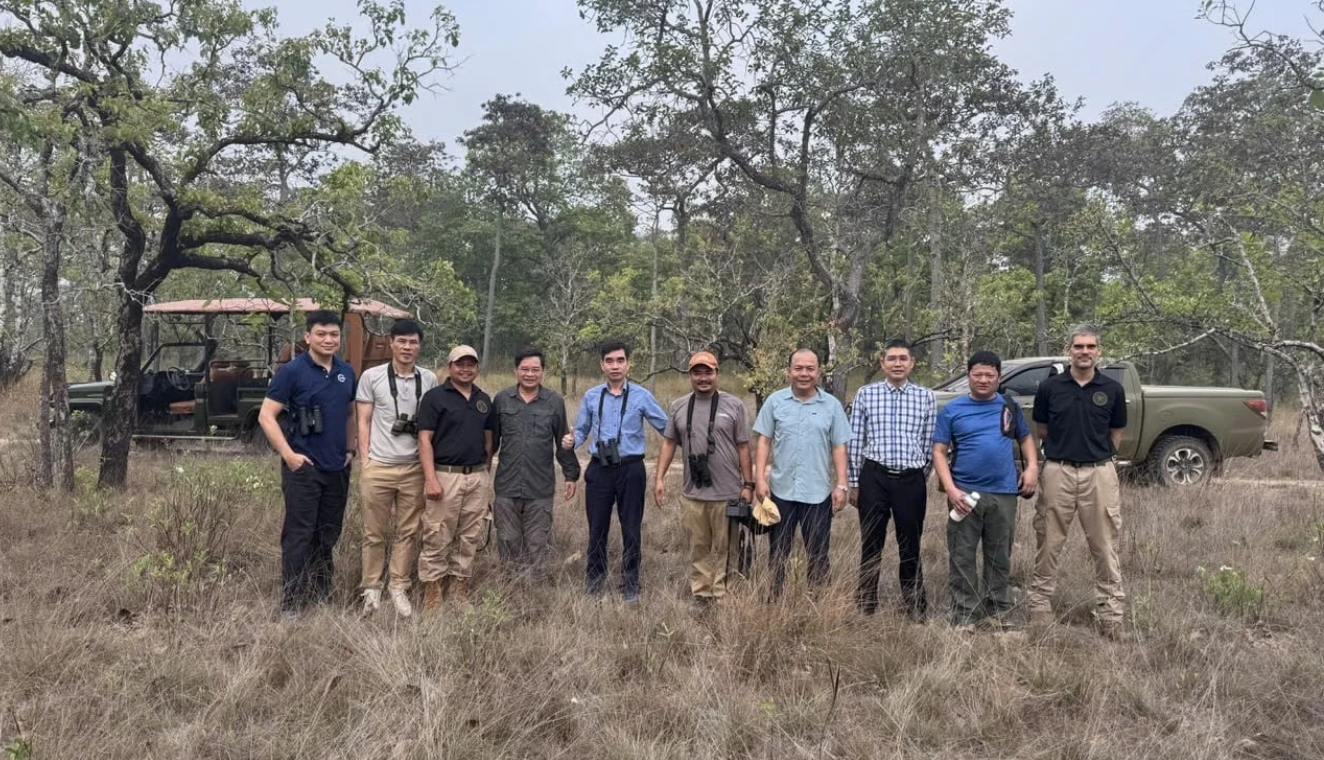 The delegation studies habitat restoration and species reintroduction processes at Siam Pang Wildlife Sanctuary. Photo: IUCN.
According to the delegation, Siam Pang shares many similarities with protected areas in Viet Nam. Challenges such as poaching, declining wildlife populations, habitat loss and local communities’ dependence on forest resources are common to both countries. These similarities suggest that lessons from Siam Pang could be effectively applied in Viet Nam.
A key highlight is a conservation model implemented by Rising Phoenix. It is built on three pillars: A landscape-level ecosystem approach; the integration of habitat restoration, species rewilding and community development; and close coordination between the private sector and government agencies, particularly Cambodia’s Ministry of Environment. The model is further supported by sustainable financing, including international funding, ecotourism and conservation-linked agricultural value chains.
Drawing on Cambodia’s experience, the Department of Forestry and Forest Protection has recommended that the Ministry of Agriculture and Environment further develop a legal framework for rewilding in Viet Nam. Key priorities include regulations on habitat assessment, species selection, quarantine procedures, release protocols and post-release monitoring.
Experts also emphasized the need to pilot controlled semi-wild enclosures for priority species such as the gaur, whose population is in sharp decline in areas like Yok Don National Park and Ea So Nature Reserve. This approach is inspired by Rising Phoenix’s experience in reintroducing wild cattle species.
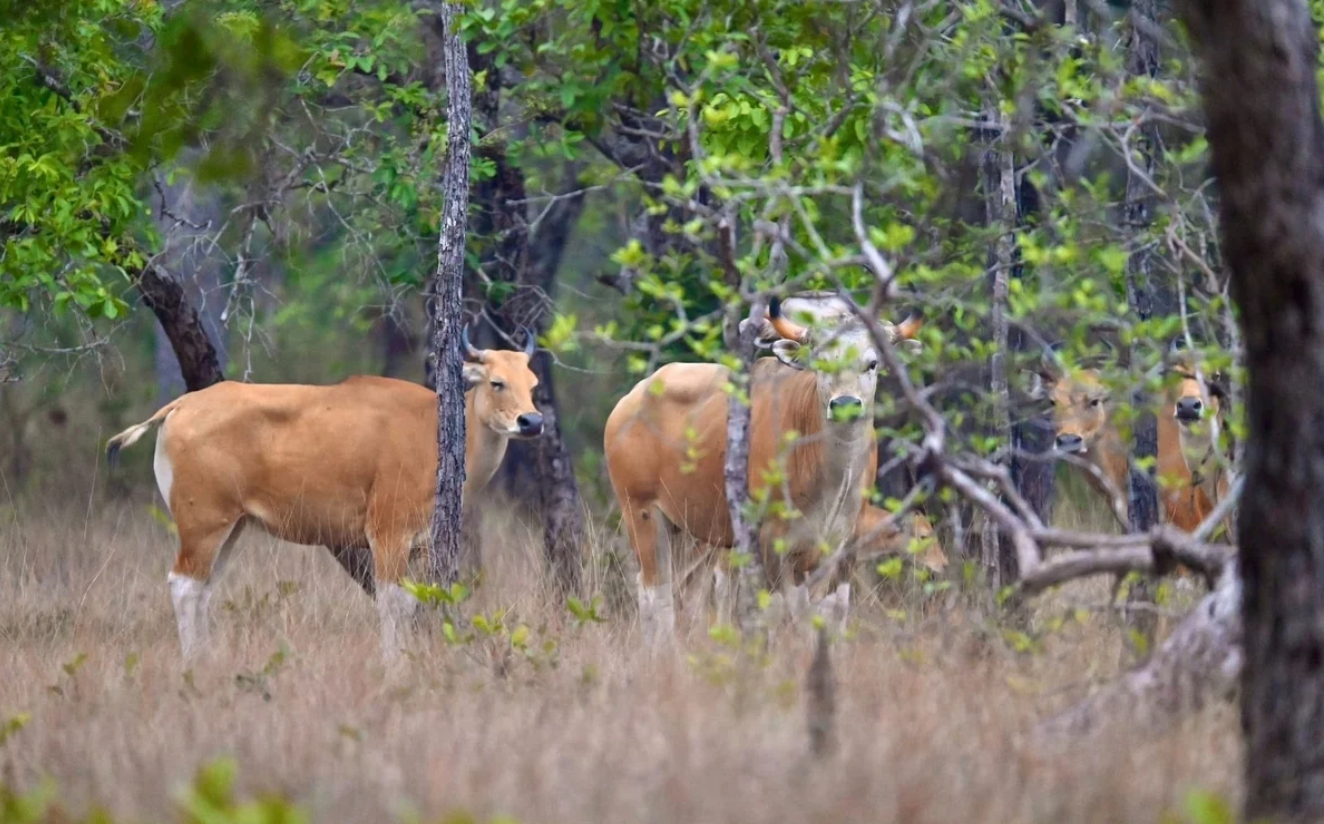 Wild cattle. Photo: IUCN/Nguyen Manh Hiep.
Another proposal is to pilot public-private partnership models in conservation management at selected national parks. This is seen as a way to mobilize social resources and improve management effectiveness, similar to the cooperation between Rising Phoenix and Cambodia’s Ministry of Environment at Siam Pang.
The delegation suggested bringing in experts from Rising Phoenix to explore how Siam Pang’s models could be adapted for Viet Nam’s national parks.
Promoting habitat restoration and sustainable livelihoods
Beyond species reintroduction, habitat restoration solutions were also highlighted. The Department proposed developing and piloting wetland restoration models in national parks such as Cat Tien, Yok Don and Xuan Lien. Technical measures applied at Siam Pang - including solar-powered water pumping systems, dry-season waterholes and the controlled use of animals to restore ecological functions - are considered suitable for Viet Nam.
At the same time, lessons from the “Ibis Rice” conservation-linked livelihood program in Siam Pang suggest the potential to build organic agricultural value chains linked to conservation commitments in buffer zones. Flagship species such as gaur, saola, langurs, red-shanked douc langurs and elephants could be used as branding to enhance product value.
Rewilding efforts are also taking shape in Viet Nam. The red-crowned crane reintroduction program at Tram Chim National Park, supported by the International Crane Foundation, is the country’s first large-scale initiative to restore an endangered bird species. In future phases, the Department plans to propose additional technical support from relevant national parks and to facilitate the legal conditions for receiving cranes from abroad.