Viet Nam updated policies on controlling imported timber and combating illegal timber trade, translating the commitments under the Section 301 Agreement.
From May 6 to 8 (local time), Deputy Minister Nguyen Quoc Tri led a delegation to attend the 5th Meeting of the Viet Nam - United States Timber Working Group (TWG) in Washington, D.C. During the meeting, the Joint Working Group reviewed the implementation of the Agreement between the Government of Viet Nam and the Government of the United States on the Control of Illegal Logging and Timber Trade (Section 301).
This is an important annual consultation between the two countries to strengthen cooperation on legal timber management, promote sustainable timber trade, and enhance law enforcement effectiveness across the timber supply chain.
The Vietnamese delegation included representatives from the Ministry of Agriculture and Environment, the Ministry of Industry and Trade, the Ministry of Finance (Customs Department), and the Embassy of Viet Nam in the United States. The U.S. side included representatives from the Office of the United States Trade Representative (USTR), the Department of Justice, the Department of State, and the U.S. Department of Agriculture.
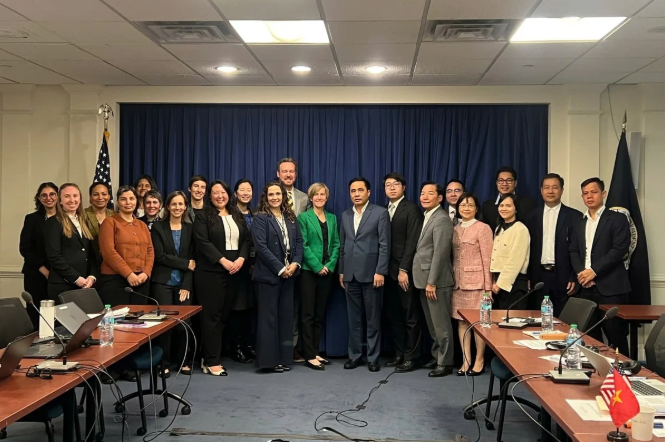 Viet Nam - United States Timber Working Group (TWG) meets in Washington, D.C. to review the implementation of the Section 301 Agreement between the two Governments. Photo: ICD.
At the meeting with the Office of the United States Trade Representative (USTR), Viet Nam updated the U.S. side on a number of notable outcomes in implementing the commitments under the Section 301. These efforts focused on improving the legal framework related to the handling of confiscated timber, controlling the origin of imported timber, and enhancing transparency throughout the timber supply chain.
Notably, the Government issued Decree No. 77/2025/ND-CP dated April 1, 2025, stipulating measures for handling confiscated timber assets and ensuring that timber subject to confiscation measures is not reintroduced into commercial supply chains. The Government also promulgated Decree No. 120/2024/ND-CP dated September 30, 2024, amending and supplementing Decree No. 102/2020/ND-CP on the Viet Nam Timber Legality Assurance System (VNTLAS), along with Circular No. 26/2025/TT-BNNMT dated June 24, 2025, and Decision No. 4236/QD-BNNMT dated October 14, 2025, issued by the Minister of Agriculture and Environment.
The Vietnamese side also informed the United States that currently 100% of imported timber shipments entering Viet Nam are subject to either document inspection or physical inspection during customs clearance, demonstrating the country’s strong commitment to controlling imported timber and combating illegal timber trade. The new regulations also help enterprises more easily comply with the U.S. Lacey Act's declaration requirements for exported wood products.
In addition, Viet Nam continues to expand international cooperation with timber-exporting countries to strengthen information exchange and verification of legal timber origins. To date, Viet Nam has signed and promoted negotiations on forestry cooperation memoranda of understanding with a number of countries, including China, Laos, Cambodia, the Republic of Korea, Japan, Nigeria, and Ghana.
At the meeting, Deputy Minister Nguyen Quoc Tri affirmed that Viet Nam highly values cooperation with the United States in forestry and sustainable timber trade, while emphasizing Viet Nam’s commitment to fully, seriously, and responsibly implementing all provisions of the Section 301 Agreement.
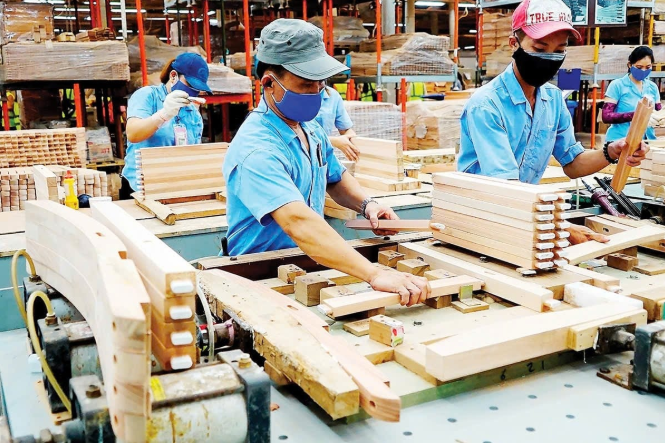 Currently, 100% of imported timber shipments entering Viet Nam are subject to either document inspection or physical inspection during customs clearance, ensuring transparency in the legal origin of timber exports. Photo: KC.
The Ministry’s leadership also called on the United States to continue maintaining regular exchanges through the Viet Nam - U.S. Timber Working Group; support capacity-building programs on law enforcement for forest rangers; enhance information sharing on transnational illegal timber trade routes; and strengthen cooperation with high-risk timber-supplying countries.
The U.S. side highly appreciated Viet Nam’s efforts and goodwill in seriously implementing the commitments under the Section 301, particularly in improving the legal framework, strengthening controls over imported timber origins, and promoting transparency throughout the timber supply chain.
The Office of the USTR acknowledged Viet Nam’s proactive coordination with U.S. agencies and partners in information exchange, enforcement capacity building, and expanding cooperation with timber-supplying countries to combat illegal logging and timber trade. Both sides also agreed to continue maintaining regular technical dialogues to promptly address emerging issues, thereby contributing to the sustainable development of timber and wood products trade between the two countries in a manner that balances interests and aligns with international practices.