FAO Director-General calls for stronger regional cooperation as many member countries across Asia and the Pacific move up the development ladder.
Ministers from across the Asia-Pacific region gathered in Brunei Darussalam to discuss a roadmap for cooperation and priority areas of action with the FAO. The conference aims to harness the region’s increasingly dynamic and prosperous agricultural sector to strengthen food security for all while ensuring that smallholder farmers benefit from technology and trade.
Opening the 38th Session of the FAO Regional Conference for Asia and the Pacific (APRC 38), Crown Prince Haji Al-Muhtadee Billah of Brunei urged countries to work together to enhance resilience and food security across the region.
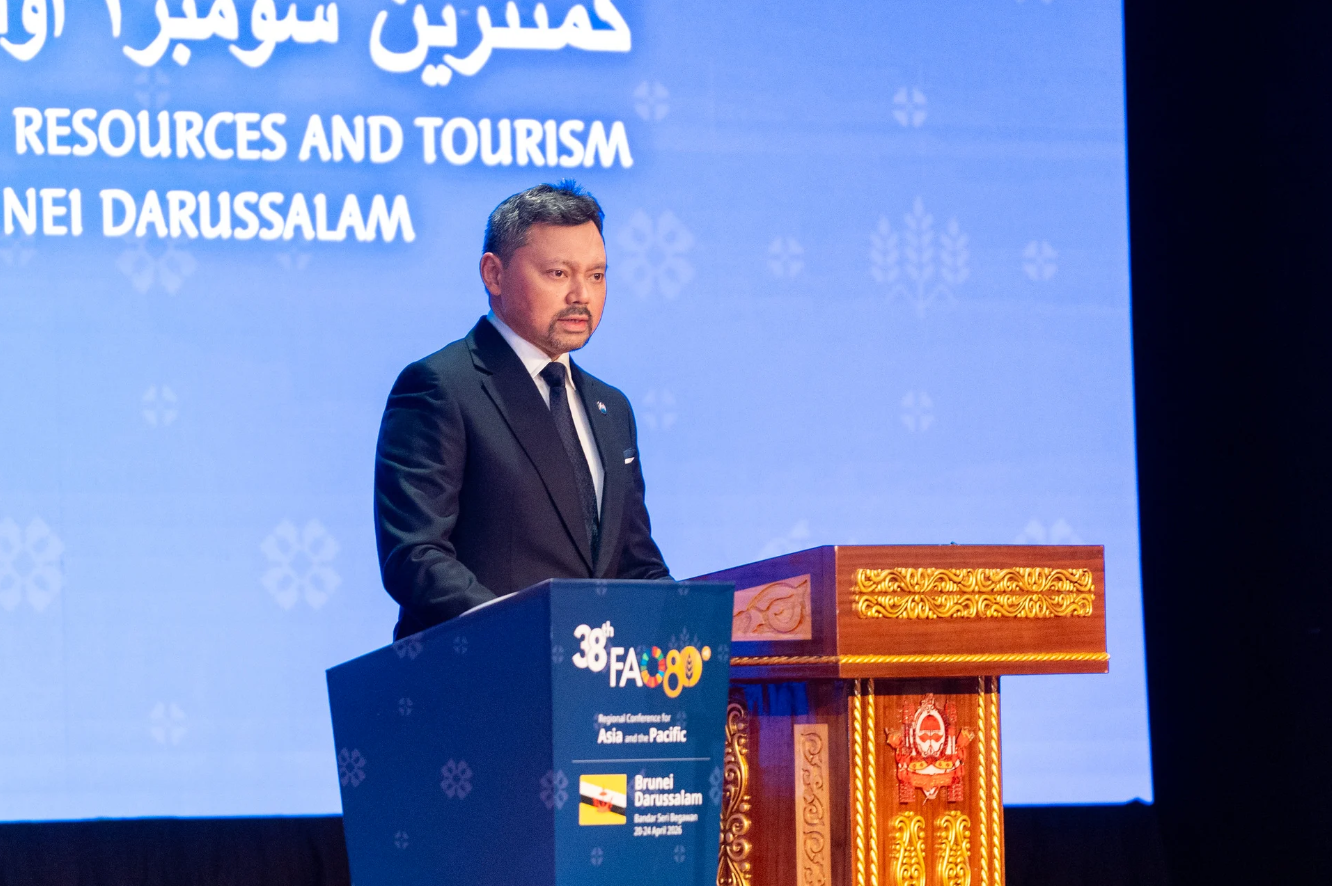 Crown Prince of Brunei, His Royal Highness Prince Haji Al-Muhtadee Billah ibini His Majesty Sultan Haji Hassanal Bolkiah Mu’izzaddin Waddaulah addresses the 38th Session of the FAO Regional Conference for Asia and the Pacific. Photo: FAO.
“We meet at a critical moment. Food systems across the region are under mounting pressure, climate change is affecting how we grow and produce food, natural ecosystems are deteriorating, and supply chains remain fragile,” the Crown Prince said. “We also cannot ignore the ongoing conflicts in the Middle East, which continue to disrupt global trade and energy markets. In this context, food security must remain at the center of our collective efforts.”
The Crown Prince said that while the challenges are significant, they are not insurmountable. The conference comes at a pivotal time, as rising energy and fertilizer costs, declining agricultural export revenues to Gulf countries, and instability stemming from the 2026 conflict in the Middle East continue to fuel volatility in agricultural commodity markets. These developments have further tightened the links between geopolitical risks, food-energy systems, and global inflationary pressures. At the same time, the region faces long-term stresses from increasingly severe climate impacts, including droughts, floods, extreme weather events, and the degradation of land and water resources.
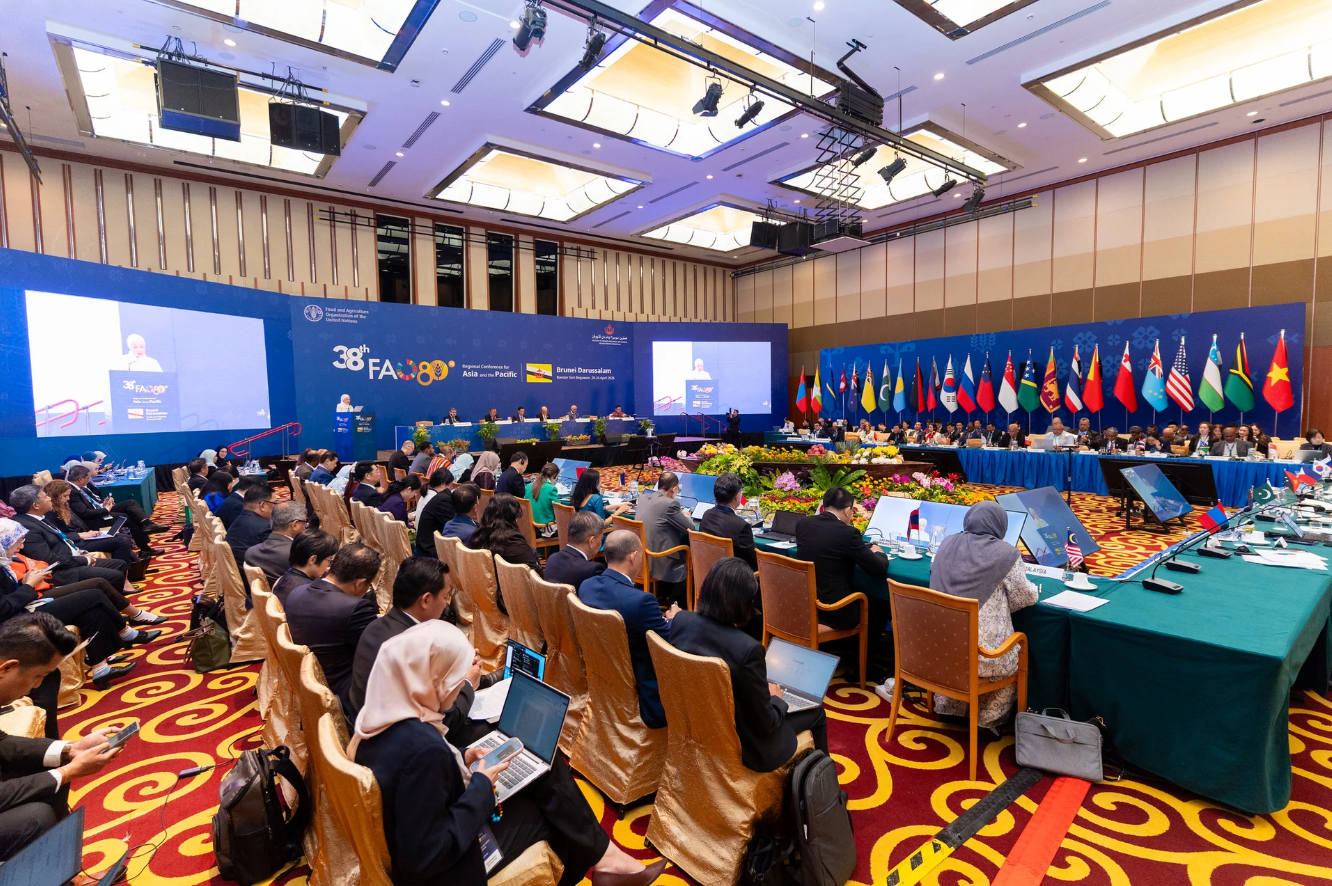 Inaugural Ceremony and Statements at APRC 38. Photo: FAO.
“We must build resilience from within, because no external assistance can be sustainable without our own collective determination,” FAO Director-General Qu Dongyu said during the ministerial session. He noted that although the region is home to more than half of the world’s population and produces over half of global food output, it still has more food-insecure people than any other region.
“Public resources alone are not enough,” he said, urging delegates to focus on financing and investment in agrifood systems, a central theme in many of APRC 38’s roundtable discussions.
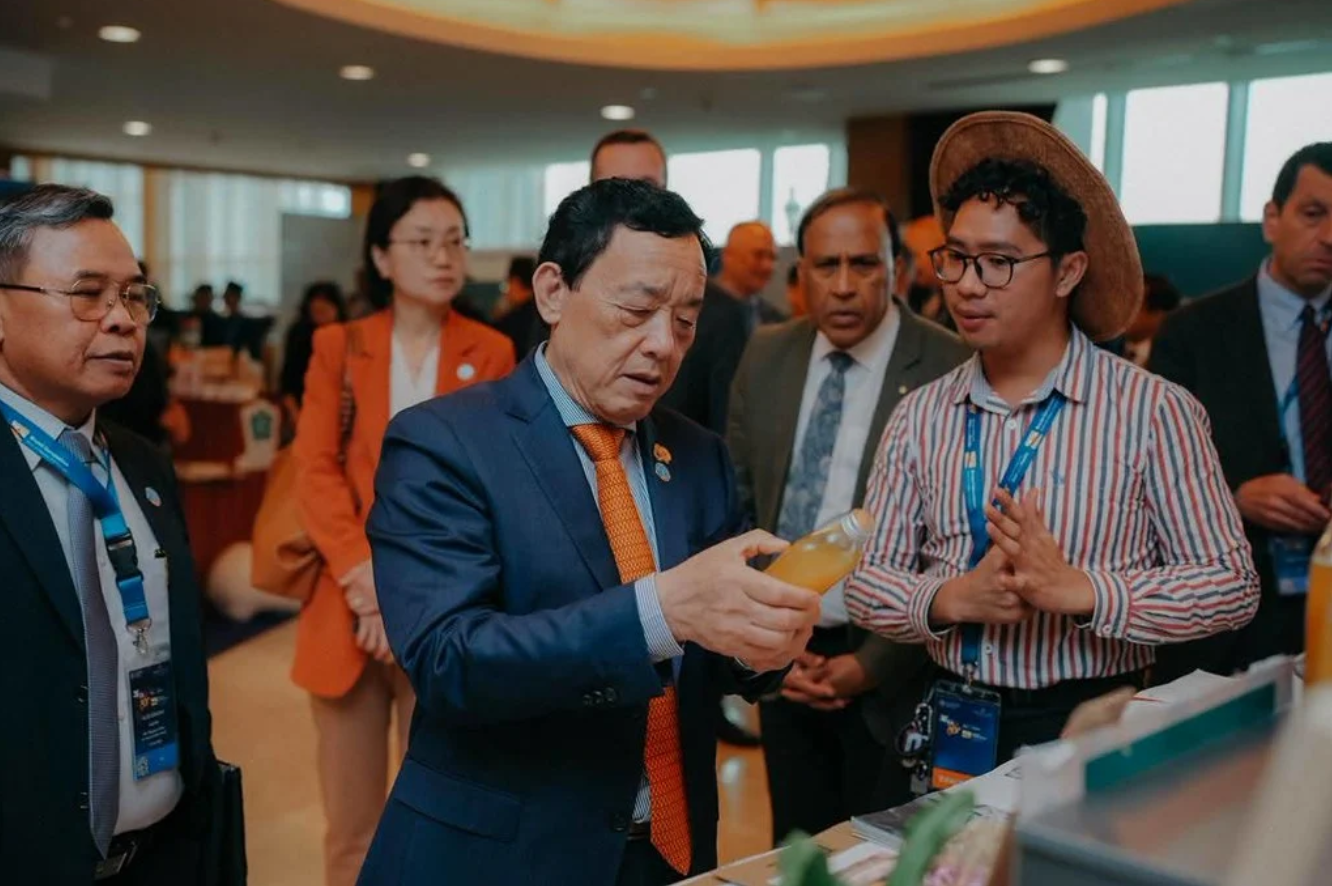 FAO Director-General Qu Dongyu at the Asia-Pacific Food Forum Exhibition on the sidelines of APRC 38. Photo: FAO.
Qu Dongyu highlighted what he described as “unprecedented opportunities” for the region through science and innovation, digitalization, investment, and partnerships. He noted that an increasing number of countries in the region are graduating from Least Developed Country status, strengthening their food security foundations, and expanding trade in surplus agricultural goods and higher value-added products.
Member states attending the conference are expected to identify national and regional priority areas for FAO consideration in shaping its Program of Work and Budget for the next biennium, in alignment with the organization’s Strategic Framework, Medium-Term Plan, and country programming frameworks.
Speaking at the ministerial session the same day, Vietnamese Deputy Minister of Agriculture and Environment Vo Van Hung said: “Viet Nam fully supports FAO’s vision of innovation as the key to transforming agrifood systems to become more efficient, inclusive, resilient, and sustainable. The Vietnamese government identifies innovation as a primary driver and strategic pillar for ensuring food security amid an increasingly complex and volatile global environment.”