Viet Nam has the chance to apply Hungary’s technological solutions in waste management and recycling, particularly e-waste, to promote circular economy.
On the morning of March 19, Deputy Minister of Agriculture and Environment Le Cong Thanh received a courtesy visit from Mr. Szabolcs Stejer, Director of Nemesfém Kft. of Hungary, to discuss cooperation in geology and mineral resources.
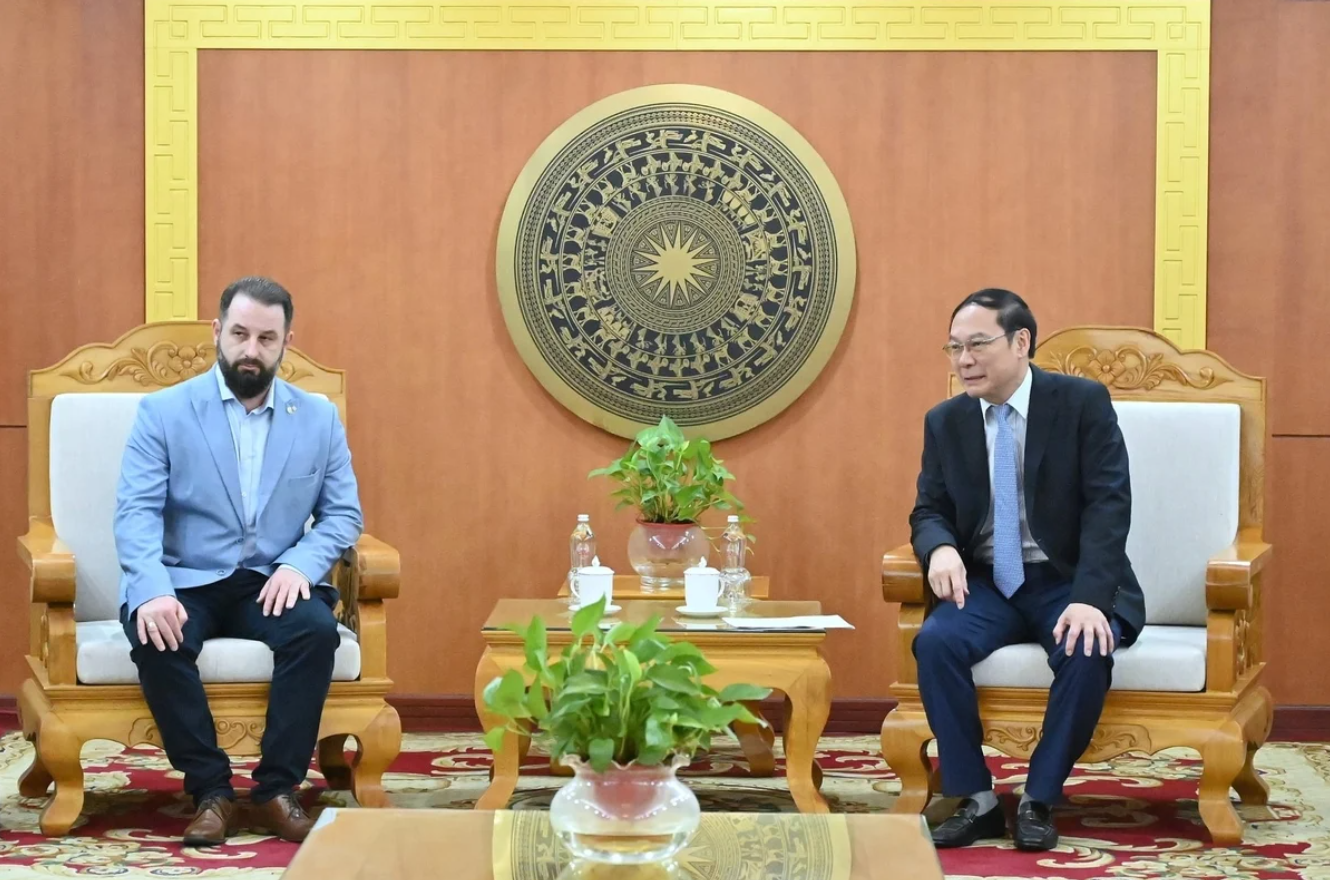 The meeting between Deputy Minister Le Cong Thanh and the Director of Nemesfém Kft. of Hungary. Photo: Kieu Chi.
Nemesfém Kft. is a company trusted by the Hungarian Government in metal extraction and processing, particularly precious metals. With centuries of accumulated experience, the company affirmed its ability to share proven technologies that could help Viet Nam shorten its research and testing processes.
At the meeting, Deputy Minister Le Cong Thanh noted that recent amendments to the Law on Geology and Minerals have expanded opportunities for research institutions and enterprises to apply advanced technologies.
At the same time, the goal of achieving strong economic growth while maintaining the principle of not trading the environment for growth is considered a fundamental direction, ensuring that environmental protection becomes an integral part of the development process rather than merely a reactive measure.
“Viet Nam possesses significant potential in mineral resources. We also place great importance on learning from the experience of more advanced countries to ensure effective exploitation and utilization, turning mineral resources into a driver of development rather than a burden on the environment,” Deputy Minister Le Cong Thanh emphasized.
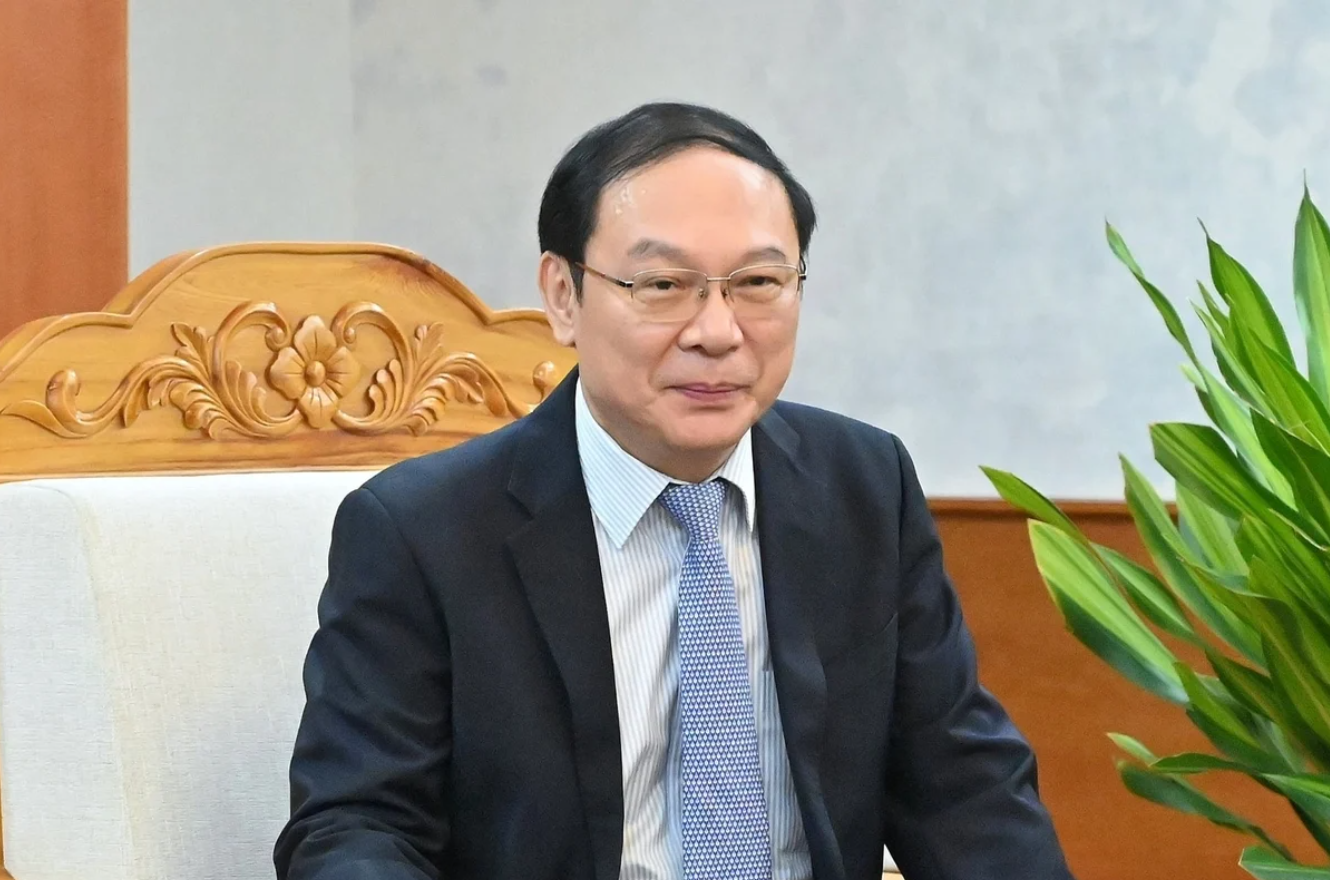 The Deputy Minister welcomed Hungarian enterprises to study, transfer technology, and invest in building modern recycling facilities. Photo: Kieu Chi.
Nemesfém Kft. has studied the capabilities of the Viet Nam Institute of Rare Earth Technology and highly values its professional team. Accordingly, the two sides could cooperate in developing technological solutions suited to local conditions, moving toward mapping the distribution and potential of various metals in Viet Nam.
Mr. Szabolcs Stejer emphasized that the company adheres to the principle of prioritizing the transfer of optimal solutions when cooperating in the field of atomic energy across many countries. All production lines are implemented in strict compliance with European environmental regulations, with outputs designed to be environmentally friendly.
The Hungarian side expressed its desire to work with manufacturing enterprises in Viet Nam to build a production chain that meets European standards. Equipment and components that cannot yet be produced domestically would be imported, while suitable stages would prioritize localization.
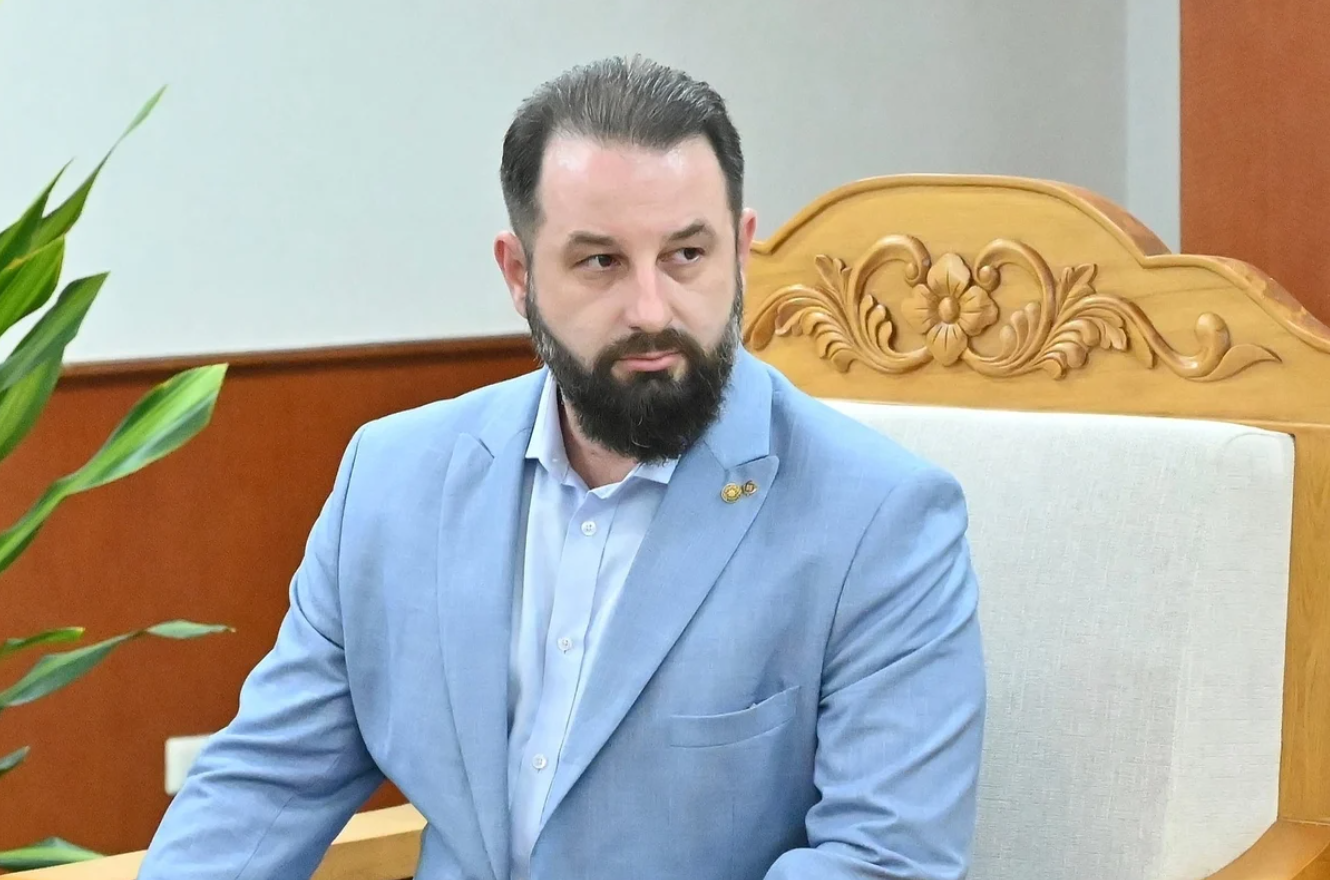 Mr. Szabolcs Stejer, Director of Nemesfém Kft. of Hungary, shared that the company is recovering metal mines and utilizing closed mines across Europe. Photo: Kieu Chi.
In addition to mineral extraction, Deputy Minister Le Cong Thanh particularly emphasized the potential for cooperation in e-waste recycling. With a population of over 100 million, the volume of discarded electronic devices in Viet Nam is substantial, while current recycling activities remain largely rudimentary.
According to the Deputy Minister, many countries have developed technologies to recover precious metals such as gold and silver from e-waste and consider it an important resource. Some countries even import e-waste for recycling. "This is a highly promising area that Hungarian enterprises may consider investing in Viet Nam," he suggested.
Hungary is regarded as a country with a successful model for waste treatment based on a circular economy, particularly in recovering precious metals from e-waste. Cooperation with experienced companies such as Nemesfém Kft. is expected to help enhance technological capacity and promote the sustainable development of Viet Nam’s mineral and environmental sectors.