EU's operators have more requirements for demonstrating deforestation-free coffee. The European Commission (EC) clarified how to collect data and conduct risk assessments under the EUDR.
At the second meeting to address questions and concerns regarding the EU Deforestation Regulation (EUDR), Thai Nhu Hiep, Vice Chairman of the Viet Nam Coffee-Cocoa Association (VICOFA), said that individual EU importers are currently requesting more information than is specified in the EUDR implementation guidance.
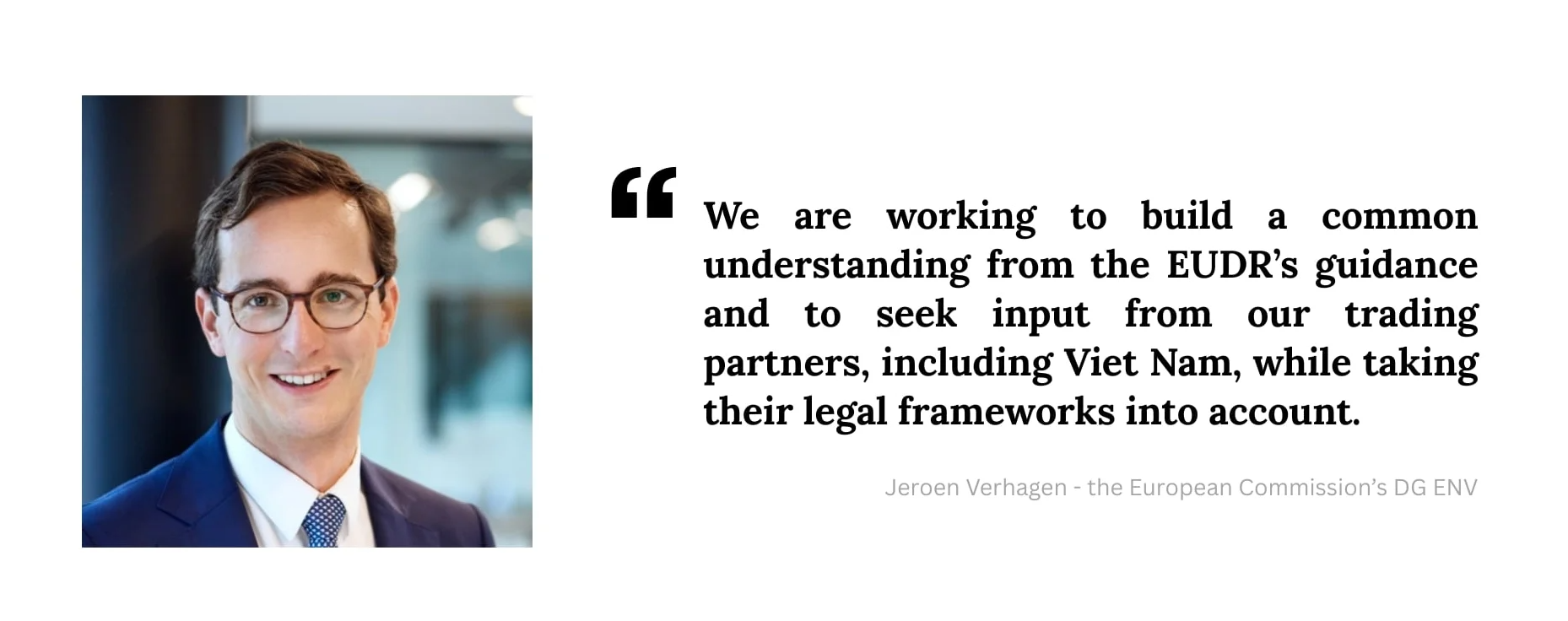
In response, Jeroen Verhagen, a policy officer at the European Commission’s DG ENV, explained that the EUDR does not prescribe a single documentation template for all supply chains or set detailed requirements for each data set. Instead, businesses only need to provide seven types of information and evidence covering: proof that products are deforestation-free and legally produced; product information; quantity of goods; country of production (Viet Nam); geolocation data for production plots; production dates or time periods; and information on supply chain operators.
To reconcile differing interpretations of the seven information and evidence requirements, VICOFA also proposed that EC promptly organize a direct meeting between European importers and Vietnamese businesses to establish a common set of requirements before the EUDR begins to apply at the end of 2026.
Another concern for businesses is the simplified due diligence mechanism that applies when Viet Nam is classified as a low-risk country. According to Jeroen Verhagen, the operator responsible for due diligence must collect information under Article 9, assess risks under Article 10, and, where necessary, implement risk mitigation measures under Article 11. For relevant commodities originating in a country classified as low risk, if the information collected and the assessment conducted under Article 9 indicate no risk or only a negligible risk, no further steps are required.
However, if the assessment identifies a risk of non-compliance, businesses must still prepare sufficiently reliable data to identify the production area, cross-check land-use history, and demonstrate legal compliance. Therefore, a country's risk classification does not replace the need to verify the origin of each individual consignment.
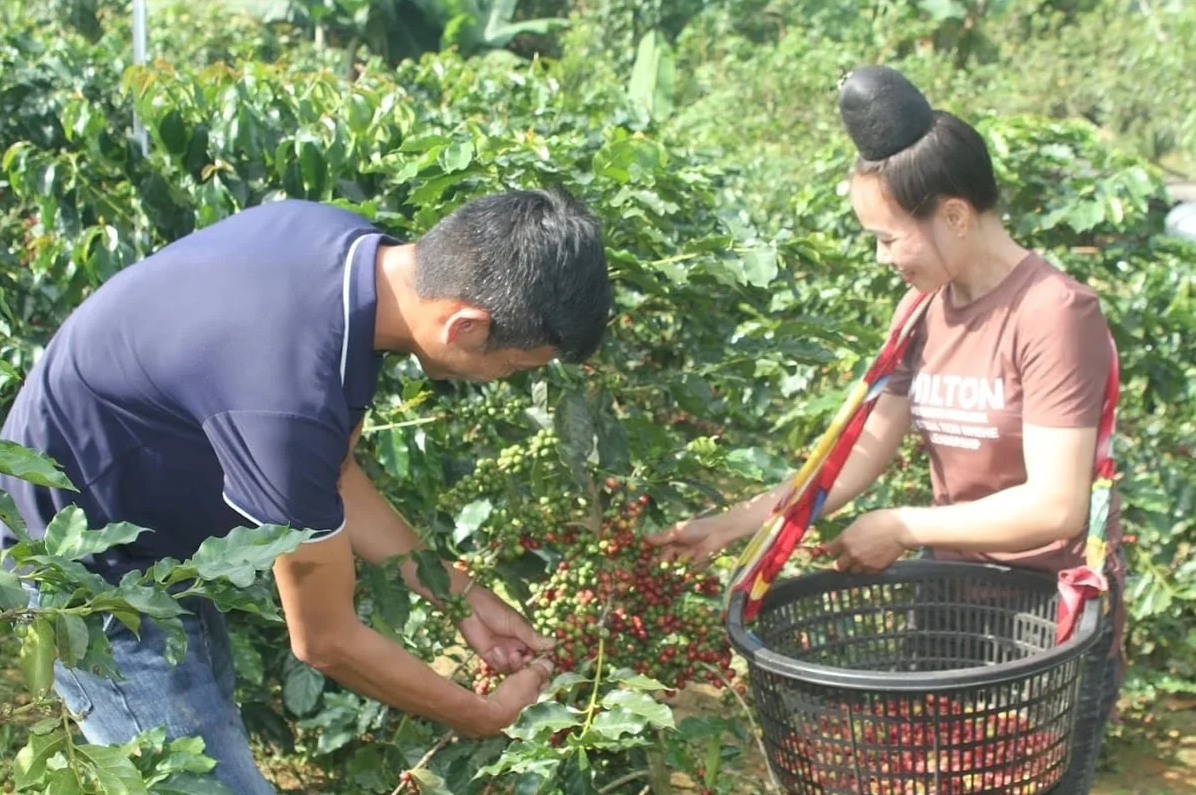 Reviewing coffee-growing areas is essential for developing traceability data in line with EUDR requirements. Photo: Nguyen Nga.
VICOFA also raised concerns about the risk of duplicate coffee production data. For example, a farmer produces 10 tonnes of coffee but sells it to three different buyers. If the information is not cross-checked, the total volume declared by the buyers could exceed the actual production of 10 tonnes. This is not merely an export-stage issue but one that affects the entire purchasing process.
Returning to the previously mentioned requirement to demonstrate legal compliance, Jeroen Verhagen stressed that traceability, warehousing and transport data must be strictly managed. When businesses consolidate goods from multiple sources, they must be able to cross-check records to ensure traceability and prevent confusion or mixing with other goods associated with deforestation. In supply chains with multiple intermediaries, standardizing data and using inventory management tools from the purchasing stage is more effective than adding documentation once goods reach the export stage.
VICOFA also compiled and presented to the EC cases involving coffee grown under forest canopies, agroforestry areas, land where crops have historically been converted, and plots with inconsistent information.
Jeroen Verhagen explained: “EUDR contains two definitions relating to forest land and agroforestry land, based on references from FAO and linked to national legislation. Accordingly, for each purpose, it is necessary to clarify land-use planning, land-use history and relevant information on land-use rights for production purposes.”
VICOFA and businesses are also interested in using forest maps, remote sensing data and land management records to support verification. These data sources can help cross-check the current status and history of land plots, but they need to be considered alongside legal documents and other relevant evidence.
The EUDR requires that products within its scope are not associated with deforestation occurring after 31 December 2020, comply with relevant national legislation and meet due diligence requirements. The regulation covers seven commodity groups: coffee, cocoa, palm oil, rubber, soy, wood and cattle.