After four-year implementation, the JICA-funded project contributed to expanding safe crop production, boosting profits and developing market outlets.
Recently in Hanoi, the National Agricultural Extension Center, in collaboration with the Japan International Cooperation Agency (JICA), held a review conference for the project "Strengthening Safe Crop Value Chains in Northern Provinces of Vietnam" for the period 2022 - 2026.
The project utilizes non-refundable ODA funding provided by the Government of Japan and has been implemented across six localities, including Hanoi, Ninh Binh, Bac Ninh, Hung Yen, Hai Phong, and Son La, while also expanding its activities to Thai Nguyen and Phu Tho.
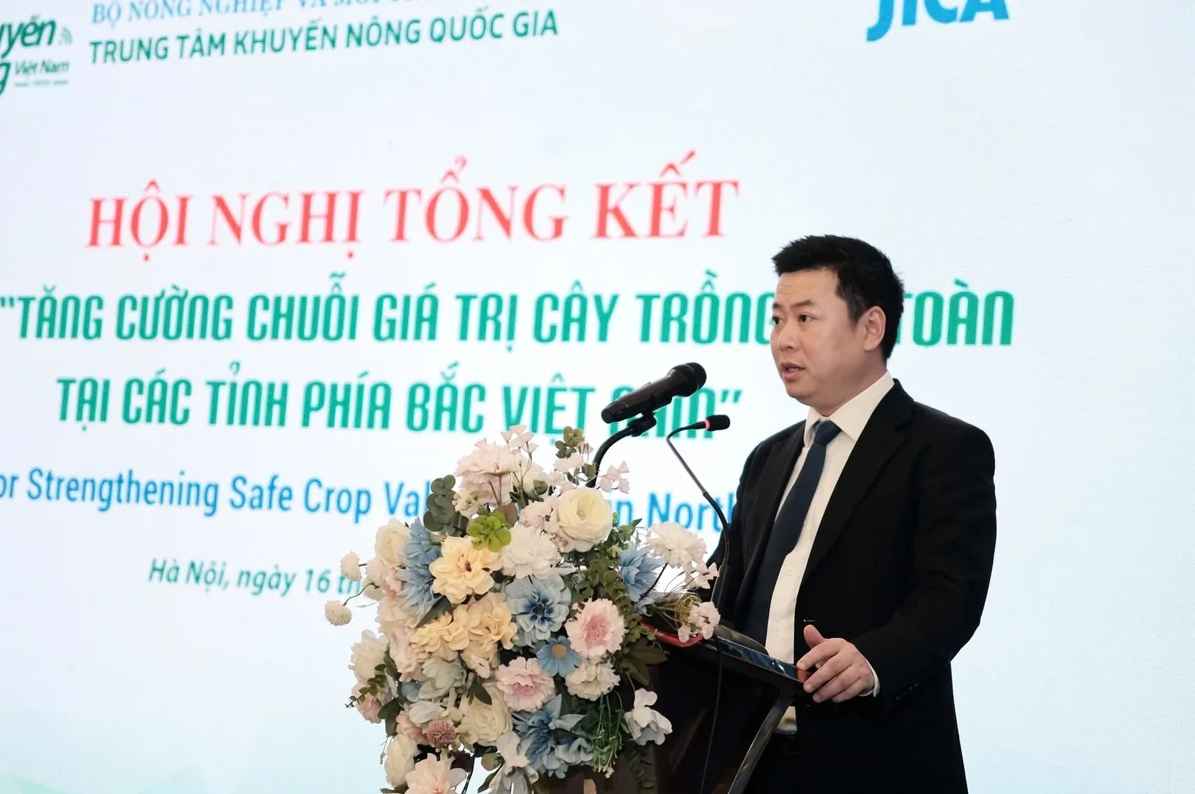 Deputy Director General of the International Cooperation Department Tran The Cong delivered his opening remarks. Photo: Thanh Trang.
Deputy Director General of the International Cooperation Department Tran The Cong emphasized that safe agricultural production is a necessary condition, but not enough to guarantee economic efficiency and sustainable development. Product quality must align with market demand, organized distribution, and the goal of increasing producers' income.
According to Mr. Cong, a notable feature of the project is its contribution to innovating agricultural extension methods, shifting from primarily providing technical guidance to actively accompanying farmers and cooperatives in market research, production planning, and market linkage. Thereby, it gradually transitions farming practices from supply-driven production to market-demand-driven production, ultimately enhancing the value of agricultural products.
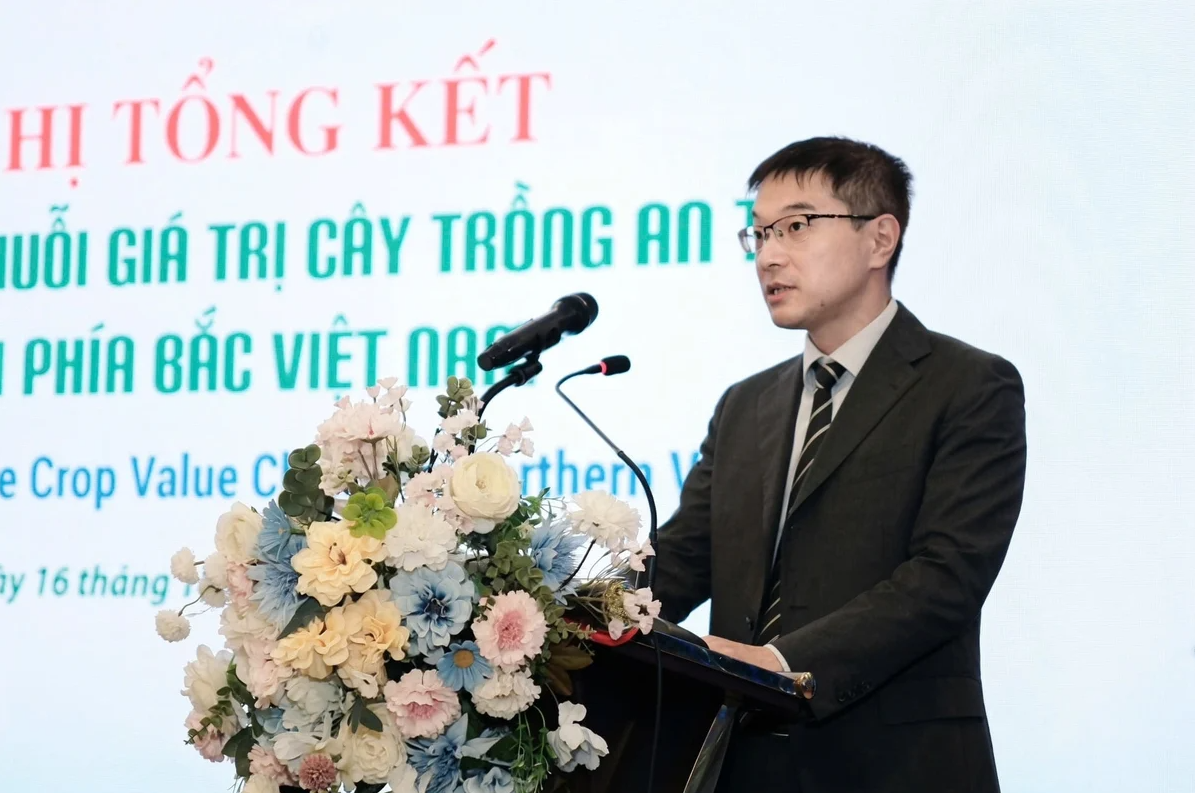 Mr. Ikeda Hiroyuki, Senior Representative of the Japan International Cooperation Agency (JICA) in Vietnam, addresses the project review conference. Photo: Thanh Trang.
From JICA, Mr. Ikeda Hiroyuki, Senior Representative of the JICA Vietnam Office, assessed that the project not only contributed to improving production management under GAP standards but also promoted a market-oriented agricultural development approach. Through survey activities, buyer matchmaking, and practical training, cooperatives have gradually enhanced their ability to understand customer needs, organize suitable production, and expand relationships with business partners.
Reporting on the project results, Mr. Do Da Giang, Coordinator of the Central Project Management Board, said that after four years of implementation, the project trained 191 agricultural extension officers, building local capacity to guide and support safe production.
The proportion of cooperatives applying Basic Good Agricultural Practices (Basic GAP) or VietGAP increased from 72% to 92%. The total area under GAP practices reached 752 hectares, a 44.4% increase from the baseline.
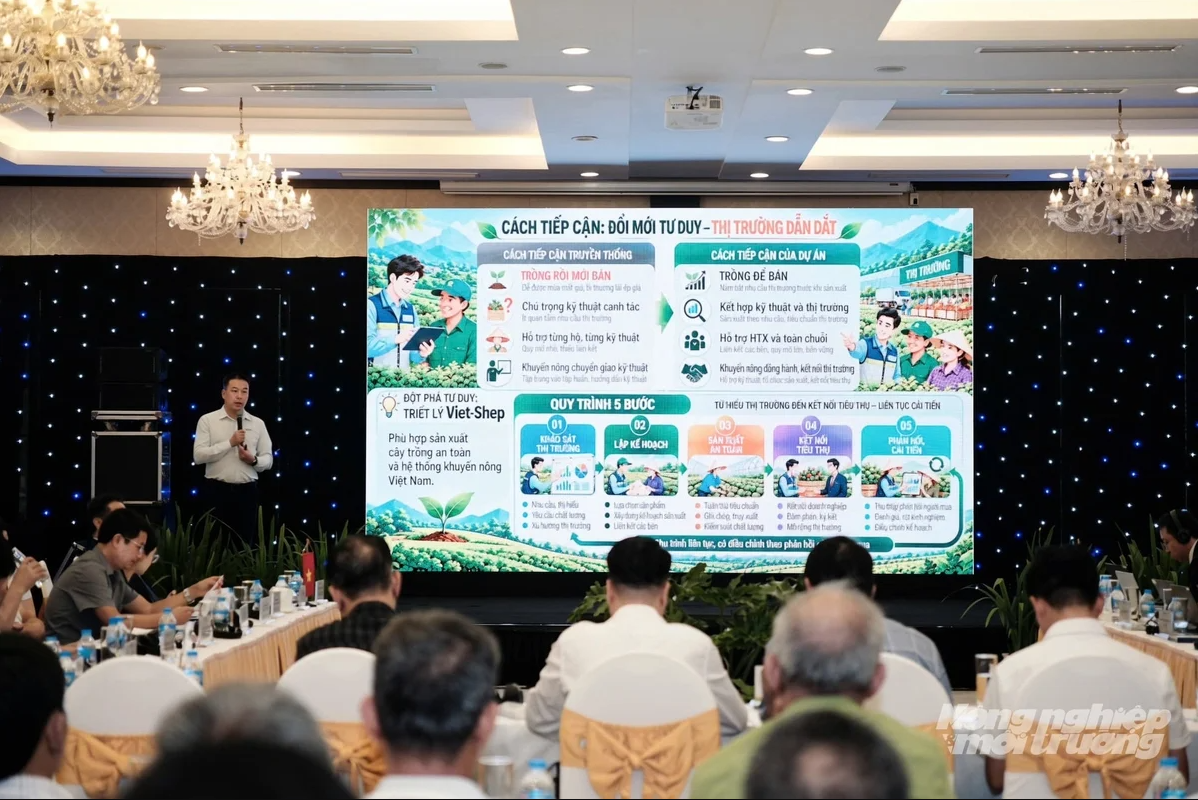 Mr. Do Da Giang, Coordinator of the Central Project Management Board, presents the implementation results of the project. Photo: Thanh Trang.
Notably, the average gross profit per unit area across 29 sampled cooperatives increased by 14.1%, exceeding the project’s target of 10%. Out of 39 cooperatives, 28 expanded their sales channels, accounting for 71.8%, with the average number of sales channels rising from 4.9 to 7.7. The proportion of cooperatives organizing collective selling also grew from 76.9% to 94.9%.
These results are closely tied to the application of the Viet-SHEP agricultural extension approach, which uses market demand as the foundation for organizing production. Instead of planting crops first and searching for buyers later, cooperatives were guided to conduct market surveys, plan production, ensure quality, connect with buyers, and adjust operations based on customer feedback.
Sharing the implementation results in Son La, Ms. Nguyen Huyen Trang, an officer at the Son La Extension and Digital Transformation Center and member of the Provincial Project Management Board, stated that the locality conducted 10 training courses on GAP and marketing for 250 trainees, while establishing five GAP demonstration models.
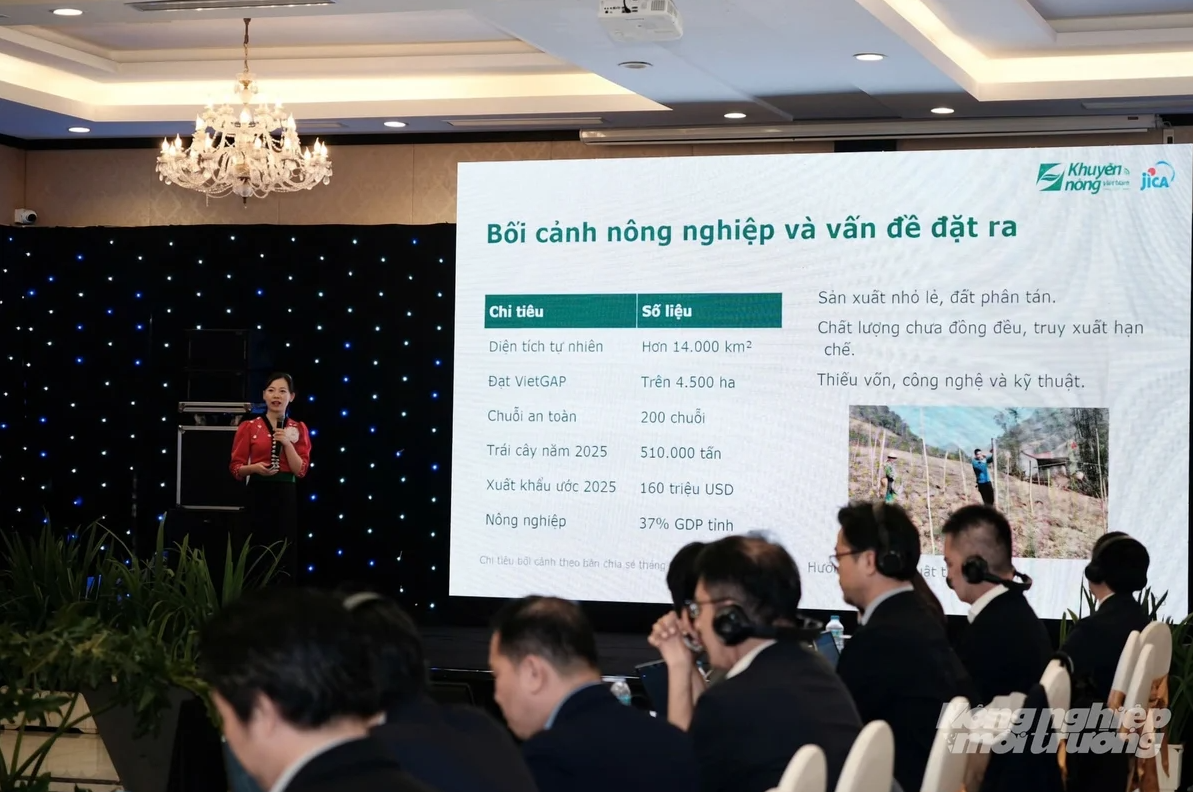 Ms. Nguyen Huyen Trang, an officer at the Son La Center for Agricultural Extension and Digital Transformation and member of the Son La Provincial Project Management Board, shares implementation results and lessons learned at the conference. Photo: Thanh Trang.
Cooperatives were also supported in improving packaging, labeling, brand building, and market linkages. However, fragmented production, lack of capital, limited infrastructure, and dependency on traders remain major obstacles to maintaining a sustainable value chain.
In Hanoi, Mr. Hoang Van Tham, Chairman of the Board of Directors of Chuc Son Clean Fruit and Vegetable Cooperative, said the project has helped transform production management through digital applications and traceability. Using the FaceFarm software, the cooperative manages production logs for each field plot, enabling consumers to trace product information via QR codes. In 2025, the cooperative distributed its products through 21 supermarkets, 61 schools, two catering service providers, and two food processing plants.
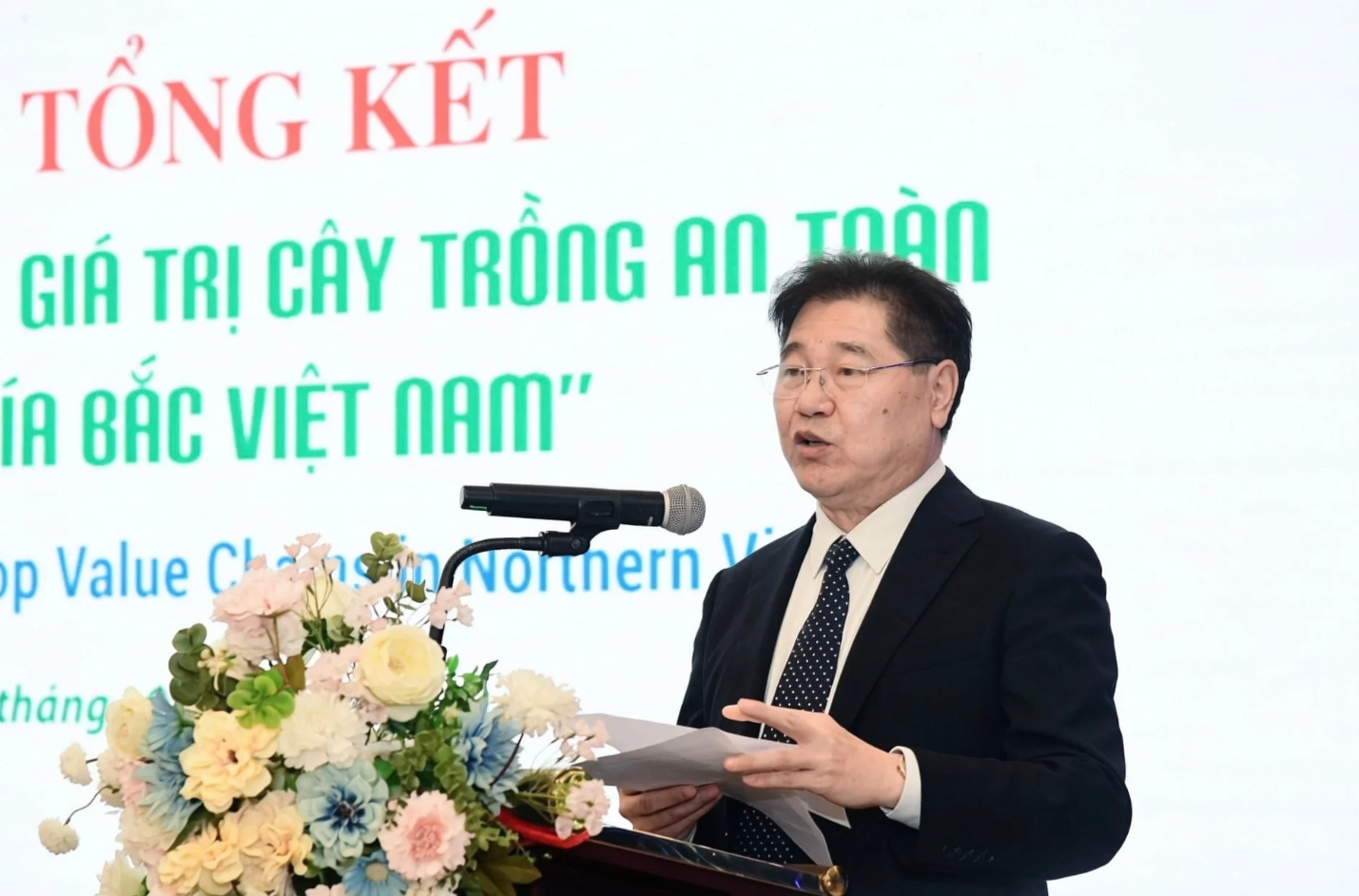 Mr. Le Quoc Thanh, Director of the National Agricultural Extension Center, delivers the closing remarks and concludes the project review conference. Photo: Nguyen Toan.
Mr. Le Quoc Thanh, Director of the National Agricultural Extension Center, affirmed that the project's value lies not only in production results but also in shifting mindsets toward value chain organization, helping farmers understand the market and take greater initiative in their business activities.
Moving forward, the National Agricultural Extension Center will continue to refine and disseminate the Viet-SHEP approach through training programs; coordinate with local authorities to sustain effective models, leverage core technical staff, and foster corporate participation. Replication will be tailored to each cooperative's management capacity, production conditions, and actual needs, aiming to enhance self-reliance and maintain long-term sustainability after the project concludes.