This finding was highlighted in the report 'Plastic Pollution - Biodiversity Assessment', conducted by GreenU.
On March 17, the Global Plastic Action Partnership (GPAP), in collaboration with the National Plastic Action Partnership (NPAP) Viet Nam, officially released the report “Plastic Pollution - Biodiversity Assessment”, with funding from the Government of Canada and technical support from GreenU. The study provides a comprehensive overview of the links between plastic pollution, biodiversity, ecosystem services, and local livelihoods in Viet Nam.
Linking plastic pollution reduction with biodiversity conservation
The report integrates data on plastic leakage with Key Biodiversity Areas (KBA) along with socio-economic indicators to identify ecological and economic “hotspots”. Thereby, it clarifies the impacts of plastic pollution on important ecosystems such as coral reefs, mangroves, fisheries resources, coastal tourism as well as communities dependent on natural resources.
Not limited to the domestic scope, the study also points out transboundary plastic flows, habitat degradation and gaps in current policies. From there, the report proposes recommendations to link plastic action with biodiversity conservation goals, enhance resilience to climate change and promote development in harmony with nature.
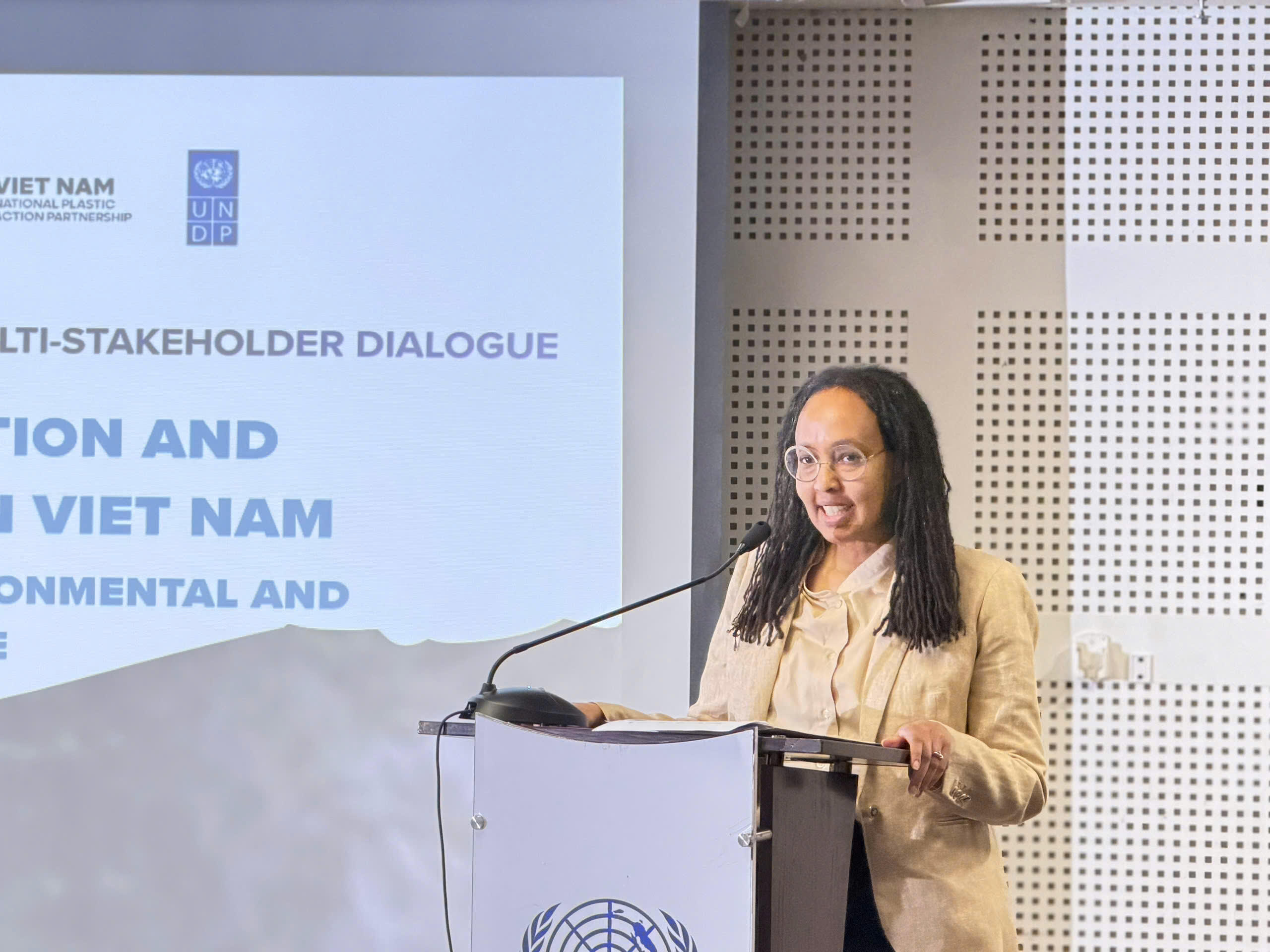 Ms. Khadija Jarik, First Secretary of the Embassy of Canada in Viet Nam, appreciated the cooperation between Canada and Viet Nam in climate, environment and sustainable development. Photo: Minh Hanh.
Speaking at the opening of the event, Ms. Khadija Jarik, First Secretary of the Canadian Embassy to Viet Nam, emphasized the increasingly close cooperation between Canada and Viet Nam in the fields of climate, environment and sustainable development. According to her, addressing plastic pollution and biodiversity loss simultaneously is not only an environmental priority but also a foundation for long-term economic development. She also stressed the need for an integrated approach, as climate change, pollution and biodiversity loss are closely linked.
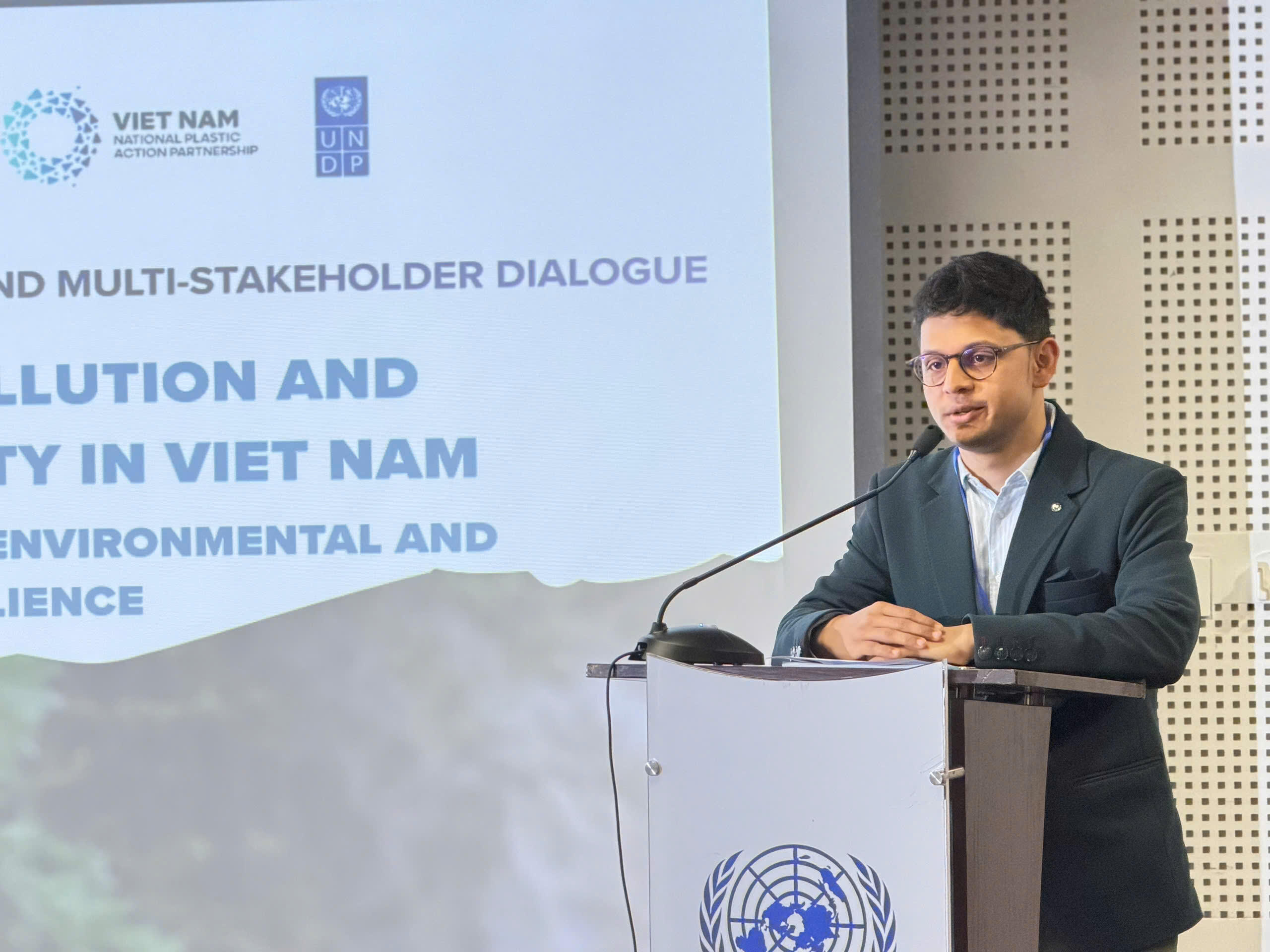 Mr. Jeet Kar - Head of Strategy and Policy of the GPAP Programme - World Economic Forum - spoke at the report launch ceremony. Photo: Minh Hanh. Mr. Jeet Kar - Head of Strategy and Policy of the GPAP Programme - World Economic Forum - spoke at the report launch ceremony. Photo: Minh Hanh.
Representing GPAP, Mr. Jeet Kar, Head of Strategy and Policy for the GPAP Programme (World Economic Forum), said that the report marks an important shift in perceptions of plastic pollution. “This is not only a waste management issue, but a systemic challenge that directly impacts biodiversity, ecosystem services and human livelihoods”, he said.
With more than half of global GDP dependent on nature, biodiversity loss caused by plastic pollution poses serious risks to both the environment and the economy.
Microplastics have become widespread in the environment
Presenting the findings, Ms. Nguyen Thu Trang, a representative of GreenU, said plastic pollution in Viet Nam is widespread, with most plastic flowing from land to sea. About 80% of ocean plastic waste originates on land and is transported through rivers and canals - often described as “conveyor belts” carrying waste from urban areas, industrial zones and production sites to coastal ecosystems.
Microplastics have been widely detected across a range of environments, from rivers and estuaries to mangroves, tidal flats, coral reefs and coastal sediments, highlighting their alarming spread and accumulation. Pollution pressure continues to grow due to rapid urbanization, inadequate waste management and the rapid expansion of coastal tourism and aquaculture.
As estimated, about 1,531 tonnes of plastic waste leak into the environment every day, equivalent to more than 558,000 tonnes per year. Notably, microplastics have penetrated the food chain and have been found in many common seafood species such as mollusks, shrimp and fish, thereby increasing exposure risks for humans.
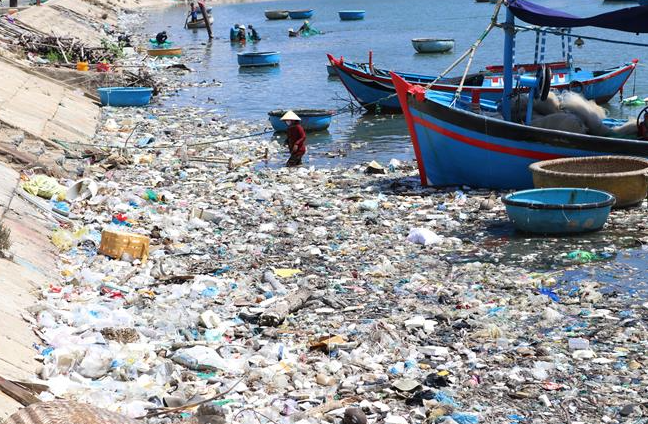 Plastic waste carries toxic chemicals that negatively affect marine organisms and human health. Archive photo: Nguyen Thanh/VNA.
Plastic pollution impacts are uneven, with “hotspots” emerging where waste generation and exposure are high, ecosystems are vulnerable and adaptive capacity is low. High-risk areas include the Red River Delta, the Southern Key Economic Region, the Mekong Delta and the central coast. Protected areas downstream of major rivers or in estuarine zones face pressure from both local and upstream plastic waste.
In terms of ecosystems, plastic pollution causes multidimensional impacts, from entanglement, ingestion to chemical effects and habitat alteration. Notably, corals exposed to plastic waste are nearly 20 times more likely to develop disease, while mangroves show reduced carbon absorption due to plastic accumulation in sediments.
Based on these findings, the report proposes three pillars of action to address plastic pollution in connection with biodiversity conservation. These include controlling emissions at the source, promoting green transitions in marine sectors such as fisheries and tourism, and strengthening conservation and ecosystem restoration through science-based and community-driven approaches.
“These solutions need to be implemented synchronously, based on evidence and with multi-stakeholder coordination to achieve sustainable effectiveness”, the research team emphasized.