Unlocking blue economy resources
On April 21 in Khanh Hoa Province, the Department of Fisheries and Fisheries Surveillance (under the Ministry of Agriculture and Environment), in partnership with the United Nations Development Programme (UNDP) and the International Union for Conservation of Nature (IUCN) in Viet Nam, held a technical workshop on “Solutions for Establishing and Effectively Managing Marine Protected Areas in Viet Nam to 2030, with a Vision to 2050”.
The workshop comes as the fisheries sector continues to affirm its strategic role, sustaining annual growth of 3.3% to 4.3%. With export value reaching USD 11.3 billion in 2025 and contributing around 16% to national GDP, the sector is focusing on three key pillars: sustainable aquaculture, modernized fishing, and resource protection alongside marine ecosystem restoration.
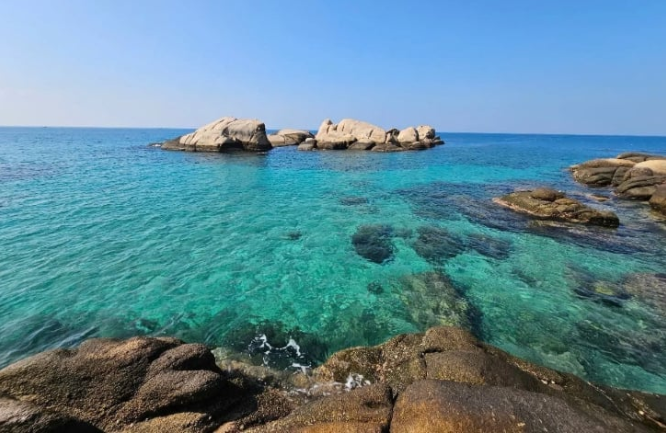 A view of Hon Cau Marine Protected Area, Lam Dong Province. Photo: KS.
Speaking at the workshop, Mr. Nguyen Quang Hung, Deputy Director General of the Department of Fisheries and Fisheries Surveillance, highlighted key tasks under Resolution No. 36-NQ/TW (dated October 22, 2018) on the sustainable development of Viet Nam’s marine economy. The resolution targets placing 6% of the country’s marine area under protection by 2030. While the global goal is 30%, this remains a significant challenge for Viet Nam.
According to the Department’s report, Viet Nam’s marine conservation system has been strategically planned through 2030, comprising 11 national-level and 16 provincial-level marine protected areas. The total designated conservation area is 463,587 hectares, equivalent to 0.463% of the national sea area. However, actual implementation has so far reached only 215,191 hectares, or about 0.215%.
To address this gap, the national master plan on the protection and sustainable use of fisheries resources for 2021-2030, with a vision to 2050, approved by the Prime Minister, aims to establish 27 marine protected areas in the coming years, requiring faster and more decisive implementation.
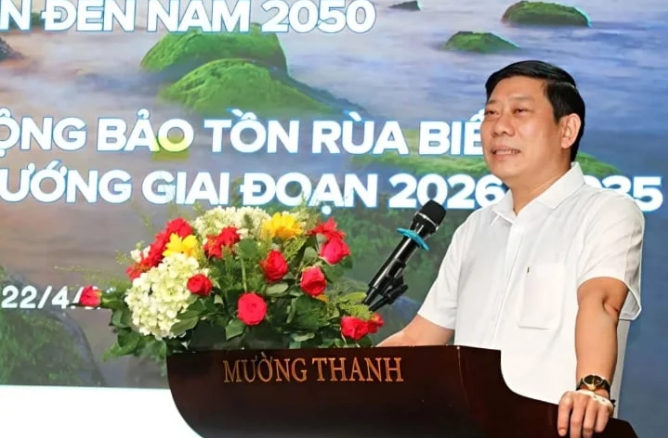 Mr. Nguyen Quang Hung, Deputy Director General of the Department of Fisheries and Fisheries Surveillance, speaks at the workshop. Photo: KS.
Mr. Hung called on the workshop to focus on removing bottlenecks in mechanisms and policies, including revising existing legal frameworks. He stressed the need to reassess management models for protected areas and national parks, and to consider pilot schemes allowing non-public entities or large enterprises to take part in operations.
From a local perspective, a representative from Quang Ninh Province said the province has assigned management of its marine protected area to the Ha Long Bay - Yen Tu World Heritage Management Board. This model makes use of existing expertise, patrol forces, and a strong financial autonomy mechanism to improve operational efficiency.
Meanwhile, Ms. Bui Thi Thu Hien, Head of the Coastal and Marine Programme at IUCN Viet Nam, noted that effective marine conservation depends heavily on the role of local authorities. Provincial People’s Committees play a decisive role in approving management plans and allocating budgets.
Key challenges remain in financing and enforcement authority. Management forces at marine protected areas currently lack the power to detain violating vessels, while funding for sea patrols is limited and lacks spending norms suited to on-the-ground conditions.
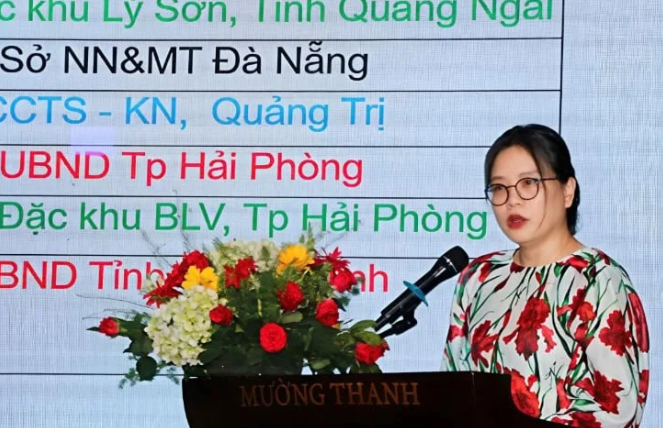 Ms. Bui Thi Thu Hien, representative of IUCN Viet Nam. Photo: KS.
To improve effectiveness, IUCN Viet Nam suggests introducing sustainable financing tools, including entrance fees and pilot ecosystem service payments. It also calls for stronger coordination among relevant forces, while promoting co-management so local communities can play a bigger role in protecting and benefiting from marine resources.
Experience from Quang Ninh shows that community consensus is key. Local people are more supportive when they see long-term benefits and receive clear support for livelihood transitions, such as eco-tourism or environmentally friendly marine farming.
Toward national marine conservation goals
According to Khanh Hoa authorities, the workshop comes at a timely moment as Viet Nam steps up efforts to meet biodiversity conservation targets, with a focus on marine ecosystems. The province holds a strategic position thanks to its rich marine resources, including coral reefs, seagrass beds, and natural breeding grounds for valuable aquatic species. Nha Trang Bay and the marine areas within Nui Chua - Phuoc Binh National Park serve as key links in a regional conservation network in the South Central region.
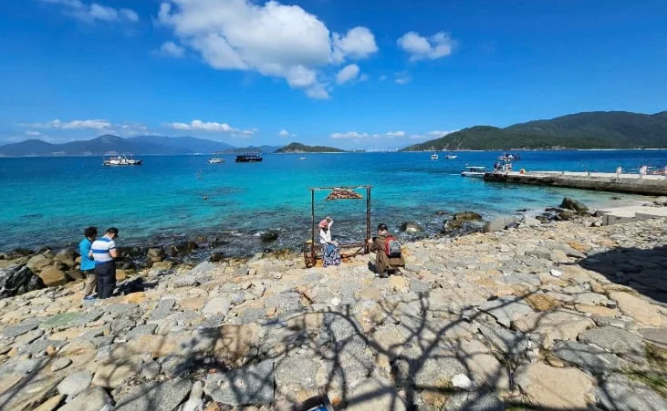 Hon Mun Marine Protected Area in Nha Trang Bay, Khanh Hoa Province. Photo: KS.
Khanh Hoa has rolled out various measures, from strengthening management to promoting co-management and sustainable livelihoods. Its partnership with the Centre for Marine Life Conservation and Community Development (MCD) has helped build local capacity, enabling communities to take a more active role in protecting fisheries resources.
Looking ahead, the province is advancing a marine ecosystem protection project to help raise protected areas to 6% of the country’s sea area. Key actions include expanding conservation areas, restoring coral reefs and seagrass beds, tightening control over coastal fishing and tourism, supporting livelihood transitions, and using technology to improve monitoring.
Beyond domestic efforts, UNDP consultants report that as of 2024, there are 16,953 marine protected areas worldwide. They recommend that Viet Nam develop a practical evaluation framework aligned with international standards but adapted to local conditions. This framework should be easy to apply and reflect the economic, social, and environmental realities of marine protected areas in Viet Nam.