Prime Minister Le Minh Hung presented the socio-economic development plan, including various directions for the agriculture and environment sector.
On April 9, continuing the agenda of the 1st Session of the 16th National Assembly, Prime Minister Le Minh Hung reported to the National Assembly on the supplementary assessment of the implementation results of the 2025 socio-economic development plan and state budget, as well as the implementation of the socio-economic development plan and state budget in the first months of 2026.
For 2026, key priority tasks will focus on improving institutions and legislation; reducing at least 50% of compliance costs and time for administrative procedures in 2026 compared to 2024; completing the system of standards, regulations, and techno-economic norms across sectors and fields; advancing science and technology, innovation, digital transformation, and tapping into new growth drivers; resolving backlogged projects; and mobilizing and effectively utilizing resources.
Regarding key tasks and solutions for the remaining months of 2026, Prime Minister Le Minh Hung highlighted a range of issues, including those related to the agriculture and environment sector.
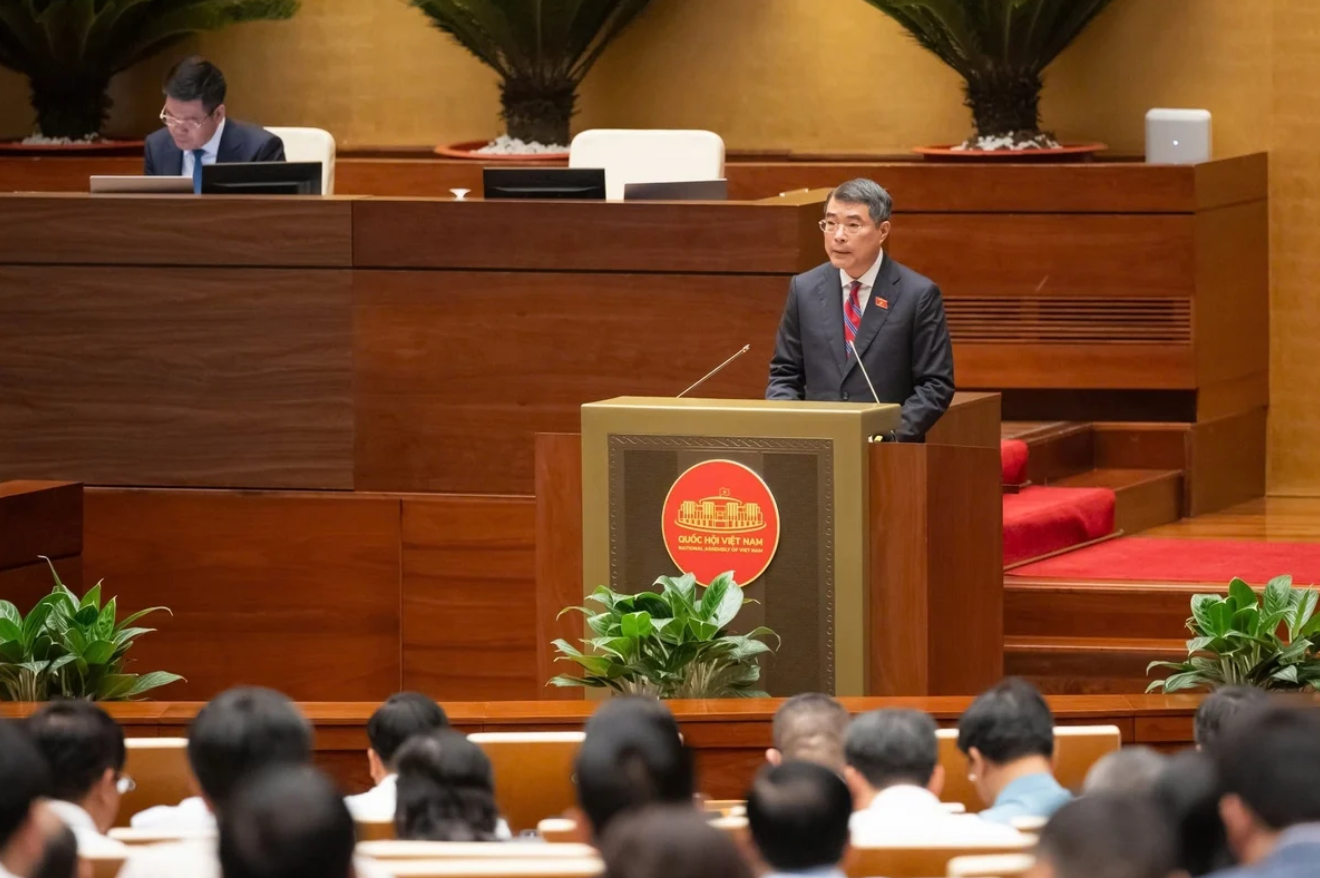 Prime Minister Le Minh Hung presents the socio-economic development plan for the coming period before the National Assembly. Photo: National Assembly.
Specifically, in the agricultural sector, the Prime Minister called for accelerating the restructuring of agriculture toward greater efficiency, sustainability, and higher added value. He also requested fundamental research and reform of policies on rice land quotas to improve land-use efficiency while ensuring national food security. In 2026, the inventory and accurate calculation of forest coverage rate, forest land area, and rice land area must be completed.
In addition, the head of the Government emphasized the need to synchronously and effectively implement solutions to soon remove IUU yellow card.
In natural resources and environment sector, the Prime Minister highlighted tasks such as effective management and use of land, natural resources, and minerals; strengthening environmental protection; and proactively preventing and responding to natural disasters and adapting to climate change.
At the same time, efforts must be enhanced to protect and restore ecosystems; ensure water security, dam and reservoir safety, and prevent the degradation of water resources. There is also a need to modernize monitoring infrastructure and improve forecasting and early warning capacity for natural disasters.
“Fundamentally addressing air pollution and flooding in major cities such as Hanoi and Ho Chi Minh City, improving environmental pollution in urban areas, industrial clusters, and craft villages, and developing solutions for waste treatment associated with the application of science and technology,” he stated.
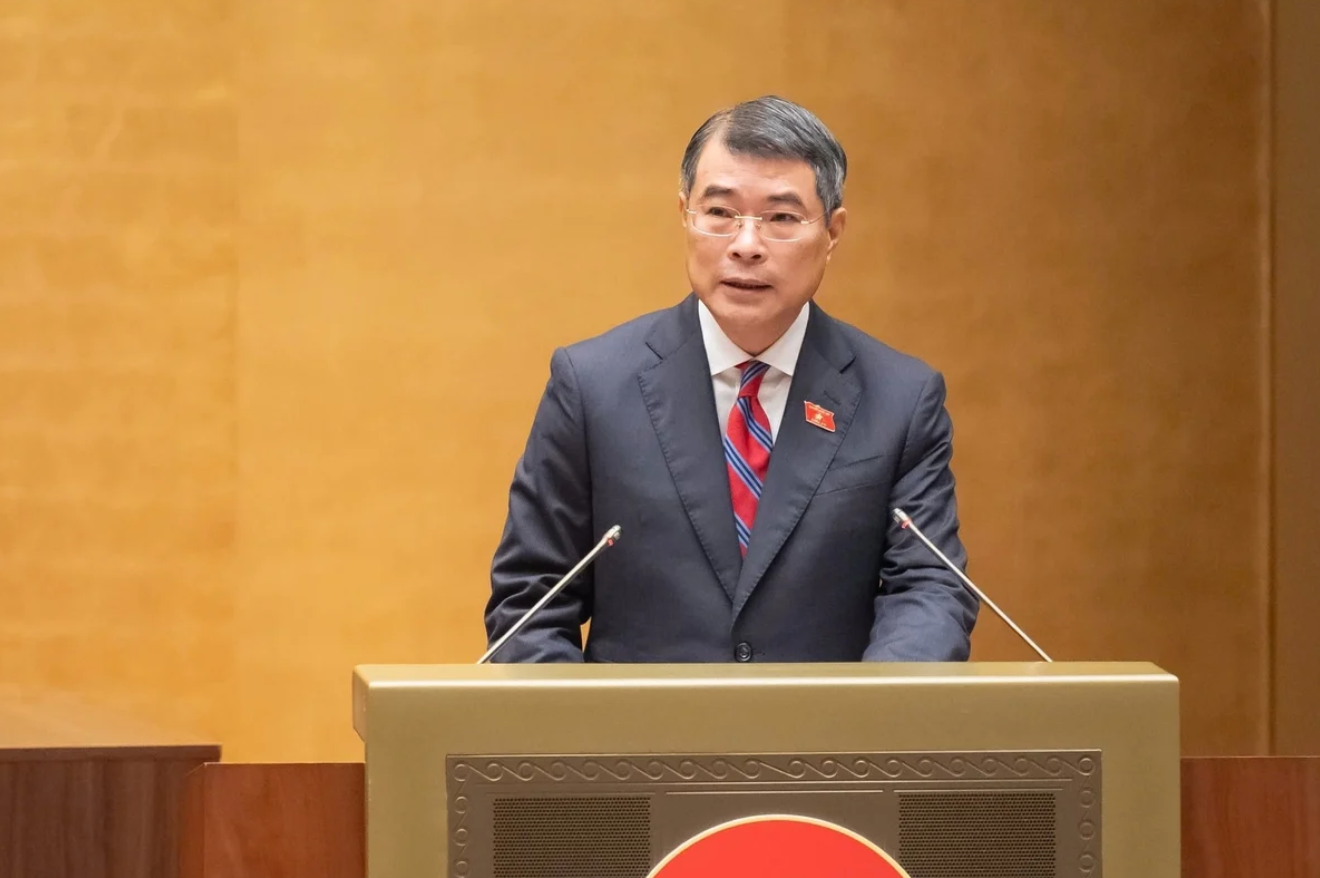 Groups of solutions and tasks for socio-economic development in the coming period include many contents related to the agriculture and environment sector. Photo: National Assembly.
11 group tasks through 2030
Regarding the proposed five-year socio-economic development plan for 2026 - 2030, the Prime Minister presented to the National Assembly 11 key groups of solutions.
First, to focus on improving institutions for synchronized, modern, and competitive development to create breakthroughs in growth.
Second, to transform the growth model; accelerate the restructuring of sectors and fields; and develop business sectors and new economic models.
Third, to promote growth in tandem with maintaining macroeconomic stability, controlling inflation, ensuring major balances, preventing economic crises, and unblocking and diversifying supply chains and capital channels.
The fourth group of solutions is to focus on developing science and technology, innovation, and digital transformation. The fifth is to build and develop an advanced Vietnamese culture imbued with national identity, in alignment with the national value system, cultural value system, family values, and standards of Vietnamese people.
Sixth, to modernize the national education system, improve training quality, and attract and utilize talents, especially in technical and technological fields and for strategic and key programs and projects.
Seventh, to develop a synchronized and modern infrastructure system; promote urbanization, urban development, and regional connectivity.
Eighth, to manage social development sustainably; ensure social progress and equity; and improve people's living standards.
Ninth, to effectively manage and utilize natural resources, protect the environment, and proactively adapt to climate change; enhance the management, exploitation, and use of land, natural resources, and important minerals, especially marine resources and rare earths; and fundamentally address air pollution, flooding, and traffic congestion in major cities such as Hanoi and Ho Chi Minh City.
The tenth group of tasks is to consolidate and strengthen national defense and security; consistently implement a foreign policy of independence, self-reliance, resilience, peace, friendship, cooperation, and development, with diversification and multilateralization.
The final key group of tasks is to unify thinking, awareness, aspirations, and actions. “Innovate governance in implementation, identify double-digit growth as a central political task, and concretize it in annual programs and work plans; inspection, supervision, and evaluation must be based on implementation results,” Prime Minister Le Minh Hung emphasized.