The delegation was led by Mr. D.P. Wickramasinghe, Secretary of the Ministry of Agriculture, Livestock, Land and Irrigation of Sri Lanka. Participants also included representatives from Sri Lanka’s Ministry of Defence, the Department of Meteorology, and experts from the Asian Disaster Preparedness Center (ADPC).
The visit aimed to exchange knowledge and gain insights into Viet Nam’s hydrometeorological management and technical systems, as well as practical experience in forecasting, disaster early warning, and climate risk management. The activity is part of the Climate Resilience Multi-Phase Approach (CResMPA) Program implemented by ADPC.
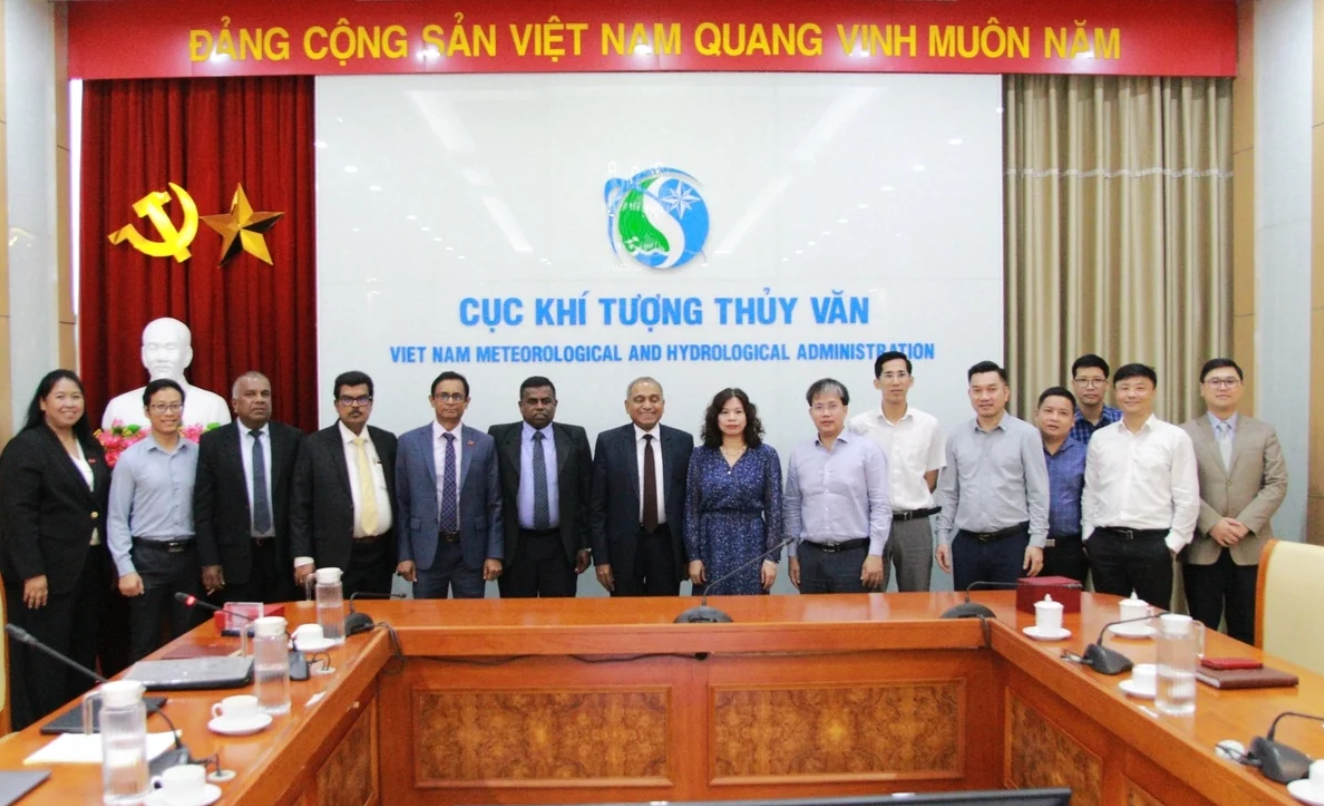 The Sri Lankan delegation visits and works with the Viet Nam Meteorological and Hydrological Administration. Photo: Tien Duc.
Welcoming the delegation, Deputy Director General of the Viet Nam Meteorological and Hydrological Administration, Ms. Dang Thanh Mai, noted that the visit not only provided an opportunity for professional exchange but also helped strengthen friendship and cooperation between Viet Nam and Sri Lanka, as well as across Asia. Both countries are highly vulnerable to climate change and extreme weather events, making the modernization of hydrometeorological services an urgent priority to protect lives and support sustainable development.
“We are pleased that ADPC has chosen Viet Nam as a destination and see this as a valuable opportunity to share lessons learned from our modernization journey - one driven by innovation and international integration,” she emphasized.
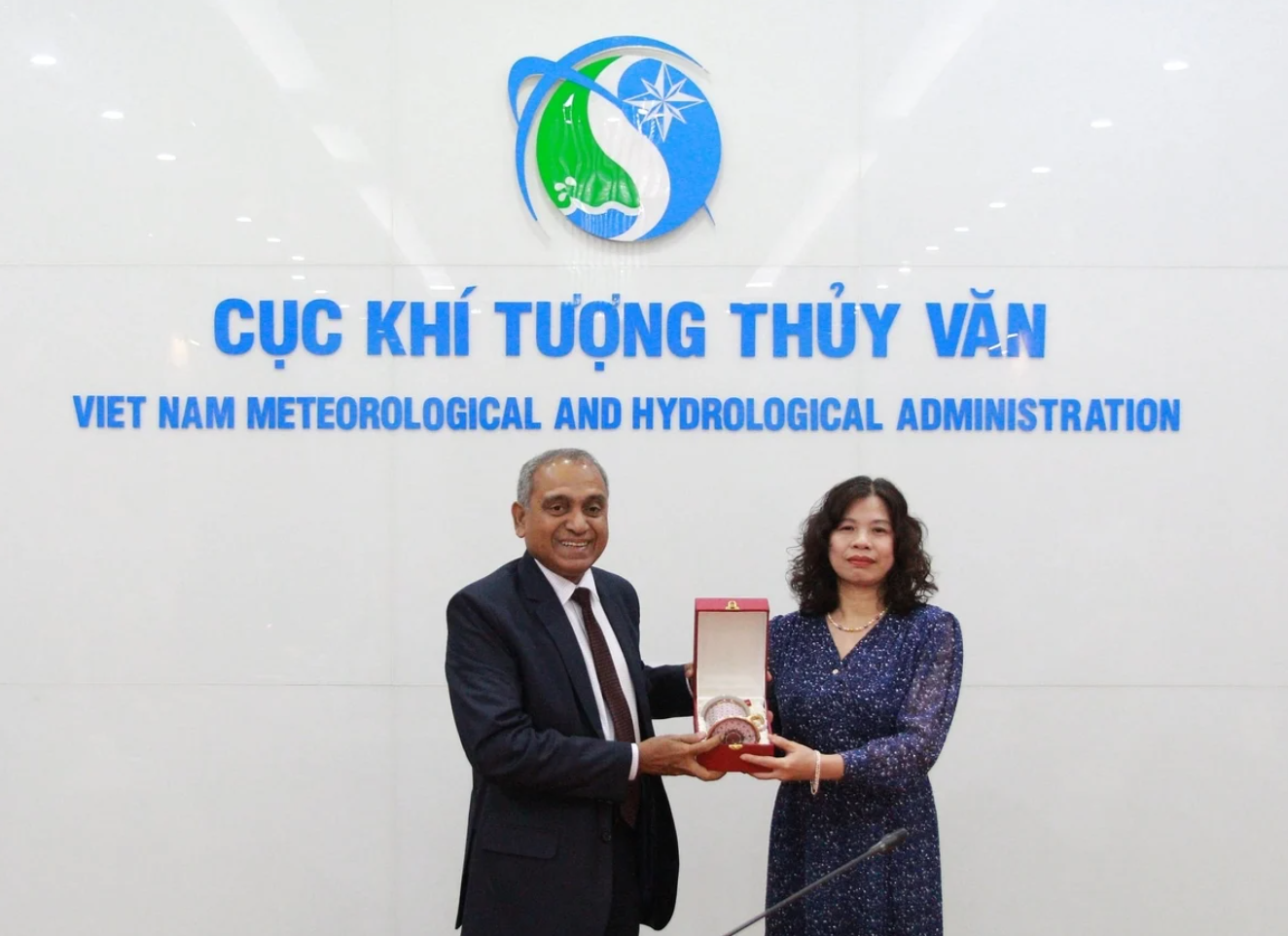 Mr. D.P. Wickramasinghe, Secretary of Sri Lanka’s Ministry of Agriculture, Livestock, Land and Irrigation, presents a gift to Deputy Director General of the Viet Nam Meteorological and Hydrological Administration, Tran Thanh Mai. Photo: Tien Duc.
According to Mr. Wickramasinghe, Sri Lanka is highly exposed to hydrometeorological hazards such as floods, droughts, and landslides, which significantly affect agriculture, water resources, and livelihoods. Sri Lanka is therefore placing strong emphasis on strengthening the scientific and technical foundations of meteorological services to support informed decision-making and climate adaptation.
The visit also served as a platform for both sides to exchange knowledge and enhance regional cooperation in meteorology, hydrology, and climate science. As countries across Asia face increasingly severe climate change impacts and extreme weather, scientific research capacity and innovation are becoming more essential than ever.
During the session, the Sri Lankan delegation was introduced to the Viet Nam Meteorological and Hydrological Administration and its modernization programs. The Administration oversees the national observation network, conducts air and water monitoring, studies climate change and natural hazards, and provides nationwide forecasting and early warning services.
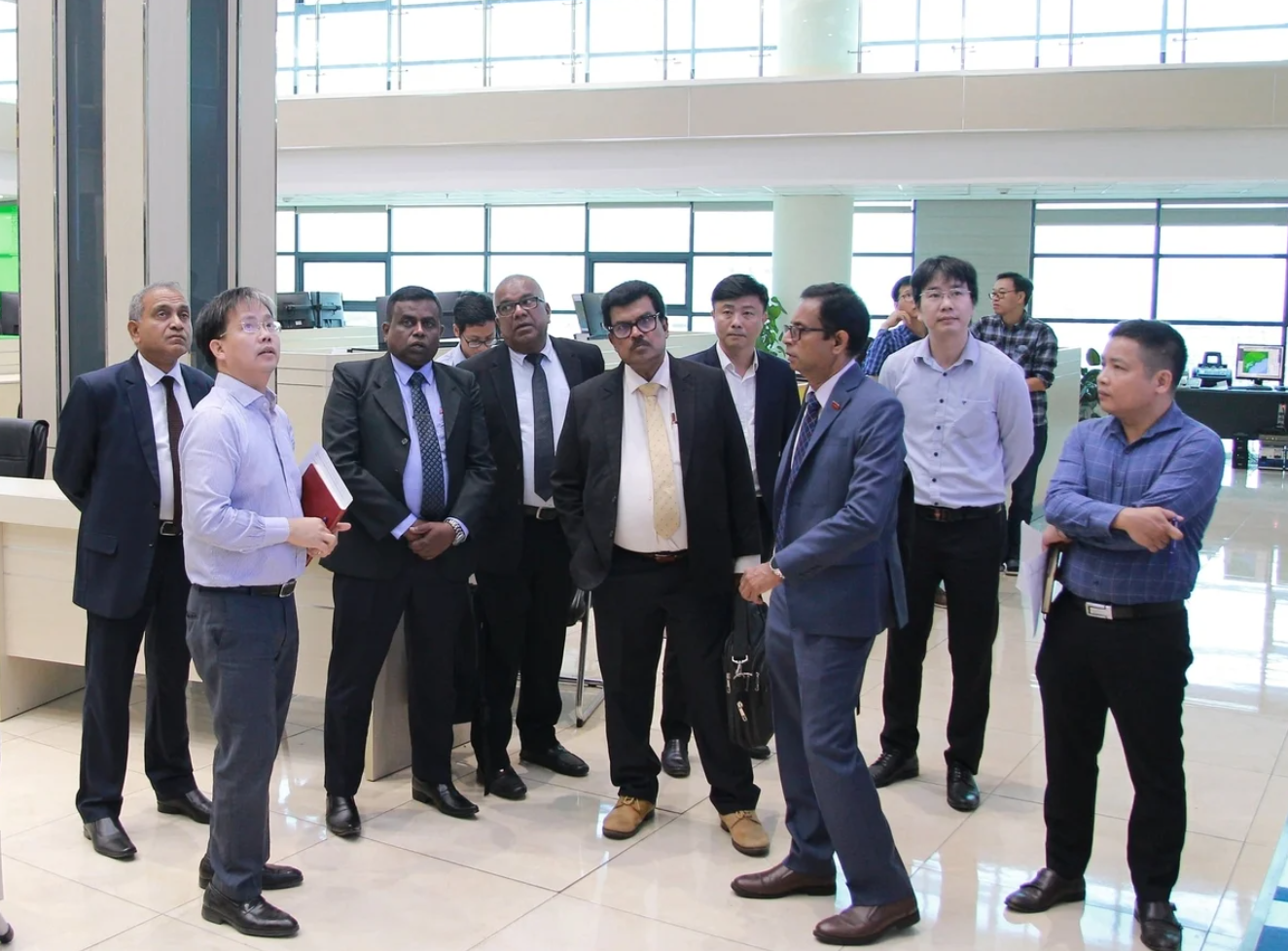 The delegation visits the National Centre for Hydrometeorological Forecasting. Photo: Tien Duc.
Viet Nam’s observation system includes 186 surface meteorological stations, 889 rainfall stations, 14 radiation stations, 232 hydrological stations, and 23 marine meteorological stations. In addition, there are upper-air observation systems, 12 weather radars, 179 environmental monitoring stations for air and water, and 18 lightning detection systems.
The system is internationally connected, linking to more than 400 surface stations and 250 upper-air stations, while using global forecasts from JMA and ECMWF and satellite data such as Himawari. Viet Nam has been a member of the World Meteorological Organization (WMO) since 1955 and cooperates with numerous international organizations and national meteorological agencies, including those of Australia, China, Japan, the Republic of Korea, the United States, and France. The country is also committed to data sharing.
Currently, weather forecasts and disaster warnings are delivered in real time to disaster management agencies, government bodies at both central and local levels, media organizations, and the public.
Looking ahead, Viet Nam’s hydrometeorological sector will focus on three pillars: observation networks, forecasting technology, and IT. Plans include expanding and upgrading observation systems, developing high-resolution typhoon and climate models, and advancing short- and medium-range ensemble forecasts, alongside greater use of IoT and cloud computing.
Both sides exchanged experiences in modernizing IT infrastructure, applying high-performance computing in weather forecasting, and implementing projects to strengthen disaster forecasting and early warning capacity. The shared goal is to reduce risks, minimize damage, and enhance disaster response capabilities.
Both sides agreed that continued dialogue and mutual learning will strengthen cooperation in hydrometeorology, improving disaster preparedness and climate adaptation.