Securing irrigation water for orchards
As the dry season reaches its peak, maintaining irrigation water has become a major concern for many farmers in Lam Dong. In Dong Thanh 2 Hamlet, Nam Ban Commune, Lam Ha District, Lam Dong Province, the family of Ms. Nguyen Thi Hoi manages more than 4 hectares of farmland, cultivating various crops such as coffee, durian, and avocado, as well as about 4,000 square meters of mulberry. Her biggest concern at the moment is ensuring a stable water supply for the entire farm.
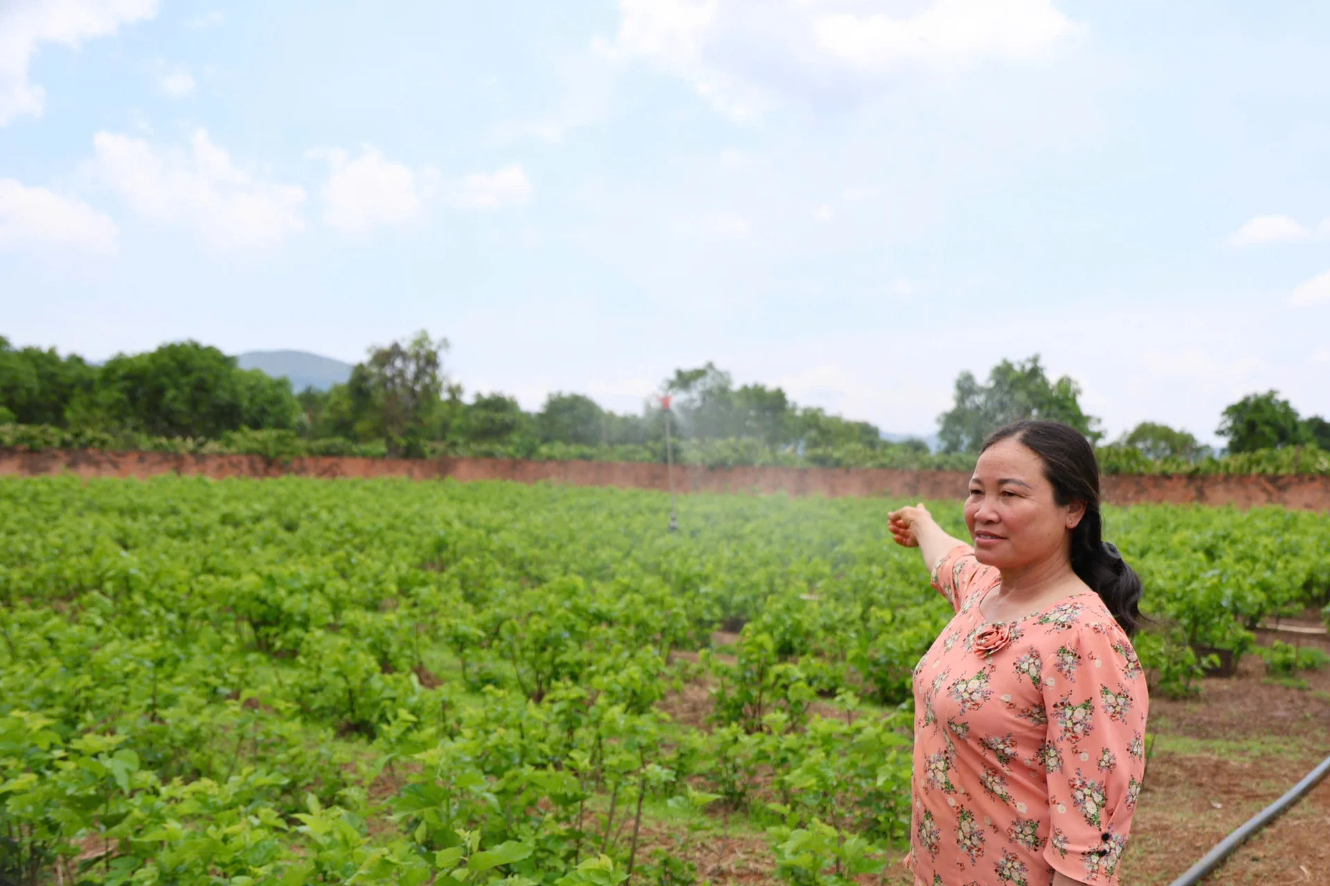 The family of Ms. Nguyen Thi Hoi (Dong Thanh 2 Hamlet, Nam Ban Commune, Lam Ha District, Lam Dong Province) channels water from a stream to ensure irrigation for their crops during the dry season. Photo: Nhat Tien.
For mulberry growers raising silkworms, irrigation water not only determines the growth of mulberry trees but also directly affects the feed supply for the worms. When water is scarce, mulberry leaves decline in both quantity and quality, and the silkworms develop less effectively. Even a short disruption in the supply of mulberry leaves can upset the entire rearing cycle, ultimately affecting the family’s income.
For many years, Ms. Hoi’s family has proactively drilled wells, installed pumps, and channeled water from a nearby stream into their irrigation system. Thanks to this early preparation, even during prolonged dry periods, their orchard maintains sufficient moisture to sustain growth. According to her, to farm with peace of mind, one must plan for irrigation water in advance. Relying entirely on rainfall makes it difficult for farmers to control cultivation schedules and production cycles.
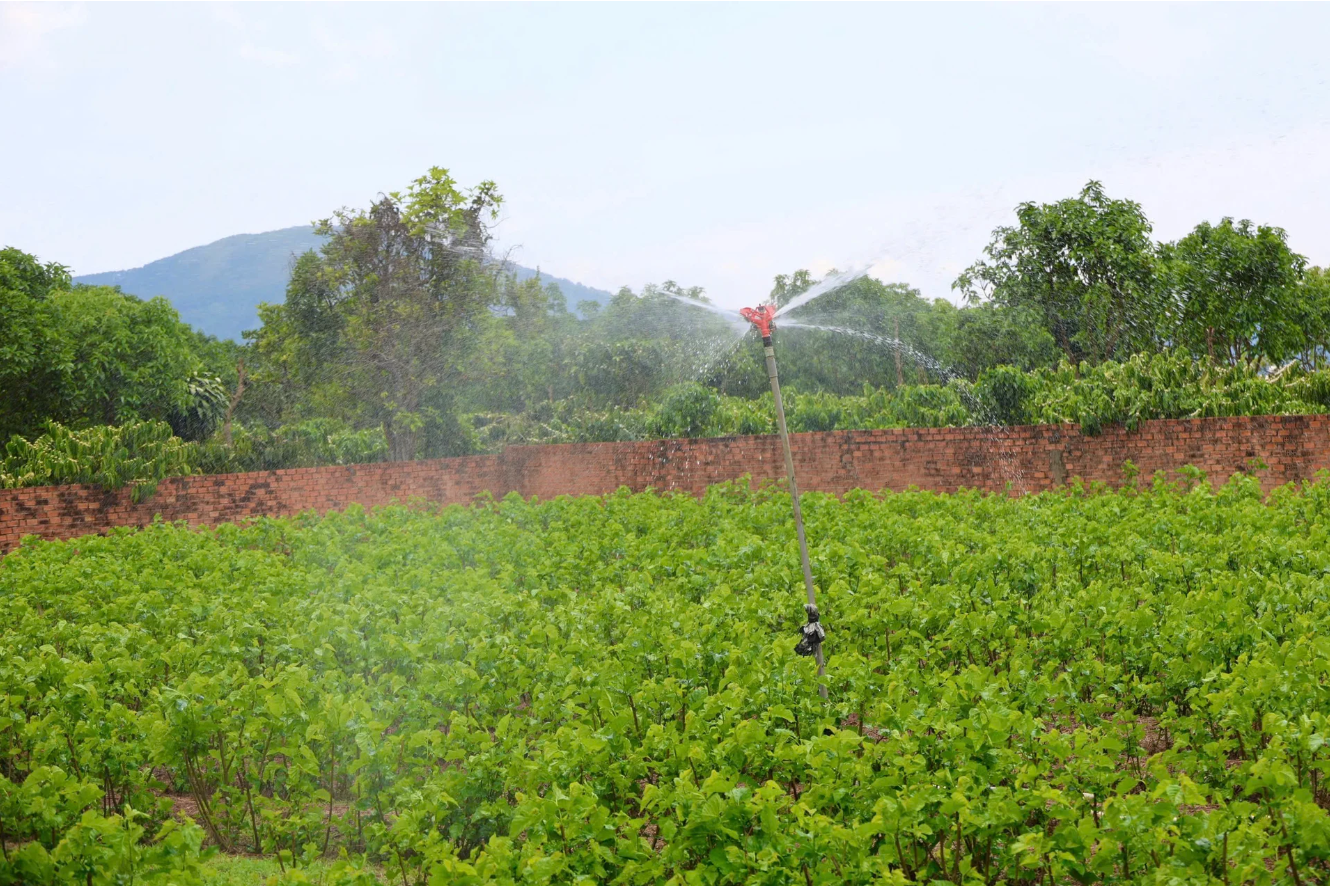 The water piping and automatic irrigation system is used by farmers in Lam Ha to proactively water their orchards during the dry season. Photo: Nhat Tien.
The rains over the past few days have helped reduce electricity costs for pumping and the labor needed for irrigation. The soil has gained additional moisture, and many crops have temporarily eased stress after a prolonged period of heat. However, for experienced farmers, unseasonal rains only partly address immediate difficulties. The dry season in Lam Dong is still expected to continue, so maintaining a stable irrigation water supply remains the decisive factor for farmers to sustain production.
Not only Ms. Hoi’s family but also many farming households in Lam Ha have taken the initiative to drill wells, build water storage ponds, or install pumps to channel water from streams to their gardens. Some households have invested in piping systems for water-saving irrigation, while others divide irrigation areas by crop type to reduce water loss. The initial investment costs are significant, but in the long term, these measures help reduce production risks.
Unseasonal rains worry coffee growers
In Hoa Lac Hamlet, Dinh Van Commune, Lam Ha District, Lam Dong Province, Mr. Nguyen Trong An is tending his family’s garden of nearly one hectare. About 2,000 square meters of this area was planted with coffee next to the house just over a year ago. Although the area is not large, this is the part of the garden the family monitors most closely during the dry season, as this period is crucial for the growth and flowering of coffee trees.
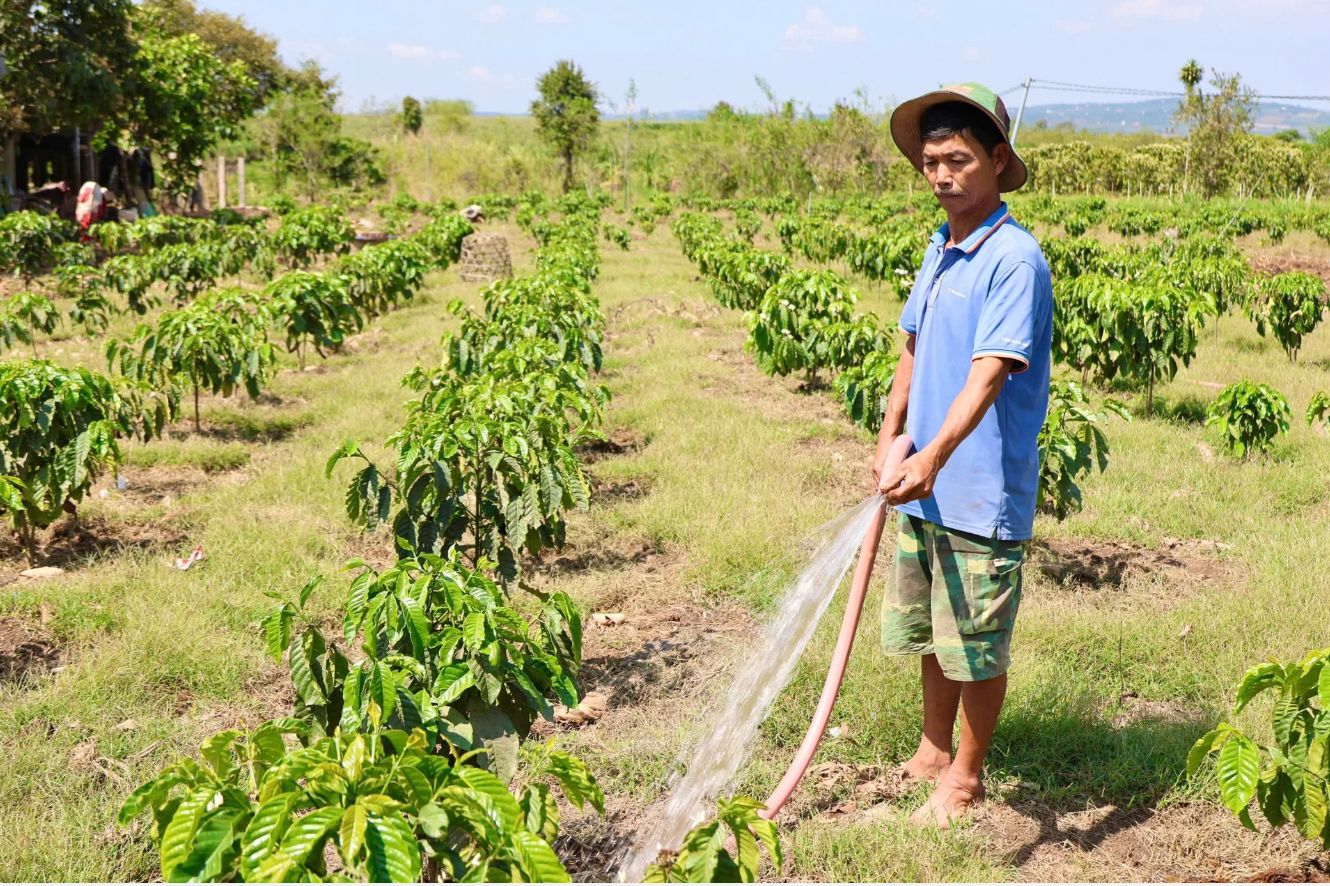 Mr. Nguyen Trong An said that in the middle of the dry season, each well-timed irrigation is a way to maintain the growth rhythm of the coffee garden. Photo: Nhat Tien.
For coffee growers, the dry season is the time to carefully calculate irrigation, as the trees are about to enter the flowering stage. When irrigation water is sufficient, the watering cycle is usually about once every 15 days to allow the trees to differentiate flower buds and bloom simultaneously. In cases where water is limited, farmers have to extend the irrigation interval to 20-25 days to save water, while also accepting greater risks for the orchard.
Timing irrigation correctly is something coffee growers calculate very carefully. If the trees are watered at the right time after a period of drought, they usually flower in a concentrated period, which is favorable for care, fruit set, and later harvesting. In contrast, if unseasonal rains occur just as the trees are flowering, the process can be disrupted, leading to scattered, uneven blooming. This is what many farmers worry about, because when flowering is not synchronized, subsequent care becomes more difficult and the risk of reduced yields becomes very clear.
Coffee in Lam Ha is entering the flowering stage, a period that is particularly sensitive to weather fluctuations and irrigation water. Photo: Nhat Tien.According to Mr. An, the rains over the past few days have helped the soil retain moisture more effectively, and farmers have been able to reduce some of their electricity costs for pumping irrigation water. However, unseasonal rains arriving at the wrong time have made many coffee growers anxious. For coffee plants, even a small weather fluctuation during the flowering stage can affect the entire upcoming crop.
Amid increasingly unpredictable weather, the provincial agricultural sector recommends that farmers closely follow the seasonal calendar, use water efficiently from the beginning of the crop, proactively store water in ways suitable to local conditions, and organize production within the limits of each area’s water availability during the dry season.
Lam Ha is one of the key agricultural production areas of Lam Dong Province, with major crops including coffee, mulberry, vegetables, and various fruit trees. As the weather becomes more unpredictable, irrigation water has become a common challenge for local agricultural production. From drilling wells and channeling water from streams to investing in pumps and planning appropriate irrigation cycles, farmers in Lam Dong are gradually adapting to the dry season.