In the first quarter of 2026, Viet Nam’s seafood exports maintained positive growth, with China and Hong Kong playing a leading role in driving demand.
China and Hong Kong lead growth
According to the Viet Nam Association of Seafood Exporters and Producers (VASEP), Viet Nam’s seafood exports began to slow in March 2026 after robust growth in the first two months, highlighting continued uncertainty in global demand.
However, first-quarter exports still grew overall, led by strong demand from China and Hong Kong.
Seafood exports were estimated at about $927 million in March 2026, up more than 5% year-on-year. For the first quarter, total exports reached $2.64 billion, an increase of nearly 8%. However, this was markedly slower than the roughly 20% growth recorded in the first two months, suggesting a cooling momentum and greater reliance on a few key markets.
 VASEP forecasts that Viet Nam’s seafood exports will continue to post positive growth in the second quarter. Photo: Hong Tham.
During the quarter, China and Hong Kong remained the largest markets for Viet Nam’s seafood, with exports reaching about $764 million, up nearly 45% from a year earlier. This was the strongest growth among major markets and a key factor supporting the industry’s overall expansion, even as shipments to the United States, Japan and South Korea declined.
In the shrimp segment, growth was mainly driven by lobster, a high-value product that relies heavily on demand from the Chinese market.
For pangasius, China remained the largest market, helping sustain stable growth while demand in other markets stayed cautious.
Other seafood products such as crabs and mollusks also benefited from demand in Asian markets, with China playing a particularly significant role.
Market diversification remains essential
While exports to China surged, other major markets have yet to show clear signs of recovery.
Shipments to the United States fell by more than 10% in the first quarter, remaining the biggest drag amid weak demand and technical barriers such as MMPA/COA regulations, along with anti-dumping duties on shrimp.
Exports to Japan and South Korea also declined by around 10%, reflecting still-subdued consumer demand.
Shipments to the European Union were largely flat, indicating stable but not yet strong demand. However, the market still offers opportunities in the whitefish segment and products that meet sustainability standards.
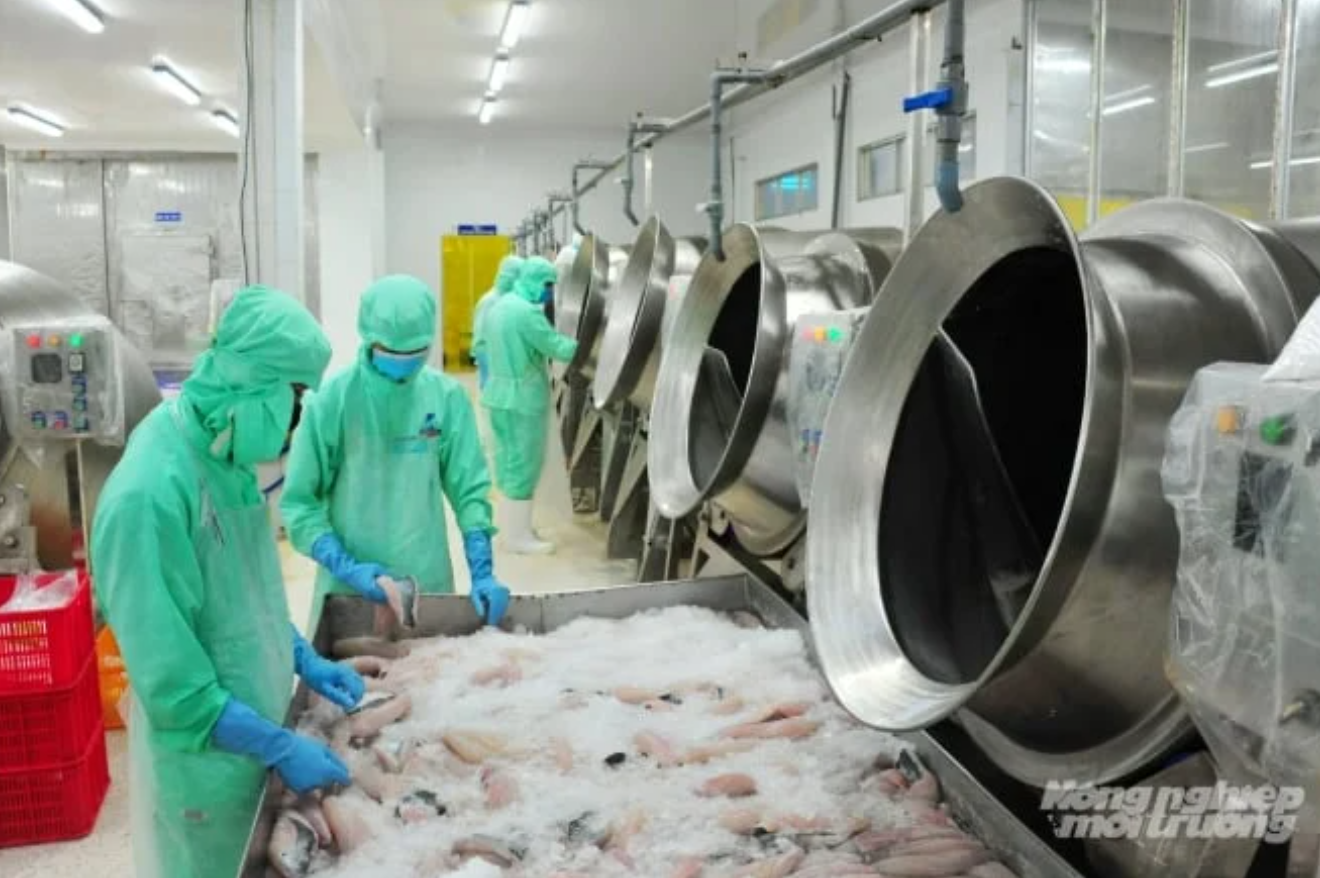 Shrimp and pangasius are expected to remain the main pillars supporting the growth of Viet Nam’s seafood industry in the coming period. Photo: VAN News.
 On the positive side, markets such as ASEAN, Australia, Taiwan and several emerging destinations continued to expand, helping diversify export outlets.
According to VASEP, strong demand from China has boosted short-term growth, but the industry’s heavy reliance on a single market poses potential risks.
First, changes in China’s import policies could quickly affect trade flows. Adjustments to border controls, quality standards, or licensing procedures could lead to short-term fluctuations in exports.
Second, the market’s strong seasonality means demand may not remain stable throughout the year. After the early-year peak, imports could slow in the following months, particularly if domestic inventories rise.
Third, competition is intensifying, especially from major suppliers such as Ecuador, in the price-competitive whole-shrimp segment.
Therefore, although China is the main growth driver in the short term, rebalancing market structure remains essential to ensure more sustainable growth.
Amid continued uncertainty in global demand, China and Hong Kong remain key engines of growth, helping Viet Nam’s seafood industry maintain its recovery momentum while also highlighting the need to diversify export markets for more sustainable development in the medium and long term.